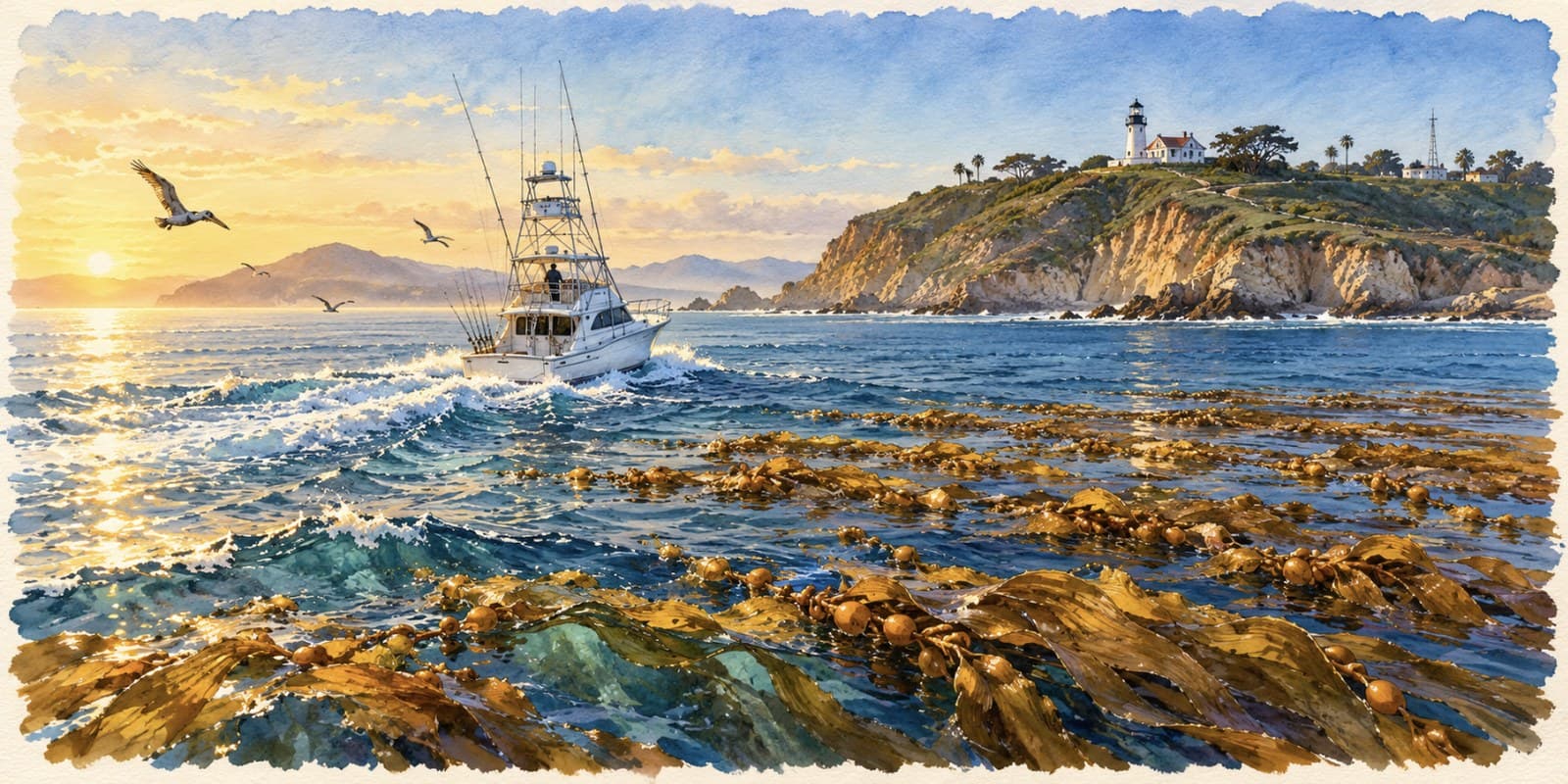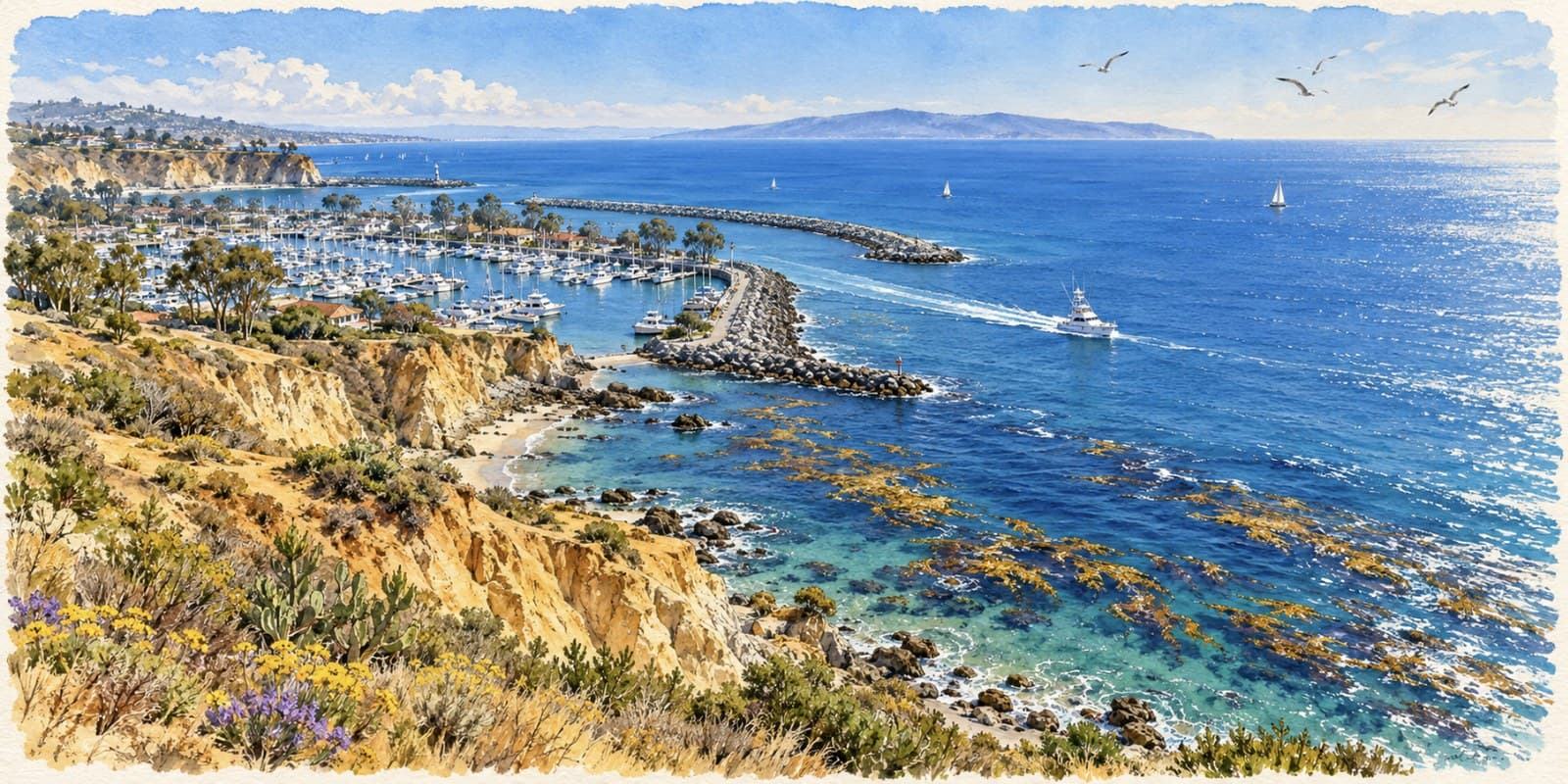
Dana Point sits at the south end of Orange County, tucked under the headland bluffs, and it fishes like a port caught between two worlds. Close in there is kelp and reef that a half-day boat can fish all year. Out front there is a shorter run to the blue water than from any of the Los Angeles harbors, and a straight shot across to San Clemente Island. Which of those is worth the trip depends almost entirely on the water temperature.
This is a guide to fishing out of Dana Point Harbor: the landing, the grounds, and how the year usually runs. For the port at a glance, see the Dana Point port guide.
The landing
Dana Point's sportfishing landing is Dana Wharf Sportfishing, inside the harbor. Its schedule covers most of what the port offers:
- Half-day and twilight trips on the local kelp and reef, the easiest way to fish Dana Point.
- Three-quarter-day trips that go after whatever is biting farther out, from bonito and white seabass to tuna when they are in range.
- Offshore and overnight trips in the warm season, when tuna and dorado are within reach.
Dana Wharf also runs whale and dolphin watching all year, and in winter a good share of the fleet's attention turns to the gray whales passing the coast. Schedules change from season to season, so check the landing's current trips and recent reports before you book.
If you run your own boat, the harbor has a public launch ramp, and the harbor mouth puts you on the kelp within minutes.
The kelp from Dana Point to San Onofre
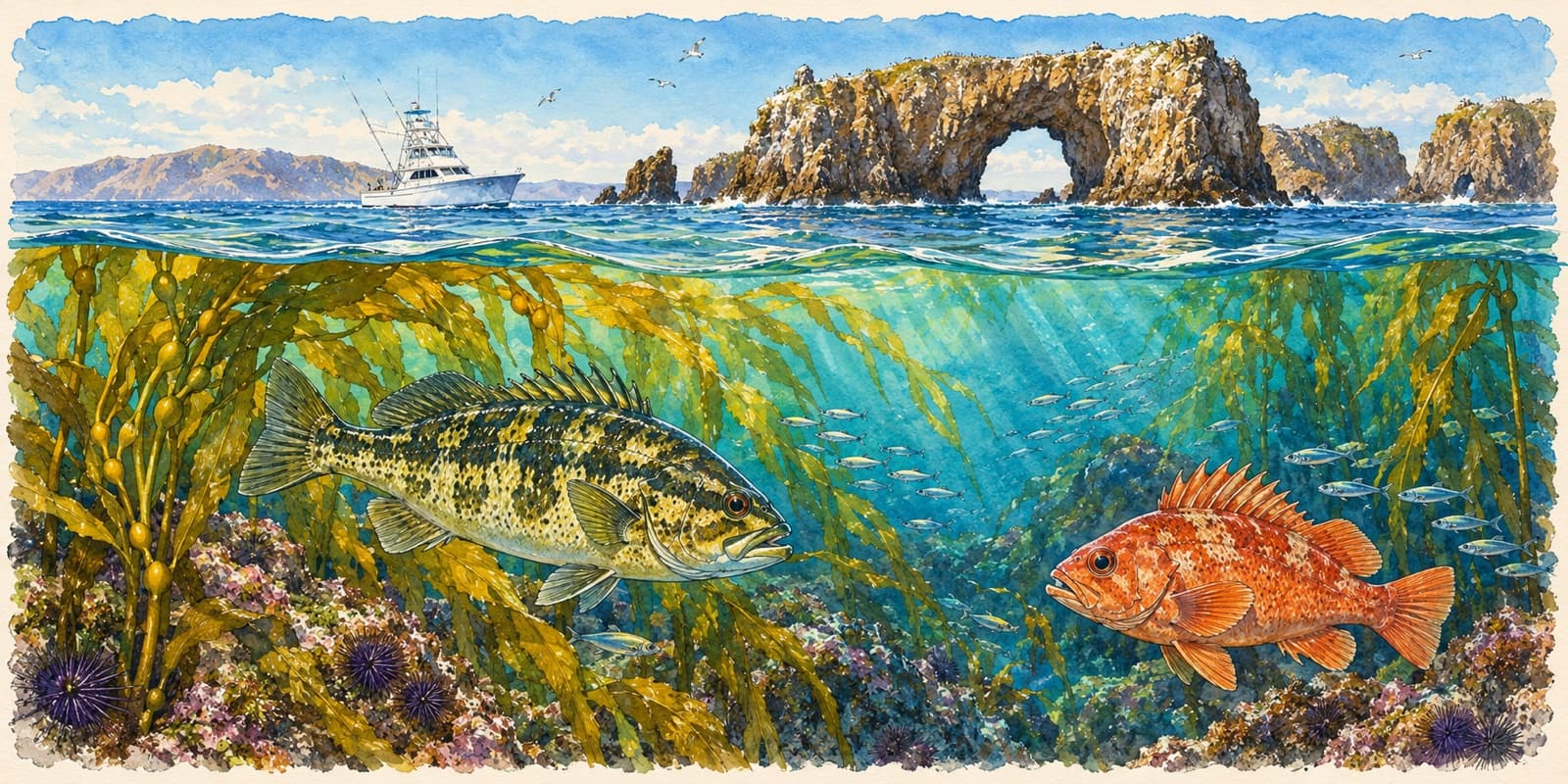
The close-in water south of the harbor, along the beaches toward San Clemente and San Onofre, is kelp and reef. In the warm months it is calico bass water first, with barracuda, sheephead and bonito coming and going as the water warms. Sand bass and halibut work the sand around the beds.
For calico, a live bait fly-lined along the edge of the kelp or a swimbait worked through the stalks is the standard approach. Turn the fish before it gets back into the kelp. The calico swimbait guide covers weights, colors and retrieves, and calico bass in the kelp covers how the season moves.
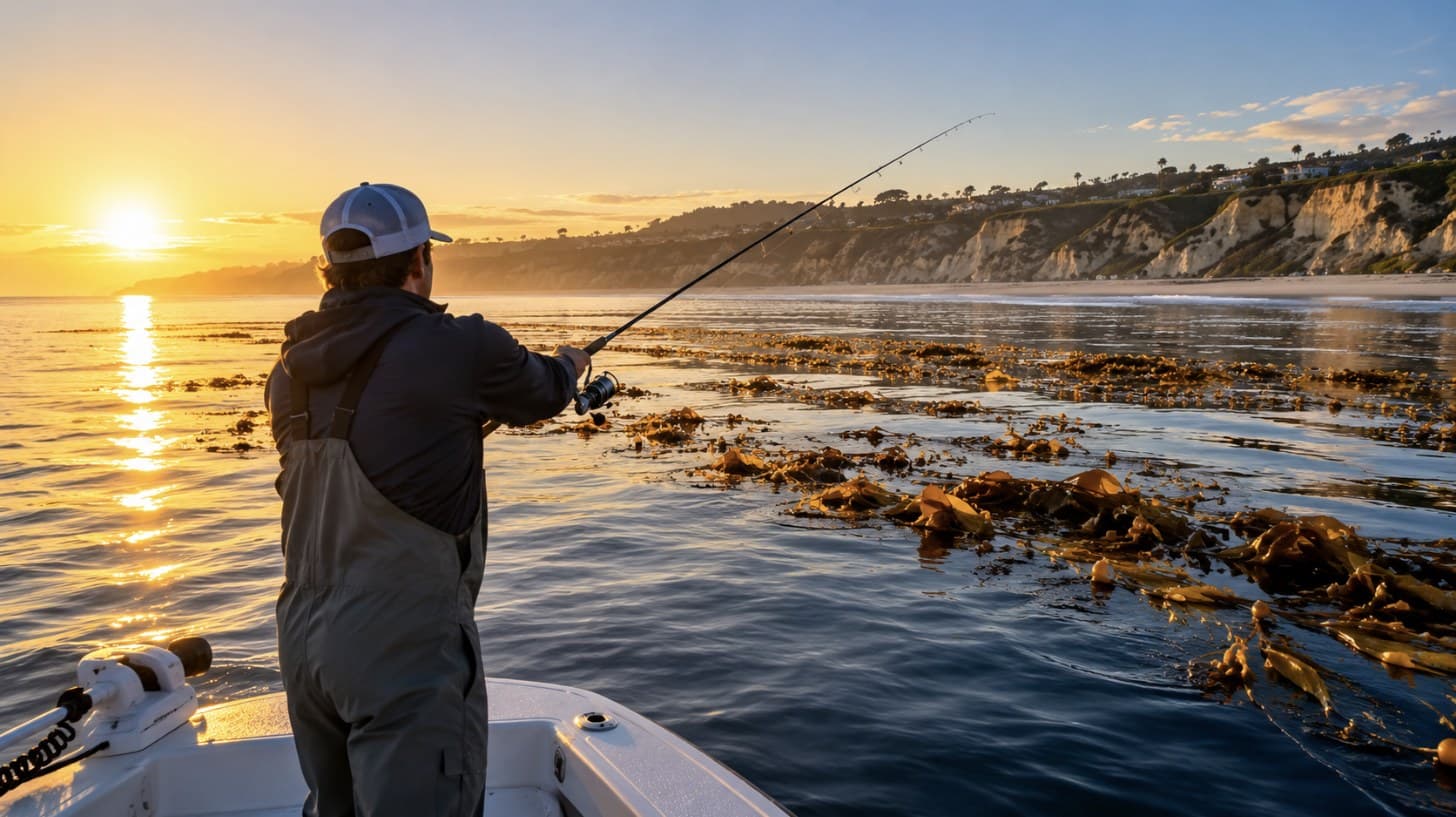
Barracuda are a warm-water fish here, and in a good year they show on the local kelp through the summer. The post on barracuda in Southern California explains why some years boom and others barely see them.
Know the lines up the coast
The coast around the headland is a patchwork of protected areas, and the rules are not the same from one to the next.
- Dana Point State Marine Conservation Area covers the shoreline from the harbor up toward South Laguna. It is not a no-take reserve: CDFW allows recreational hook-and-line fishing for finfish there. Taking anything from the tidepools is not allowed.
- Laguna Beach, just to the north, has no-take protected areas along much of its shore.
Check the CDFW marine protected area maps before you fish a new stretch, and read the rules for that specific area rather than assuming.
The local hard bottom
Beyond the kelp, the reef and rock off Dana Point drop into deeper water that holds rockfish and sculpin. That bottom is the winter fallback for the half-day boats when the season allows. Rockfish seasons, depth limits and the species you may keep come from CDFW and change, so check the CDFW groundfish rules before every trip, and carry a descending device for fish you release from deep water. For how to rig for them, see rockfish rigs.
San Clemente Island
The island is the committed run from Dana Point. Its kelp, boilers and ridges hold yellowtail from spring into fall, along with white seabass, calico, sheephead and whitefish. It is open-ocean water both ways, and the Navy closes parts of the island at times, so plans can change at short notice.
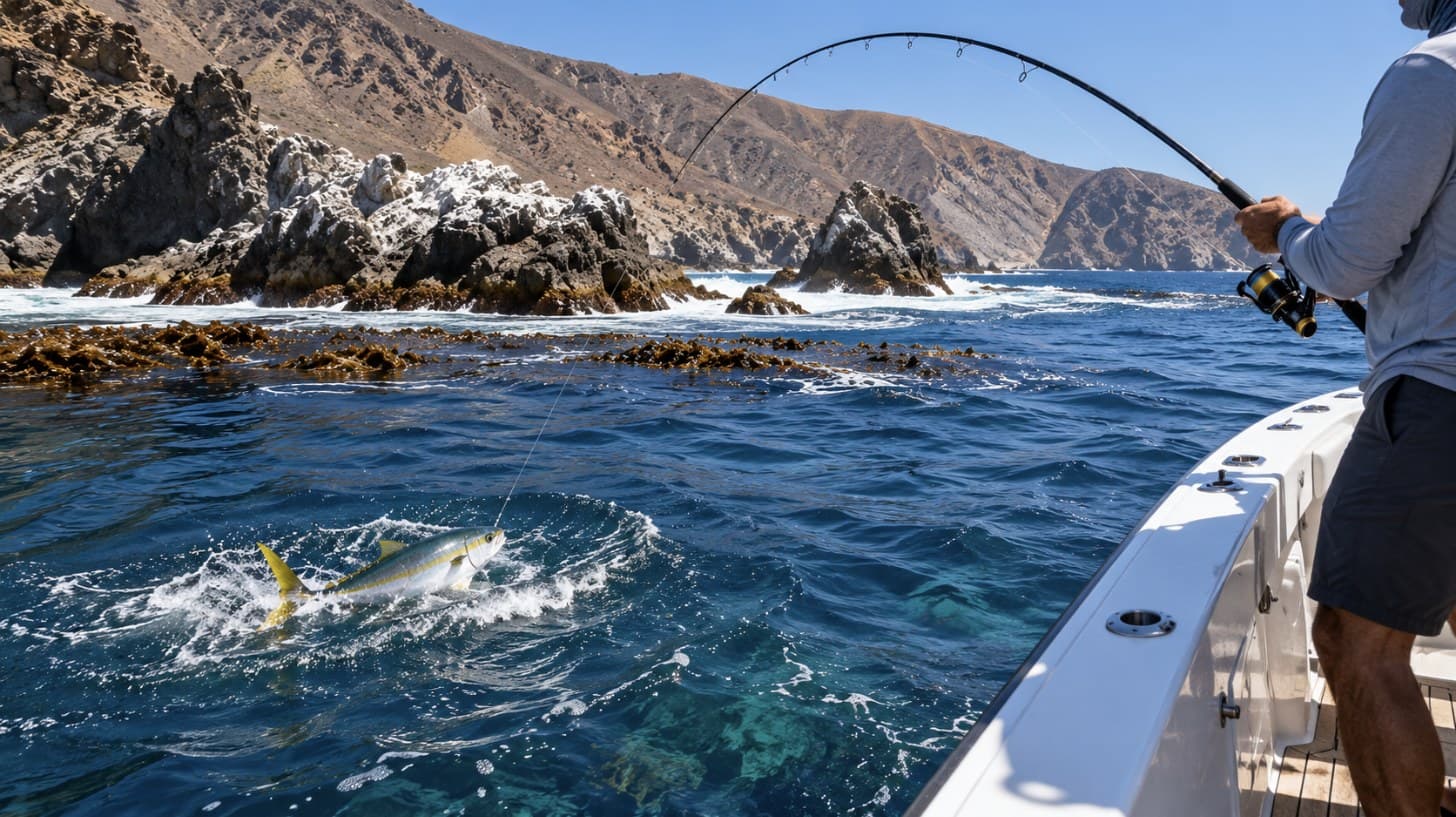
Yellowtail at the island behave like yellowtail everywhere: they hold on the up-current side of structure and move with the bait. Chasing the grey ghost covers that habit, and the iron covers which jig to throw when they come up.
The blue water out front
Dana Point's real advantage is distance. The blue water and the paddies are a shorter ride from here than from the ports to the north, which makes it a natural jumping-off point when warm water pushes up from the south.
On that warm push the offshore water can hold yellowfin, dorado, marlin, mako and skipjack. It is also the most variable fishing out of the port. Some summers it sits within range for weeks. Some summers it never arrives. When it does, reading a kelp paddy and fall yellowfin cover how to work it.
Dana Point through the year
As a rough shape, not a promise:
- Spring. The kelp wakes up as the water warms, calico start biting harder, and yellowtail begin to show at the island.
- Summer. The kelp is at its best for calico and barracuda, the island fishes for yellowtail, and the offshore boats go when the tuna and dorado are in range.
- Fall. The offshore season peaks on the warm push if it comes at all, and the island can still produce until the water cools.
- Winter. Quieter close to home. The half-day boats lean on the reef and the bottom when the rules allow, and the whale-watching boats get busy.
Where Fish or Pass fits
From Dana Point the real decision is usually kelp or blue water, and that is a temperature question before it is anything else. The Bite Score reads water temperature, bait, kelp, structure, recent reports and sea conditions for each grounds and gives a verdict of Catching, Fishing or Pass for the day. It can tell you the offshore water has cooled out of range this week, or that the kelp is warm enough for calico to be on.
It cannot read the wind for you, and it is not a navigation or safety tool. Check the NOAA marine forecast before any island or offshore run, and check the current CDFW ocean fishing regulations for every species you plan to keep. If you are weighing harbors, Newport is just up the coast and Oceanside has its own run to the same island.