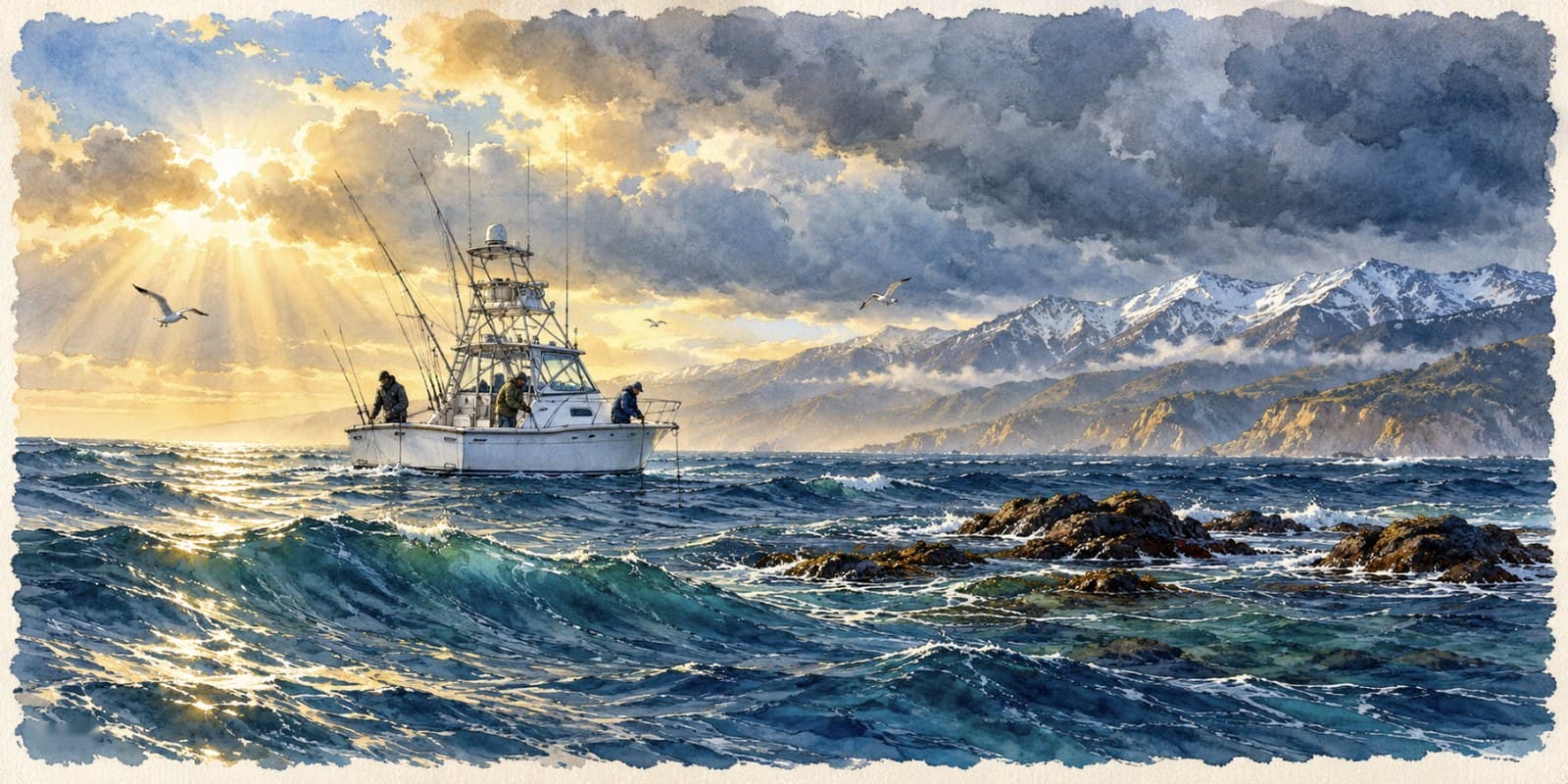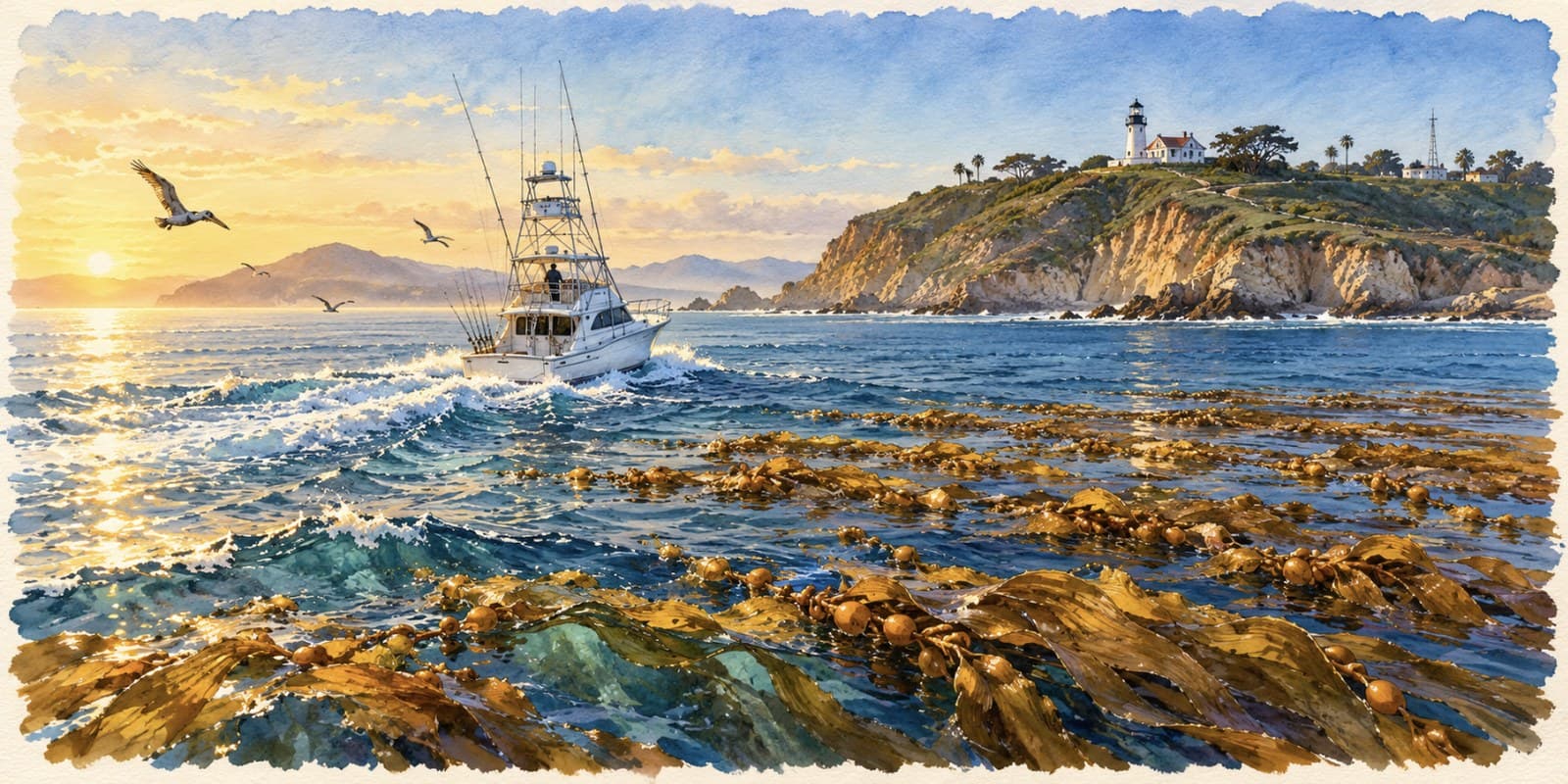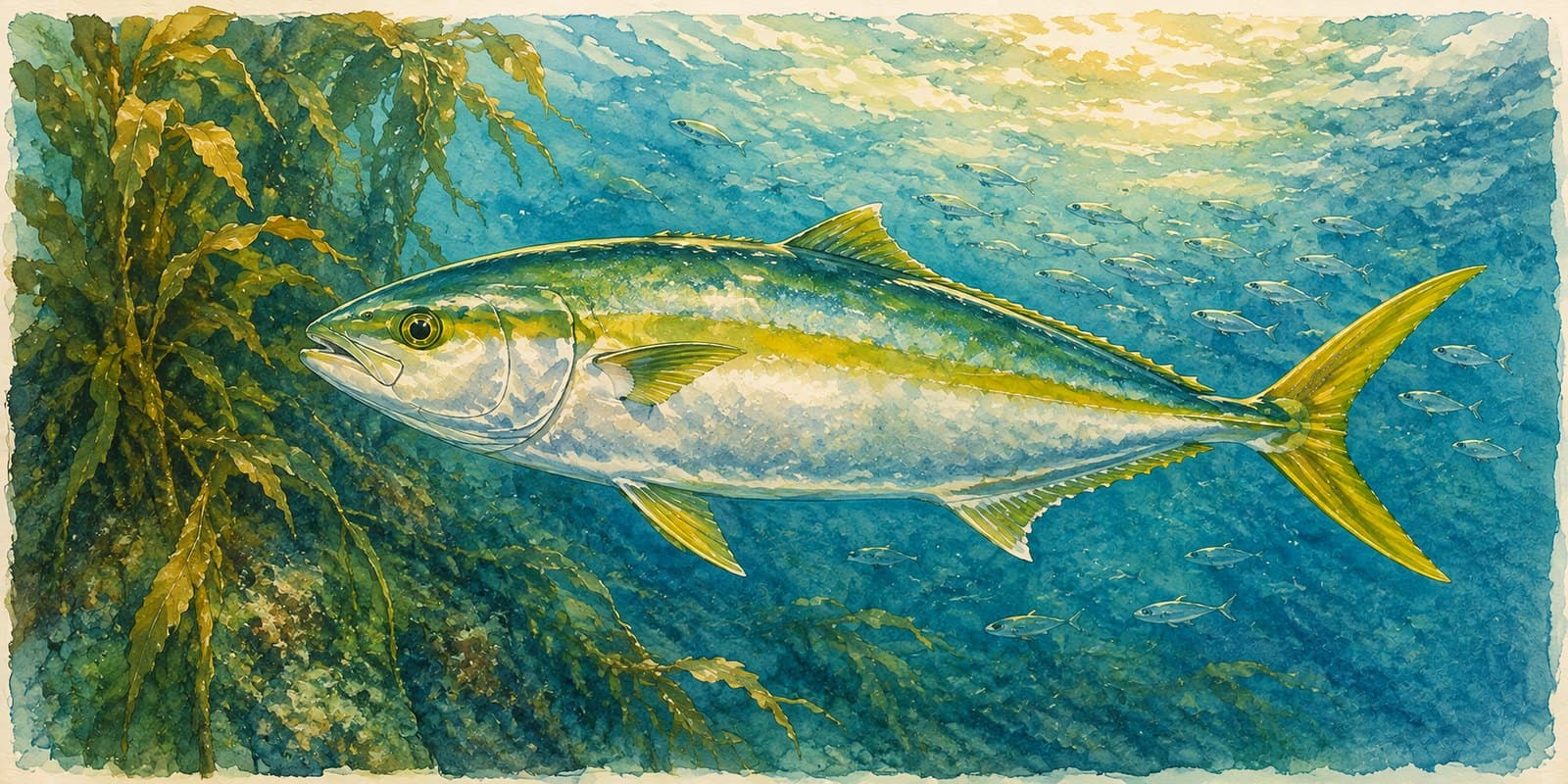
Ask ten Southern California anglers where to find yellowtail and you will get ten spots. Ask them why the fish are there and the answers collapse into one: something hard, with water moving over it. Yellowtail are a structure fish first and a roaming fish second, and most of what looks like luck on a yellowtail trip is a boat that was parked on the right side of the right rock.
If you are new to the species, start with the yellowtail guide. This post is about the one habit that explains the rest: how they sit on structure, and how that should change where you stop the boat.
What counts as structure
For a yellowtail, structure is anything that breaks up open water and gives bait a reason to stack. In this fishery that means four things.
- Hard bottom and high spots. Rock that rises off the surrounding bottom: the banks, the reefs, the pinnacles off the islands.
- Kelp. Both the rooted beds along the coast and islands, and the drifting paddies that break loose and float offshore.
- Boiler rocks and island points. Wash rocks and corners where swell and current pile water against stone.
- Edges in the water itself. A current line or a temperature break is not rock, but it concentrates bait the same way, and yellows work it the same way.
What these have in common is not the material. It is that each one gives small fish somewhere to gather, and gives a predator a place to hold without spending much energy.
Current decides which side
A high spot with no water moving over it is just a rock. The same spot with current on it has a front and a back, and the fish use them differently.
Bait tends to gather on the up-current face of structure, where the moving water meets the rise and food is carried to it. Yellowtail set up where they can reach that bait without fighting the flow. In practice, the fish are very often on the up-current side and edges of a spot rather than directly over its shallowest point.
Two things follow from that.
- The good side moves. When the current swings, the fish move with it. The corner that produced in the morning can go quiet after the tide turns, while the opposite side wakes up.
- Position beats location. Being on the right bank is not enough. You want the boat set so your baits and jigs travel through the water the fish are actually watching.
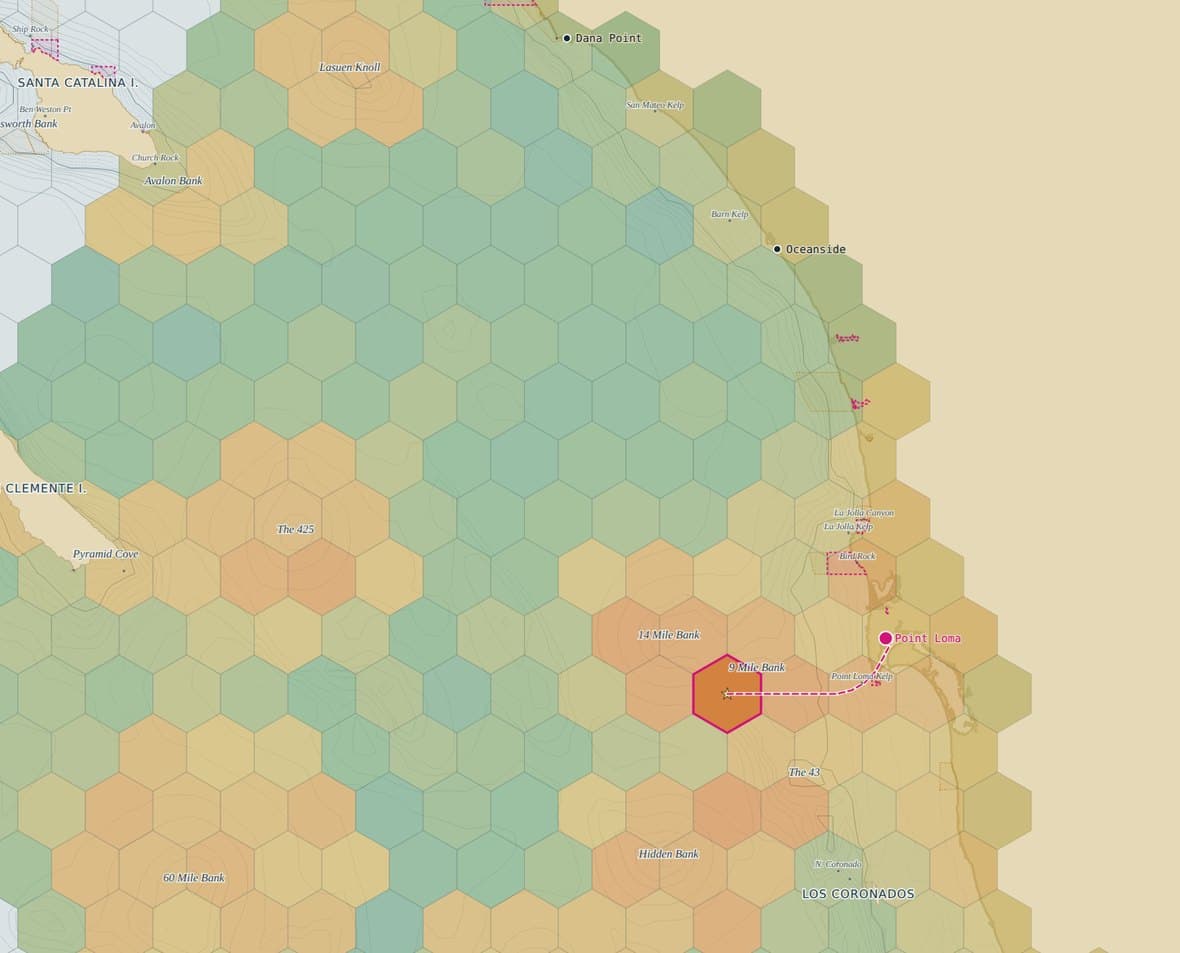
This is the part of the picture the Bite Score tries to read for you. Structure and depth are one of the signals behind it, and the set of the current is used to favor the up-current face of a high spot. The how the score works page lays out each signal and how much it counts.
Kelp: rooted and drifting
Coastal and island kelp beds are yellowtail structure in the plainest sense. The fish cruise the outside edge and the lanes through the bed, close enough to duck back in. Hook one there and it will try to do exactly that, which is why local anglers talk about stopping the first run. A fish that reaches the stalks usually wins.
Kelp paddies are the offshore version. A floating mat of kelp is the only structure for a long way in every direction, so bait gathers under it and predators find the bait. Not every paddy holds fish, and a paddy that held them yesterday may be empty today. But in warm months a paddy sitting on a current line or a temperature break is worth a look every time.
Temperature tells you when, structure tells you where
Yellowtail in this region are most active in roughly 62 to 70 degree water. That range explains the calendar: the fishery wakes up in spring as the water warms, runs through summer, and holds on into fall. It does not explain the map. Within water of the right temperature, the fish are still on something.
That is why the southern end of the Bight carries the longest season. Boats out of Point Loma are closest to the warm water that pushes up from the south, and a short run puts them on island structure that keeps holding fish after spots to the north have cooled off. The post on why the Coronado Islands fish so late goes through it.
Putting it to work
Before the trip, pick structure, not a general area. Have two or three spots in mind that offer different sides and depths, so you have somewhere to go when the current changes.
On the spot, read the water before you fish it. Which way is the boat drifting? Where is the bait showing on the meter relative to the high point? Are birds working an edge? Set up so your gear moves through that zone.
Then let the fish tell you how deep. Marks up in the water column near the surface call for a surface jig or a fly-lined bait. Marks pinned to the bottom call for a heavy jig dropped down and wound back up fast. The post on picking jigs that get bit covers which iron to tie on for each.
What a score cannot know
A conditions read can tell you that the water is the right temperature, that there is structure in range, and that the current is set up on it. It cannot tell you whether the fish on the spot will eat, or whether they left last night. Yellowtail roam. A spot that was loaded one week can be empty the next.
Use the read to choose where to spend your fuel, and use your eyes and your meter when you get there. Seasons, size and bag limits change, so check the current CDFW ocean fishing regulations before you go.