Barracuda are a warm-water visitor that behaves like a local. They are not here all year. They come up from Baja California as the water warms, school along the kelp and the beaches through the summer, and drift back south in the fall. In a good year they are on almost every coastal trip. In a cool year you can go a season with barely a bite.
This post covers when they arrive, where they hold once they are here, what makes one year so different from the next, and what that means for how you fish them. For the fish itself, the barracuda species guide is the place to start.
A fish that migrates with the water
The California barracuda, called Pacific barracuda in CDFW's reports, is a coastal, schooling fish. CDFW describes its range as reaching from Alaska to Cabo San Lucas, with most of the fish in the southern part of that range, and its catch historically centered between Point Conception and San Quintín in Baja.
State tagging studies found barracuda migrating north from Baja into Southern California in late spring and early summer, and the timing and distance of that move track sea surface temperature closely. In a warm spring they arrive earlier and travel farther. CDFW describes them as generally present off California for about six months of the year, from April to October.
The catch follows that schedule. CDFW's records put most landings between May and August, with June and July together accounting for close to 60 percent. The species guide's best months, May through September, describe the same window. By late fall most of the fish have moved back south.
Spawning in our water
Barracuda do not just visit to feed. They spawn here. CDFW reports spawning from April to October in the nearshore waters of Baja and Southern California, peaking in June off Southern California. They are broadcast spawners that release eggs many times a season. Fecundity rises steeply with size: a 20 inch female was found carrying about 42,000 eggs and a 37 inch female about 484,000.
The young grow up inshore. Juvenile barracuda live in coastal lagoons, bays and harbors.
Growth is quick at first. A barracuda reaches about 14 inches in its first year and around 28 inches at four or five years old, when it weighs only about 3 pounds. That long, thin build is why a fish that looks huge in the water weighs less than you expect. All males and about three quarters of females are mature in their second year at about 19 inches. The oldest aged barracuda was 18. There is a minimum size, and CDFW sets it, so check the CDFW ocean fishing regulations before you keep one.
Where they hold
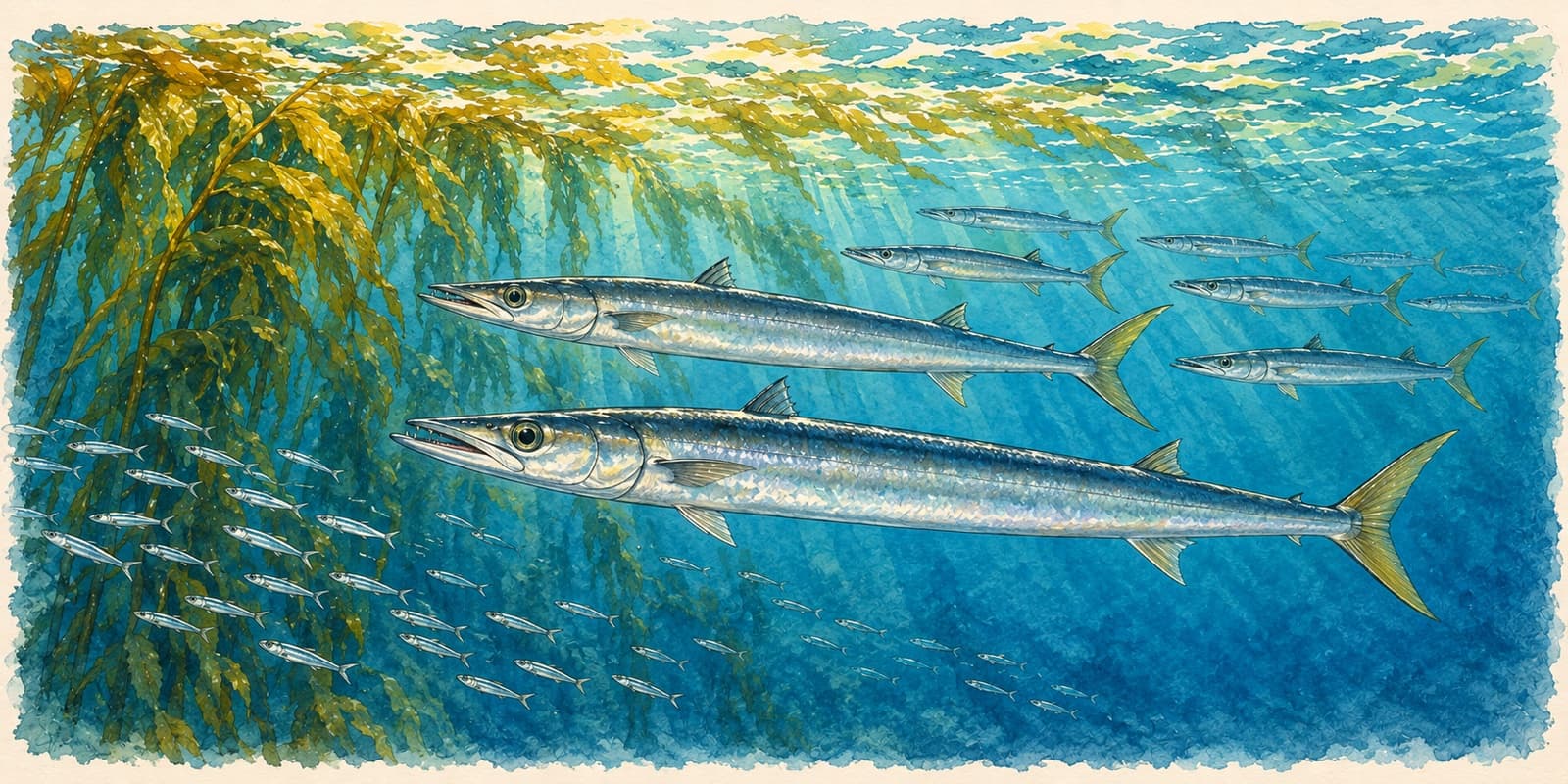
Barracuda are pelagic, but they are not offshore fish. CDFW's status report notes that the fishery generally takes place in less than 100 feet of water, and also near the kelp beds when the water is warm. In practice that means:
- The outside edge of the kelp. The classic barracuda water. La Jolla and the Point Loma kelp out of Point Loma, and the Horseshoe Kelp off Long Beach and San Pedro, have all had strong summer barracuda bites.
- Along the beaches. CDFW's catch records name Huntington Beach, San Mateo Point, Dana Point and Oceanside among the places barracuda are caught.
- Piers and jetties. This is a fish shore anglers catch. The same records include the Santa Monica and Seal Beach piers, Ventura Harbor and the San Pedro area.
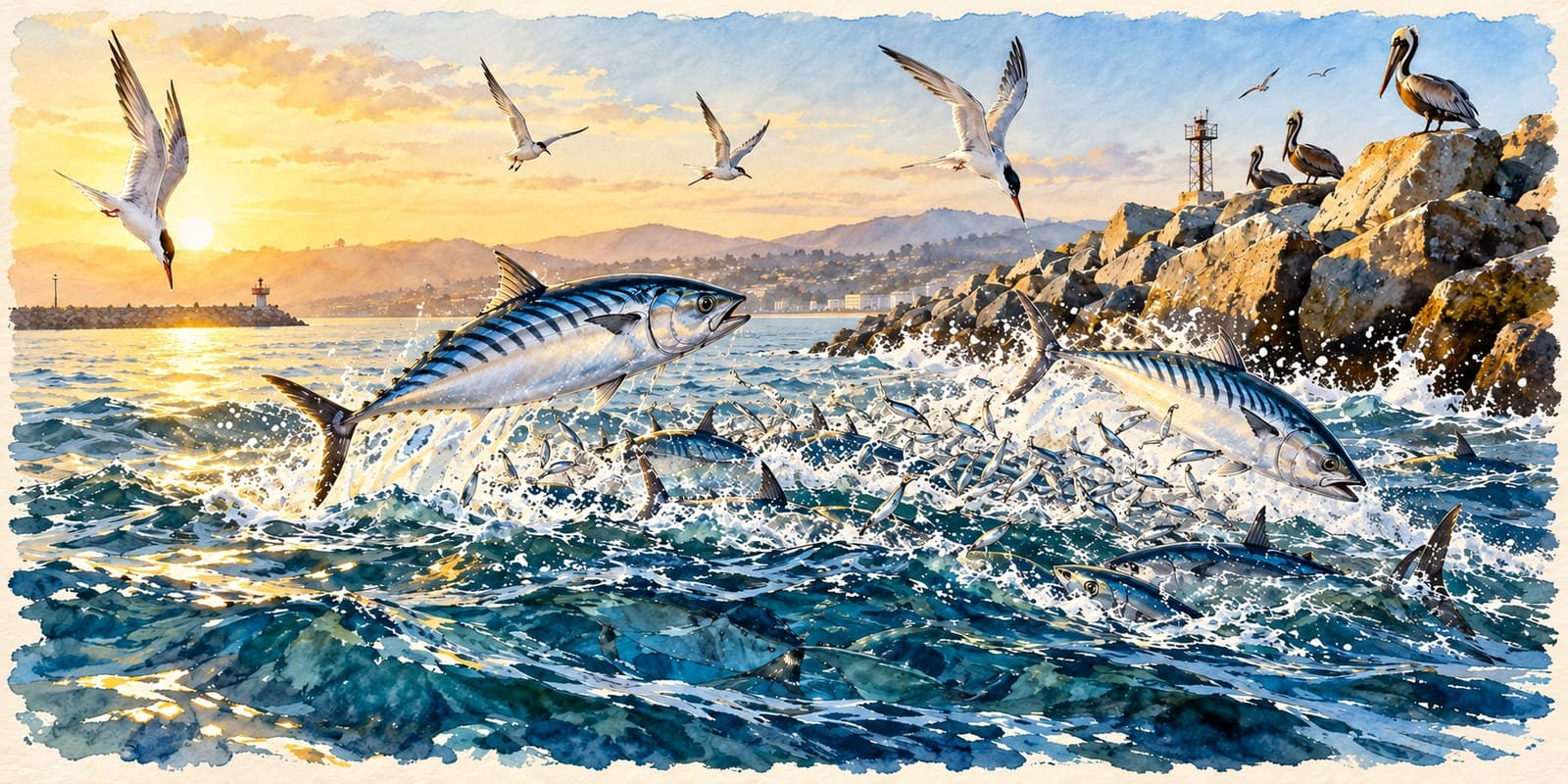
- Wherever the bait is pushed up. Barracuda feed on anchovies, sardines, young mackerel, young jack mackerel and grunion. One study found anchovy made up about two thirds of their diet. Find bait balls near the surface in warm water and you have found barracuda country.
Our post on fishing out of Long Beach covers the Horseshoe Kelp and the breakwater water that boats from that side of the Bight fish.
Why some years are full of them
Barracuda numbers swing more than almost any fish on the coast, and the swing tracks water temperature.
For four decades, from 1959 to 1998, barracuda ranked among the top ten fish caught on Southern California party boats. Since then the catch has trended down, with spikes in warm years. Between 2005 and 2021, the rank of barracuda in the recreational harvest ranged from ninth in 2007 to forty-seventh in 2019. CDFW names the strong El Niño years of 1957 to 1958, 1982 to 1983 and 1997 to 1998 among the years of high catch.
Warm water does two things. It pulls the migrating fish north earlier and closer to the coast, and it seems to help young fish survive. CDFW noted an increase in smaller barracuda in the recreational catch that may reflect stronger recruitment after the warm years of 2015 to 2016 and 2018 to 2019. Warm years can also bring visitors. The Mexican barracuda, a different species, has only been recorded in Southern California during warm water events.
The commercial history runs the same way. The commercial barracuda catch peaked in the 1920s, fell in the 1930s, and declined after World War II as a cooling trend from 1948 to 1956 cut abundance. Purse seining for barracuda was banned in 1940.
The lesson for planning: a cold spring means a late, thin barracuda season, and a warm one can fill the kelp line by May.
How that shapes the fishing
Barracuda are not hard to get bit. They are hard to stay connected to, and they can be fussy about speed.
- Surface iron. A light, narrow surface iron is the traditional barracuda jig. Our guide to picking jigs covers the shapes. When the fish are on small anchovies, smaller irons that match the bait often get bit best. Single-hook irons are easier to unhook from a toothy fish.
- Watch your speed. Barracuda chase fast-moving lures, but when you are getting short bites, or no bites, slow down. If slowing down does not work, let the jig sink for a count of ten or more before winding. The fish may be holding below the surface activity.
- Fly-lined bait. A live anchovy or sardine fly-lined or on a light sliding sinker is the bait-angler's barracuda rig. Anchovy chum keeps a school around the boat better than anything else.
- A bit of leader. Barracuda teeth go through light monofilament. A short length of heavier fluorocarbon fixes most cut-offs without killing the bite.
- Handling. Use pliers or a dehooker. The teeth are sharp and the fish thrash.
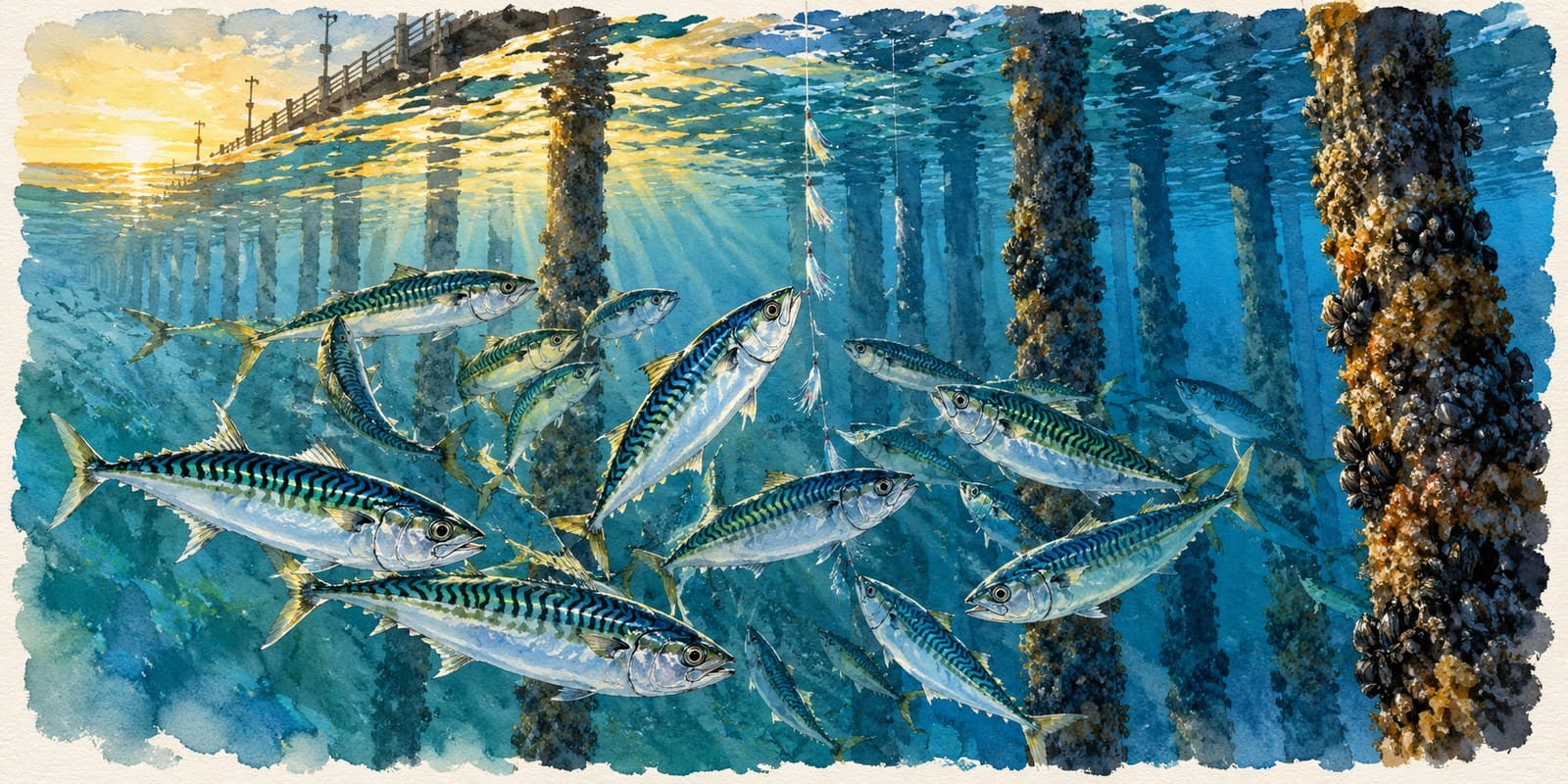
You will often be catching barracuda between the fish you came for. Calico bass share the same kelp, bonito work the same bait, and a fly-lined sardine meant for yellowtail can be eaten by a barracuda first. If you need live bait to start the day, our guide to catching Pacific mackerel on a sabiki covers the bait that keeps the whole coastal game going. For the barracuda's warm-water running partner and how its numbers have risen and fallen, see bonito in Southern California.
If you plan to eat barracuda, read the state's eating advice first. The Office of Environmental Health Hazard Assessment publishes guidance for fish from parts of the Southern California coast, and barracuda has been on it because of mercury. Its fish advisories page has the current version.
Where Fish or Pass fits
The barracuda guide is a profile of the fish. The Bite Score does not grade barracuda. It grades calico bass and yellowtail, which work the same warm kelp line, reading water temperature, sea conditions and recent reports each day as Catching, Fishing or Pass. The warm water that lifts those verdicts in summer is the same water that brings barracuda north. The score cannot tell you whether the school is on the kelp today, and it cannot make one bite.