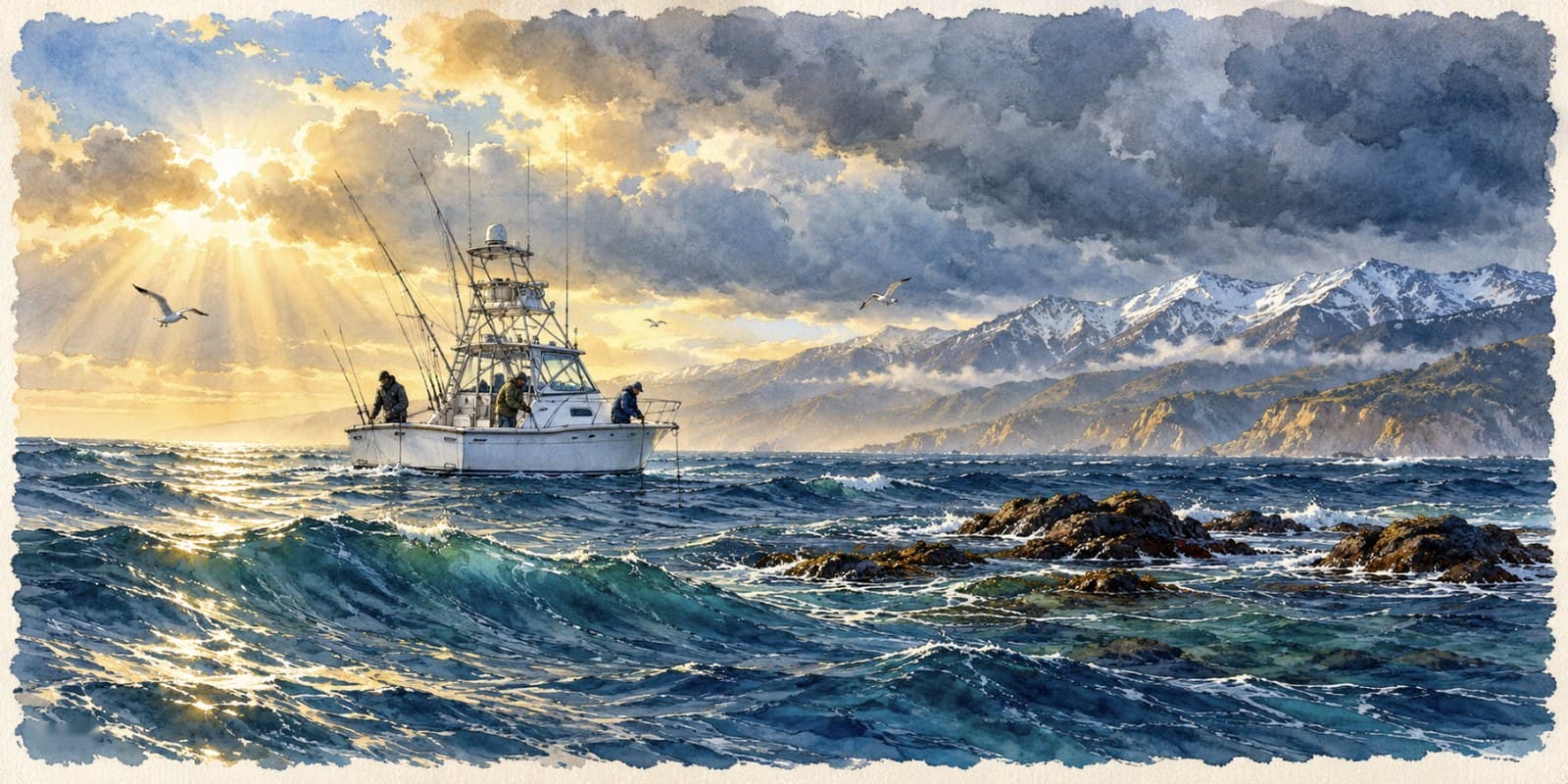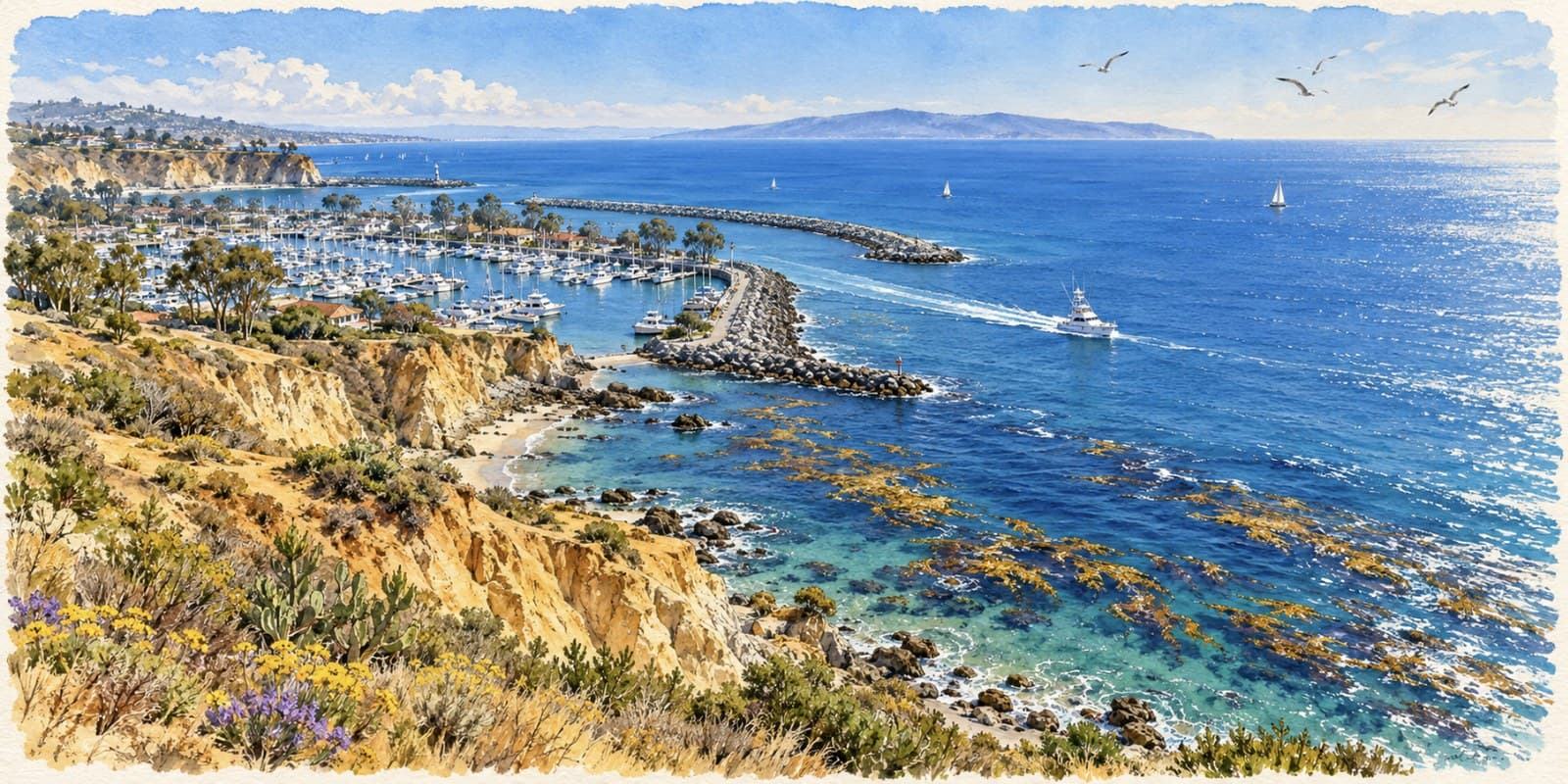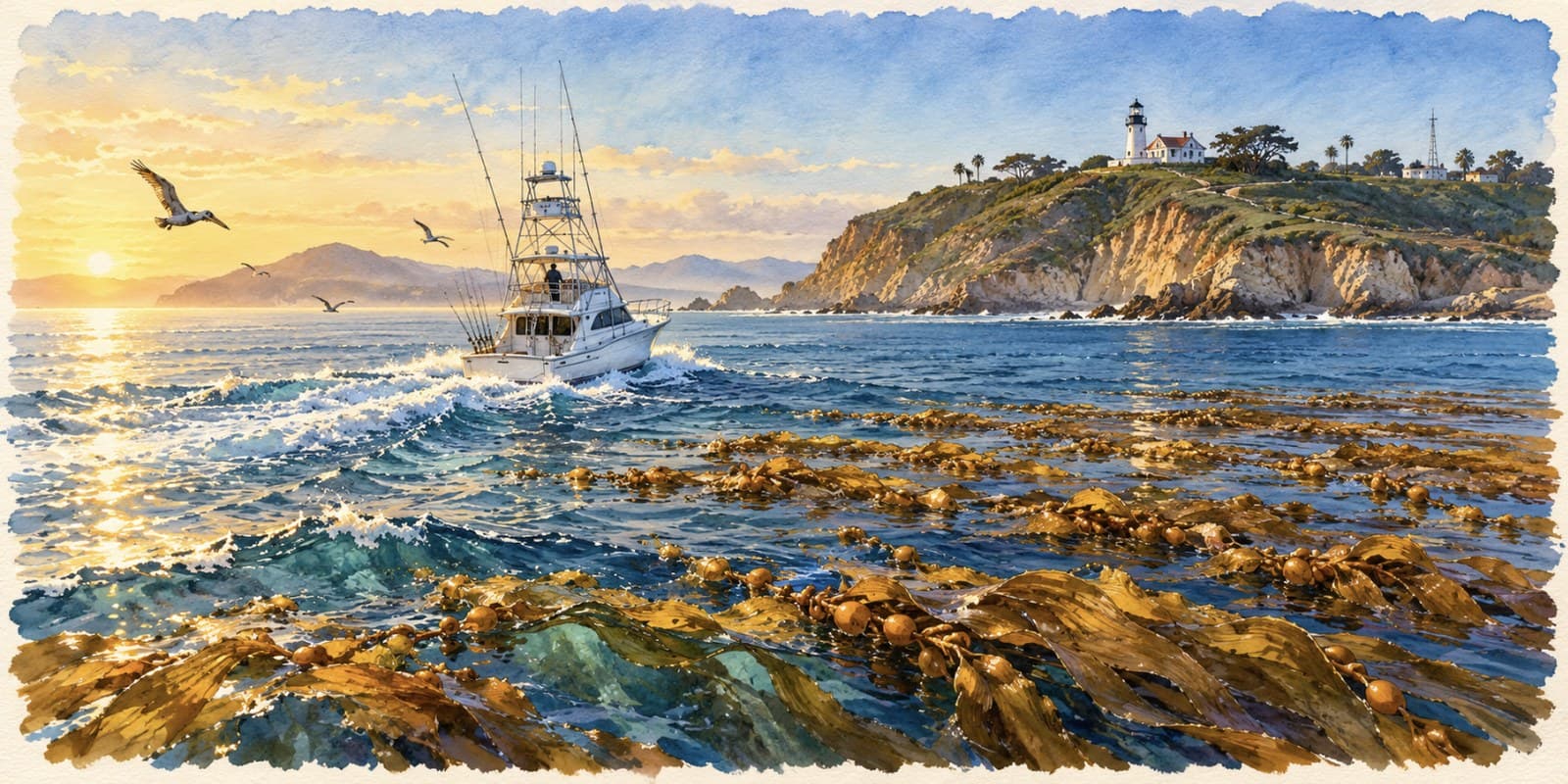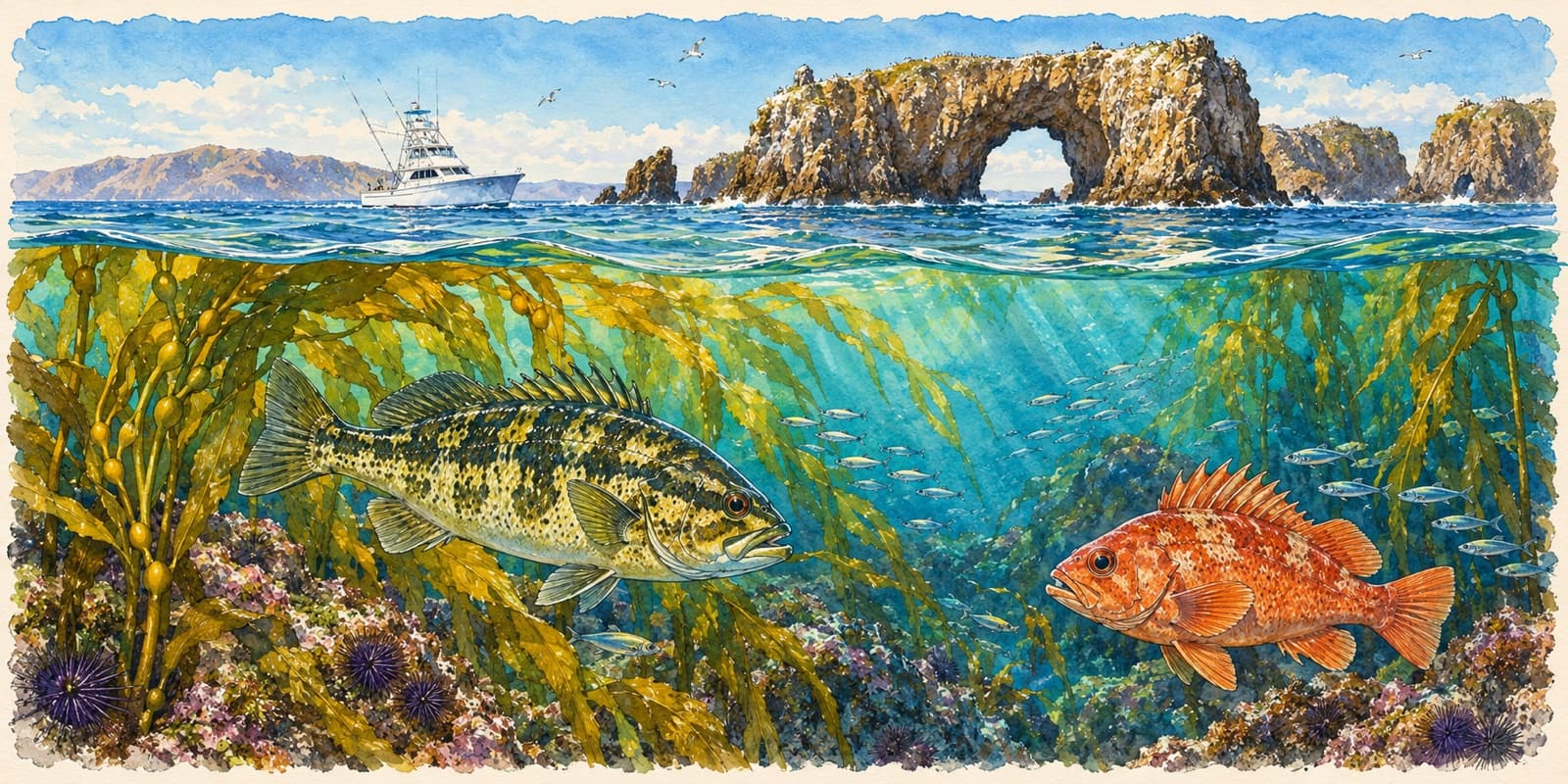
Channel Islands Harbor in Oxnard, and Ventura Harbor just up the coast, are the shortest jump in Southern California to the northern Channel Islands. Anacapa sits right across the channel, Santa Cruz is next door, and on a calm morning a half-day boat can be fishing island kelp while boats from other harbors are still running. That short run is the whole character of this port: island fishing without a marathon, plus squid grounds and sand flats close to home.
This is a working guide to fishing out of Oxnard and Ventura: the landings, the grounds, what bites when, and the rules that matter at the islands. For the quick reference, start with the Channel Islands Harbor port guide.
The landings
Two sportfishing landings work out of Channel Islands Harbor, and one out of Ventura Harbor.
-
Channel Islands Sportfishing in Channel Islands Harbor runs a fleet of charter boats on half-day, three-quarter-day and full-day trips, plus overnight and multi-day trips. It has a live bait operation and a tackle shop.
-
Hook's Landing, also in Channel Islands Harbor, is a family-run landing with open party and private charter trips, from local half and three-quarter days to overnight and multi-day runs to the outer islands.
-
Ventura Sportfishing in Ventura Harbor runs half-day, three-quarter-day and full-day trips to Anacapa and Santa Cruz and along the coast, with island trips farther out, and has a tackle shop with rental gear and licenses.
Schedules and boats change by season. Check with the landing for what is running the week you want to go.
The grounds
Anacapa Island. The closest of the islands and the signature short run. Kelp, reef and boiler rocks along a narrow chain of rock, with calico bass in the kelp, white seabass and yellowtail when conditions line up, and rockfish on the hard bottom when the groundfish season is open.
Santa Cruz Island. The big island next door, with miles of kelp and structure along its shoreline. Its size is its advantage: when one side is blown out or slow, there is usually another side to try. Calico, rockfish and ocean whitefish are common in island bags, and halibut work the sandy coves and edges.
The Squid Grounds. Market squid gather and spawn in the area, and when they do, they draw predators in. White seabass are the headline, but halibut and other fish feed on the same squid. Boats that find squid can fill the bait tank with the best bait on the coast.
Ventura Flats. The sand off the harbors, a short run from either landing. Halibut drift across the bottom here, and sand bass move in during the warm months. When the channel is too rough for an island run, the flats are the fallback.
Season by season
Spring. The best-known season here starts when the squid show. White seabass key on squid around the islands and the local grounds, and the fleet's focus shifts to finding and catching that bait. Halibut feed on the same squid. The groundfish season has recently opened in spring, which puts rockfish back on the menu at the islands.
Summer. Calico bass fish the island kelp through the warm months, and halibut and sand bass work the flats. Barracuda show in warm water. Rockfish fill out mixed trips, within whatever depth rules apply that part of the year.
Fall. The islands stay productive into fall. In a warm year, yellowtail push up into the islands and give the north end of the Bight a taste of what San Diego and Orange County see all season. When the surface fishing fades, the boats turn more to rockfish and lingcod.
Winter. The slow season. The groundfish season has been closed early in the year, the water is cold, and wind and swell make the island run harder. Local trips and the flats carry the fleet when the weather allows.
How to fish the islands
Island fishing here is structure fishing. Most of what works at Anacapa and Santa Cruz comes down to putting the boat on the right side of kelp or rock with current moving over it.
-
Calico in the kelp. Live bait fished along the outside edge of the kelp, or plastics and swimbaits cast tight to it. The calico bass guide covers the fish.
-
Rockfish on the hard bottom. Dropper loops with shrimp flies and squid strips, and a sinker heavy enough to hold bottom on the drift. The rockfish guide covers the species and the season.
-
White seabass on squid. Live squid fished near the bottom around the squid grounds and the kelp, often best at first light and dusk. When there is no squid, jigs and swimbaits for daytime white seabass work the outside edge of the kelp. White seabass carry their own size and bag rules, set out on the CDFW white seabass page.
-
Yellowtail in warm years. When yellows do show at the islands, they hold on the same points and current edges they use everywhere. The post on how yellowtail relate to structure explains where they sit.
Marine protected areas around the islands
The northern Channel Islands are ringed by a large network of marine protected areas. Stretches of the shoreline at Anacapa, Santa Cruz and the other islands are reserves where nothing may be taken, and others are conservation areas that allow only certain kinds of fishing. Some extend well offshore.
The boundaries are specific and they matter. Party boats know them; if you run your own boat, carry a current chart and check the CDFW marine protected areas page before you fish an island you do not know.
The crossing
The island runs cross open water at the north end of the Bight, where wind builds fast. Afternoon west wind is common, and a calm morning can turn rough by the ride home. Check the NOAA marine forecast before you commit, and turn back early rather than late.
Compared with Santa Barbara
Santa Barbara, up the coast, fishes some of the same water from the other side. Its boats lean harder on deep reef rockfish and lingcod and reach the farther islands, Santa Rosa and San Miguel. Oxnard and Ventura are the quicker jump to Anacapa and Santa Cruz, with the squid grounds and flats close at hand. The Santa Barbara port guide covers that harbor, and our guide to fishing out of Santa Barbara covers its grounds.
Where Fish or Pass fits
The Bite Score grades each species across these grounds every day and calls them Catching, Fishing or Pass. It weighs water temperature, bait, kelp, recent landing reports and sea conditions. It can tell you whether the island kelp or the flats look better today. It cannot find the squid for you or make a white seabass eat.
Before you go, check the current CDFW ocean fishing regulations for the species you plan to keep.