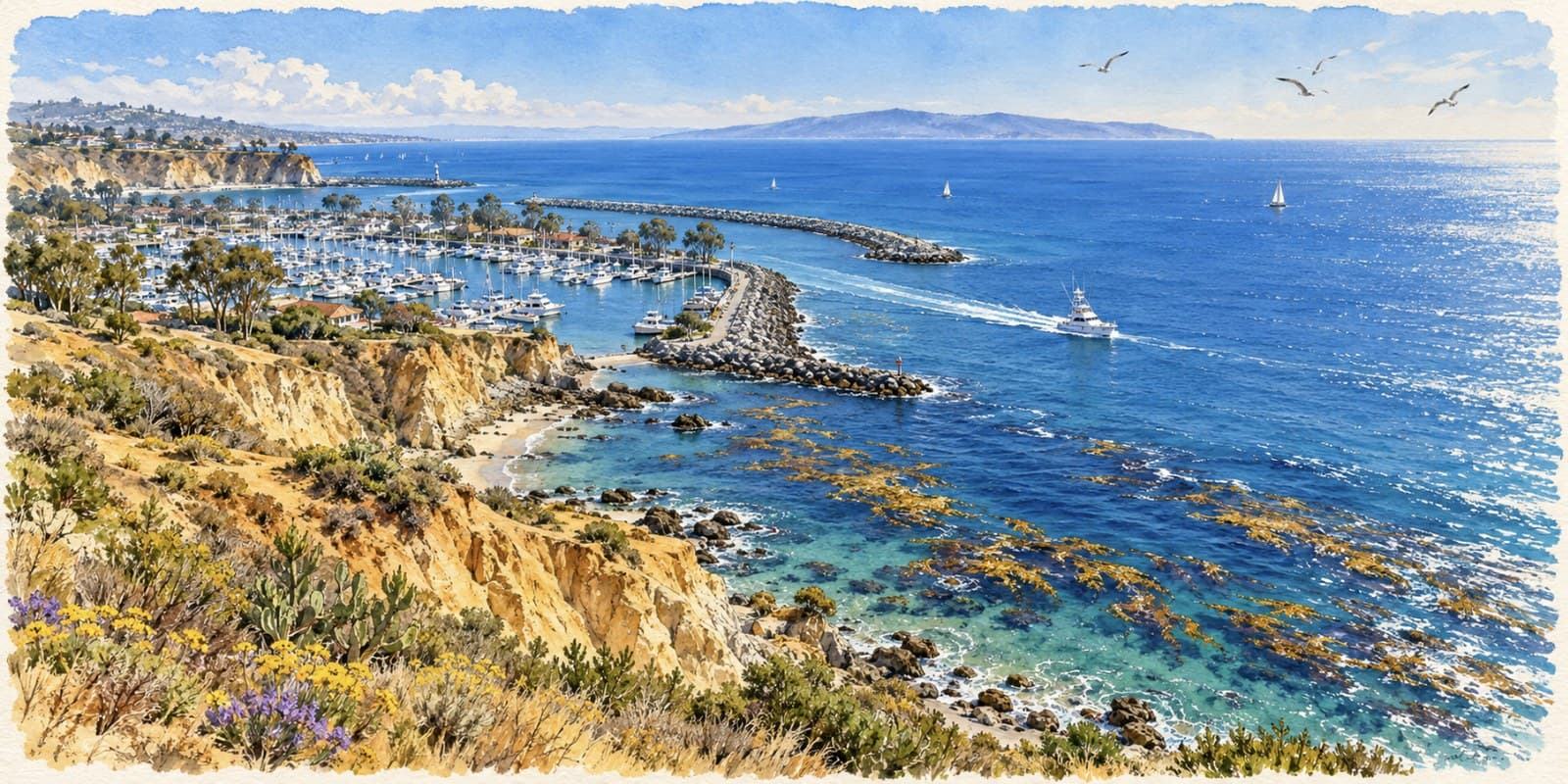
Most harbors on this coast make you run to get to deep water. Newport does not. The Newport Canyon reaches in close to the harbor mouth, so bait, squid and the fish that eat them can sit a short ride from the jetty. Add a set of broad sand flats up the beach, Catalina across the channel, and the offshore banks beyond, and you have a port that can fish something in almost every month.
The question is which of those to fish, and when. This is how the grounds out of Newport Beach work through the year, what the landings run, and how to decide where to point the boat on a given day.
The landings on the Balboa Peninsula
Newport's party-boat fleet works out of two landings on the bay side of the Balboa Peninsula, a short walk apart.
-
Davey's Locker sails from the historic Balboa Pavilion. It runs half-day, three-quarter-day and overnight trips, including island and offshore trips when the tuna are in range.
-
Newport Landing is on Palm Street, next door. Its half-day boats work the coast between Huntington Beach and Laguna Beach, and its three-quarter-day boats regularly fish Catalina.
Half-day trips run about five hours and stay local. Three-quarter-day trips have the time to cross to the island or work farther up and down the coast. Overnight trips are for the offshore fish. If you run your own boat, the same grounds are open to you, and the harbor mouth puts you on most of them quickly.
The Newport Canyon
The canyon is the reason Newport fishes above its size. Deep water close to shore means the things that live along a steep edge, squid, bait schools and the fish that follow them, can be minutes from the harbor rather than an hour away.
The hard bottom off the harbor entrance runs from shallow rock out past a few hundred feet, and that range of depth gives the half-day boats options. When the surface is quiet, they can drop to the bottom for rockfish, sculpin and other reef fish. When bait and squid come up along the edge, the same water can hold bass, bonito and the occasional yellowtail.
Two things to know before you fish the deep edge. Rockfish seasons, depth limits and which species you may keep are set by CDFW and change, so check the CDFW groundfish rules before every trip. And if you are fishing deep, carry a descending device so fish you release go back down alive.
Newport and Huntington Flats
North of the harbor the bottom flattens into broad sand. The Huntington Flats are one of the best-known barred sand bass grounds on the coast, and in summer they are the busiest water out of Newport.
Sand bass gather in big schools over the sand to spawn in the warm months. The bite usually builds around early summer, often when inshore water sits in the mid to high 60s, and it can hold into August. When it is on, you will see the fleet stacked up and anglers working plastics, jigs and live bait near the bottom.
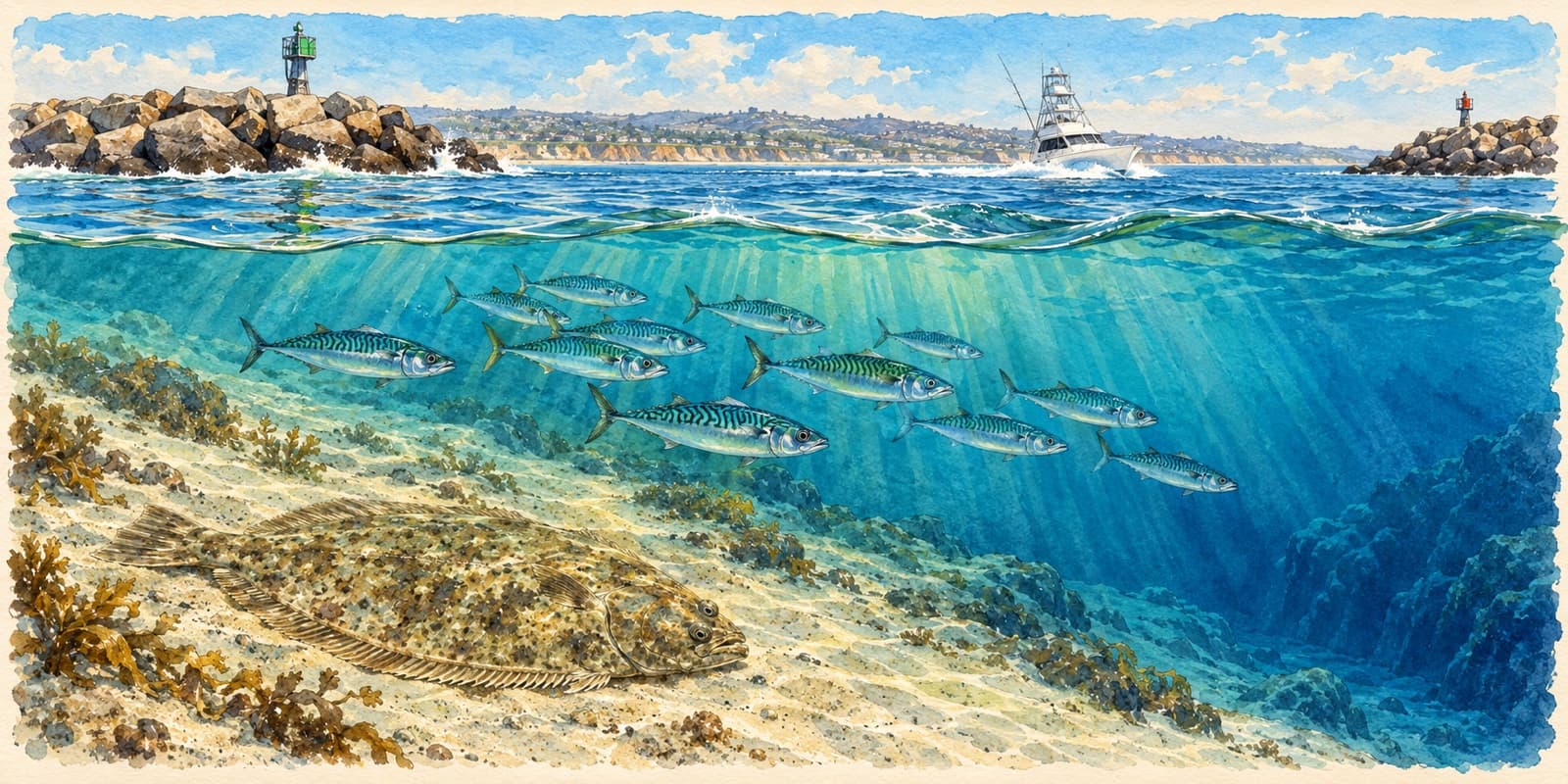
The same flats are halibut water. Halibut lie on the sand and ambush bait, so drifting with live bait or dragging a swimbait along the bottom is the standard approach. They are a quieter fish than the summer bass and reward patience: a slow, steady drift over the right bottom matters more than a big crowd.
Closer to the beach, the kelp and rock between Corona del Mar and Laguna hold calico bass through the warm months, along with sculpin and rockfish. Several stretches of this coast are marine protected areas. Check the CDFW marine protected area maps before you fish a new spot.
Catalina Island
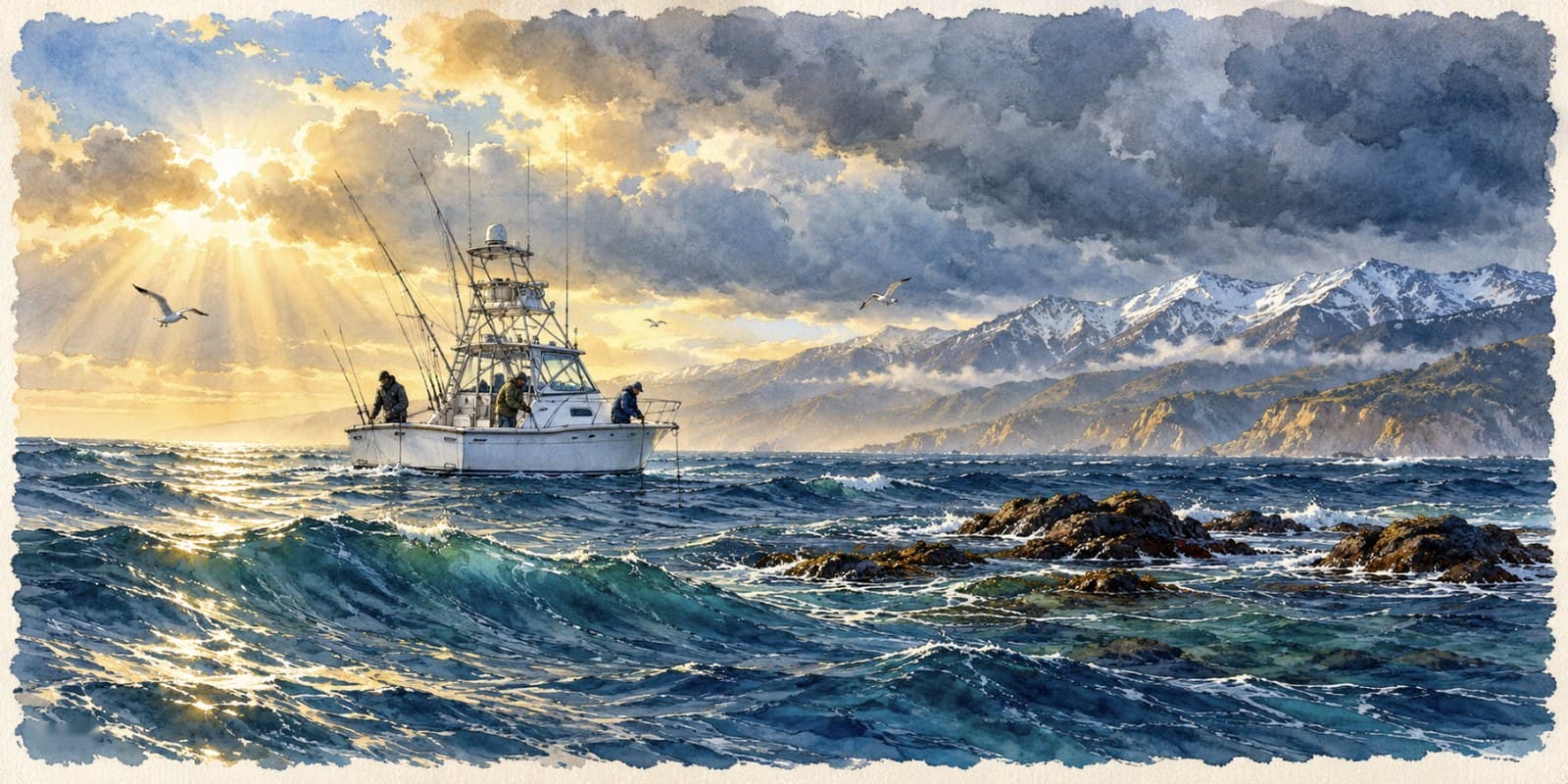
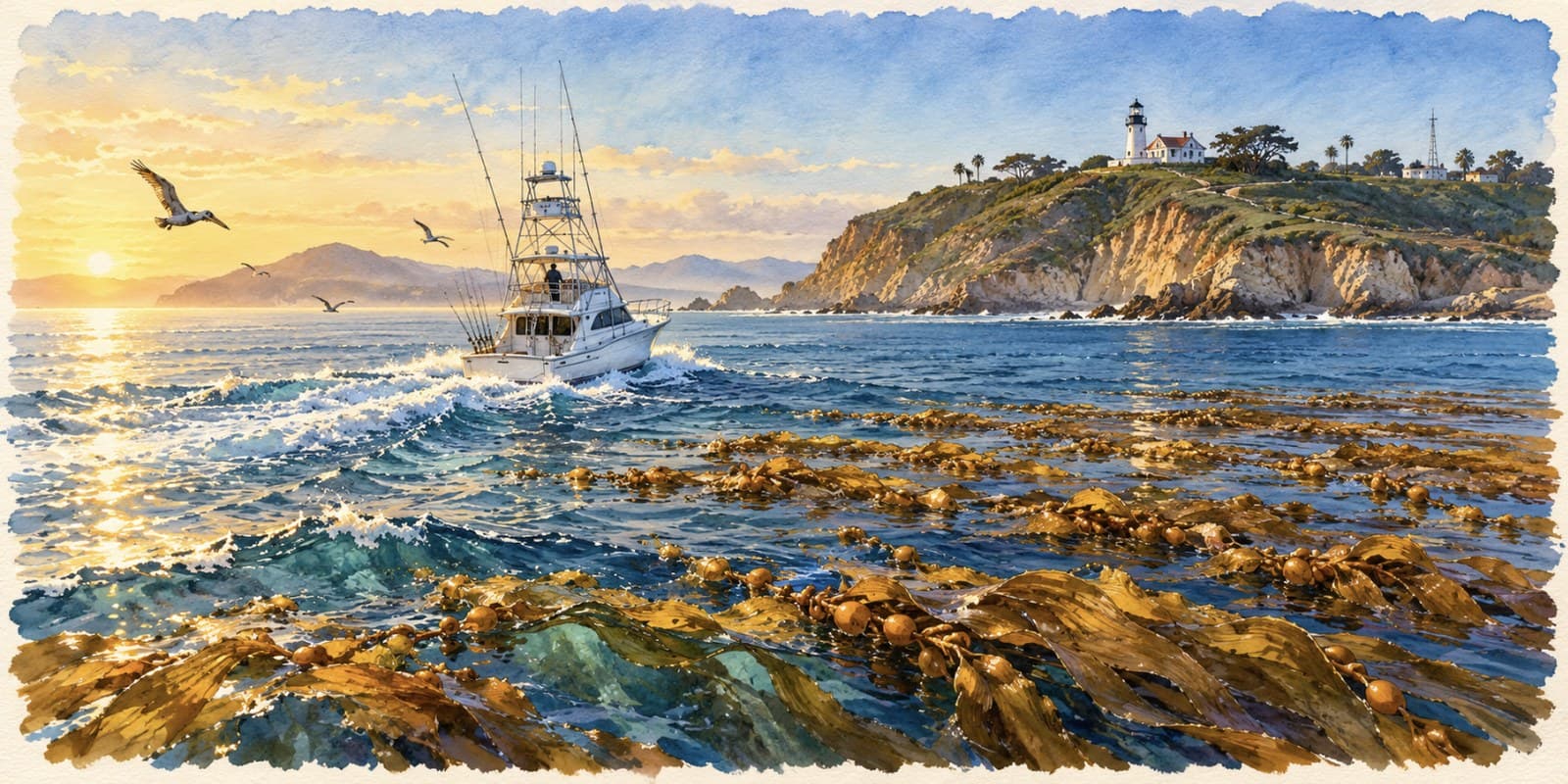
When the three-quarter-day boats leave the coast, Catalina is where they usually go. The island's kelp, points and boiler rocks are classic structure water, and in the warm months they hold yellowtail, calico and white seabass.
Yellowtail relate to structure and current. Work the up-current side of points and the outside edge of the kelp, and watch for birds and bait. The post on yellowtail and structure covers that habit in more detail, and the guide to surface and yo-yo iron covers which jig to throw when they show.
The crossing is open ocean. Wind and swell can make a calm morning at the harbor into a rough afternoon in the channel, so check the NOAA marine forecast before you go and watch it through the day.
The offshore banks
Beyond the island and the coastal edge sit the offshore banks, high spots in deep water where current pushes bait up. The 14 Mile Bank is one well-known Newport destination. In a warm year these are where yellowfin, bluefin and dorado show on the summer and fall push, along with yellowtail on kelp paddies. The same banks, the 14 Mile among them, hold marlin in a warm summer; see when and where marlin show up.
This is the most variable fishing out of the port. Some summers the warm water and the tuna come close enough for full-day and even half-day boats. Some summers they barely reach the area at all. The guides on fall yellowfin and fishing kelp paddies for dorado cover how to read that water when it arrives.
Newport through the year
The shape of a Newport season, in broad strokes:
-
Spring. The bay and coastal fishing wake up as the water warms. Calico start biting harder in the kelp, halibut move across the flats, and the first island trips go out when conditions allow.
-
Summer. The sand bass spawn on the flats is the headline. Calico are at their best, Catalina fishes for yellowtail, and the offshore game starts if the warm water arrives.
-
Fall. The offshore season peaks on the warm push into fall, if it comes at all, and the island can still produce. Coastal bass slow as the water cools.
-
Winter. The fleet leans on bottom fishing and sculpin when the rules allow, and a good share of the boats turn to whale watching for the gray whale migration, which passes the Orange County coast from about December through April.
Where Fish or Pass fits
Newport gives you more choices than most ports in a single morning, which is exactly when a conditions read helps. The Bite Score weighs things like water temperature, bait, kelp, recent landing reports and sea conditions into a verdict of Catching, Fishing or Pass, for each species on each grounds. You can see how that works on how it works.
It can tell you that the flats are warm enough for the bass, or that the water offshore has cooled out of range. It cannot pick the bait, read the wind for you, or make a fish bite. Use it to choose the day and the grounds, then make your own call at the dock.
Before you go, check the current CDFW ocean fishing regulations for size, bag and season rules on every species you plan to keep. If you are weighing ports, Dana Point to the south and Long Beach to the north share some of the same water. Our guide to fishing out of Dana Point covers its kelp and the run to San Clemente Island. Our guide to fishing out of Long Beach covers the breakwater and the Huntington Flats, which Newport's boats fish too.