Rockfish tackle looks simple. A sinker, a couple of hooks, some squid. But the difference between the angler who fills a sack and the one who spends the day retying is almost always in the rig: how the hooks stand off the line, how heavy the sinker is, and whether the line lets you feel the bottom from a few hundred feet up.
This is a plain-language guide to the gear a Southern California rockfish trip runs on, from the dropper loop to the descending device you are now required to carry. It assumes you know the fish. If you do not, the rockfish species guide covers who they are and where they live, and our Southern California rockfish guide covers depth and seasons.
The dropper loop: the knot the rig is built on
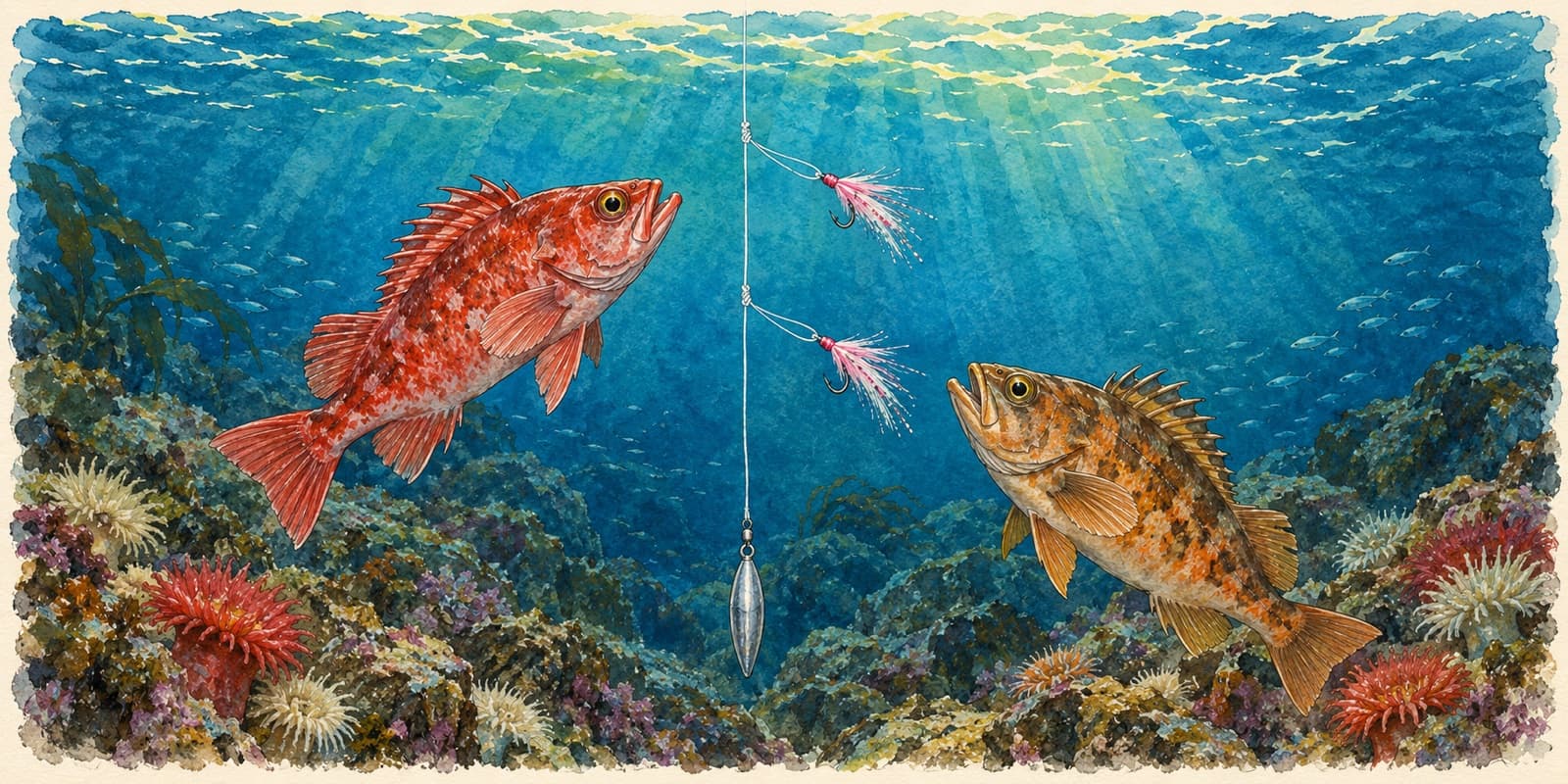
A rockfish rig is a length of leader with a sinker on the bottom and one or two hooks standing off it. The dropper loop is the knot that makes those hooks stand off. It ties a loop into the middle of the line without cutting it, and the loop sticks out at right angles instead of lying flat against the leader.
That matters for two reasons. A hook that stands away from the line tangles less on the drop and swings naturally in the current. And a rig with no swivels or hardware in the middle has fewer weak points and fewer places to snag the rock.
To tie one:
-
Form a loop in the leader where you want the hook, about the size of your palm.
-
Twist one side of the loop around the other several times, so the line wraps around itself above and below the loop's center. Six to eight wraps is plenty.
-
Open a gap in the middle of the twists and push the top of the loop through it. A finger or a pencil holds the gap open.
-
Hold the loop and pull both ends of the leader slowly. Wet the line first. The twists gather into a neat barrel and the loop stands out from it.
You can slide a hook or a shrimp fly onto the loop with a loop-to-loop connection, or cut one side of the loop to leave a single dropper leg and tie the hook to it. Space two droppers far enough apart that their hooks cannot reach each other.
California sets a hook limit when you fish for groundfish. Check the CDFW groundfish regulations summary before you tie more than a couple of droppers into one rig.
Shrimp flies and bait
The two things that go on those hooks are shrimp flies and bait, and most rigs use both.
Shrimp flies are small, bright flies tied on a hook, often with a bit of flash and a soft body. Rockfish eat them on the drop, on the bottom and on the way up. Many come pre-tied on a multi-hook leader. Many of those leaders carry more hooks than the California groundfish rules allow, so check before you fish one and cut it down if needed.
Bait sweetens the deal. Squid strips are the standard. They are tough, they stay on the hook through a lot of bites, and they put scent in the water. Cut them long and narrow so they flutter. Other common choices:
-
Small whole squid on a single larger hook, for bigger fish.
-
Cut mackerel or sardine, oily and strong-smelling.
-
A strip of squid on the shrimp fly itself, which combines flash with scent and is how a lot of rigs get fished.
Change bait when it gets washed out. A white, shredded strip catches a lot fewer fish than a fresh one.
Sinkers: match the depth and the drift
Sinker weight is not about the fish. It is about getting the rig to the bottom and keeping it there while the boat drifts.
The rule is the same one that applies to a yo-yo jig: use enough weight that your line stays close to straight up and down. If your line is scoping out at an angle far behind the boat, you are too light. You will not feel the bottom, you will snag more, and you will tangle with the people next to you.
Shallow reef on a calm day may need only several ounces. Deep banks with wind and current pushing the boat can call for a pound or more. Torpedo-shaped sinkers fall straight and pull out of rock better than round ones. Many boats ask everyone to fish the same weight so lines stay together, so ask the crew what they are using.
Bring spares. You will lose sinkers to the rock. A sinker tied to the rig with lighter line than the main leader breaks off when it snags and saves the hooks above it.
Rod, reel and line
The job of a rockfish outfit is to feel the bottom, set the hook, and lift fish from deep water without wearing you out.
-
Rod. A medium-heavy conventional rod with a sensitive tip and enough backbone to lift a lingcod off the rock.
-
Reel. A conventional reel with enough line capacity for deep drops and a gear ratio that brings the rig up without taking forever.
-
Line. Braid is the standard for deep bottom fishing. It has almost no stretch, so you feel every tick of the sinker and every bite, and its thin diameter cuts through current with less belly than monofilament of the same strength. Tie the rig to the braid with a short leader of heavier monofilament or fluorocarbon, which takes the abrasion from the rock.
Landings rent rods and reels already rigged for rockfish. If you are buying, start with what the boats you ride fish.
Lingcod tactics
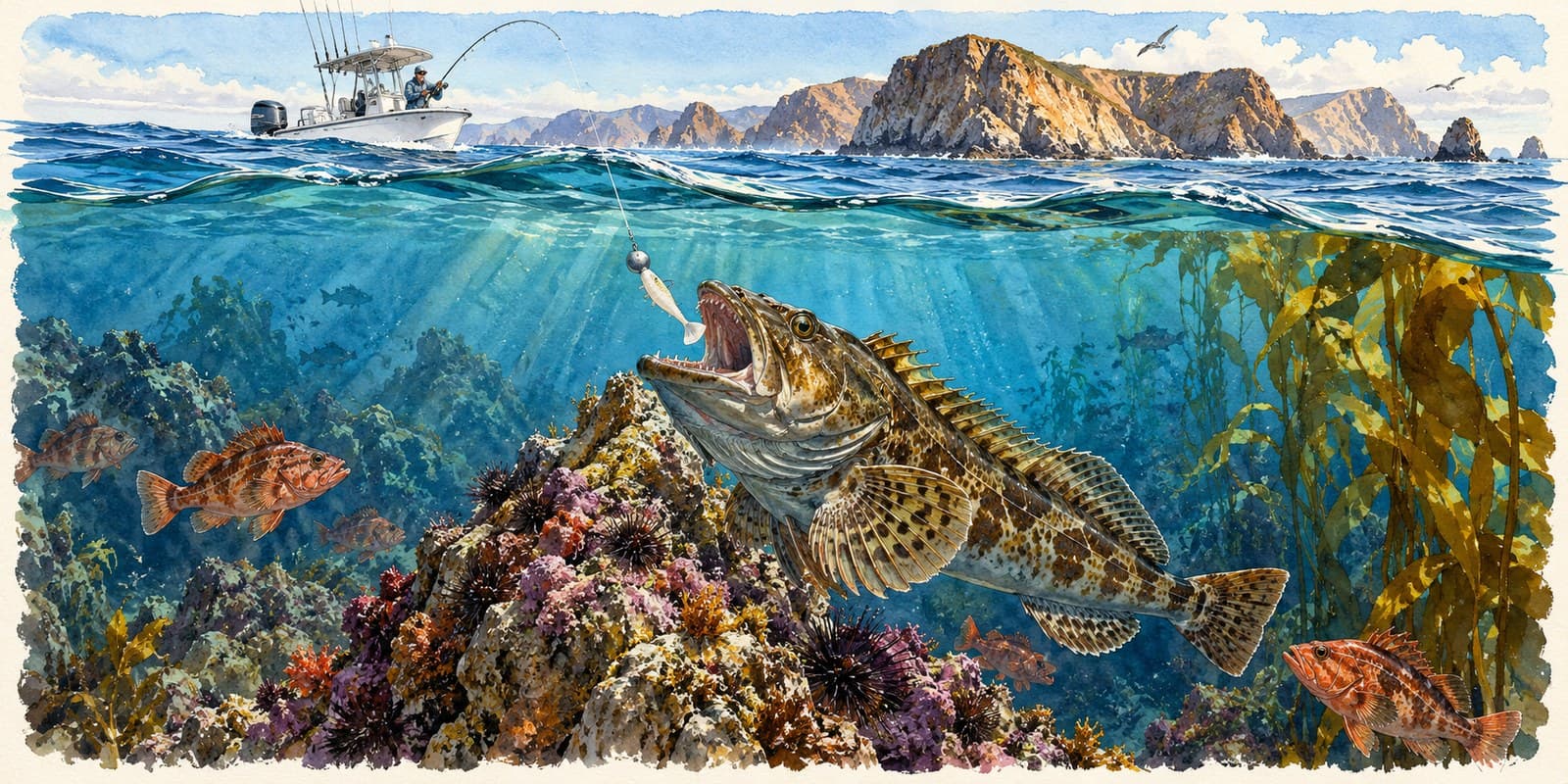
Lingcod live in the same rock and eat the same fish, but they want a bigger meal. Most rockfish trips catch a few by accident. You catch more on purpose, and our guide on how to catch lingcod with swimbaits, jigs and live bait goes deeper than the list below.
-
Swimbaits on a leadhead. A large soft plastic on a heavy jighead, bounced along the bottom and lifted in short hops. Lingcod hit it hard on the fall.
-
Heavy jigs. A heavy metal jig worked near the bottom takes lingcod along with rockfish.
-
Live bait. A live mackerel, sardine or small fish on a dropper or a sliding sinker rig is hard for a lingcod to pass up.
-
The hitchhiker. A lingcod will often grab a rockfish you are already winding up. Keep steady pressure and do not stop. They often let go at the surface, so have a gaff or net ready before the fish is in sight.
Lingcod have a separate bag and size limit from rockfish. Measure before you keep one.
The descending device: part of the rig now
A descending device is required aboard any boat fishing for groundfish in California. It belongs in the tackle bag next to the sinkers, rigged and ready.
Rockfish brought up from depth suffer barotrauma. Their swim bladders expand, their eyes bulge, and they float on the surface. Returned to depth, many recover. A descending device grips the fish by the lip or holds it on a barbless hook and lets you lower it on a weighted line, then releases it at depth. CDFW recommends descending over venting, which commonly injures or kills the fish.
Some devices clip into your fishing line above or below the hooks, so you can descend a fish without a second rod. If you use a separate line, CDFW rules say it may carry only the device and no hooks. The CDFW barotrauma and descending device page shows the commercial and homemade options.
Where Fish or Pass fits
The Bite Score grades the rockfish grounds each day as Catching, Fishing or Pass, weighing the habitat, depth, sea conditions and recent landing reports. A calm, readable drift and a good score make every rig on this page fish better. The score cannot tie your dropper loop or pick the right sinker for the drift, and it cannot make a fish bite.
Before you go, check the current CDFW ocean fishing regulations for the season, depth rules and gear rules that apply.