How the Bite Score works
One honest number, built from everything we can read about the water. A good captain reads a handful of signs. Fish or Pass reads all of them: decades of ocean records, the fishery's history, live satellite and buoy data, the seafloor, and how each species actually behaves, and folds it into a single Bite Score and a one-word verdict for every patch of water. You can see some of the signals below.
What every Bite Score weighs
Tap any cell in the demo to see which of these drive a read. We tell you what goes in. How each one is weighed, species by species, is the part we have spent two years working out.
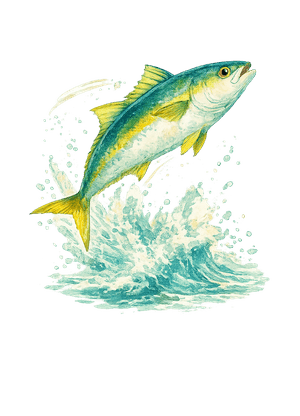
Recent activity
How the fishing's been going lately in water you can reach: one signal of six, a nudge on the score, never the whole story.
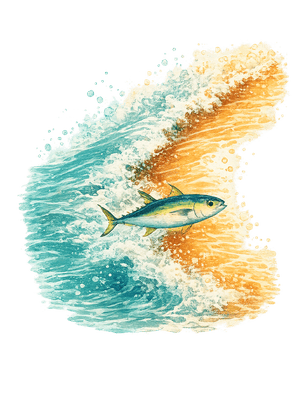
Water temp & breaks
Ocean temperature against each species' comfort zone, plus the sharp temperature edges pelagics stack on.
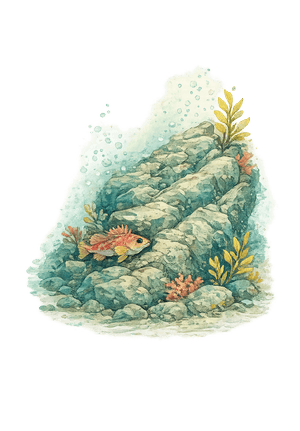
Structure & depth
The seafloor a species lives on: banks, canyon edges, and the depth band it holds in.

Kelp & bait
Standing kelp, paddies and bait marks, where calico and yellowtail set up.
Sea conditions
Swell and wind at every cell, scored as the water and never as your boat. One ocean, one score, the same for every hull.
Tide & current
The day's tidal exchange and the current running over the piece: how much water is moving, and whether that suits the fish you are after.
Three words, so you can decide in a glance
The 0–100 Bite Score rolls up into one call for the water you're looking at.
The best water out there for this fish, the kind the whole fleet knows about. We hold this word back on purpose, so it means something when it shows up.
Good water with the species around: the right conditions, reports nearby, structure worth running to. A grind-it-out, earn-your-fish kind of day.
Bad water, or water this species simply wouldn't be in. Often the smart money is to save the fuel and the alarm.
Where Catching and Fishing begin on the 0–100 score is set per species, and moves with the day. A marlin day and a calico day are not read against the same bar, because the two do not score on the same scale: each species has its own ceiling, and its scores bunch up differently underneath it. The lines are placed so the word means the same thing either way, which is that Catching is the best water out there for that fish and Fishing is the tier below it. One flat number for both would call one of them wrong every time.
…and a confidence, so you know how much to trust it
Every read also carries a confidence, how much real data stands behind it. Fresh reports and clear satellite passes close to port read high; thin data far offshore reads low. Confidence never inflates the score. It just tells you how firmly to lean on it.
Real sources, refreshed daily
We ingest the ocean
Sea-surface temperature and breaks, chlorophyll, swell & wind, tides and surface currents, real bathymetry, kelp canopy, and the day's dock & captain chatter: from NOAA, CoastWatch, CDFW, SCCOOS, Open-Meteo and more.
We weigh it per species
Bluefin live on the break; calico live in the kelp; rockfish are about structure. Each species has its own temperature band, depth and structure weighting, tuned against years of how this coast fishes.
You get one read, by area
Every patch of water gets a Bite Score, a verdict and a confidence, tuned to the range you can actually reach and safely fish today.
What the score can't know, and we'll tell you
A satellite pass can be cloudy, reports lag, and fish move: so Fish or Pass is a conditions report card, not a guarantee, and not a safety or navigation tool. Every read carries a confidence indicator; always check official NOAA marine forecasts and use your own judgment before you head out. The longer version →
What the signals mean depends on the fish and the ground
A temperature break is everything to a bluefin and almost nothing to a rockfish, and a bank that fires in July can be dead in November. The guides carry that part, fish by fish and port by port.
Bluefin Tuna · Yellowfin Tuna · Yellowtail · Dorado · Calico Bass · Rockfish · Marlin