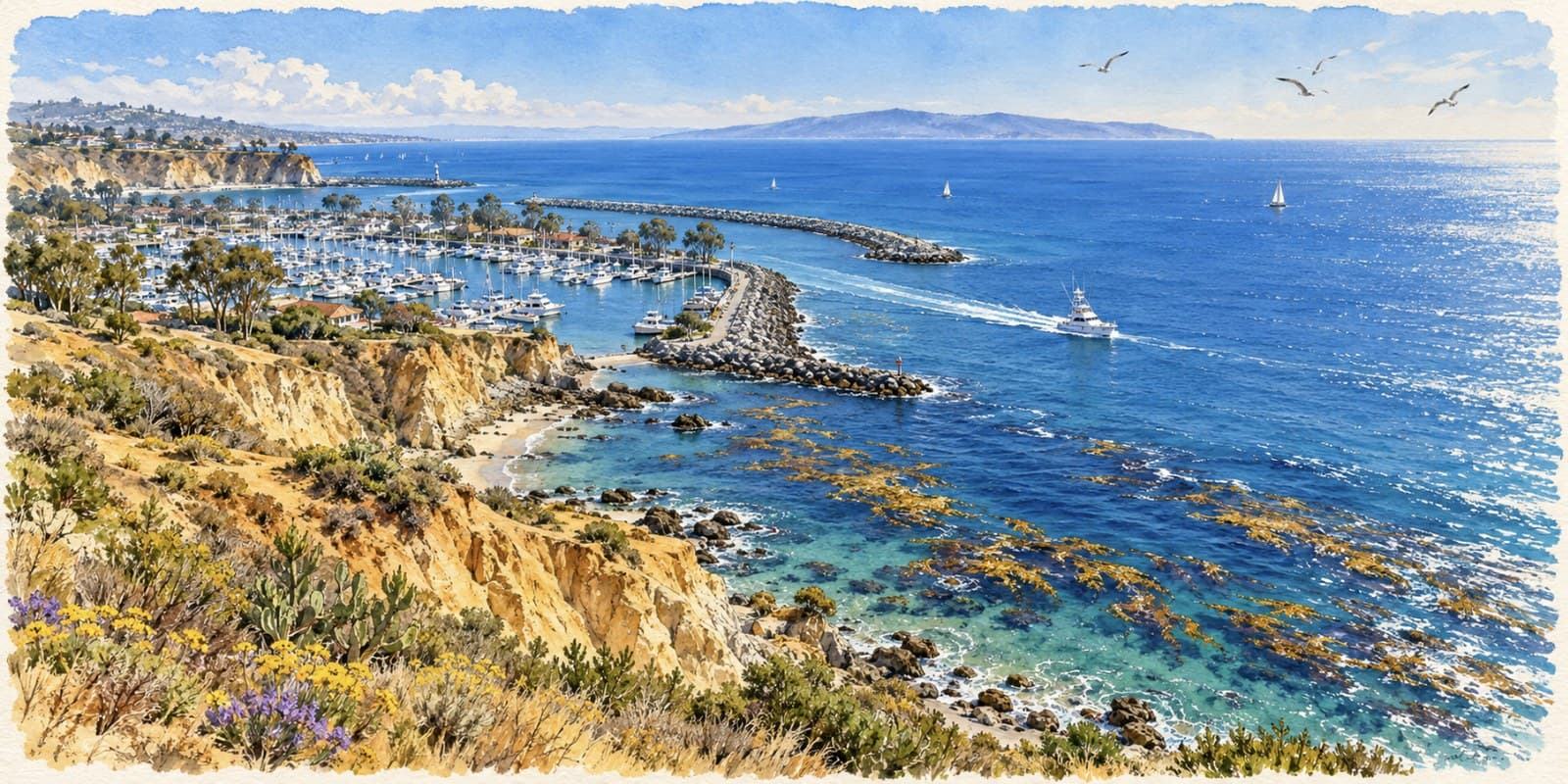
San Diego is the bottom of the Southern California Bight, and that one fact explains most of its fishing. The warm water that brings tuna, dorado and yellowtail arrives here first and leaves here last. The Coronado Islands sit a short run south of the harbor mouth. Kelp, a deep canyon and a string of offshore banks are all within a day's reach. No port in the state gives you more choices in a single morning.
This is a guide to fishing out of San Diego's Point Loma landings: who sails from where, the grounds the boats work, and how the year usually goes. For the port at a glance, see the Point Loma port guide.
The landings
San Diego's party-boat fleet sails from two bays.
San Diego Bay. Three landings sit close together on the Point Loma side of the bay, near Shelter Island.
- Point Loma Sportfishing runs half-day trips to the local kelp beds, plus private charters to the islands and the outer banks.
- H&M Landing runs one of the biggest fleets on the coast, with trips from half days up to multi-day runs.
- Fisherman's Landing is best known for long-range boats that leave for a week or more down the Baja coast.
Mission Bay. A few miles up the coast, Seaforth Sportfishing runs half-day, three-quarter-day, Coronado Islands, offshore and multi-day trips out of Quivira Basin.
The long-range fleet is its own world and fishes well outside the Bight, so it is not what this post is about. The trips that matter for most anglers are the half days, the three-quarter days and the island and offshore runs that come home the same day or the next morning.
If you run your own boat, Shelter Island has a public launch ramp, and the bait receivers near the harbor mouth sell live bait on the way out. Ask what they have before you plan the day around it.
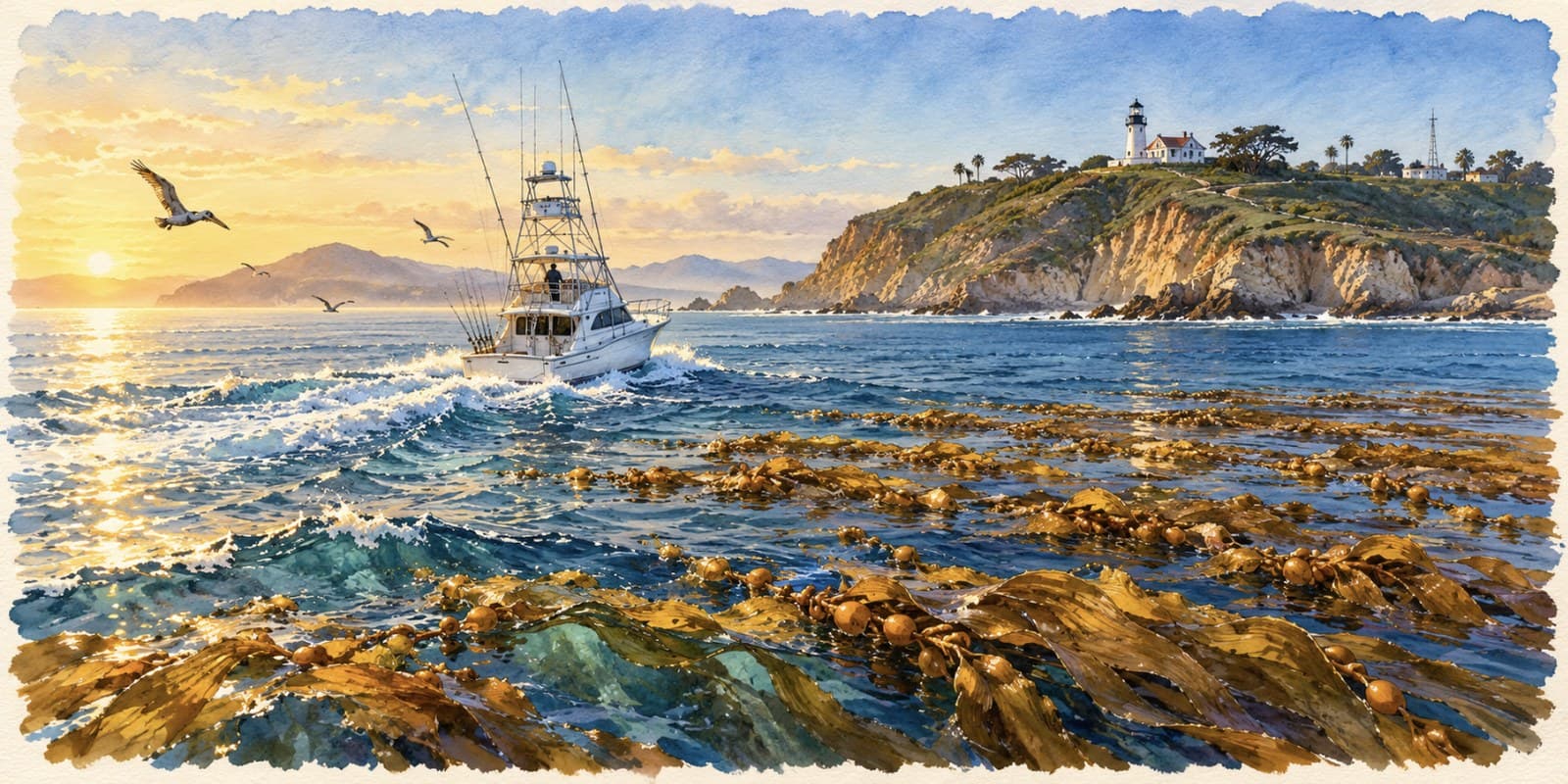
The Point Loma kelp
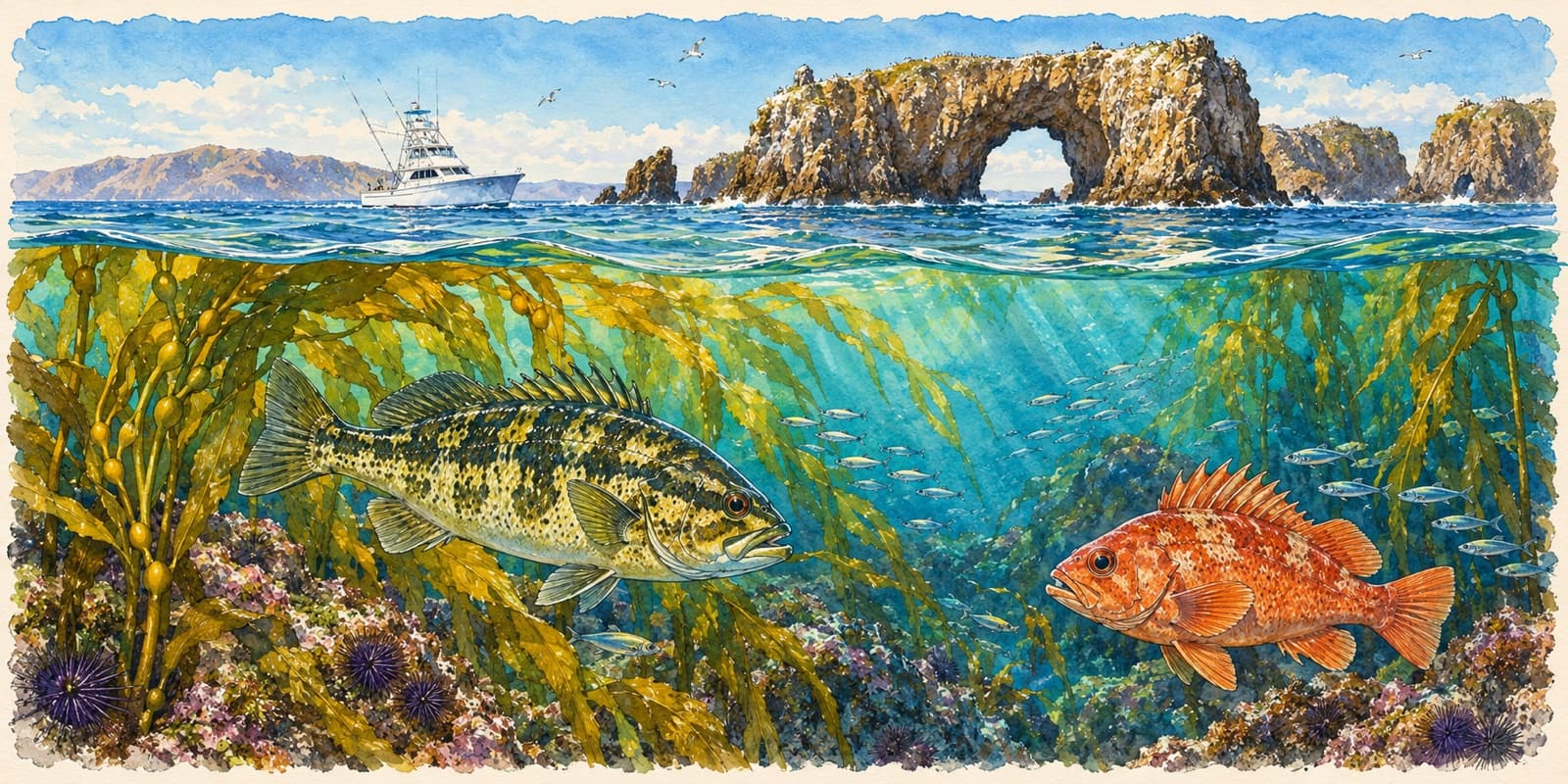
The half-day boats spend most of their time on the kelp off Point Loma and up the coast toward La Jolla. Point Loma's kelp is one of the largest beds in California, and it is home water for calico bass, sheephead, whitefish and sculpin, with sand bass and halibut on the sand around it.
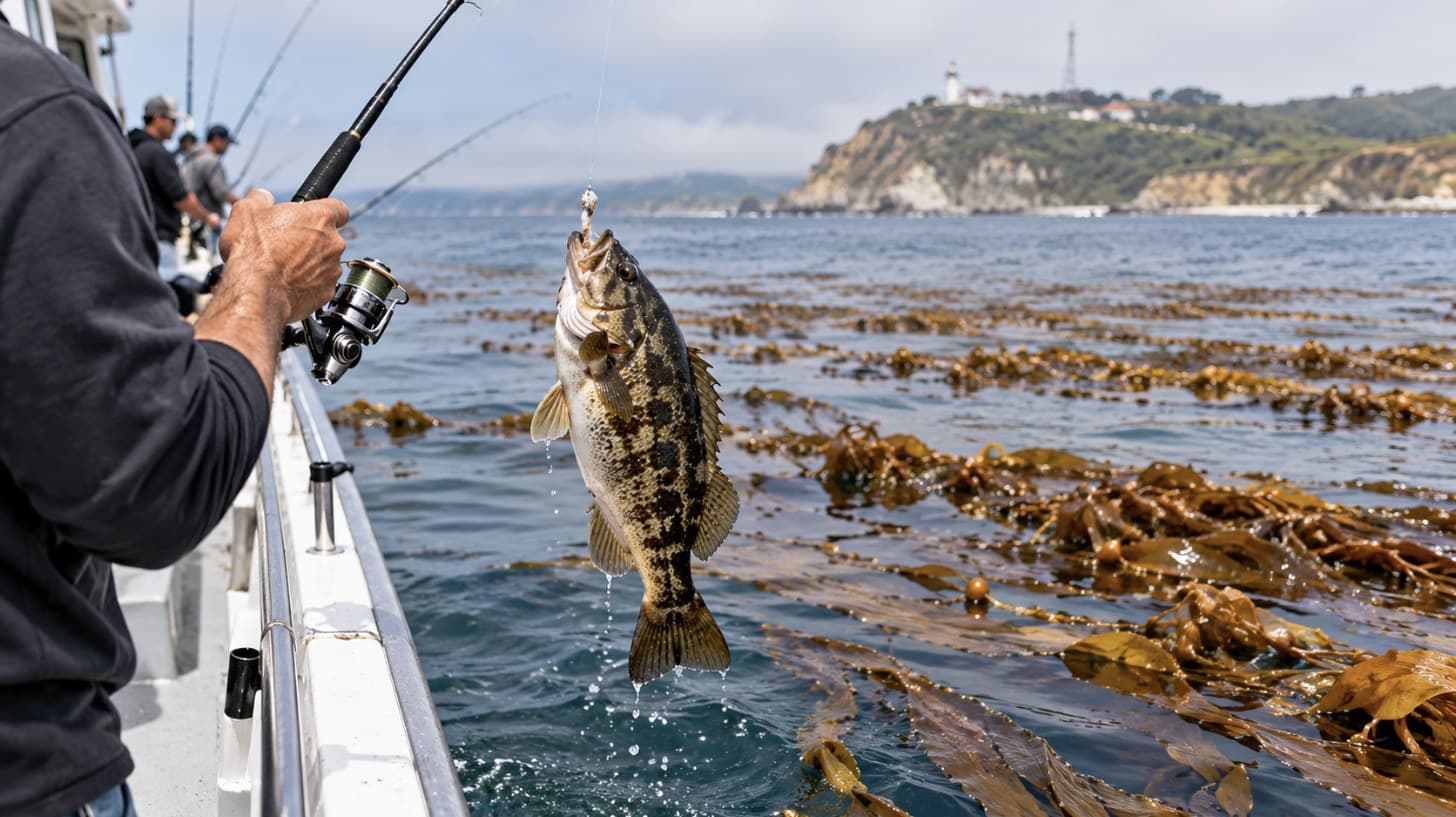
In a warm year yellowtail move onto the kelp too, and a half-day trip can find itself on fish that most ports have to run an hour for. Barracuda and bonito come and go with the warm water.
Two rules to know before you fish the point. The tip of Point Loma is inside the Cabrillo State Marine Reserve, where nothing may be taken. And the deeper reef off the kelp is groundfish water, so rockfish seasons, depth limits and which species you may keep come from CDFW, not from the calendar. Check the CDFW marine protected area maps and the CDFW groundfish rules before you drop a line.
La Jolla: the kelp and the canyon
North of Point Loma, the La Jolla kelp sits on the edge of a submarine canyon that cuts in close to shore. Deep water against a big kelp bed is a combination fish like. Yellowtail, calico, sheephead and rockfish all work this water, and squid sometimes spawn on the sand nearby, which brings white seabass with them. The post on white seabass and the squid spawn covers that link.
La Jolla also has marine reserves along its shoreline, including the Matlahuayl and South La Jolla reserves. The edges are close to good water, so know where the lines are.
The Coronado Islands
The Coronados are why San Diego's season runs longest. The islands are a short run south, they are all rock, kelp and boilers, and they sit at the warm end of the Bight. Yellowtail hold there into the cold months, later than anywhere to the north. Calico, sheephead and whitefish fill in the gaps.
The islands are in Mexico. Everyone fishing needs a Mexican fishing licence, Mexican rules apply, and what you bring home has to be legal on both sides of the line. The landings usually handle the permits for their passengers. On your own boat it is on you. Our post on why the Coronados hold the longest season goes through it in detail.
The 9 Mile Bank and the offshore banks
The 9 Mile Bank is the close-in high spot off Point Loma, and in a warm year it can hold bluefin and yellowfin within easy reach of the harbor. It also holds whitefish and sculpin on the hard bottom.
Farther out are the banks San Diego anglers know by number: the 178, the 302, the 371 and the 425. These are the offshore grounds for tuna, dorado, marlin, mako and skipjack on the summer and fall warm push, and the kelp paddies that drift over them can hold yellowtail and dorado. They are also the most variable fishing out of the port. Some years the warm water sits on them for months. Some years it barely shows.
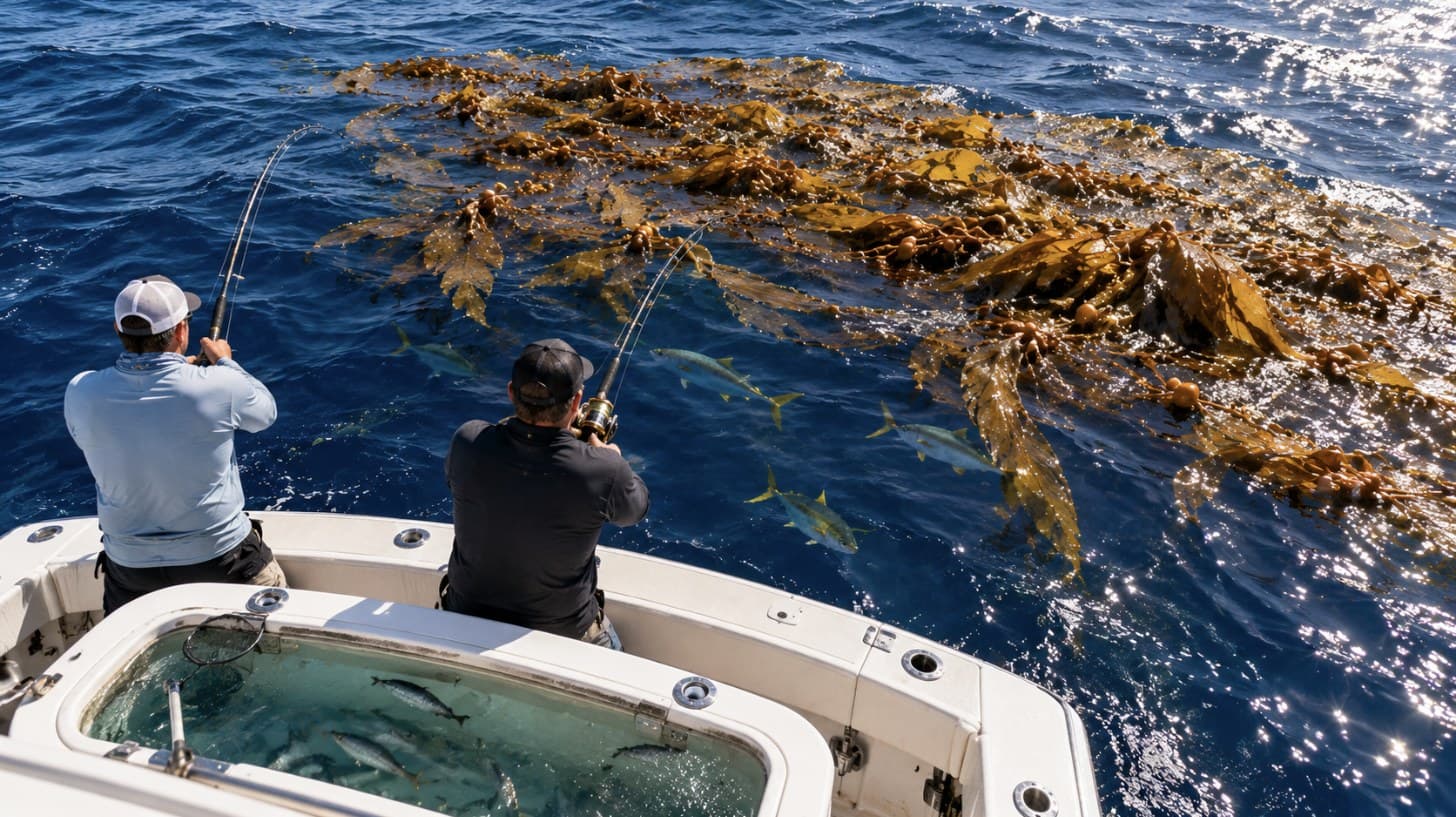
If you are new to offshore water, start with reading a kelp paddy and how to tell yellowfin from bluefin.
San Diego Bay and Mission Bay
You do not need a boat ride to fish here. San Diego Bay and Mission Bay hold spotted bay bass and halibut, and both reward light tackle and a little attention to the tide. The post on spotted bay bass on light tackle covers plastics and structure, and drifting for California halibut covers the bay flats.
San Diego through the year
Every year is different. In broad strokes:
- Spring. The kelp wakes up as the water warms. Calico bite harder, halibut move onto the shallow flats, and yellowtail start showing at the Coronados and sometimes on the local kelp.
- Summer. Everything is in play. The kelp fishes well, the islands produce yellowtail, and the offshore trips go when tuna and dorado are within range.
- Fall. The longest tail on the coast. Offshore fishing can run deep into the fall if the warm water holds, bluefin may stay after the yellowfin leave, and the Coronados keep producing yellowtail after the northern ports have gone quiet. See fall yellowfin and fall bluefin for how that usually plays out.
- Winter. The half-day boats keep fishing the kelp and the bottom, rockfish trips run when the season allows, and the islands can still give up a yellowtail on a good day. Our winter fishing guide covers what still bites from November to March.
Where Fish or Pass fits
San Diego's problem is never a lack of options. It is choosing between them before you spend the fuel or the fare. The Bite Score reads water temperature, bait, kelp, structure, recent reports and sea conditions for each grounds and gives a verdict of Catching, Fishing or Pass for the day. It can tell you the water at the 9 Mile has cooled out of range, or that the islands are still warm enough for yellowtail.
It cannot tell you whether the bait receiver has sardines, and it is not a navigation or safety tool. Check the NOAA marine forecast before any offshore or island run, and check the current CDFW ocean fishing regulations for every species you plan to keep. If San Diego's schedule does not fit, Oceanside is the next harbor up the coast.