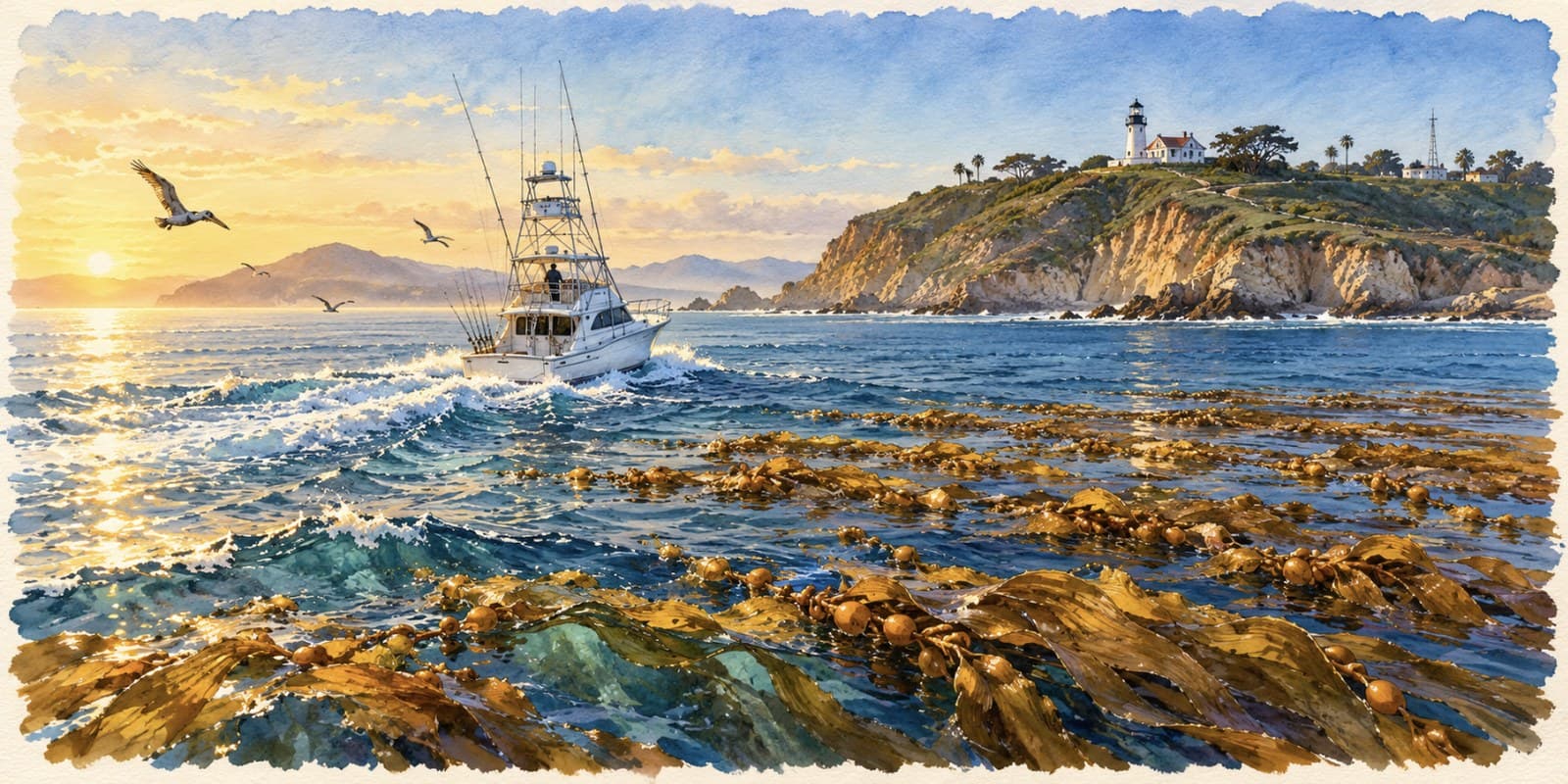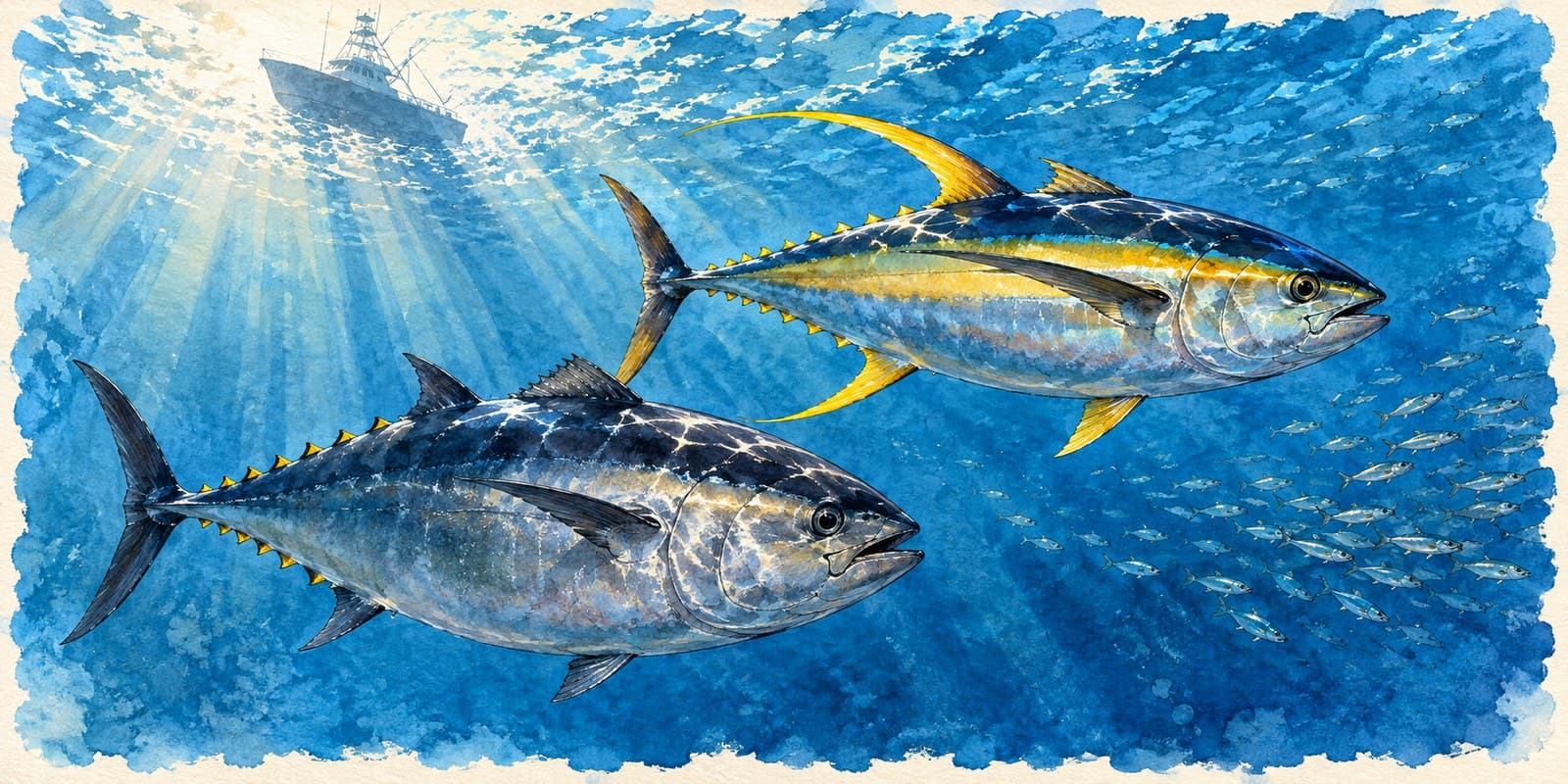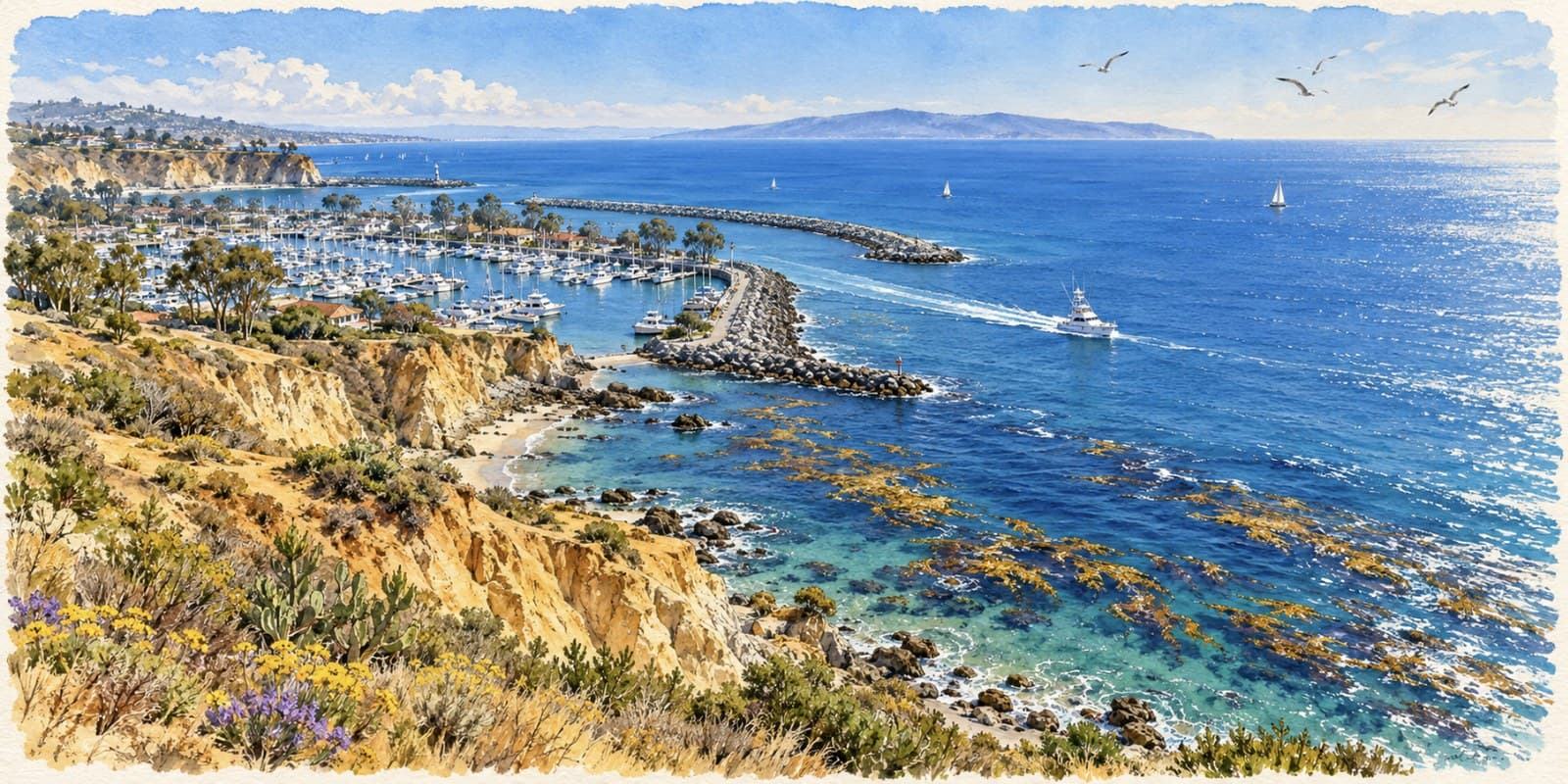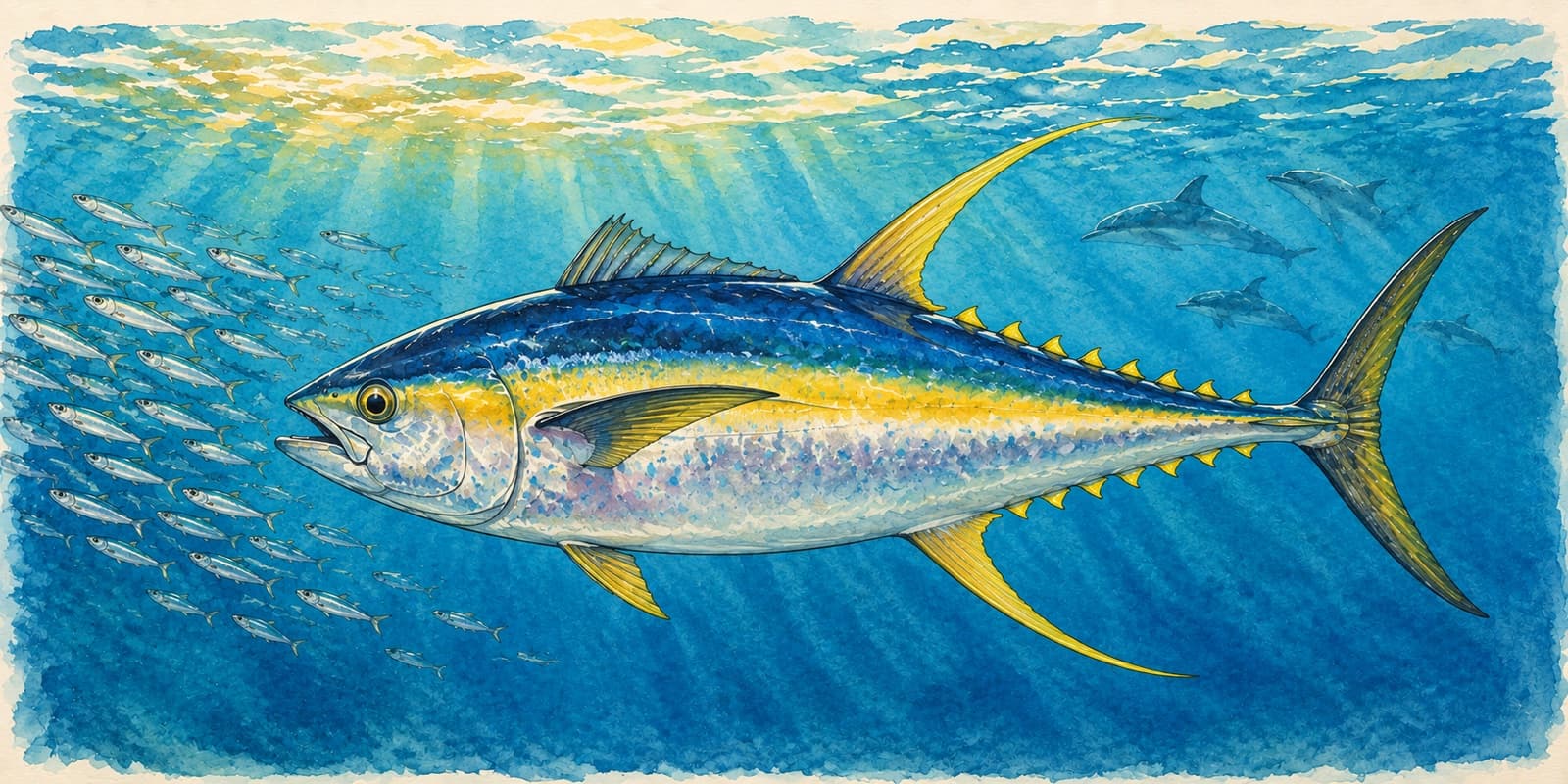
Yellowfin are the warm-water tuna of the Southern California Bight. They are the last to show up in summer and the first to leave in the fall, and in a cool year they barely show at all. October is when that clock runs out. Some years it is the best yellowfin month of the season. Some years the fish are already back in Mexico. The trick is knowing which year you are in before you burn the fuel.
This is how yellowfin behave on the fall edge, where to look, and how to tell when it is time to stop looking.
Why yellowfin come and go with the water
Yellowfin ride warm water north out of Mexico. When that water pushes into the Bight, usually in late summer, the fish come with it. When it backs off, so do they. They are far less tolerant of cool water than bluefin, which is why you can have bluefin on the outer banks all fall while the yellowfin bite falls apart.
Low 70s is yellowfin water. Upper 60s can still hold them, especially on a clean edge. Once the offshore water slides into the mid 60s, the yellowfin are usually gone or going, and you are fishing for bluefin and yellowtail instead. Those are rough numbers, not a switch. Fish do not read thermometers, but they do follow them.
What changes in October
Three things shift as fall sets in:
- The days get shorter and the surface cools. Less sun means the top layer stops warming. A string of north wind can stir up colder water and knock the surface temperature down fast.
- The warm water retreats south and offshore. The edge that sat off the 9 Mile Bank in August can be out past the 302 or below the border by mid October.
- The fish get pickier about where they sit. With less warm water to go around, yellowfin pile up on whatever edges, paddies and bait are left. That can make for a short, wide-open window right before the end.
So the question in October is not just "are there yellowfin?" It is "is the warm water still within reach of my boat, and is it holding together?"
Where to look
The fall yellowfin grounds are the offshore high spots and banks south and west of San Diego: the 9 Mile Bank, the 302, the 371, the 425, and the 43 Fathom Spot, with the outer banks like Tanner and Cortes in play for boats with the range. Most of the fleet working these grounds runs out of Point Loma, and private boats from San Diego Bay and points north fish the same water.
A lot of the best fall water sits in Mexican waters south of the border, around and beyond the Coronados. That needs a Mexican fishing licence, and the rules are different, so sort that out before you go.
On the grounds, yellowfin give themselves away a few ways:
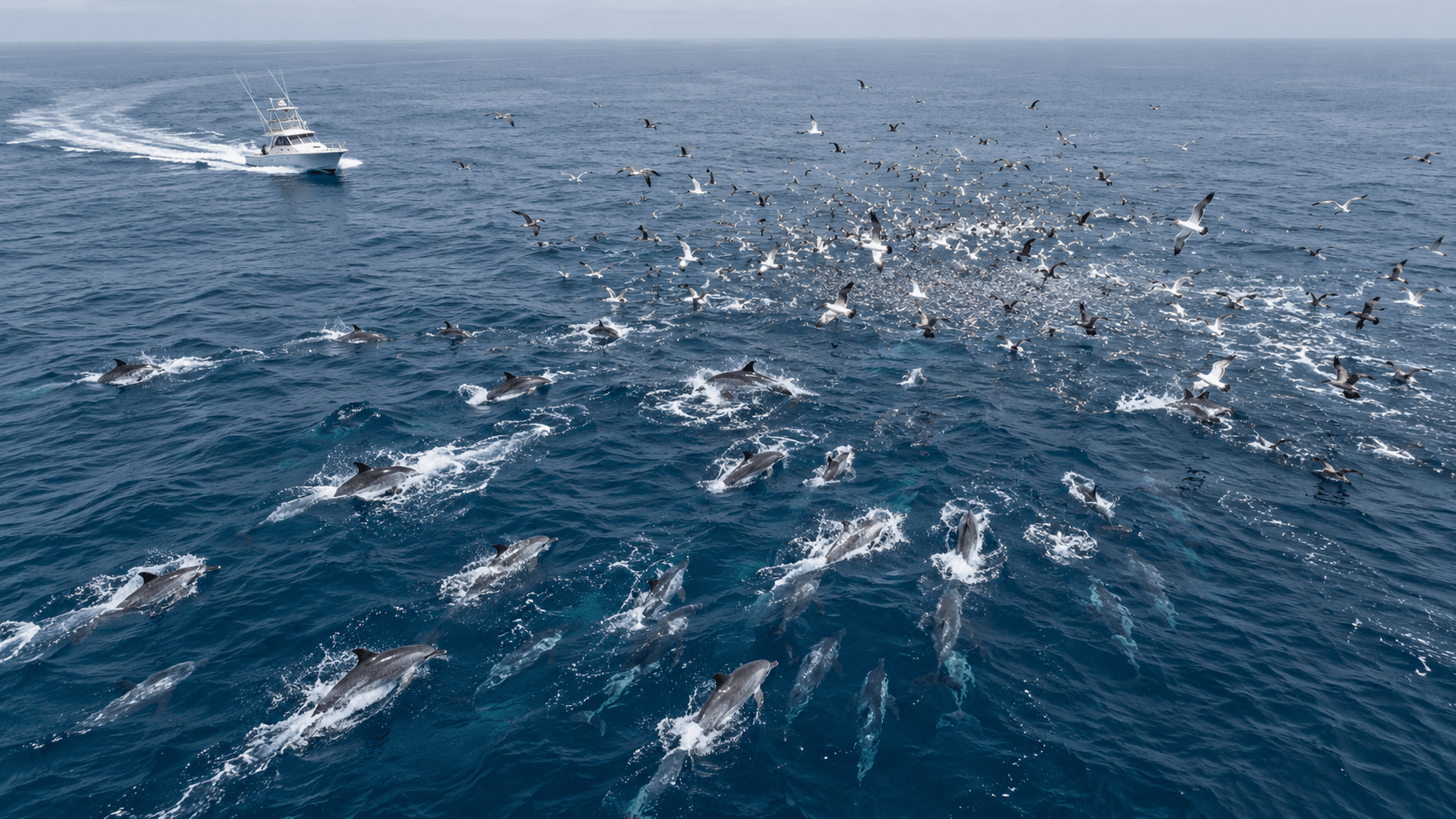
- Porpoise. Yellowfin travel with spotted and common dolphin schools. A school of porpoise moving with birds working over it is worth a hard look.
- Kelp paddies. In warm water, a good paddy can hold yellowfin under the yellowtail and dorado. We wrote up how to work one in reading a kelp paddy for dorado, and almost all of it applies here.
- Breezers and foamers. Fish feeding on the surface. Easy to spot, hard to stay on.
- Meter marks on the high spots. Fish holding deeper over structure, often early and late in the day.
How to fish them
Fall yellowfin can be fussy. Clear water, light lines and fish that have seen a few boats make for a lot of looks and few bites.
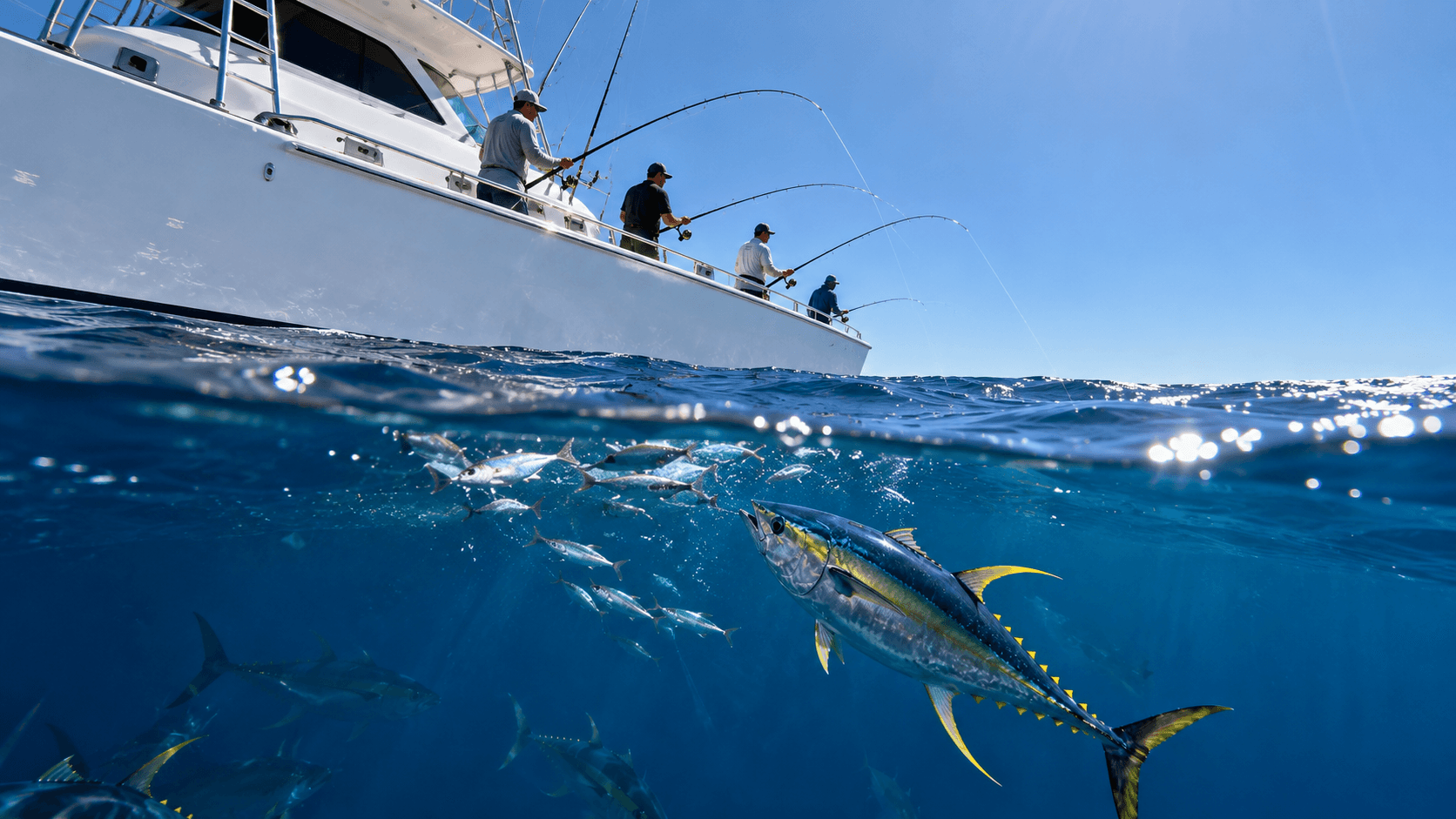
Trolling to find them. Cedar plugs, feathers and small skirted lures at trolling speed cover water until something goes off. When you get a knockdown, stop and get bait in the water fast. The rest of the school is often right there.
Fly-lined bait. A lively sardine on a small hook and light fluorocarbon is the standard. If they will not eat on heavier line, step down. If the fish are sitting deeper, add a small rubber-band sinker and let it fall.
Iron and poppers. On foamers, a surface iron or popper thrown past the fish and worked back through them can get bit when bait cannot keep up. For meter marks, a flat-fall or knife jig dropped to the marks is a good way to fish them. Our guide to picking jigs that get bit covers the iron side in more detail.
Stay on the edge. If you find warm, blue water with bait in it, work that edge rather than running around. In the fall, that edge is the whole show.
When to call it
There is a point every fall where the yellowfin are done for the year, and the reports do not always say so right away. A few signs it is getting close:
- Offshore water temperatures dropping into the mid 60s and staying there.
- The warm edge retreating south past where your boat can reasonably run.
- Reports shifting from yellowfin to bluefin and yellowtail.
- A run of north wind and cold mornings that does not bounce back.
None of that means there will never be another yellowfin. It does mean you are betting a long run on a few stragglers. Most days that is a Pass for yellowfin, and a reason to look at what else is biting.
Where Fish or Pass fits
The Bite Score weighs the things that matter most on the fall edge: water temperature and breaks, kelp and bait, recent reports from the landings, and sea conditions. It turns them into a verdict of Catching, Fishing or Pass for the grounds and the day.
What it cannot see is the porpoise school a mile off your bow or the paddy that just drifted into the edge. It reads the conditions, not the fish. On the fall edge, use it to decide whether the run is worth making, then fish what is in front of you.
Regulations
Bag limits, size limits and licence rules for tuna change, and they differ between US and Mexican waters. Check the current CDFW ocean sport fishing regulations before you go, and Mexican rules if you are fishing south of the border.