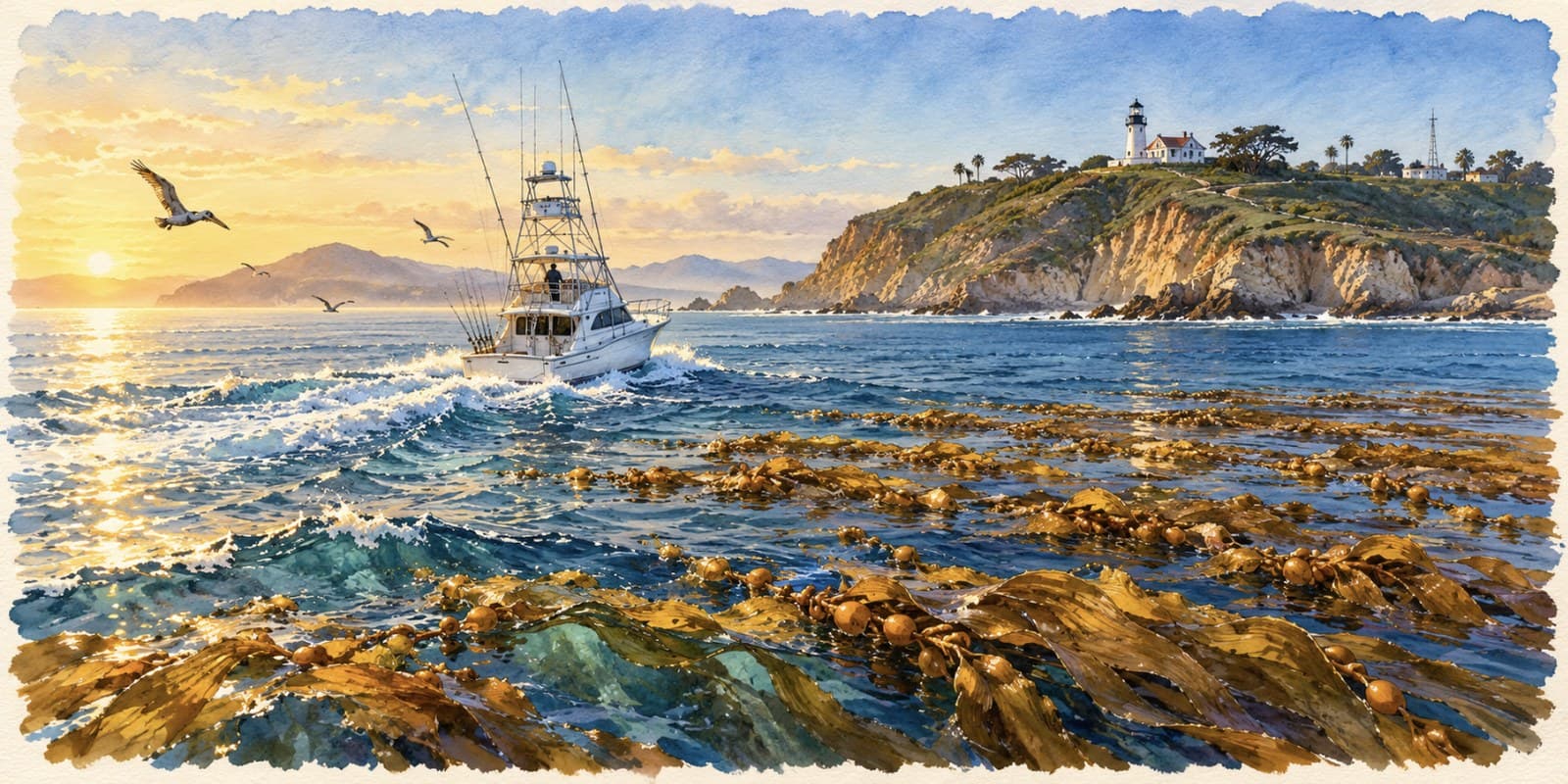
Run offshore in late summer with a few people who have fished this coast for a while, and sooner or later someone will stand up, point at a brown smudge on the horizon and say one word: paddy. The boat turns. Everyone grabs a rod.
A kelp paddy is the simplest piece of structure in the ocean and, in a warm-water year, one of the most productive. This is how to read one, how to approach it, and how to fish it for dorado without wasting the opportunity. For the fish itself, start with the dorado guide.
What a paddy is and why fish use it
A paddy is a mat of kelp that has torn loose from a bed along the coast or the islands and drifted offshore. Out in open water it is the only solid thing for a long way in any direction.
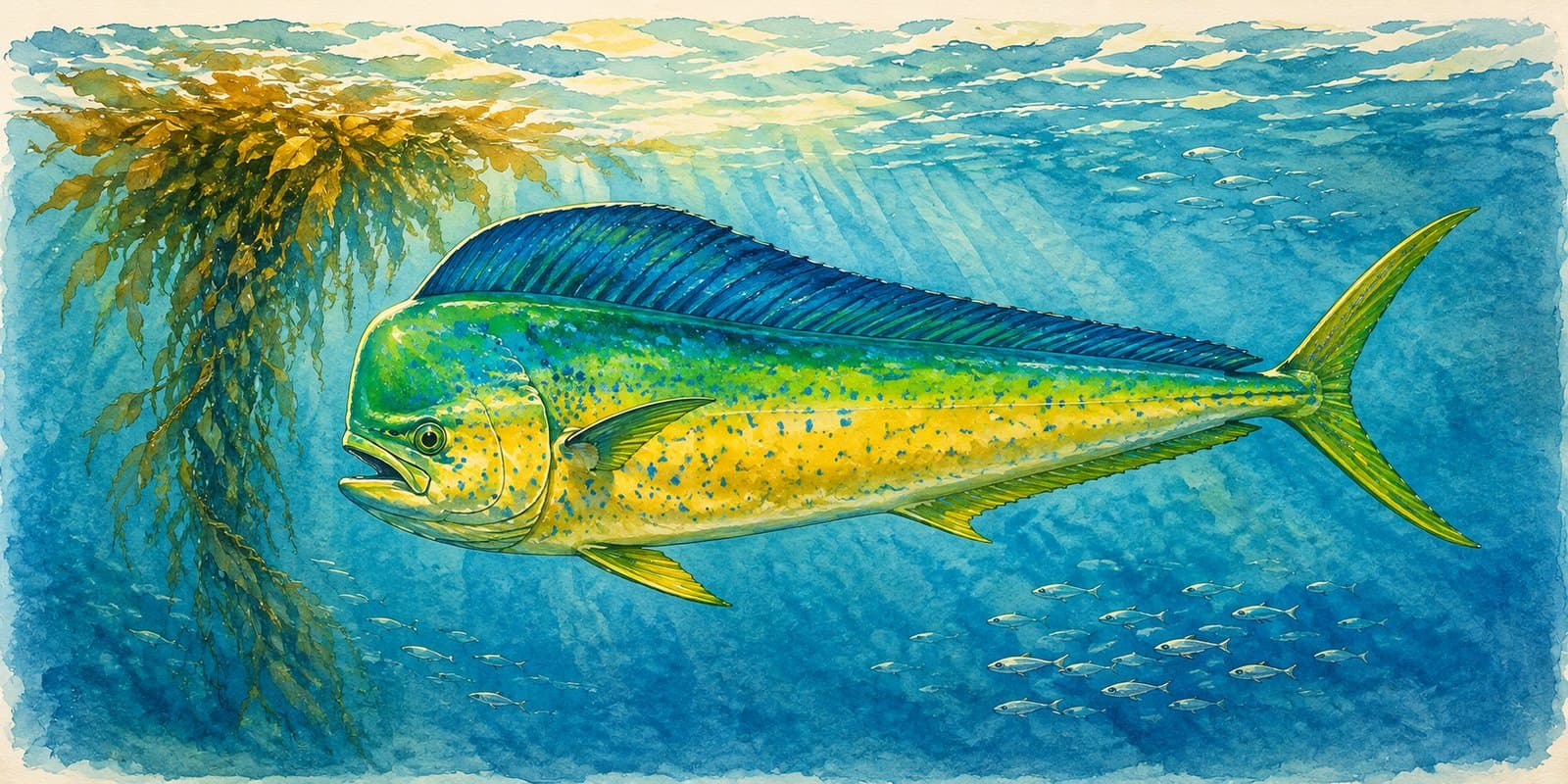
That is the whole appeal. Small fish gather under it for cover. Shade collects beneath it. Predators learn that floating objects mean food, and they check them. Dorado in particular will tuck under almost anything that floats in warm water: a paddy, a plank, a stray buoy.
The same logic is why yellowtail turn up under paddies too. Both are relating to structure, and a paddy is structure that happens to drift. The post on how yellowtail relate to structure covers that habit in detail.
Warm water comes first
Dorado are a warm-water fish. In Southern California they are a late summer and fall visitor, they like water of roughly 70 degrees and up, and they do not show every year. They ride in when the ocean is warm and fade when it cools.
So before you think about paddies at all, think about the water they are sitting in. A beautiful paddy in cool, green water is usually just kelp. The same paddy in warm, clean, blue water is worth every minute of the detour.
This is the part a conditions read can help with. Water temperature and temperature breaks are among the signals behind the Bite Score, and the page on how the score works explains how they are weighed. What no read can tell you is which paddy has fish under it today. That takes eyes.
Not every paddy is worth a stop
On a good day you may see more paddies than you have time to fish. A few things separate the ones that hold fish from the ones that do not.
- Size and age. A paddy does not have to be big, but one that has been drifting long enough to gather life is better than fresh, clean kelp. Look for bait flickering underneath and small fish around the edges.
- Birds. Terns or other birds sitting on a paddy or picking around it are a strong sign there is bait there.
- Where it sits. A paddy on a current line or a temperature break, where the water changes color or the surface changes texture, is a better bet than one in the middle of nowhere.
- Water color. Clean blue water under and around the paddy matters more than the paddy itself.
Good binoculars earn their place on the boat for this. Finding paddies, and judging them from a distance, is most of the work.
The approach decides the stop
More paddies are spoiled by the approach than by anything else.
Come in slowly and stop short. Running up on a paddy at speed, or driving over it, pushes the fish down or off it. Ease the boat in, upwind or up-current of the paddy, and let it drift toward the kelp so that your baits reach the fish before the hull does.
Give other boats room. If someone is already working a paddy, it is theirs. There will be another.
How to fish it
Dorado are not usually hard to please when they are home.
- Start with live bait. Pitch a lively sardine toward the edge of the paddy and let it swim. A bait that runs toward the kelp is doing exactly what you want.
- Have a jig ready. A small jig cast past the paddy and worked back along its edge will often draw fish out. The guide to picking jigs that get bit covers the choices.
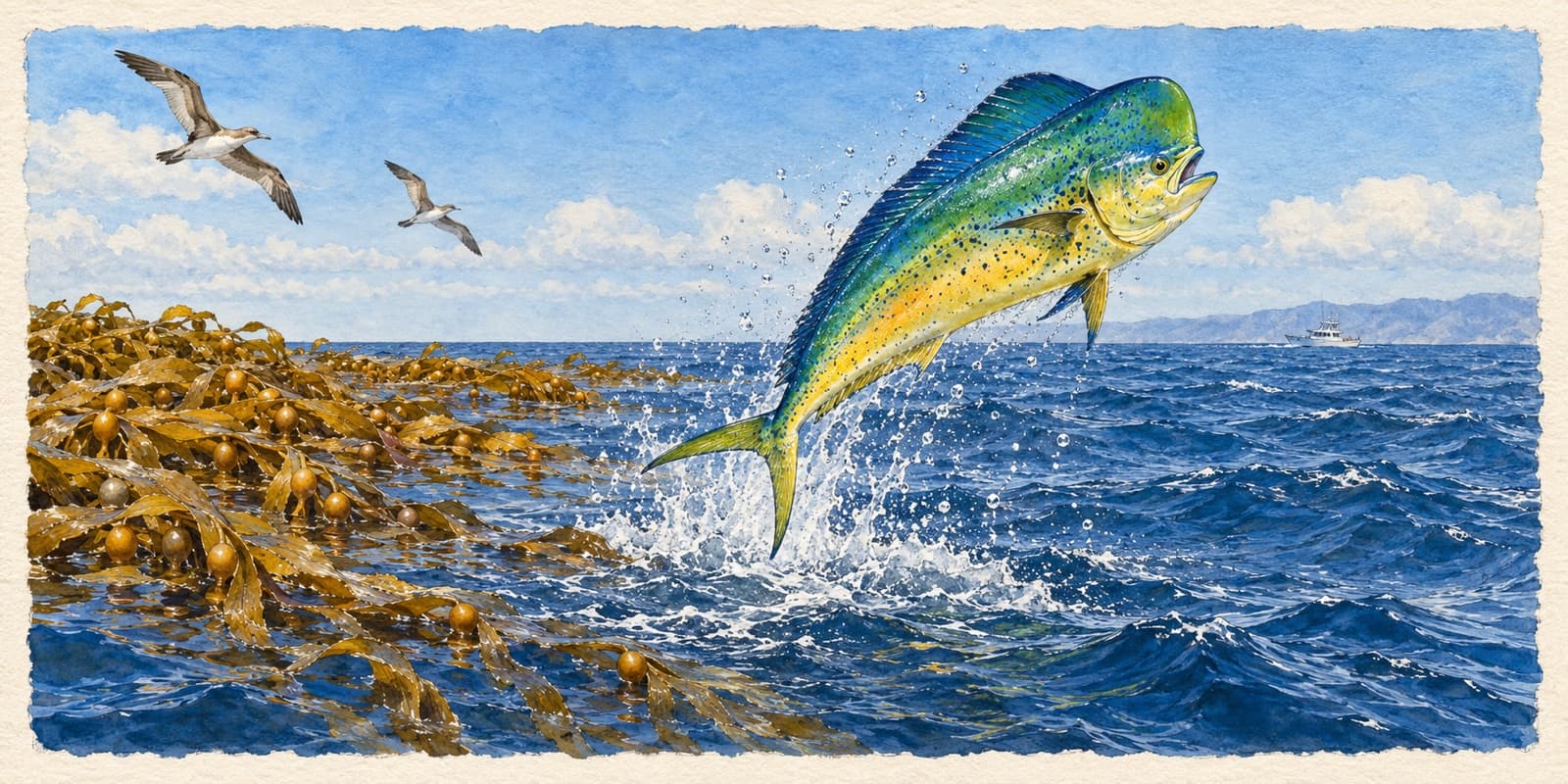
- Watch the water. Dorado often show themselves. You may see flashes of blue, green and gold coming up from under the kelp before anyone gets a bite.
- Fish light enough to enjoy it. Most of these fish run five to fifteen pounds, and they jump. There is no rock for them to reach, so you can fish lighter tackle than you would for yellowtail on a reef.
If the first drift produces nothing, look at the paddy again before you leave. Sometimes the fish are a little way off it, or deeper under it, and a second drift from a different angle finds them.
Keep one in the water
This is the piece of advice that turns one fish into several. When someone hooks a dorado, the rest of the school will often follow it to the boat. If that fish is lifted straight in, the school can lose interest and drift away. If it is kept in the water near the boat while others get baits out, the school tends to stay.
So fight the first fish to the boat and hold it there, calmly, while the next baits go in. Then take turns. Handle fish quickly, and release the ones you are not keeping while they are still strong.
Where the run starts
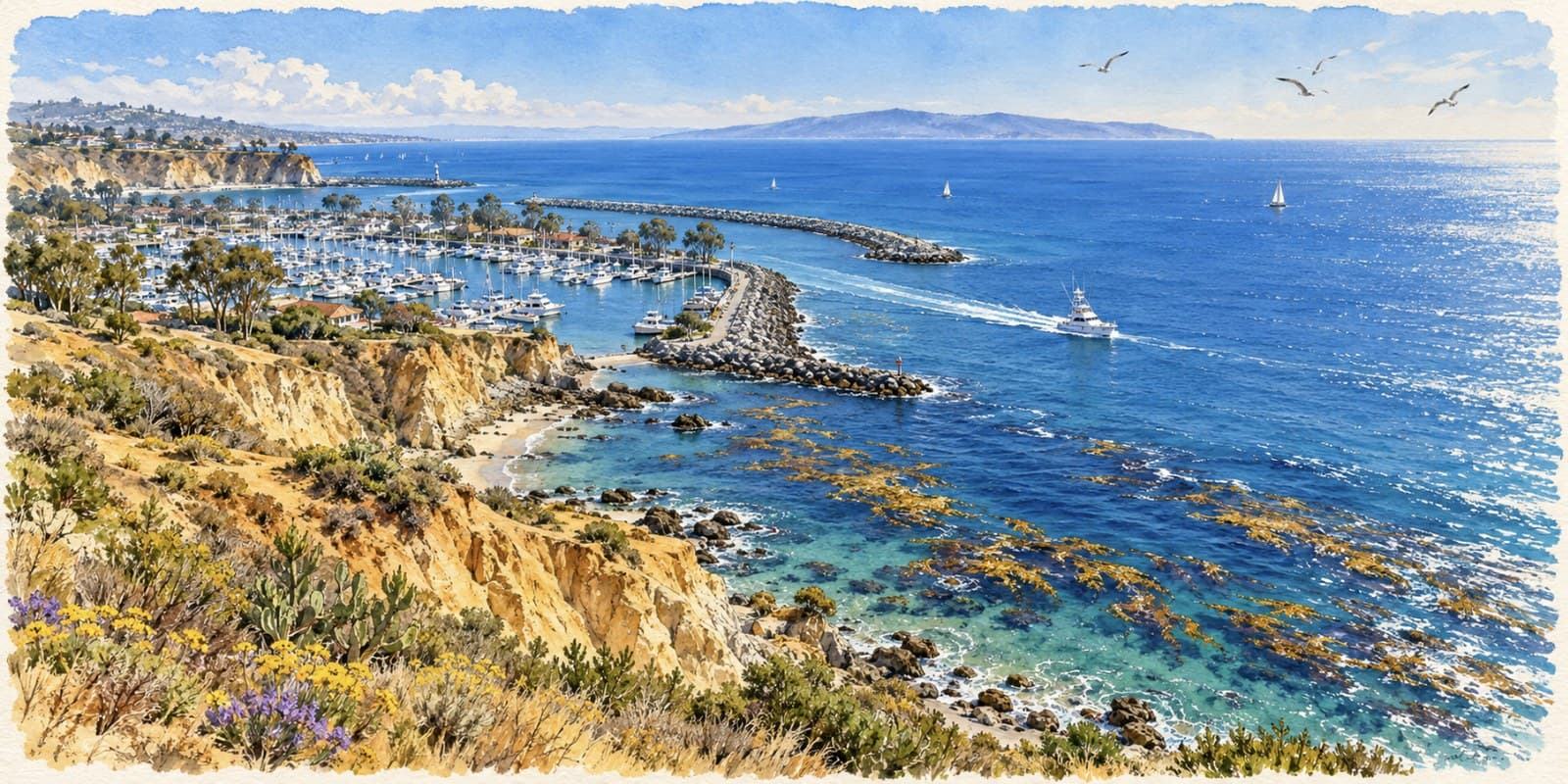
Paddy fishing is an offshore game, and in this region it is mostly a southern one. Boats out of Dana Point, Oceanside and San Diego are closest to the water that warms first, and in a good year that is where the season is longest.
It is also a long day on open water. Check the NOAA marine forecast, carry the fuel for the run you are planning plus a margin, and remember that a conditions read is not a navigation or safety tool.
What to take from this
Dorado fishing rewards looking more than it rewards any piece of tackle. Find warm, clean water. Find something floating in it. Approach quietly, fish the edges, and keep a fish in the water once you are bit.
Some years they never arrive. That is part of what makes a warm-water summer worth paying attention to. Before you go, check the current CDFW ocean fishing regulations for seasons and limits.