Calico bass are the home-team fish of the Southern California Bight. They do not migrate in from Mexico or ride a warm current up the coast. They live here, in the kelp and on the rocks, all year, and most local anglers caught their first real one within sight of the beach. The question is not whether they are around. It is whether they are in the mood.
This is a closer look at the calico bass: what they are, where they live, when they bite, how they feed, and how people catch them. It also covers why so many of them go back in the water.
What a calico bass is
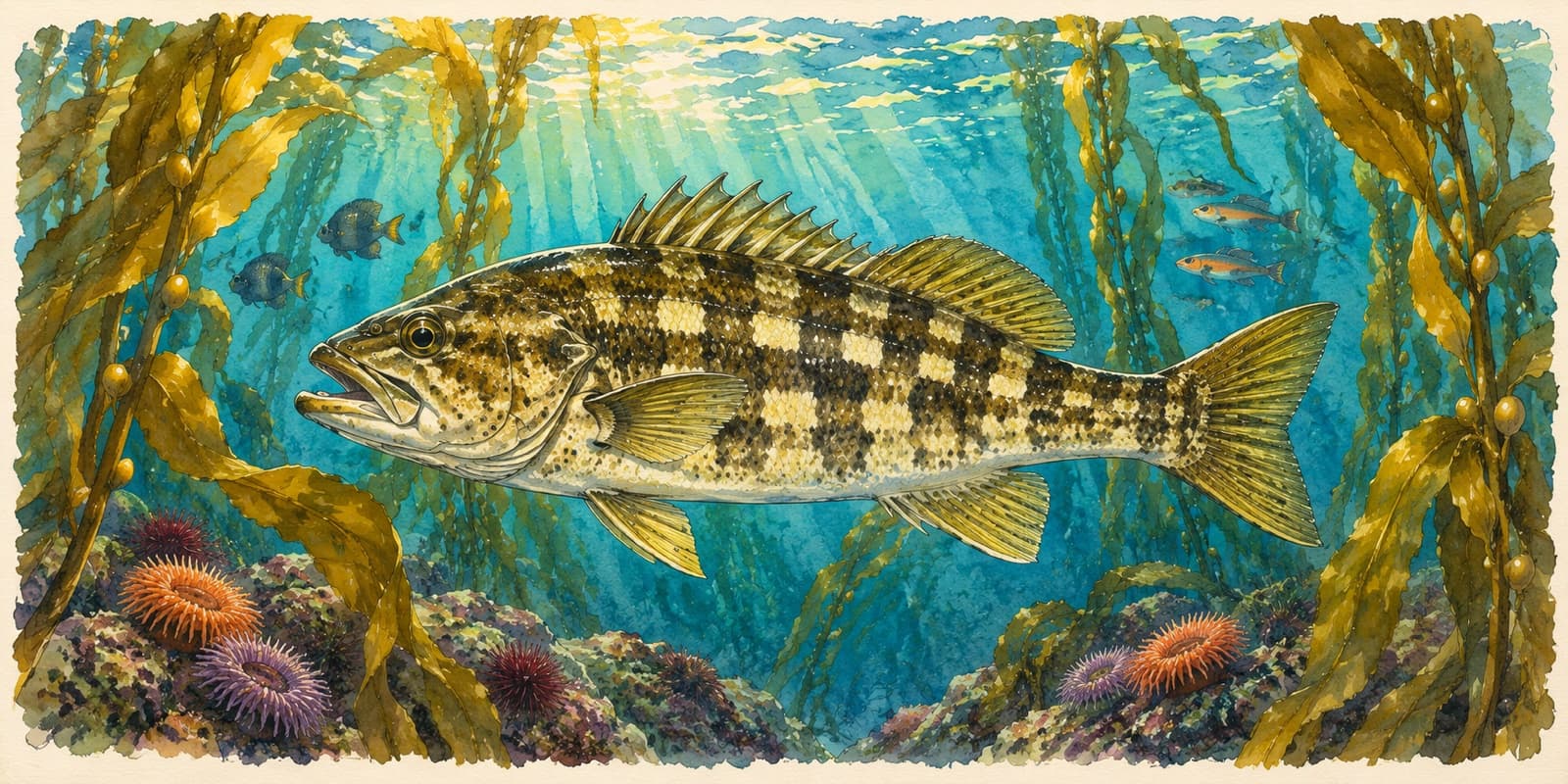
The calico is a kelp bass, Paralabrax clathratus, a member of the sea bass family that shares the coast with its cousins, the barred sand bass and the spotted bay bass. You can tell a calico by its color and its home. It is green, brown and gold, with pale blotches across the back, and it lives in the kelp and on the reef rather than out on the sand.
Most of the calicos you will catch weigh between one and four pounds. A fish over five pounds is a "grade" fish, and the big ones are old. Calicos grow slowly and can live for decades, which is the whole reason the fishery is managed the way it is.
They are homebodies. Tagging work has shown that individual fish tend to stay on the same patch of reef for long stretches. That is good news for an angler, because a spot that held fish last summer tends to hold fish again. It is also why a reef can be fished down if everything gets kept.
Where they live
Calicos want vertical structure and moving water. In practice that means three kinds of places.
-
Kelp beds. Giant kelp is the classic home. Fish hold under the canopy, along the outside edge, and in the lanes and pockets inside the bed. The edge facing the current is usually where the feeding happens.
-
Rocky reef and boilers. Hard bottom with relief, especially rocks that come close enough to the surface to make the water boil on a swell, holds fish with or without kelp on top.
-
Breakwaters and jetties. The big harbor breakwaters of LA and Long Beach are man-made reef. They hold calico close to the ramp all year, which is why half-day boats work them.
The California Department of Fish and Wildlife has named the most productive areas for kelp bass in recent decades as Point Loma and La Jolla in San Diego County, Dana Point and Huntington Beach in Orange County, Santa Catalina Island and the Horseshoe Kelp in Los Angeles County, and the Channel Islands. Add the Palos Verdes kelp to that list from the LA side.
From south to north, that maps onto the ports like this. The Point Loma fleet works the Point Loma and La Jolla kelp. Boats out of San Pedro and Long Beach fish the breakwater, the Horseshoe Kelp, Palos Verdes and Catalina. The LA and Orange County calico guide takes those harbors one at a time. The Channel Islands boats have the islands' kelp and reef. South of the border, the Coronado Islands are famous calico water too, but they are in Mexican waters and need a Mexican fishing license. The post on the Coronado Islands' long season covers that trip.
When they bite
Calicos are here twelve months a year, but they bite on a temperature dial.
Winter. In cold water the fish are still on the reef, but they are slow. They feed less, hold tighter to the bottom and the structure, and take a lure worked low and slow. Fish are caught, often on the breakwaters and the deeper reef, but numbers drop.
Spring. As the water warms, the fish wake up. Many anglers treat the mid 60s as the point where calicos start to move up and get aggressive. A warm spring can bring good fishing on the kelp by May.
Summer. This is the peak. Kelp bass spawn from late spring into early fall, with the heaviest activity in summer. Spawning fish gather in groups along the kelp canopy and around reefs and piers, and those aggregations are what produce the big days you hear about.
Fall. The bite stays good as long as the water holds its warmth. It fades as it cools, usually through late fall.
Water temperature is the main variable, but not the only one. Calicos feed best on moving water. A current pushing across the kelp lines up bait on the up-current edge, and the fish face into it. Slack water, dirty water and a big swell all tend to slow them down.
How they feed
A calico is an ambush predator. It sits in the shade of the kelp or a rock and waits for something to swim past, then darts out, grabs it and goes straight back to cover.
Small calicos eat a lot of crustaceans and small invertebrates. Adults eat fish: anchovies, sardines, small kelp fish, and squid when it is around. When a school of bait washes along the kelp edge, the calicos come out and feed hard. When it leaves, they go back to picking.
That habit decides how you fish for them. Your bait or lure needs to pass close to the structure, the closer the better, and you need to win the first few seconds of the fight before the fish gets back into it.
How people catch them
There are four common approaches, and most anglers carry all four.
-
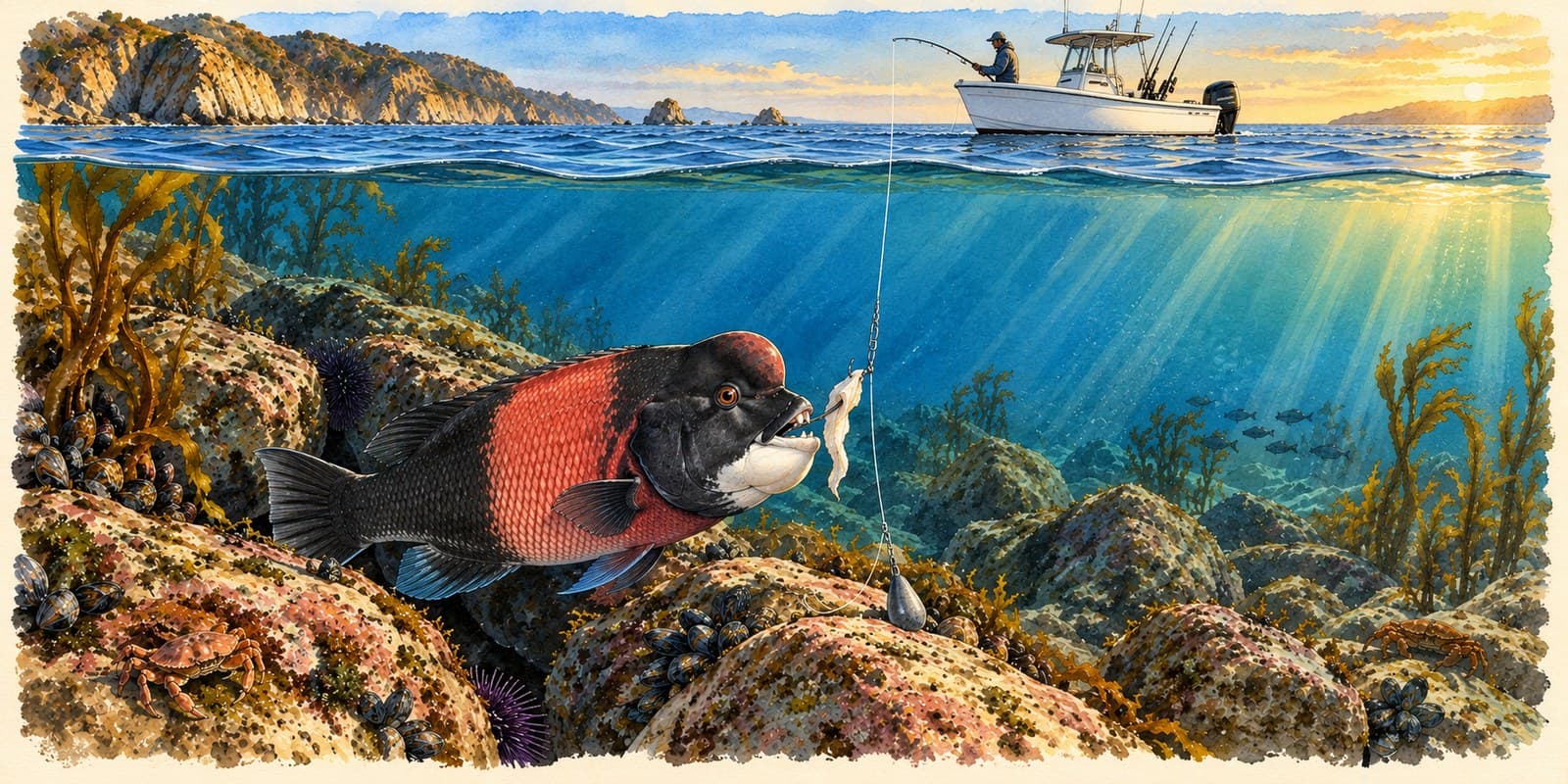
Live bait. A lively anchovy or small sardine, fly-lined with little or no weight and allowed to swim toward the kelp, is the classic sportboat method. It is the easiest way for a newer angler to get bit, and on a slow day it often outfishes everything else.
-
Plastics and swimbaits. A soft paddle-tail on a leadhead, cast tight to the kelp and swum back, is how a lot of locals prefer to fish. It covers water and it tends to pick the more aggressive, and often bigger, fish. The companion gear post goes deeper on weights, sizes and retrieves.
-
Surface iron. A small surface jig thrown along the kelp line catches calico when they are up and feeding. The post on picking surface and yo-yo jigs covers how the iron works.
-
Working the edge. Whatever you throw, cast it at the kelp edge or into a pocket, not into open water. The fish live in the structure.
The fight is short and decides everything. A hooked calico turns for the kelp. Point the rod at the fish, wind hard and pull it clear before it can wrap the line around a stalk. Give it slack and it will bury you in the weed.
Release culture
Calico bass are one of the great catch-and-release fisheries on the coast. Because the fish grow slowly and stay put, many local anglers release the big breeders on purpose, and a lot of them release almost everything.
If you plan to let a fish go, keep it in the water as much as you can, handle it with wet hands, and get it back quickly. A fish brought up from deeper water may need help getting back down. A descending device does that job.
Size limits and bag limits do exist, and the sea bass group shares limits. They change from time to time, so check the current rules rather than relying on memory or on any post.
Where Fish or Pass fits
Fish or Pass gives calico bass a daily Bite Score for the grounds each port fishes. It weighs the things that move a calico bite: water temperature against what the species likes, bait in the area, kelp and reef structure, recent landing reports, and sea conditions. It turns that into a plain call of Catching, Fishing or Pass. You can read how the score is built on how it works.
It cannot pick your bait, put your cast tight to the kelp, or make a fish bite. It tells you which days the conditions are on your side. Before you keep a fish, check the current CDFW ocean sport fishing regulations.