MINIMUM SIZE
28 in total length
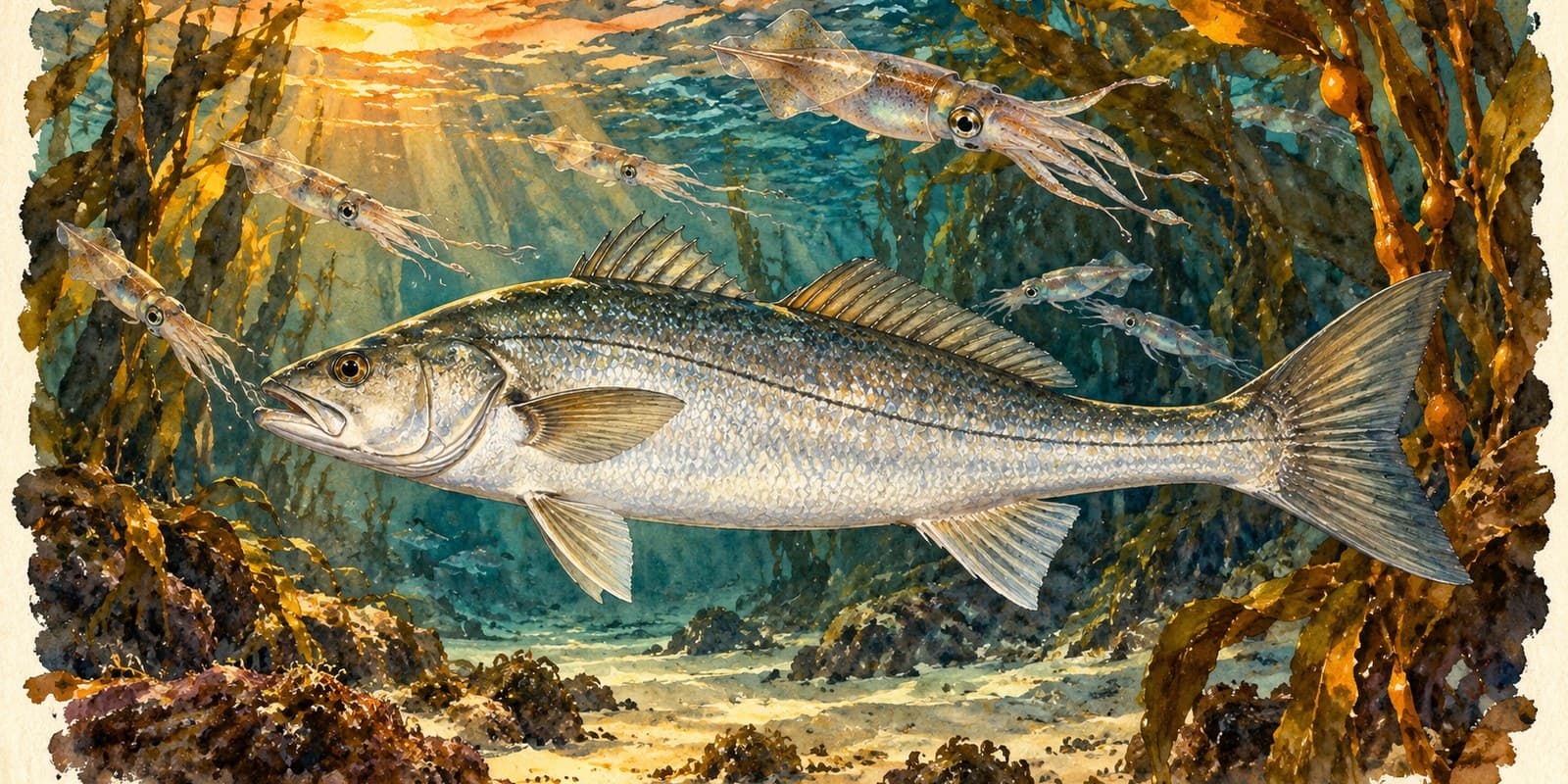
The ghost of the kelp line: a big silver croaker that shows on the squid, eats for an hour, and is gone by sunup.
South of Point Conception the bag drops to a single fish between March 15 and June 15, which is the heart of the season most people fish them.
14 CCR 28.35, as read on October 9, 2026. Limits, seasons and marine protected area boundaries change, so the CDFW ocean sport fishing regulations are the authority, not this page. Check them before you keep anything.
Despite the name there is no bass in it: white seabass are the largest croaker on this coast, and like every croaker they make noise, drumming a muscle against the swim bladder. They are big, bright silver, and they have a reputation among SoCal anglers for being maddeningly hard to pattern. People fish a whole season for one.
The kelp edge and the hard bottom under it, from the Channel Islands down to San Diego. What really moves them is squid: when market squid pile onto a sand bottom to spawn in late winter and spring, seabass show up to eat them, and the whole fishery follows the squid rather than the calendar.
A “rat” is under the legal size and goes back. A good one is 25 to 40 pounds, and genuine ghosts push past 60. They grow slowly and live a long time, so the rules run tighter than for most fish here: there is a size limit, and through the spring CDFW has cut the bag to a single fish. Measure carefully and read the current regulations before you keep one.
Live squid fished on or just off the bottom when a spawn is on, a live mackerel or sardine through the kelp the rest of the year, and a surface iron at grey light. Fish are often there and simply not eating, which is why the bite so often comes in a twenty-minute window at first light or on a tide change.
The grounds that hold white seabass within reach of each home port, south to north. Follow a port through for its season, the rest of the water it reaches, and the rules that apply there.
Seasons, depth limits, size and bag limits and marine protected area boundaries are set by CDFW and change from year to year. Check the current rules for the ground you are running to before you keep anything.
You can sometimes hear them. A hull sitting quietly over a school of white seabass can pick up the low drumming they make with their swim bladder, which is how a few old-timers used to find them before sonar.
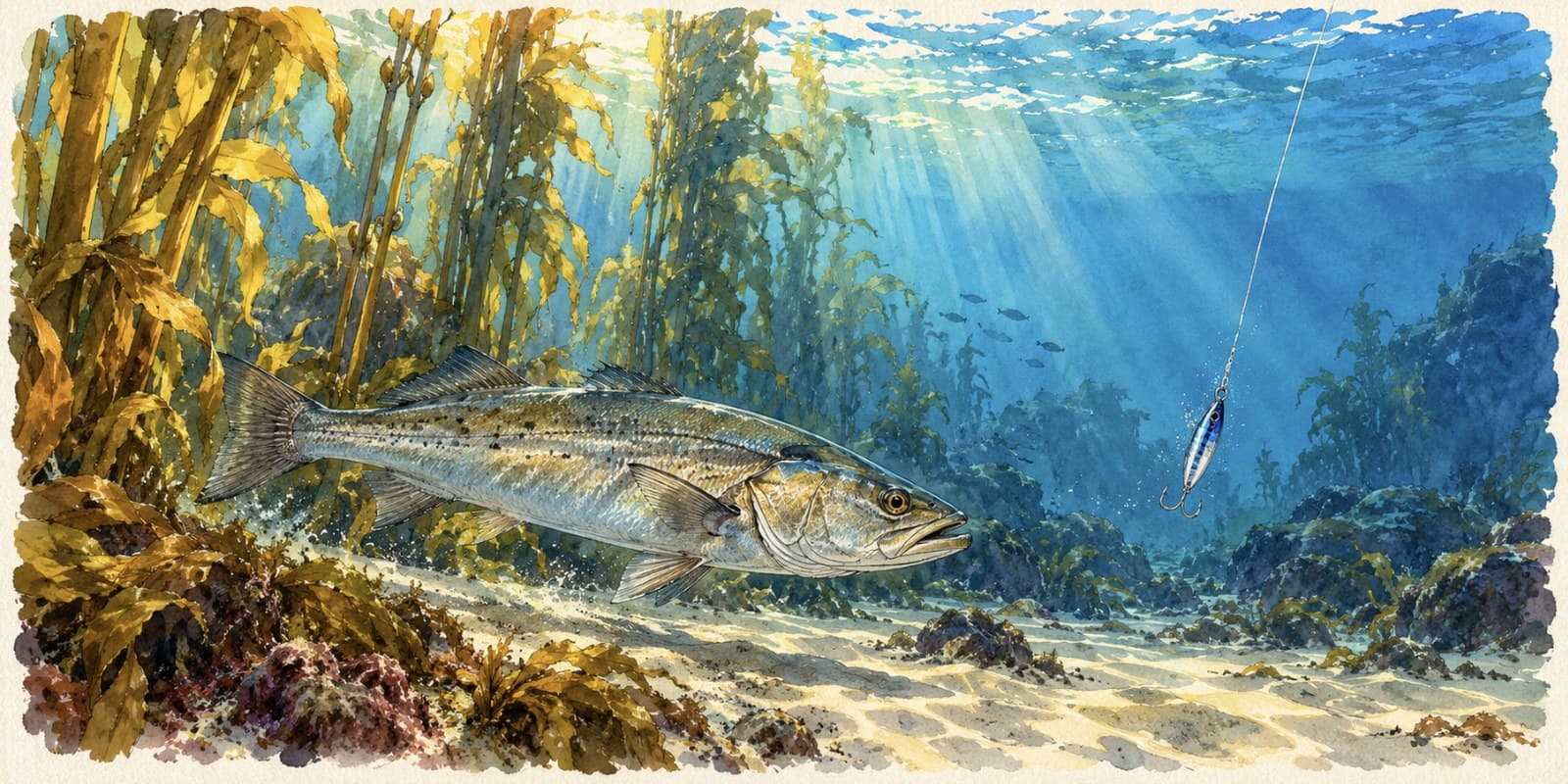
No squid in the tank and no light boats on the grounds. Where white seabass hold in daylight, which jigs and swimbaits get bit, and the tackle to turn them.
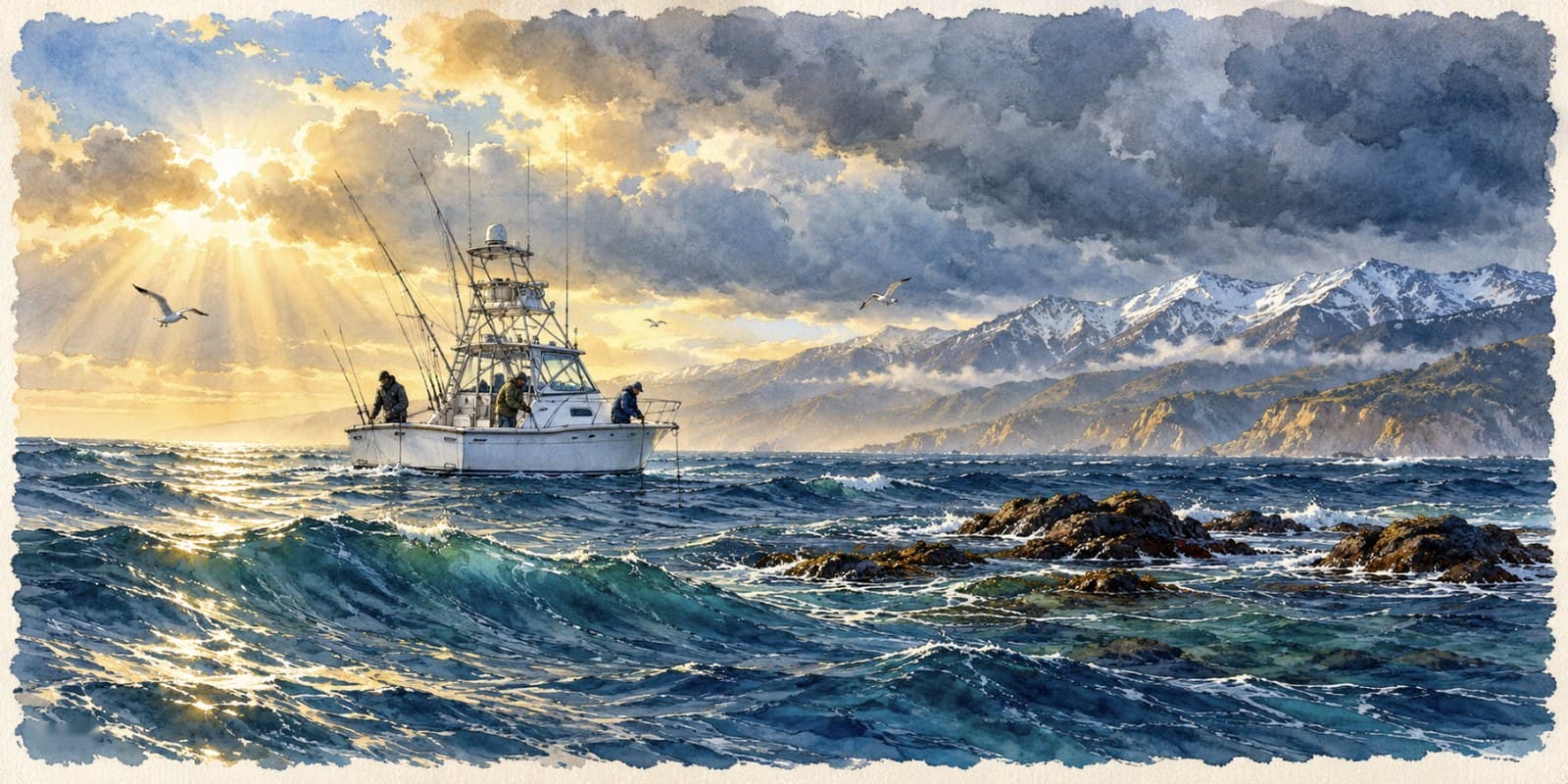
The tuna boats stop, the counts get shorter, and a lot of rods go in the garage. Here is what is still worth chasing between storms, and how to pick the days.
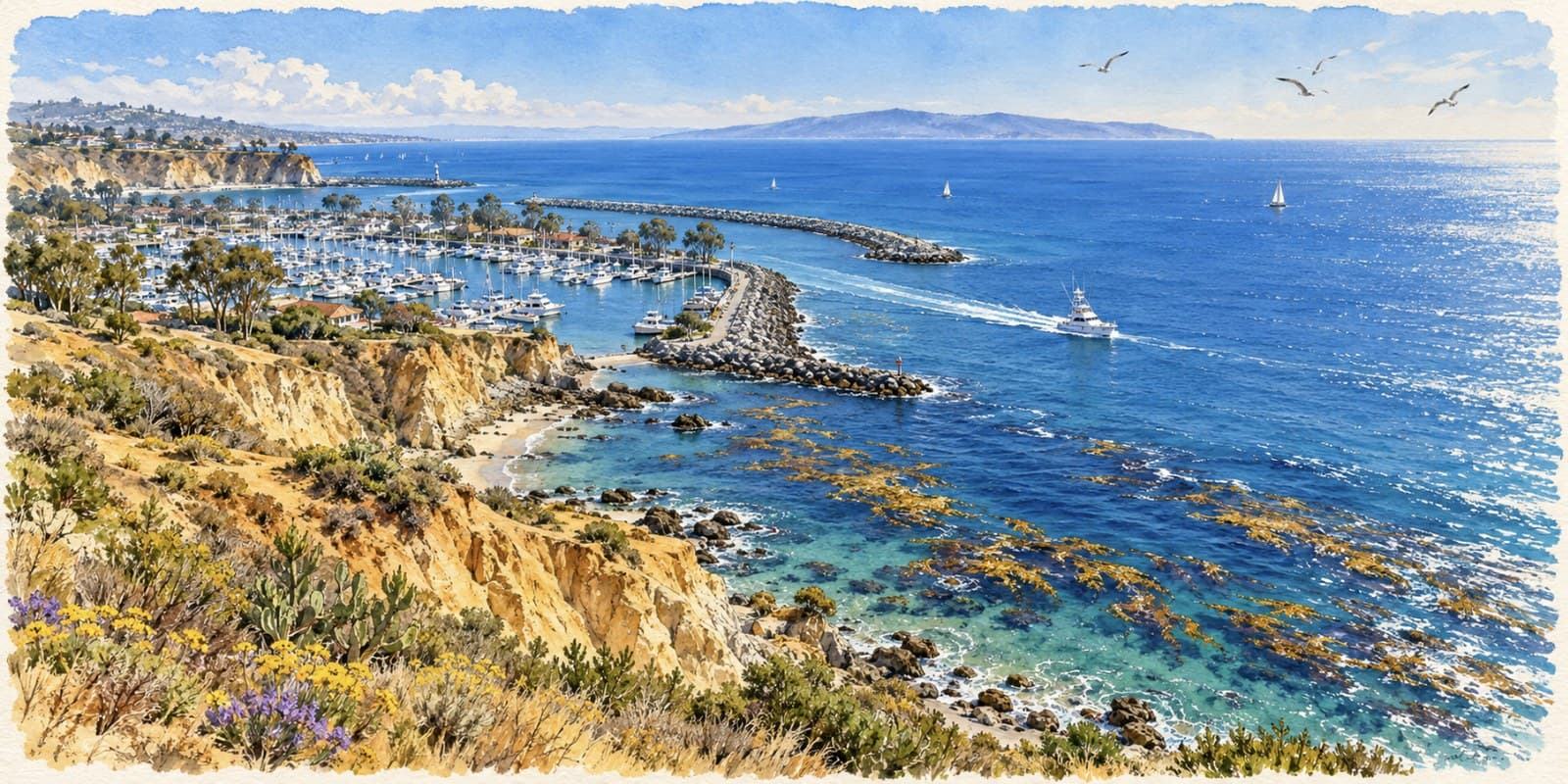
Kelp and reef close in, the shortest Orange County run to the blue water out front. The landing, the grounds, the protected areas and how the year runs.
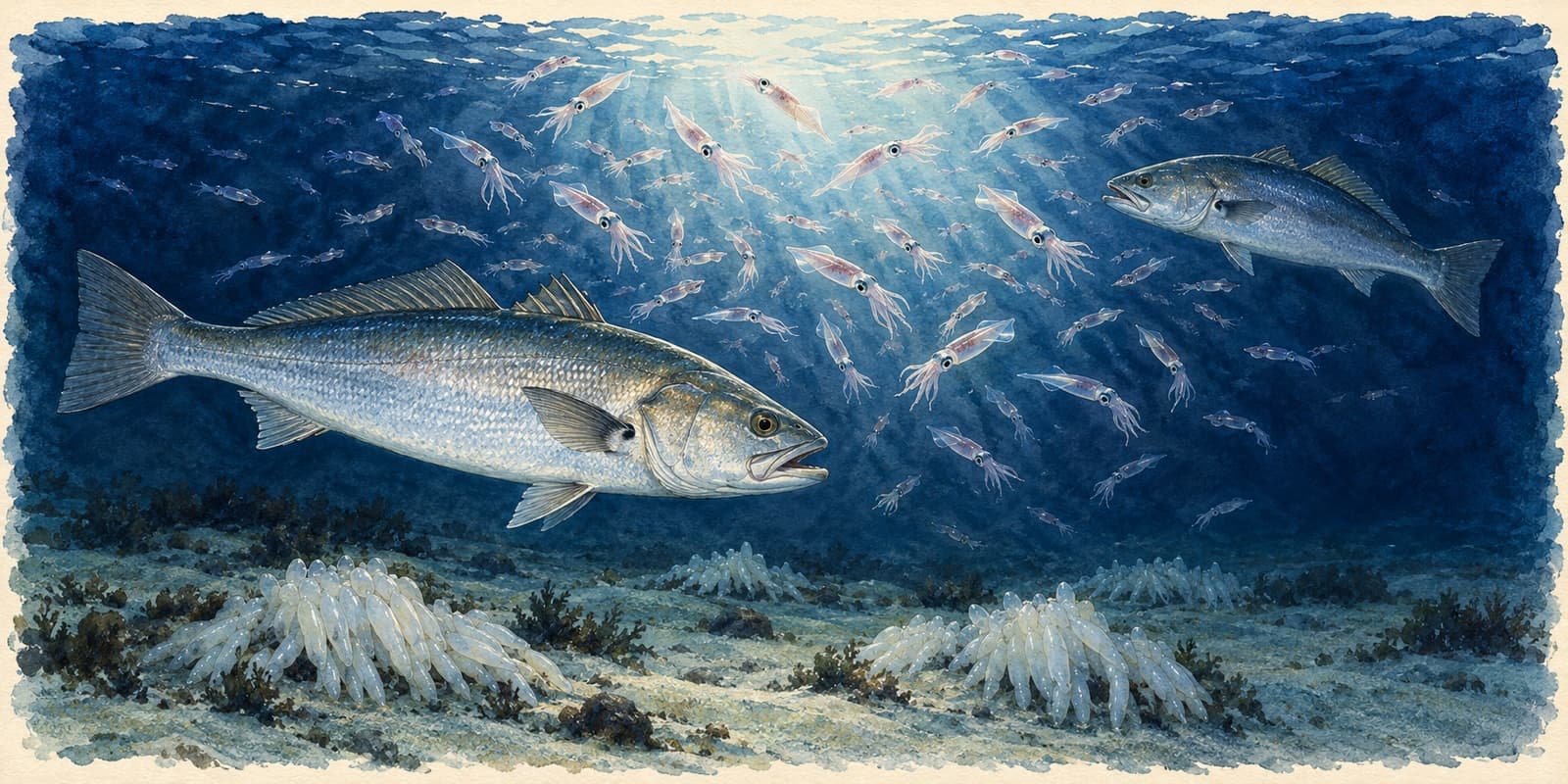
Find the squid and you have found the seabass. The island squid grounds, the night and grey-light bite, and the rigs that put a live squid in front of a ghost.
This is a profile, not a scored species. Fish or Pass grades seven fish across the Bight every day, so if you are going anyway, see what the water is doing for those.