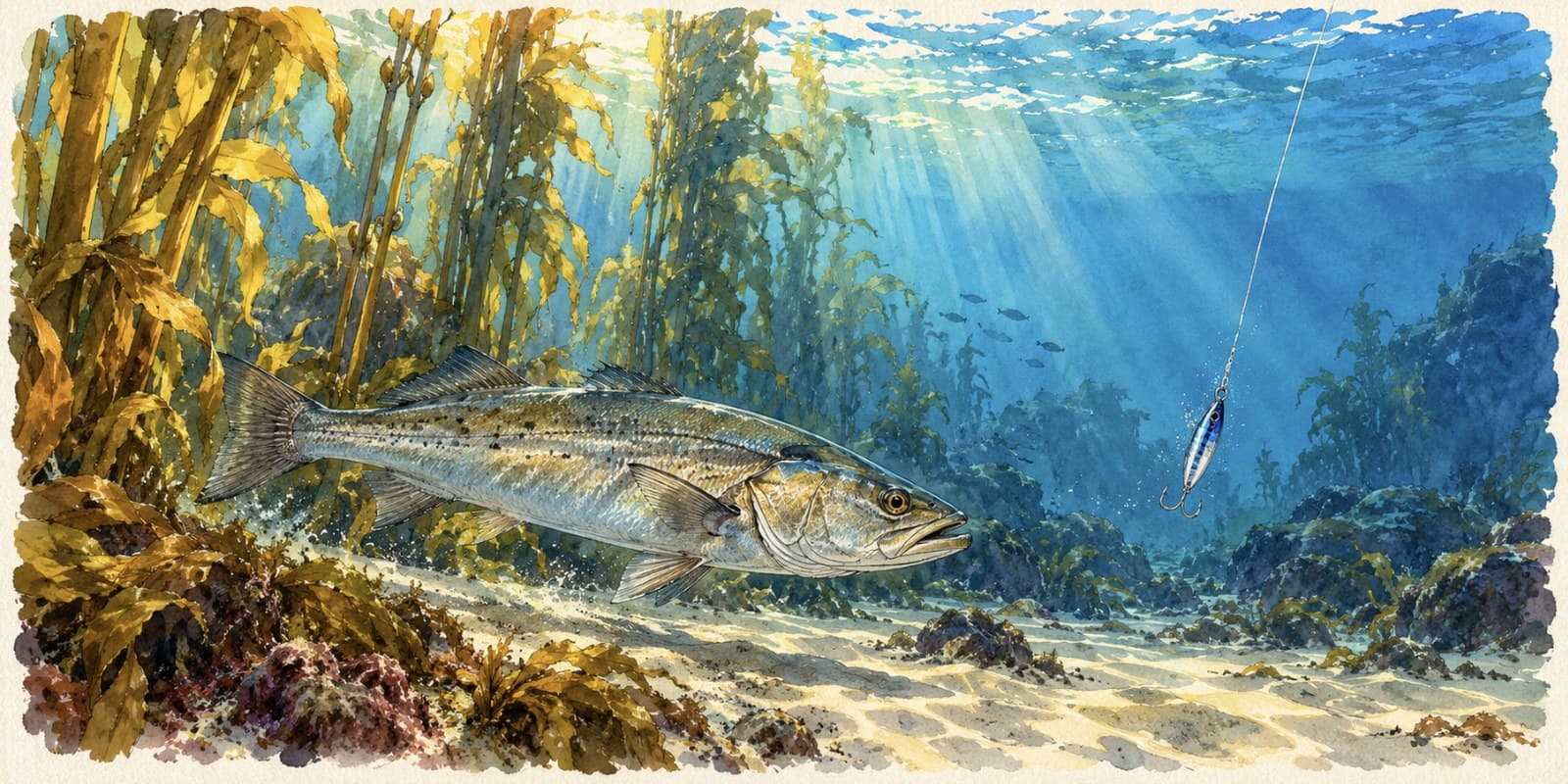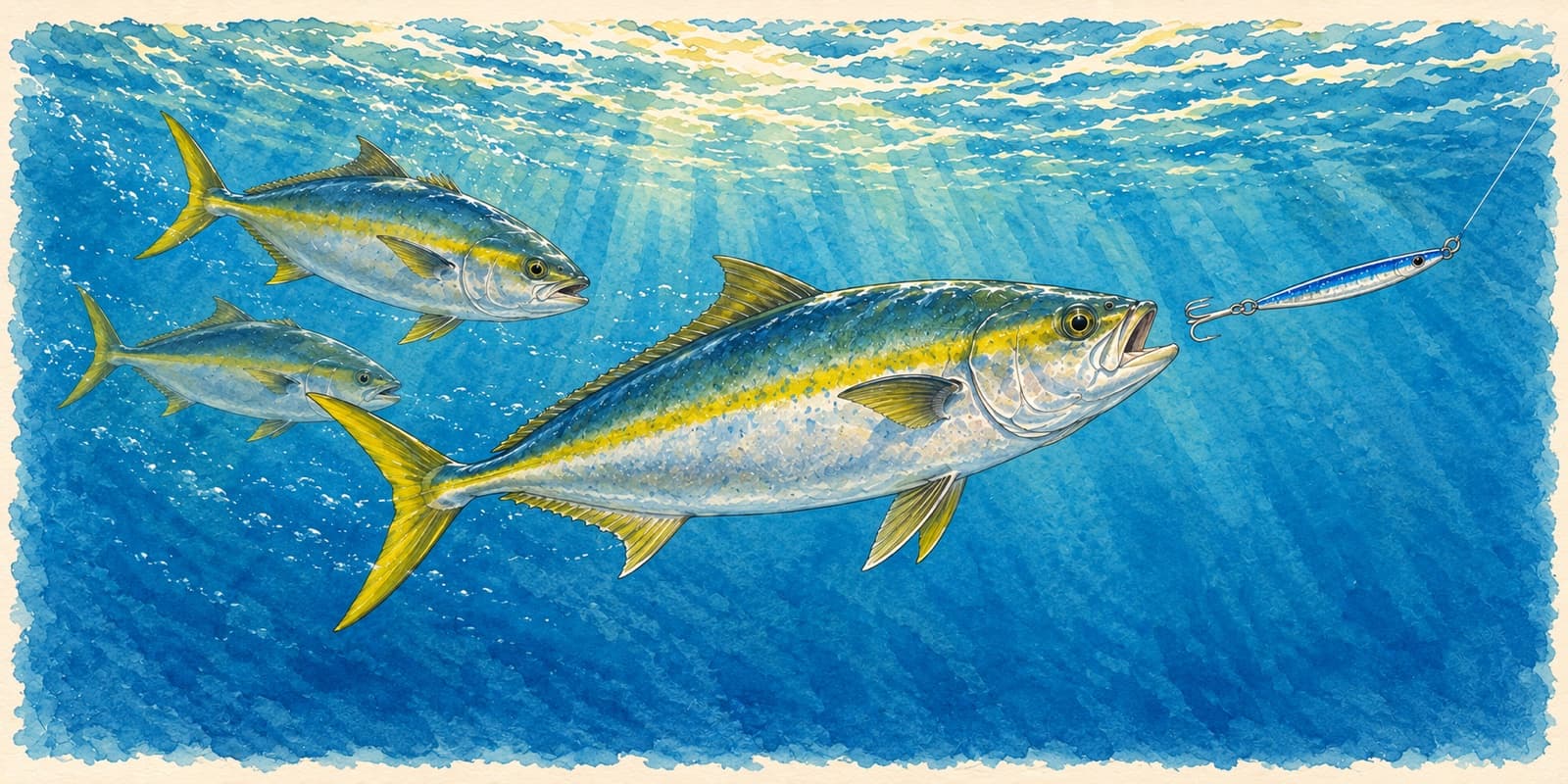
Walk the rail of any Southern California sportboat and you will see the same thing clipped into most rod holders: a plain slab of metal with a hook on the end. Locals call it the iron. It has been catching yellowtail here for a very long time, and it still does, because it does one thing bait cannot. It lets you cover water fast and put a lure exactly where the fish are.
This is a plain-language guide to choosing one. It assumes you already know the fish. If you do not, read the yellowtail guide first.
Two jobs, two kinds of jig
Almost every decision about iron comes down to one question: are the fish up, or are they down?
Surface iron
Surface jigs are light for their size. They are long, fairly thin, and built to be cast a long way and retrieved near the top. On a steady wind they swim with a wide side-to-side kick. You throw them at fish you can see: breezing schools, boils, birds working, or fish that have come up around the boat.
A surface jig is a casting tool. It needs a long rod and room to throw, and it rewards practice more than any other piece of tackle on the boat.
Yo-yo iron
Yo-yo jigs are heavy for their size. They are shorter and thicker, and they are built to sink fast. You drop one to the bottom, or to the depth of the marks on the meter, and wind it back up as fast as you can turn the handle. Then you drop it again. The motion is where the name comes from.
A yo-yo jig is a depth tool. You use it when the fish are holding deep on a high spot, a reef or a bank and will not come up.
Weight: match the depth and the drift
Jig weight is not about the size of the fish. It is about getting the lure where it needs to be and keeping it there.
- For surface iron, lighter jigs swim better and stay up, but heavier ones cast farther into wind. Pick the lightest jig you can still throw to the fish.
- For yo-yo iron, you need enough weight to reach bottom with the line close to straight up and down. In deeper water, or when wind and current are pushing the boat, go heavier. If your line is scoping far out behind the boat, the jig is too light for the conditions.
A jig that never reaches the fish catches nothing, however good it looks.
Color: keep it simple
Jig color is the subject of more dock talk than it deserves. A short list covers most days.
- Blue and white is the standard. It looks like a sardine or a mackerel from most angles.
- Scrambled egg, a yellow, brown and white mix, is the classic alternative and a good choice around kelp.
- Mint and white is a common pick when fish are on smaller bait or the water is off-color.
- Plain chrome or dorado patterns earn a spot in the bag for bright days and deep drops.
If the fish are biting, most of these will get bit. If they are not, changing where and how you fish the jig usually matters more than changing its paint.
How you fish it matters more than which one
A well-chosen jig fished badly will lose to an average jig fished well.
With surface iron, cast past the fish and bring the jig through them, not onto their heads. Wind at a steady pace that keeps the jig kicking. If it spins or skips, slow down. Be ready for the bite to feel like the jig simply stopped.
With yo-yo iron, stay in contact on the drop, because fish often eat it on the sink. When it hits bottom or reaches the marks, wind fast and do not stop until the jig is well clear of the zone. Speed is the trigger. A jig cranked up slowly looks like nothing a yellowtail wants.
Either way, the fight is the same. Yellowtail head for the rocks or the kelp the moment they are hooked, so use tackle heavy enough to turn the fish early. The post on how yellowtail relate to structure explains why they do it and where they will be sitting when you arrive.
A sensible starter bag
You do not need a wall of jigs. Four cover most of the season.
- A light surface jig in blue and white.
- A second surface jig in scrambled egg or mint.
- A heavy yo-yo jig in blue and white.
- A second yo-yo jig in a different weight, for deeper water or a faster drift.
Add to that as you learn what the boats you ride tend to fish and how deep the spots you visit run.
Where the iron fits in a day
Iron is not only a yellowtail lure. The same surface jig will catch bonito and barracuda, and a yo-yo jig worked near the bottom takes calico bass and rockfish. But yellowtail are the fish it was made for.
On a trip, treat it as the fast option. Bait is patient and iron is quick. When the captain slides up on a paddy or a meter mark, the jig is already in the water while everyone else is still pinning on a sardine.
A conditions read can point you at water that is worth the run. It cannot pick the jig, and it cannot make a fish bite. That part is still up to you. Before you go, check the current CDFW ocean fishing regulations for seasons and limits.