MINIMUM SIZE
None
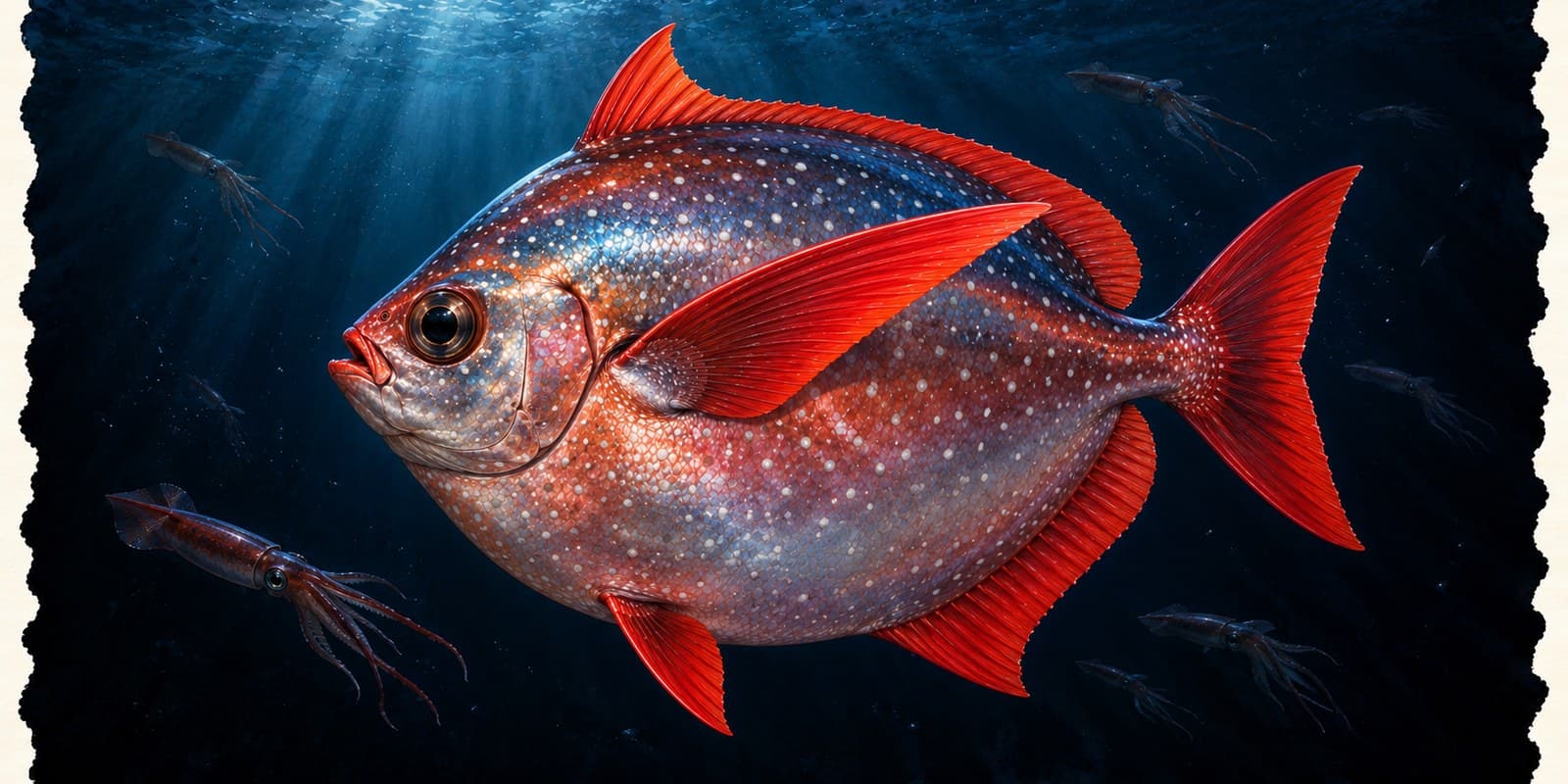
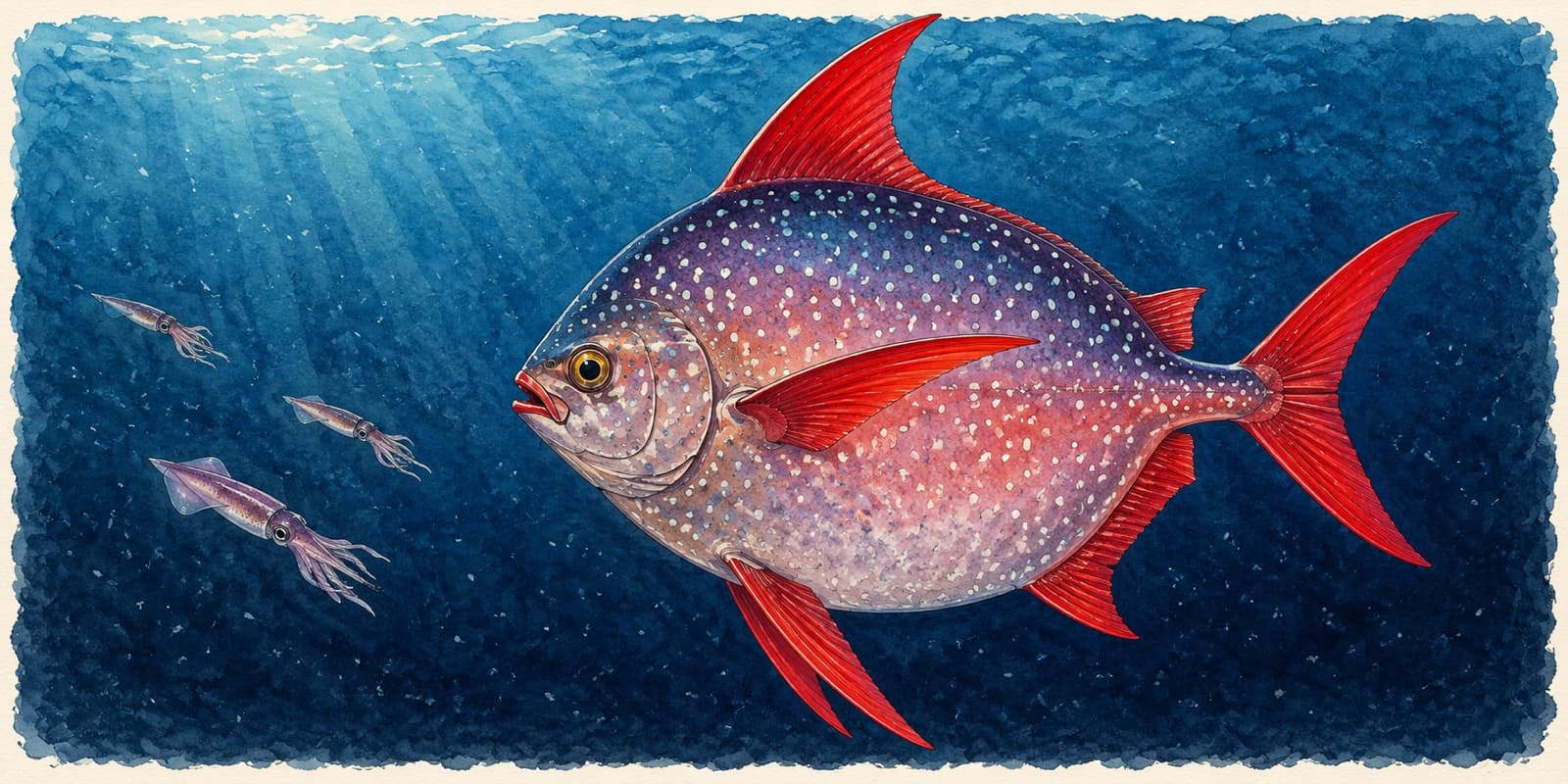
A deep-water fish shaped like a dinner plate, painted silver and red, and the only fish known to be warm all the way through.
Opah has no entry of its own in CDFW's table, so the general finfish limit is what applies: twenty fish in combination, no more than ten of any one species.
14 CCR 27.60(a), as read on October 9, 2026. Limits, seasons and marine protected area boundaries change, so the CDFW ocean sport fishing regulations are the authority, not this page. Check them before you keep anything.
Almost circular, flattened side to side, silver with white spots and scarlet fins, with a small mouth and a large eye. Nothing else in the Pacific looks remotely like it. It swims by flapping its pectoral fins, more like a bird than a fish.
In 2015 NOAA researchers showed the opah is the first fish found to be warm throughout its whole body. Tuna and some sharks keep their muscles or eyes warm; the opah circulates warm blood through its gills in a counter-current heat exchanger and keeps its heart and everything else above the surrounding water.
Deep and offshore, in the cold water below the thermocline, which is why almost nobody sees one. They are solitary rather than schooling. Most Southern California opah come to boats fishing deep for swordfish or on long-range trips, not to anyone targeting them.
Opah is several different fish in one body: the loin is pink and firm, the belly is fattier and paler, and the cheek is different again. It is highly regarded, it does not look or cook like anything else on this coast, and for most anglers it is a once-in-a-career fish.
Being warm all over means the opah can hunt in cold deep water without its heart slowing down, which is why it can stay below the thermocline and keep chasing squid while most predators have to come back up to warm themselves.
This is a profile, not a scored species. Fish or Pass grades seven fish across the Bight every day, so if you are going anyway, see what the water is doing for those.