MINIMUM SIZE
None
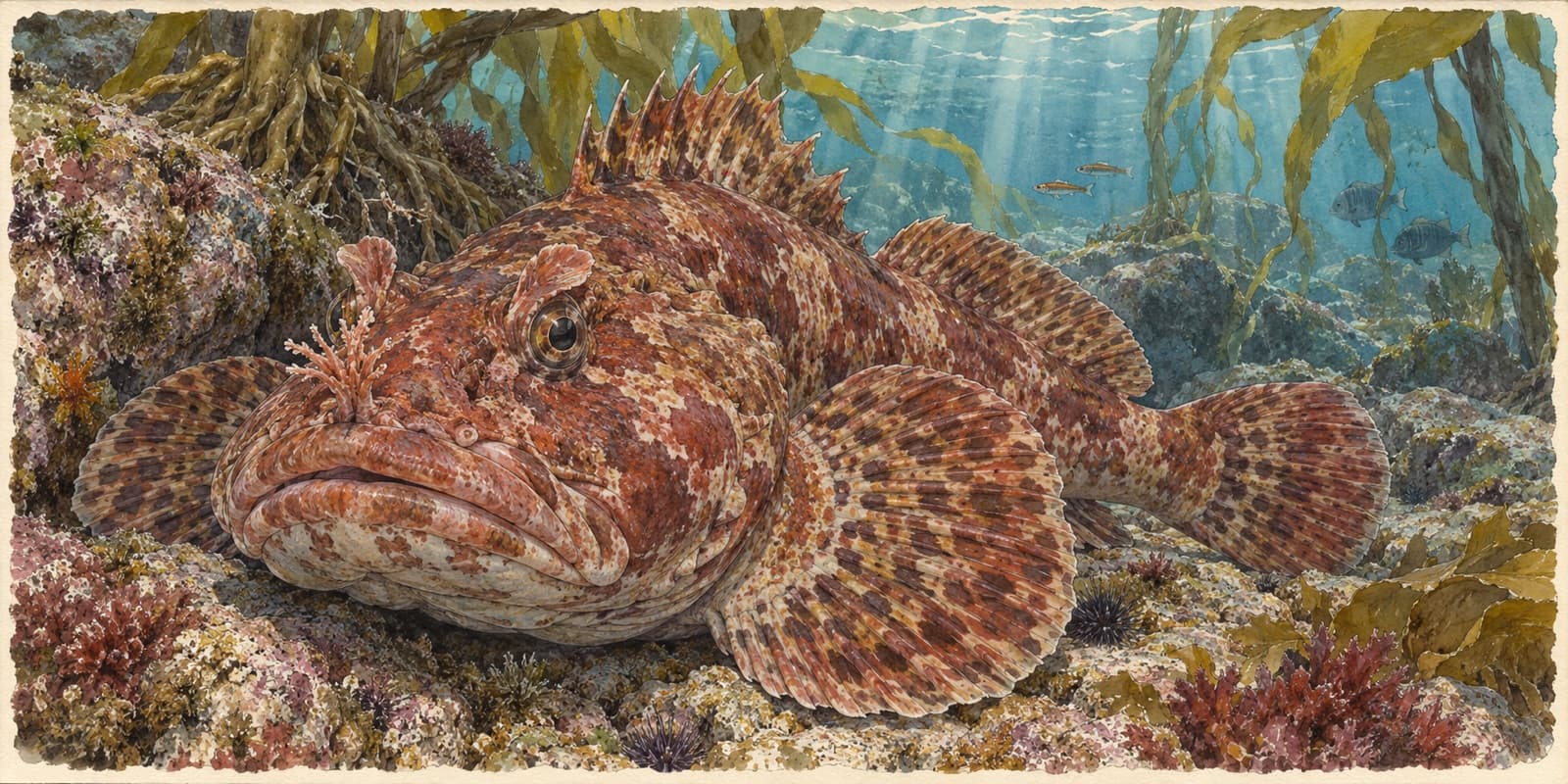
A big-headed sculpin that eats crab, holds tight to the rock, and whose roe is genuinely poisonous.
Cabezon is a nearshore species and closes with them: shut to boats October through March, and inside the fifty-fathom line July through September.
Southern groundfish summary, as read on October 9, 2026. Limits, seasons and marine protected area boundaries change, so the CDFW southern groundfish regulations are the authority, not this page. Check them before you keep anything.
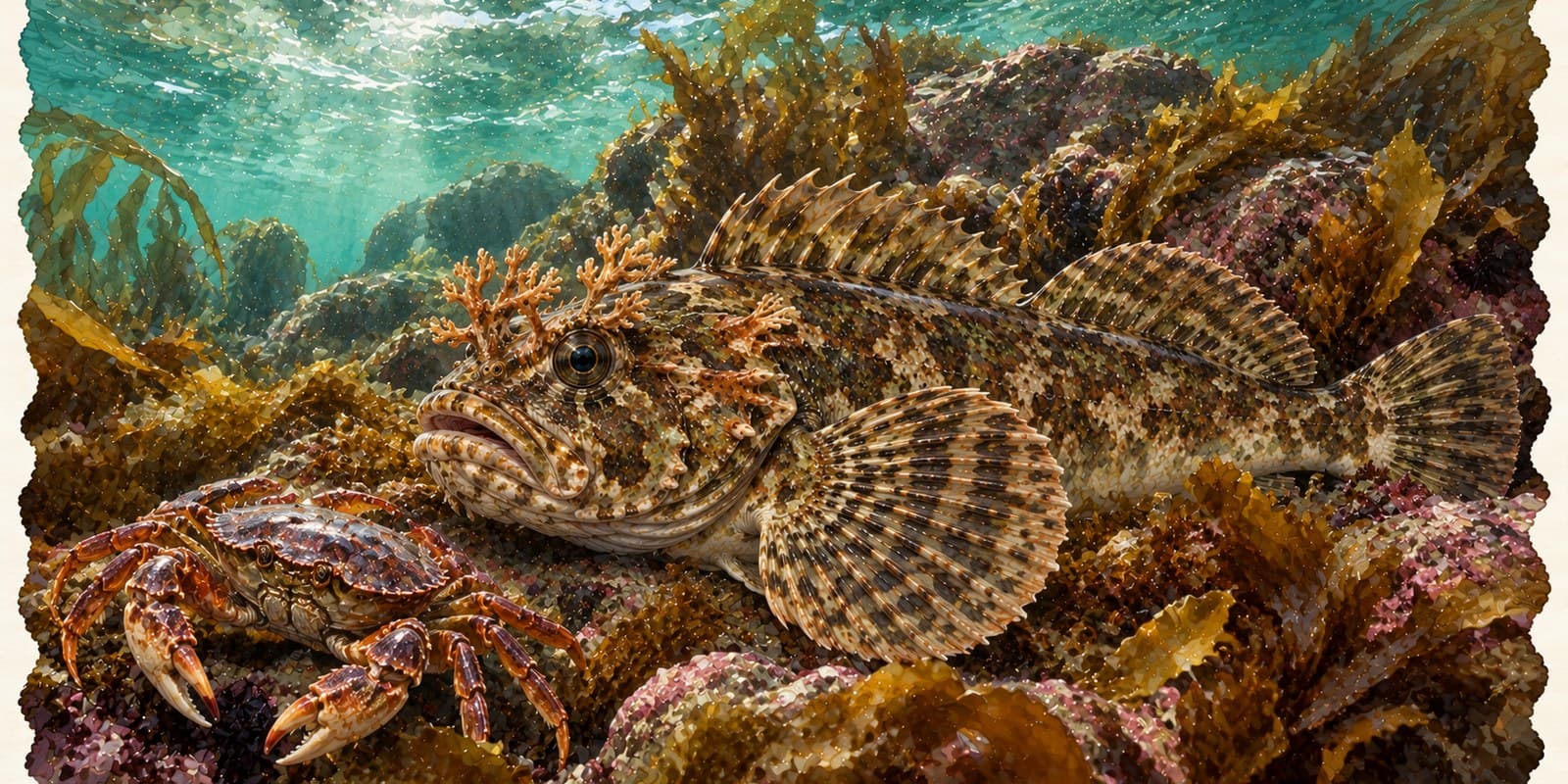
Spanish for “big head,” and accurate. A broad flat skull, a wide mouth, no scales, and a branched flap of skin on the snout that is the easy field mark. They come in mottled brown, green or red, and the red ones are usually male.
Cabezon eggs are toxic to humans and cooking does not fix it. The flesh is excellent and perfectly safe; the roe causes serious gastrointestinal illness. If you keep one, discard the egg mass entirely and do not let it touch the fillets.
Shallow, rough, kelp-covered rock, often in water under 60 feet and sometimes a lot less. They are ambush feeders that specialise in crab, and a cabezon will crush one whole. Males guard the nest aggressively through the winter spawn.
A whole crab, shrimp or a strip of squid fished hard against the rock. They do not chase and they do not run far; the fight is a short, heavy, straight-down argument with a fish that would rather be in a hole. Seasons and limits sit inside the CDFW groundfish rules, so check before you drop.
The grounds that hold cabezon within reach of each home port, south to north. Follow a port through for its season, the rest of the water it reaches, and the rules that apply there.
Seasons, depth limits, size and bag limits and marine protected area boundaries are set by CDFW and change from year to year. Check the current rules for the ground you are running to before you keep anything.
The flesh of some cabezon is a startling blue-green, like lingcod, and like lingcod it cooks out white and is entirely harmless. Both fish get it from the same bile pigment.
This is a profile, not a scored species. Fish or Pass grades seven fish across the Bight every day, so if you are going anyway, see what the water is doing for those.