MINIMUM SIZE
No take
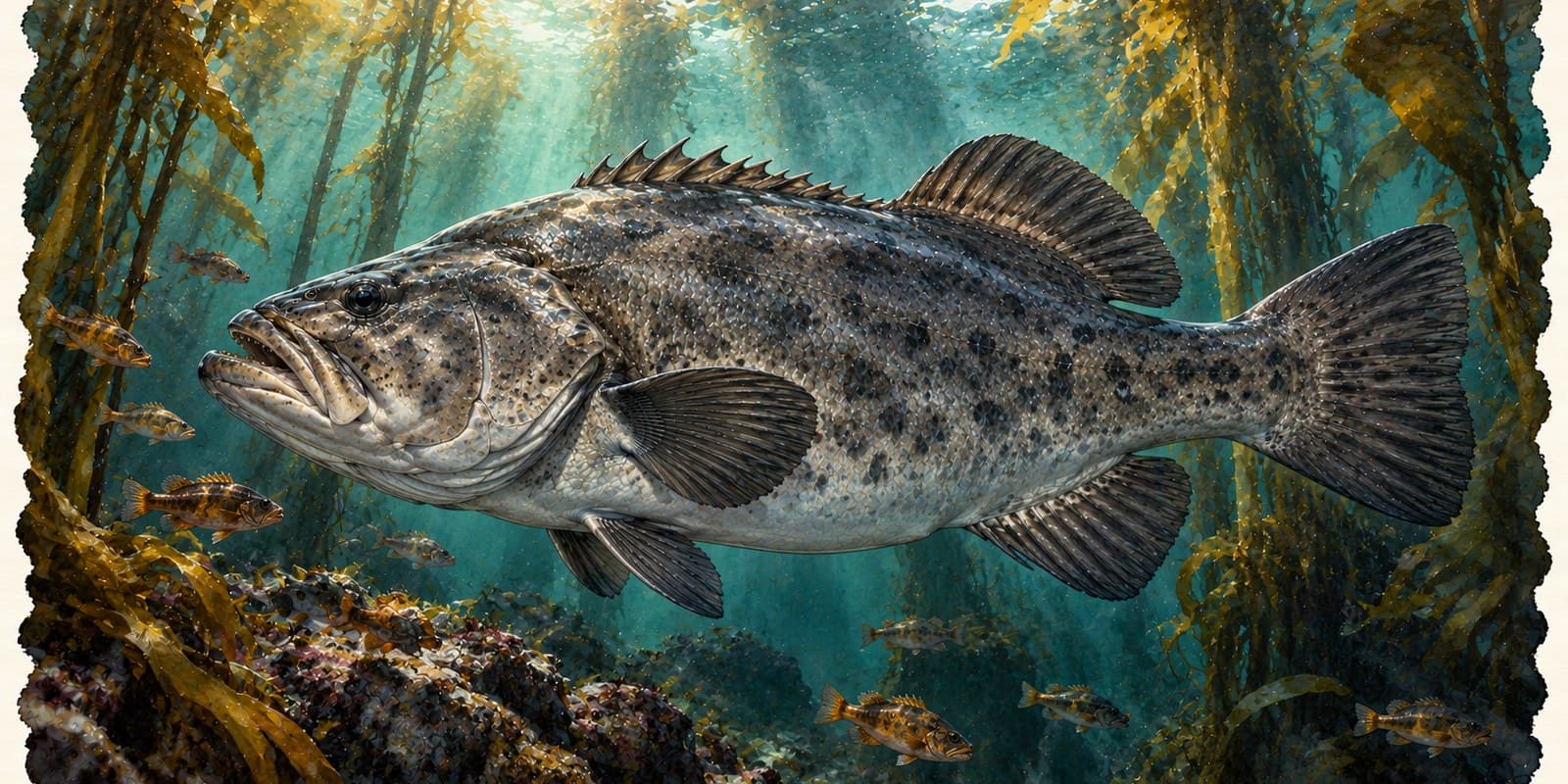
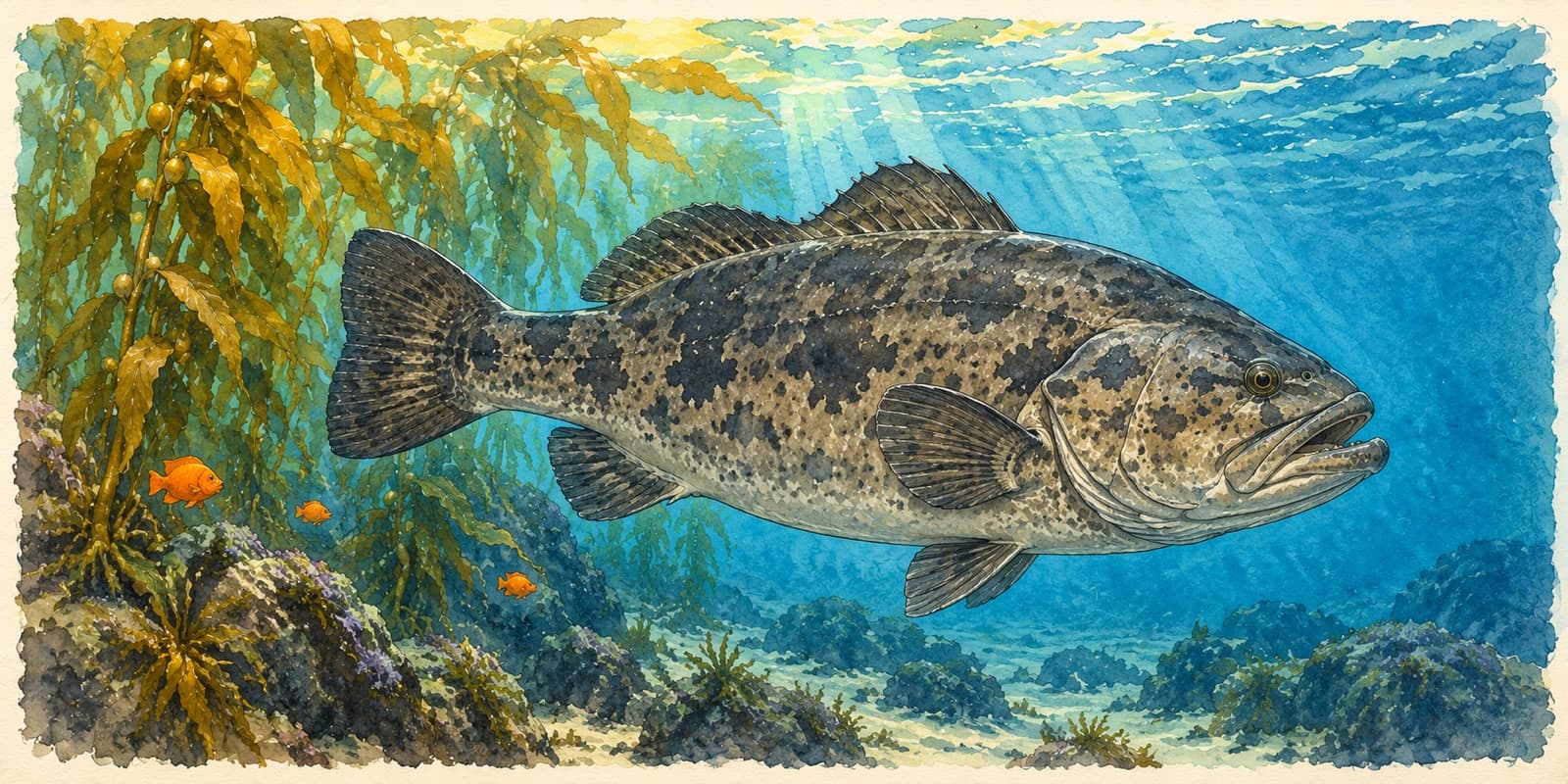
The biggest fish in the kelp forest, protected in California since the eighties, and slowly coming back.
Take and possession are prohibited off California. Hooking one happens; release it in the water without lifting it. CDFW does allow two per angler per trip taken south of the Mexican border, which a Coronado Islands run reaches, and that comes with its own Mexican licence requirements.
14 CCR 28.10, as read on October 9, 2026. Limits, seasons and marine protected area boundaries change, so the CDFW ocean sport fishing regulations are the authority, not this page. Check them before you keep anything.
Take of giant sea bass is prohibited for California recreational anglers. That has been the case since the early 1980s, after the population was fished down to a fraction of what it had been. If you hook one, which happens, release it in the water without lifting it, and check the current CDFW rules, which are the authority here and do change.
Not a bass but a wreckfish, and the largest bony fish in the California kelp forest. Dark, slab-sided, enormous, and completely unbothered: divers describe them as curious rather than shy. They can live past 70 years and do not mature until around 11 to 13.
The kelp edge and rocky reef from the Channel Islands south, usually in 40 to 150 feet. They gather in the same places at the same time each summer to spawn, which is precisely what made them so easy to wipe out and precisely what makes those sites worth leaving alone.
Sightings have climbed steadily since protection, especially around Catalina and the Channel Islands, and researchers now identify individuals by the spot patterns on their flanks, which are unique like a fingerprint. It is one of the clearer conservation success stories on this coast, and it is still in progress.
Every giant sea bass carries a unique pattern of dark spots, so a photograph is a usable identification. Several California research projects accept diver and angler photos to track individual fish over the years.
This is a profile, not a scored species. Fish or Pass grades seven fish across the Bight every day, so if you are going anyway, see what the water is doing for those.