MINIMUM SIZE
None
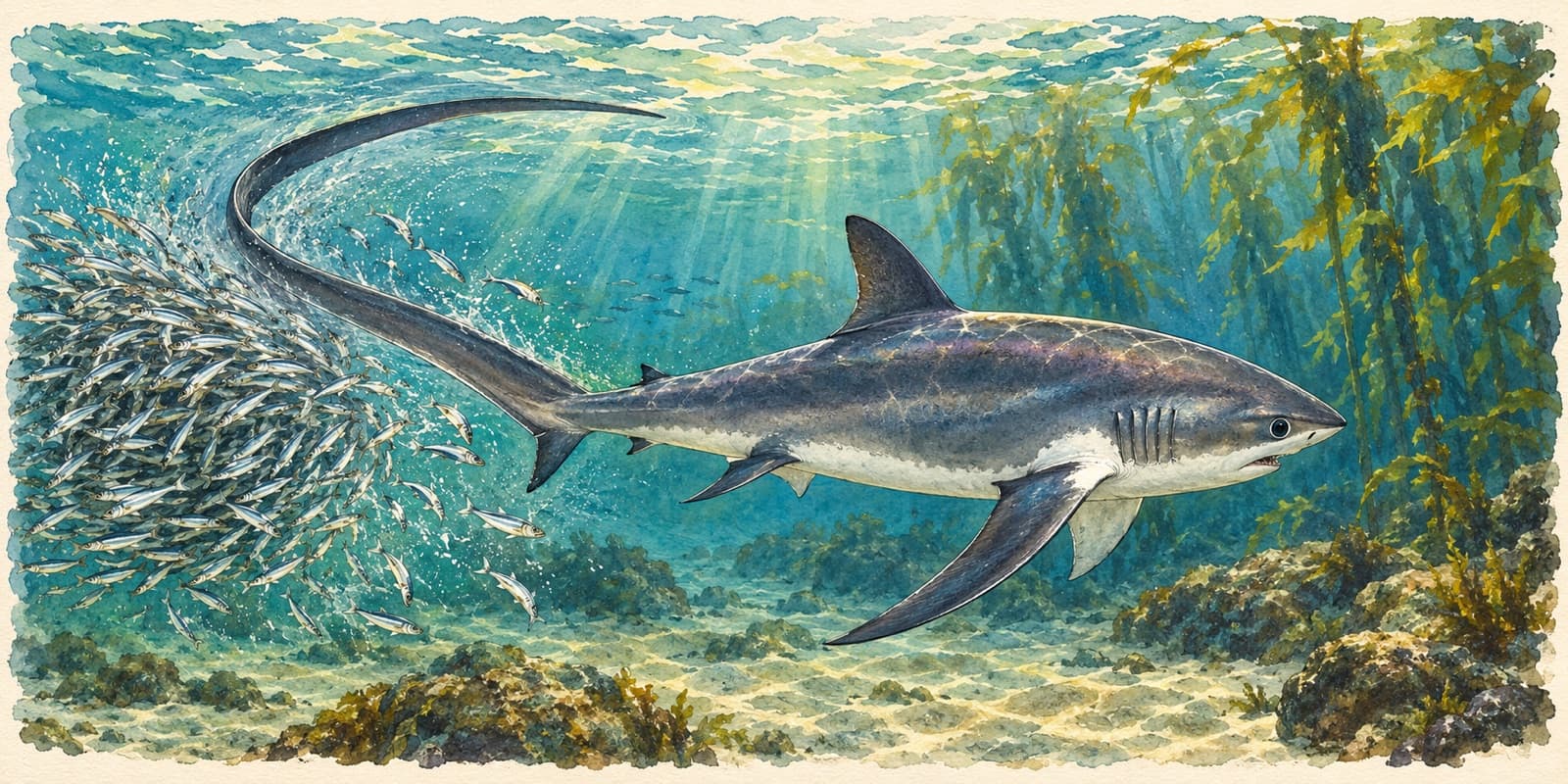
A shark that hunts with its tail, which is also, inconveniently, how a lot of them end up hooked.
Two of each shark species, so thresher, mako and blue are counted separately rather than together.
14 CCR 28.42, as read on October 9, 2026. Limits, seasons and marine protected area boundaries change, so the CDFW ocean sport fishing regulations are the authority, not this page. Check them before you keep anything.
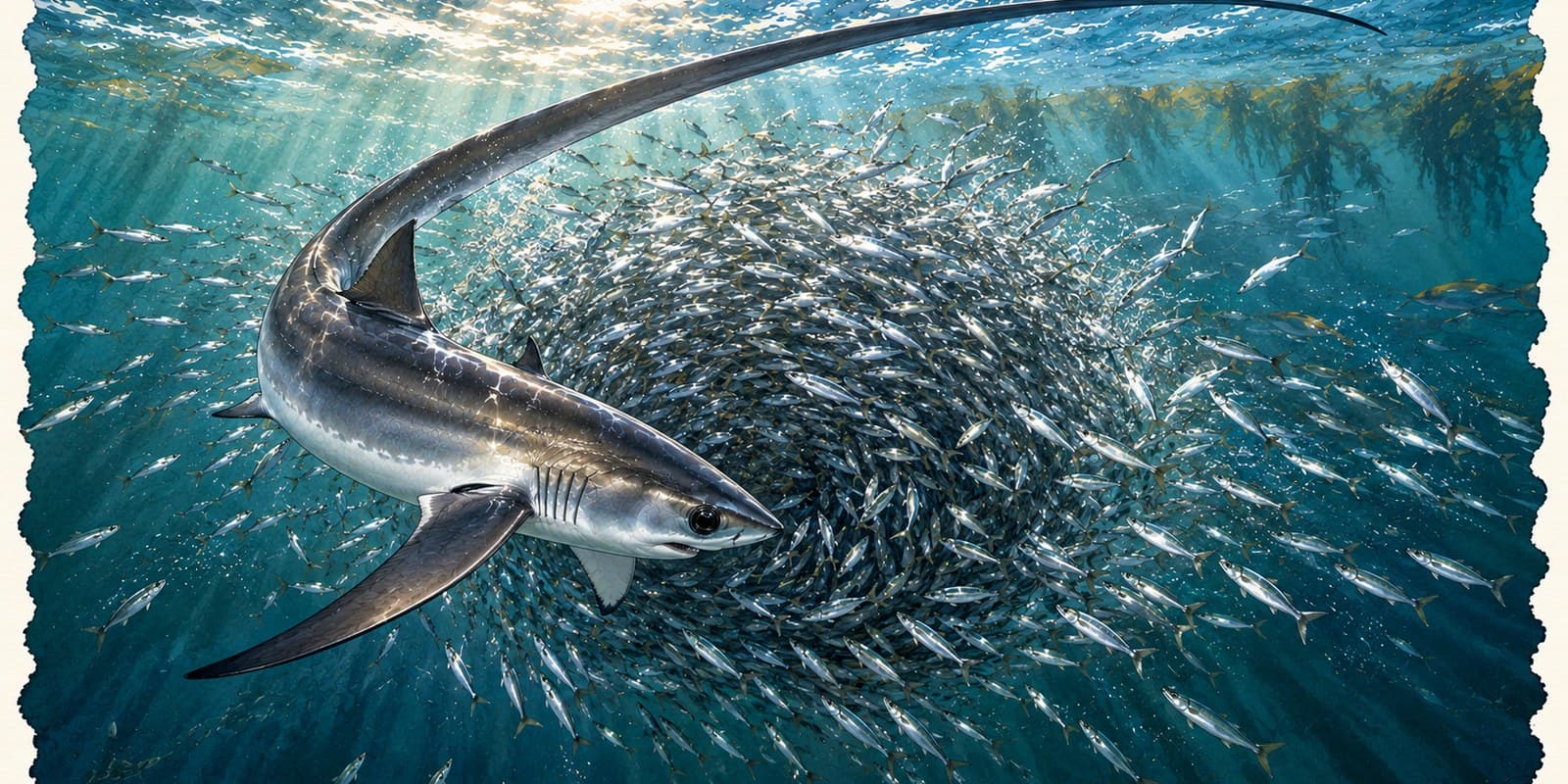
The upper lobe of the tail is about as long as the rest of the shark, and it is not decorative. Threshers herd baitfish into a ball and then stun them with an overhead crack of the tail, which has been filmed and is as strange as it sounds.
Closer in than most people expect: threshers work the bait schools off the beaches and along the kelp line through spring and summer, in the same water a half-day boat covers. They are a genuine nearshore big-game fish in Southern California.
Because they strike with the tail, a thresher often hits a trolled or slow-drifted bait with that lobe first and ends up foul-hooked in the tail. A tail-hooked shark is swimming backwards, cannot pass water over its gills properly, and tires in a way that makes release harder, so it is worth knowing before it happens.
Like mako, threshers are a highly migratory species with rules that change. Check the current CDFW and NOAA Fisheries regulations before targeting one. If you intend to release, keep the fish in the water, cut the leader short, and do not drag it backwards.
The grounds that hold common thresher within reach of each home port, south to north. Follow a port through for its season, the rest of the water it reaches, and the rules that apply there.
Seasons, depth limits, size and bag limits and marine protected area boundaries are set by CDFW and change from year to year. Check the current rules for the ground you are running to before you keep anything.
High-speed footage from a thresher's own hunting runs showed the tail tip breaking the sound barrier underwater in a sense: it moves fast enough to cavitate, leaving a trail of bubbles that stuns fish on its own.
This is a profile, not a scored species. Fish or Pass grades seven fish across the Bight every day, so if you are going anyway, see what the water is doing for those.