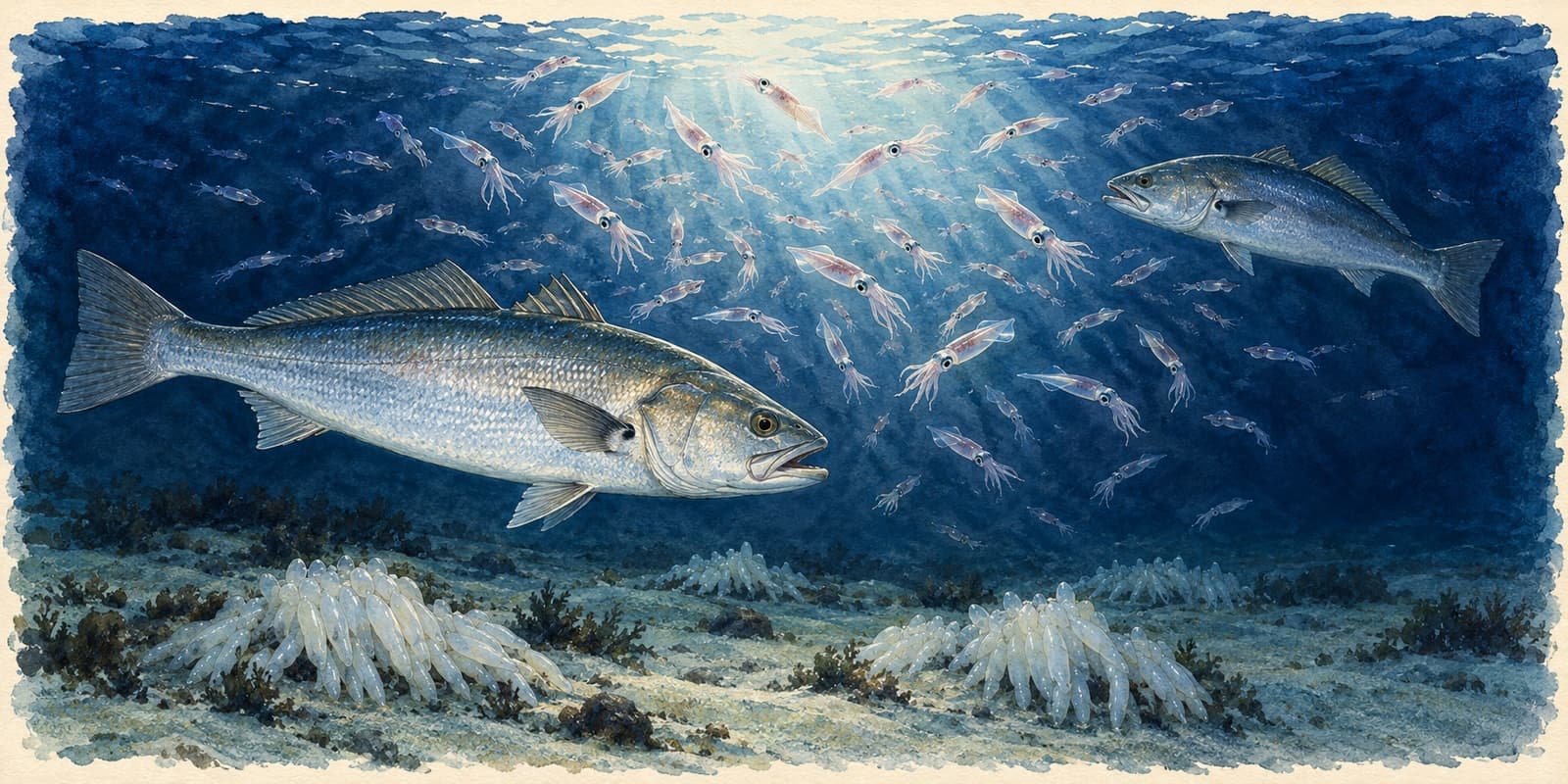
The classic white seabass trip is a squid night: a light over the side, live squid on a dropper loop and a fish at grey light. That trip depends on squid being on the grounds and in your bait tank. Plenty of days, neither is true.
White seabass still eat on those days, and they still get caught on lures. This post is about fishing for them with iron, swimbaits and spoons when there is no squid to drop: where the fish are in daylight, what to throw, and how to work it. For the squid side of the story, see white seabass and the squid spawn. For the fish itself, start with the white seabass species guide.
Where white seabass sit in daylight
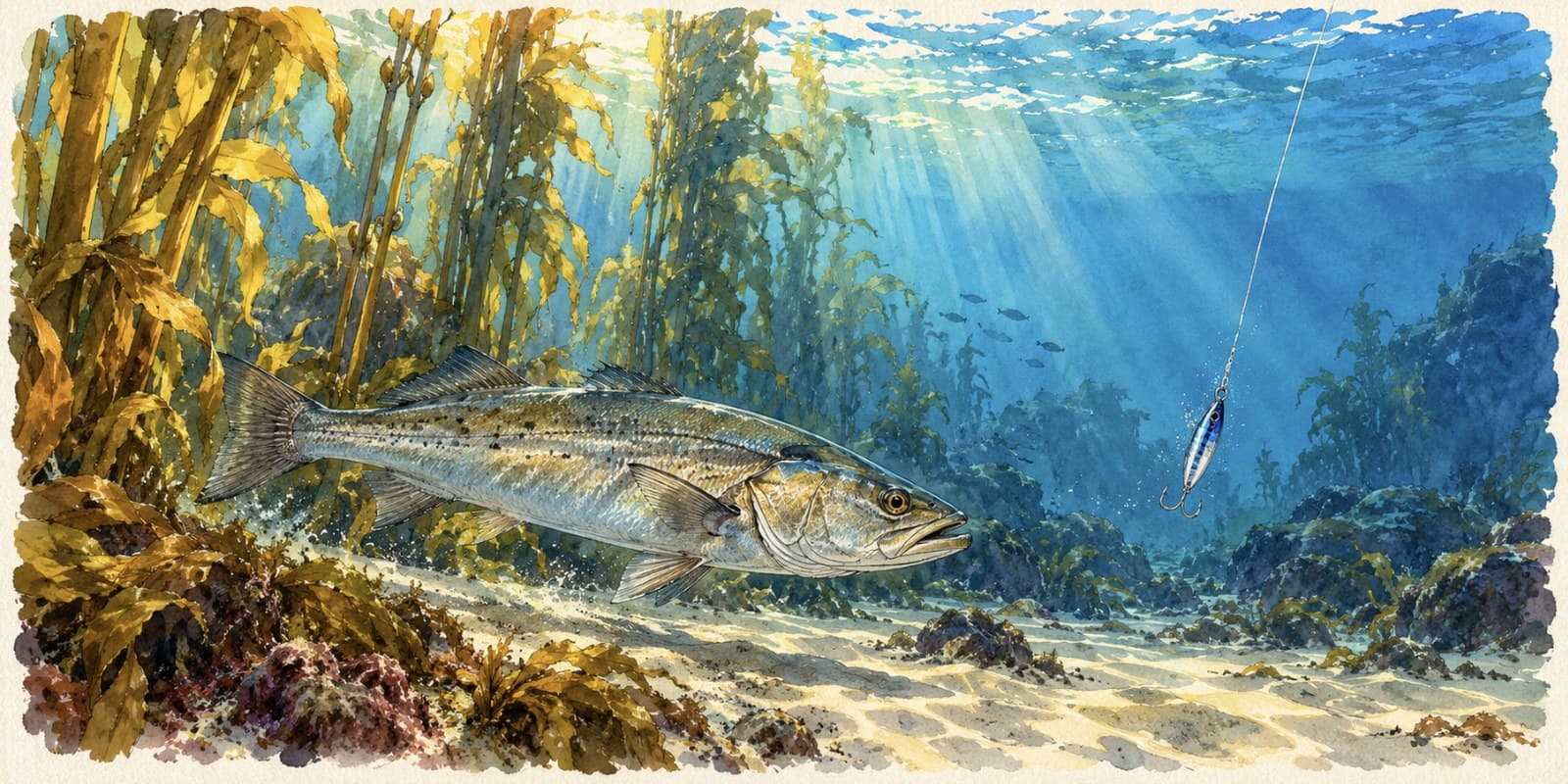
In the daytime white seabass usually slide back toward the kelp. They hold in the shade of the beds, near the bottom on the outside edge, and along the sand where the kelp gives way. They feed more readily when current is running across that edge, which tends to be strongest around the new and full moons, and they often show along a colour break where milky green water meets clean blue.
That gives a lure angler three places to look:
- The outside edge of the kelp, especially the up-current side.
- The sand and rock just off the kelp, a few feet off the bottom.
- Bait. Seabass eat anchovy, sardine, mackerel and pelagic red crabs as well as squid. Where the meter shows bait near the bottom off a kelp bed, a seabass may be under it.
Most of what makes a good yellowtail spot makes a good seabass spot. The difference is that seabass tend to sit lower, so the lure needs to get down.
Yo-yo iron
A heavy jig fished deep is the most common lure for white seabass from a boat. It gets to the bottom fast and stays there in current.
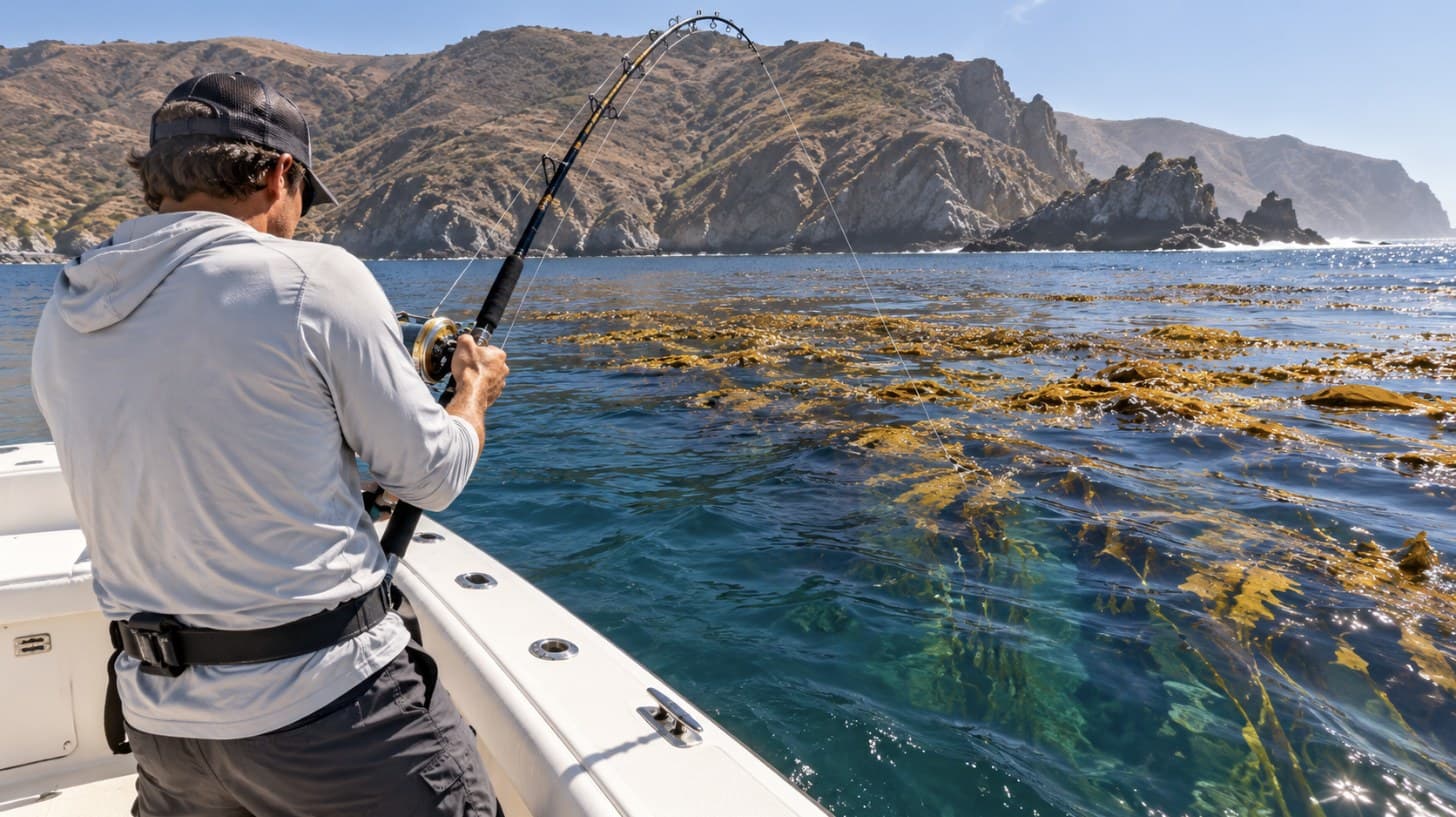
- Which jig. A heavy, compact jig that sinks fast. Blue and white, scrambled egg and squid-like colors are traditional for seabass.
- How to fish it. Drop it to the bottom, then wind it up fast for several turns and let it fall back. Most bites come on the fall or at the first turns off the bottom.
- Stay near the bottom. A seabass rarely chases a jig far up the water column. If you are not touching the bottom regularly, you are probably fishing too high.
The post on picking jigs that get bit covers heavy iron for yellowtail, and the same jigs cover seabass.
Big swimbaits
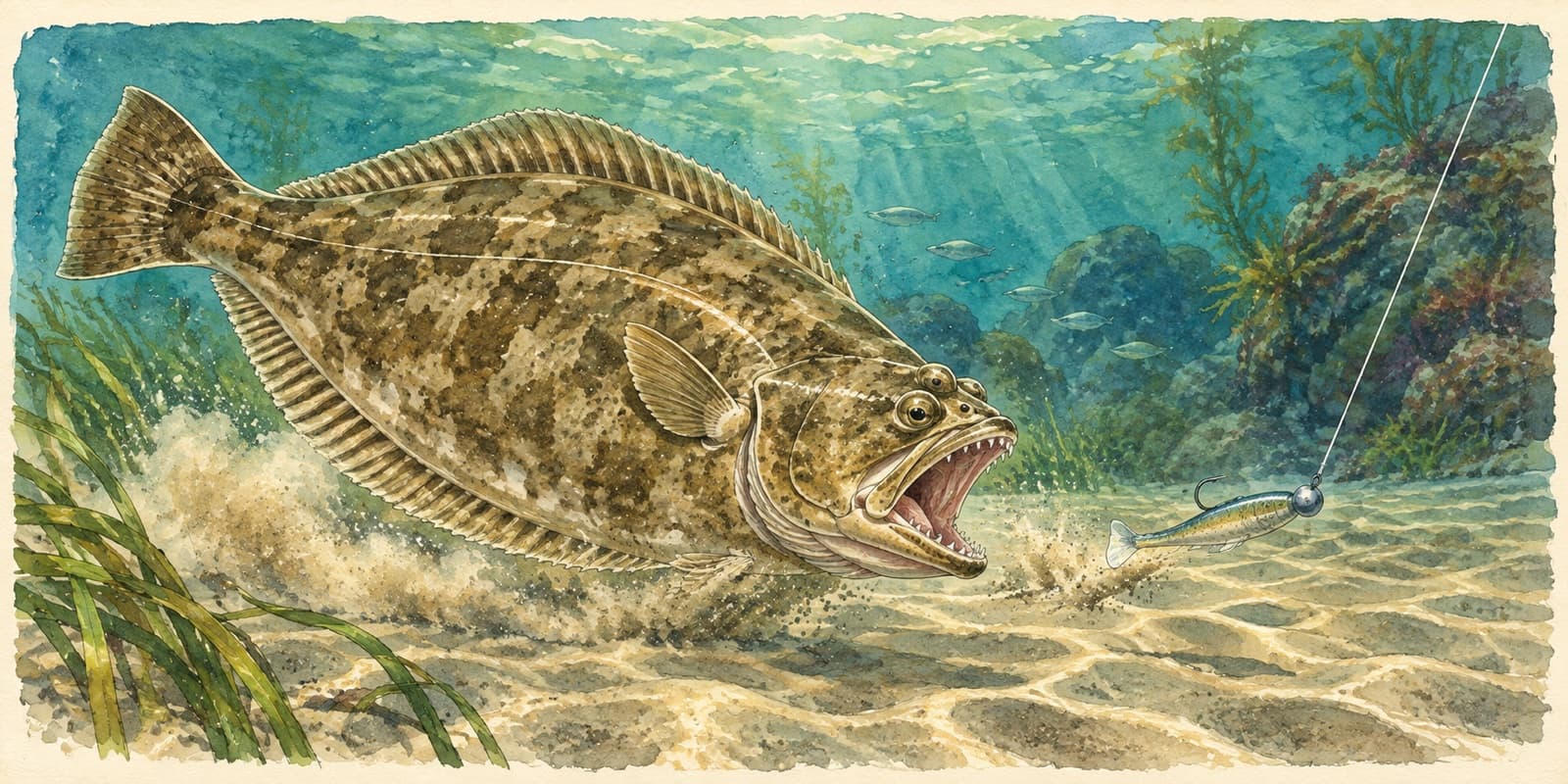
A large swimbait on a heavy leadhead is the other standard lure, and it is often the better choice over sand next to kelp.
- Size. Go bigger than you would for calico. Seabass eat big baits, and a large paddletail looks like a mackerel or a squid.
- Weight. Heavy enough to reach the bottom in the current you have. On a slow day that may be lighter than you think, and a lighter head swims more naturally.
- The retrieve. Let it sink to the bottom, then wind it slowly so it swims just above the sand. A slow, steady retrieve with an occasional pause is usually better than hopping it.
From shore: spoons and swimbaits
White seabass come within reach of the beach, piers and jetties at times, usually in spring and early summer and often around dawn, when bait or squid push in close. Shore anglers catch them on heavy casting spoons and swimbaits thrown out past the breakers and worked slowly back.
It is not a common catch from shore, and it is not something to plan a season around. But when seabass are being caught off the local beaches, it is worth having a heavy spoon in the bag.
Tackle
White seabass are big fish that live next to kelp, so the tackle has to be heavy enough to turn them.
- Line. Plenty of seabass anglers fish 40-pound monofilament or braid with a fluorocarbon leader of about that strength. Lighter line gets more bites in clear water but loses more fish in kelp.
- Rod. A rod with enough backbone to pull a fish away from the stalks. A jig stick or a heavy swimbait rod works.
- Drag. Set it firm. A seabass that reaches the kelp is often lost. If one does wrap up, ease off and let it swim out, then come tight again.
Know your fish before you keep it
White seabass have a size limit and a bag limit, and the bag south of Point Conception drops in late spring, right when fishing is best. Check the CDFW Southern region regulations before every trip and measure every fish. Small seabass, often called rats, are common on the kelp and go back.
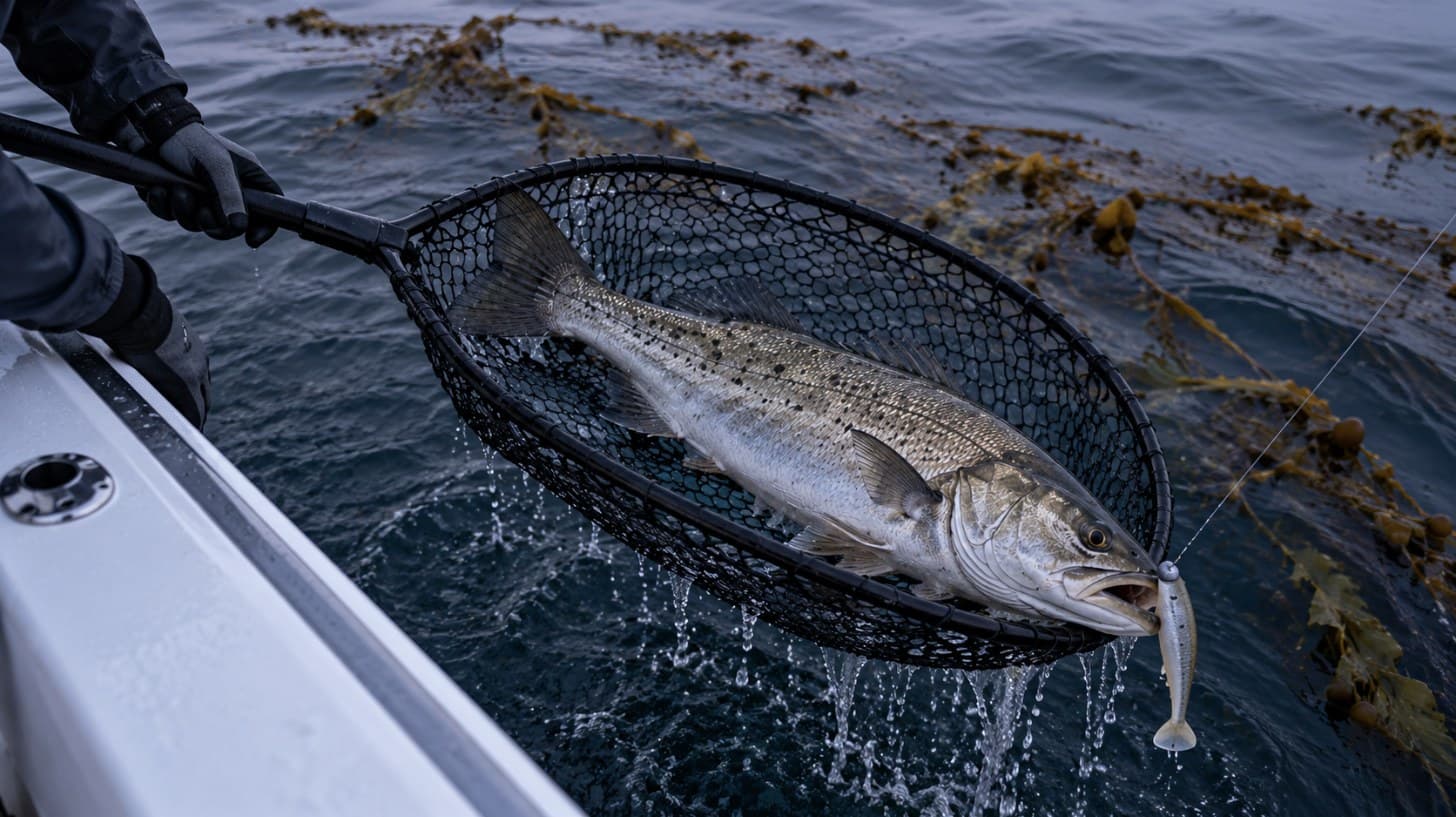
Two look-alikes to know:
- Giant sea bass. A dark, heavy-bodied fish that eats your bait on the bottom may be a giant sea bass, which cannot be kept. The giant sea bass story explains why.
- Yellowtail. On the same kelp, a yellowtail has a bright yellow tail and a yellow stripe down its side. A white seabass is silver to bronze-grey with no stripe and a slight ridge running down the belly.
The hatchery fish
White seabass are one of the few fish in the Bight with a hatchery program behind them. CDFW's Ocean Resources Enhancement and Hatchery Program raises juveniles, which volunteers grow out in pens at harbors across Southern California before release. Some fish you catch carry a small tag in the cheek. The species guide has more on the program.
Where Fish or Pass fits
White seabass are a profile on Fish or Pass, not a graded species. The Bite Score reads conditions for six species, and the one that shares the seabass's kelp, current and bait is yellowtail. A day the score likes for yellowtail on an island kelp line is often a day worth carrying a seabass jig. It cannot tell you whether a seabass is sitting under the bait you are marking. Your jig will.