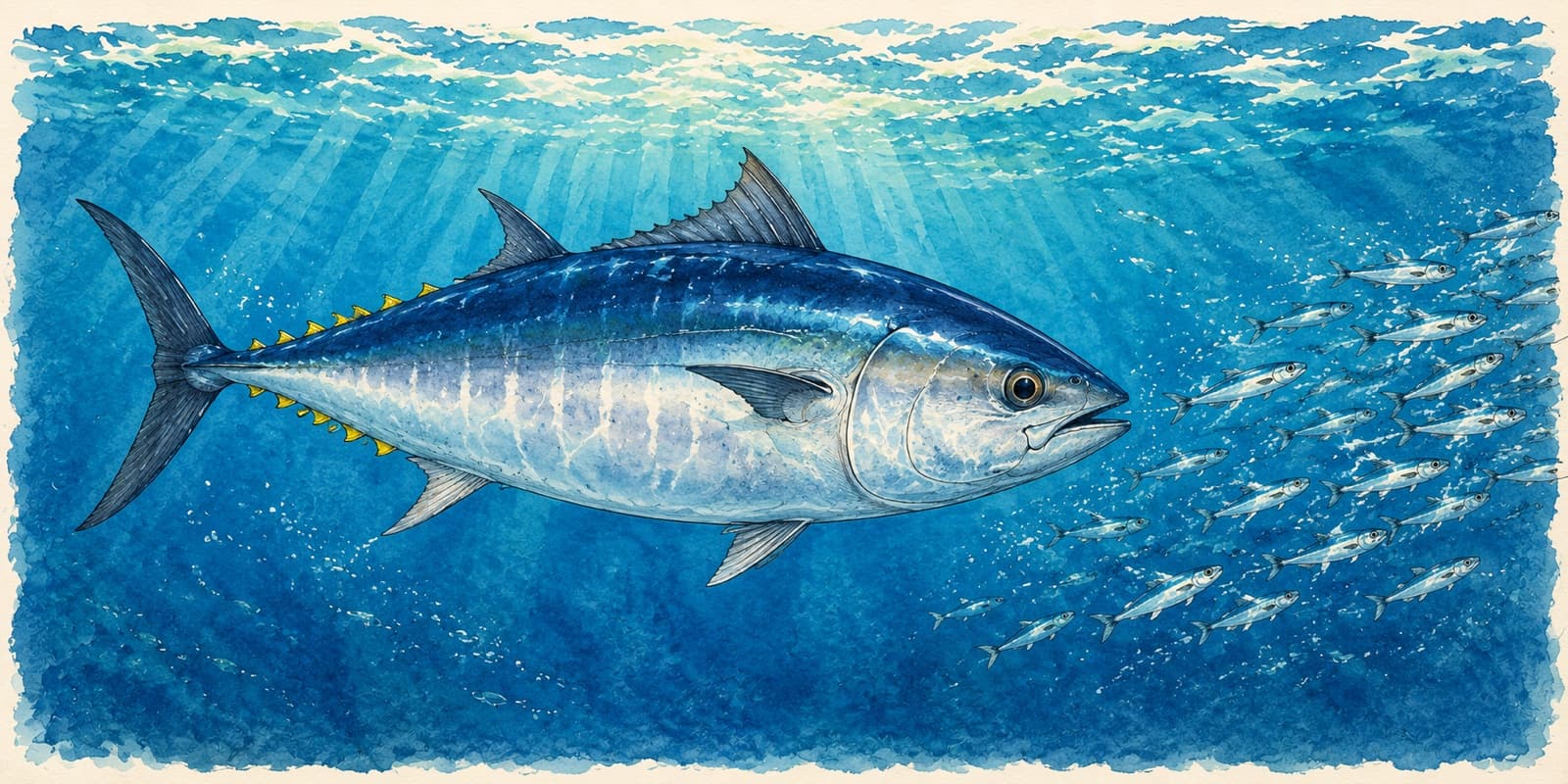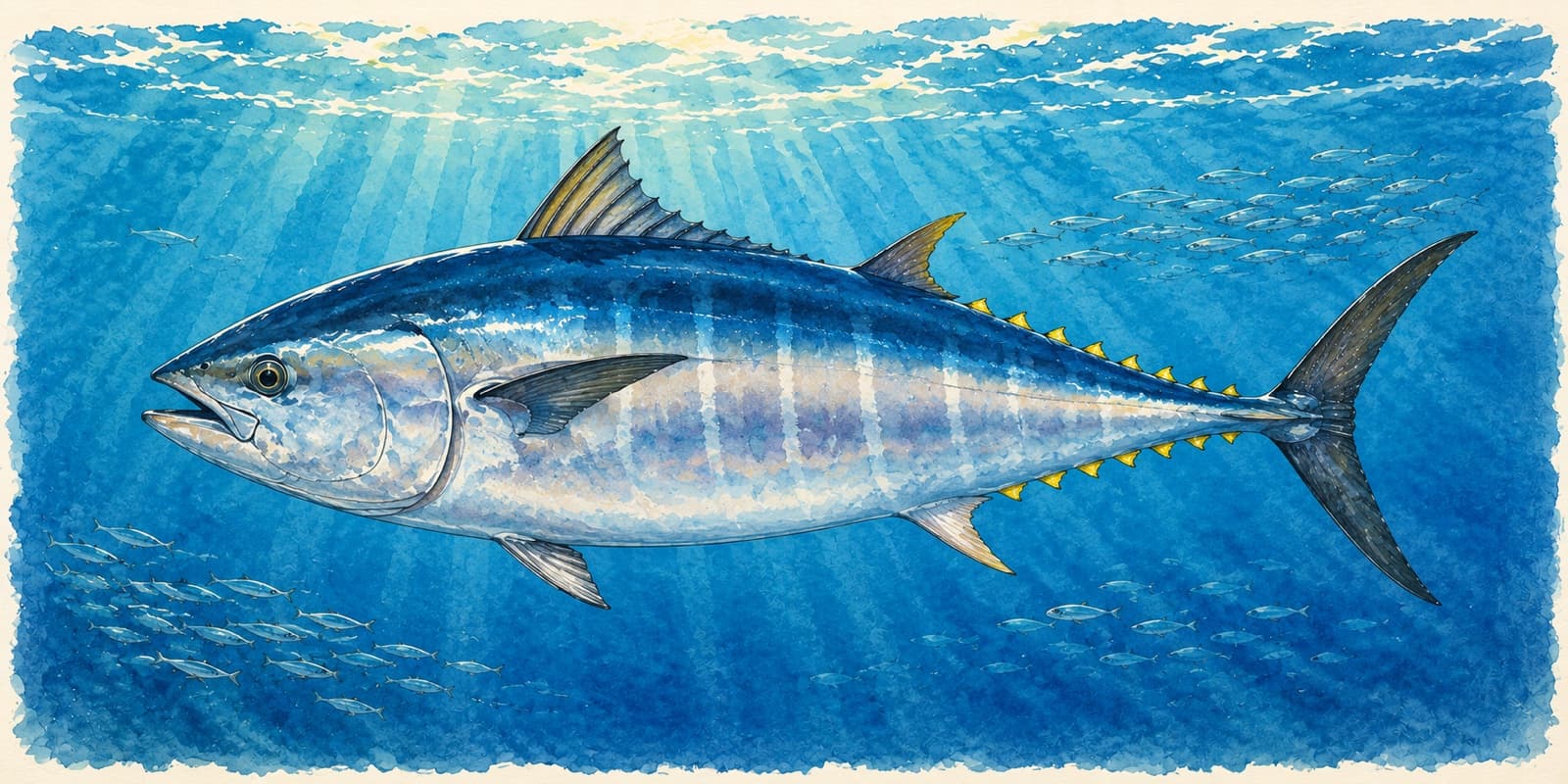
By October the yellowfin are leaving. The warm water that carried them into the Bight is backing off to the south, and most years the reports start to change their tune. What they change to, more often than not, is bluefin.
Bluefin are the tuna that stays. They tolerate cooler water than yellowfin, they hang around long after the warm-water crowd has gone home, and they are the hardest fish on this coast to get to bite. This is how they behave in the fall, where to look for them, and why a day on bluefin is a different game from a day on anything else.
Why bluefin outlast the other tuna
Most fish are the temperature of the water they swim in. Bluefin are not. They are one of the few fish that keep their bodies warmer than the ocean around them, which lets them work cool, deep water that would slow a yellowfin down.
That one trait explains most of their fall behaviour. Yellowfin want the low 70s and leave when the offshore water slides into the mid 60s, which is the story told in our post on fall yellowfin in Southern California. Bluefin are comfortable in the low-to-upper 60s and will hold on a good break well into the season. When the yellowfin run is over, the bluefin often are not.
The fish themselves are travellers. The bluefin caught off Southern California hatched on the far side of the Pacific, crossed it as juveniles, and spend a few years feeding along this coast and Baja before heading back. They are here to eat, and in the fall there is a lot to eat. Our bluefin overview follows them month by month.
What they are keyed on
Bluefin are not structure fish the way yellowtail are. They are keyed on water and bait.
- Temperature breaks. The line where warmer and cooler water meet, often marked by a change in colour or surface texture. Bait gathers along it and the tuna patrol it.
- Bait. Sardines, mackerel, anchovies and squid. Find the bait on the meter or under the birds and you are in the right neighbourhood.
- Birds and whales. Working birds give away feeding fish. Bluefin also travel with whales, and a spout in clean blue water is worth a look.
- Kelp paddies. Less reliable for bluefin than for dorado and yellowtail, but in warm water a good paddy can hold them. The habits in reading a kelp paddy still apply.
Where to look
The fall bluefin grounds are offshore, and some of them are a long way out. The fleet out of Point Loma works the offshore banks south and west of San Diego, and boats with the range push to the outer banks, Tanner and Cortes, where cold, rich water meets the warm.
San Clemente Island is the other big piece of the map. It sits within reach of Oceanside, whose boats have a fairly short, straight run to the blue water and the island. When the fish are holding between the coast and San Clemente, North County is well placed. The guide to fishing out of Oceanside Harbor covers the landing and its trips.
Some of the best fall water sits south of the border. That needs a Mexican fishing licence, and the rules are different, so sort that out before the trip.
How bluefin show themselves
Bluefin tend to give a few kinds of looks, and each one wants a slightly different approach.
Foamers. Fish crashing bait on the surface, white water and birds. Exciting, easy to spot, and often hard to stay on, because the school moves fast and goes down without warning.
Puddlers. Fish just breaking the surface in small, quiet swirls. These are often feeding on small bait and can be the fussiest of all.
Meter marks. Fish holding deeper, sometimes well down, under bait or along a break. These fish are not showing on top, and they are fished from below.
How to get bit
This is the part bluefin are known for. They have sharp eyes, they feed on bait that is often small, and they will swim past a sardine on line they can see. Expect a lot of looks for every bite.
- Fly-line light. A lively sardine on a small hook and fluorocarbon leader, as light as you dare for the size of fish around. If you are being ignored, step down.
- Use a sinker rig for deeper fish. When the marks are below the surface, a bait on a dropper loop with a torpedo sinker, or a rubber-band sinker on a fly-line, gets it down to them.
- Throw poppers and stickbaits on foamers. Cast past the school and work the lure back through it. On a fast-moving foamer, a lure can get bit where a bait cannot keep up.
- Drop jigs to marks. A flat-fall or knife jig dropped to fish on the meter is a standard way to fish them, early, late and after dark. The broader rules on choosing metal are in the iron.
- Kites for the big ones. Kite fishing keeps a bait splashing on the surface with no line in the water near it. It is the method of choice for larger fish.
Whatever you use, bring tackle heavy enough to land what you hook. A 20 to 40 pound school fish is a hard fight. A triple-digit fish is a long one, and undersized gear means the fish is tired out by the time it is released, if it is landed at all.
The fall clock
In most years the bluefin bite carries on well after the yellowfin have gone, and it can run late into the fall. It ends the way it started: with the water. Strings of north wind, rough weather and cooling offshore water push the fish around and make the long runs harder to justify. Some years they hang on; some years they do not.
The sea state matters as much as the fish. The bluefin grounds are a long way offshore, and the fall brings more wind. Check the NOAA marine forecast before a long run, carry fuel for the trip plus a margin, and remember that a conditions read is not a navigation or safety tool.
Where Fish or Pass fits
The Bite Score weighs each species on its own terms, and for bluefin that means temperature breaks, clean blue water, bait and recent reports from the landings. It turns those into a verdict of Catching, Fishing or Pass for the grounds and the day.
What it cannot do is make a picky bluefin eat. It reads the conditions, not the fish, and it cannot see the foamer that pops up a mile away. Use it to decide whether the run is worth making, then fish what you find.
Regulations
Bluefin carry their own bag limits, separate from other tuna, and the rules differ between US and Mexican waters. Check the current CDFW ocean sport fishing regulations before you go, and Mexican rules if you are fishing south of the border.