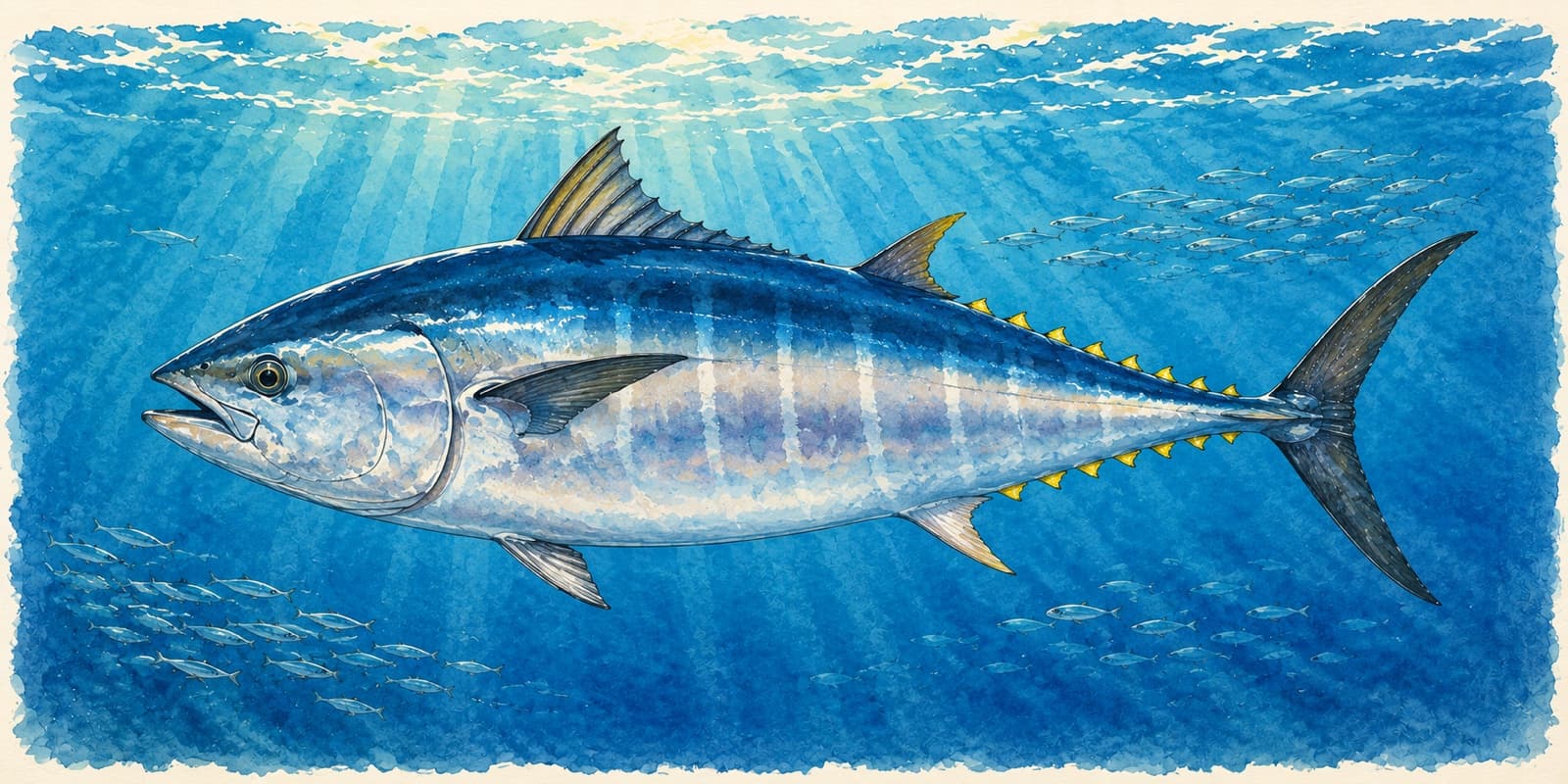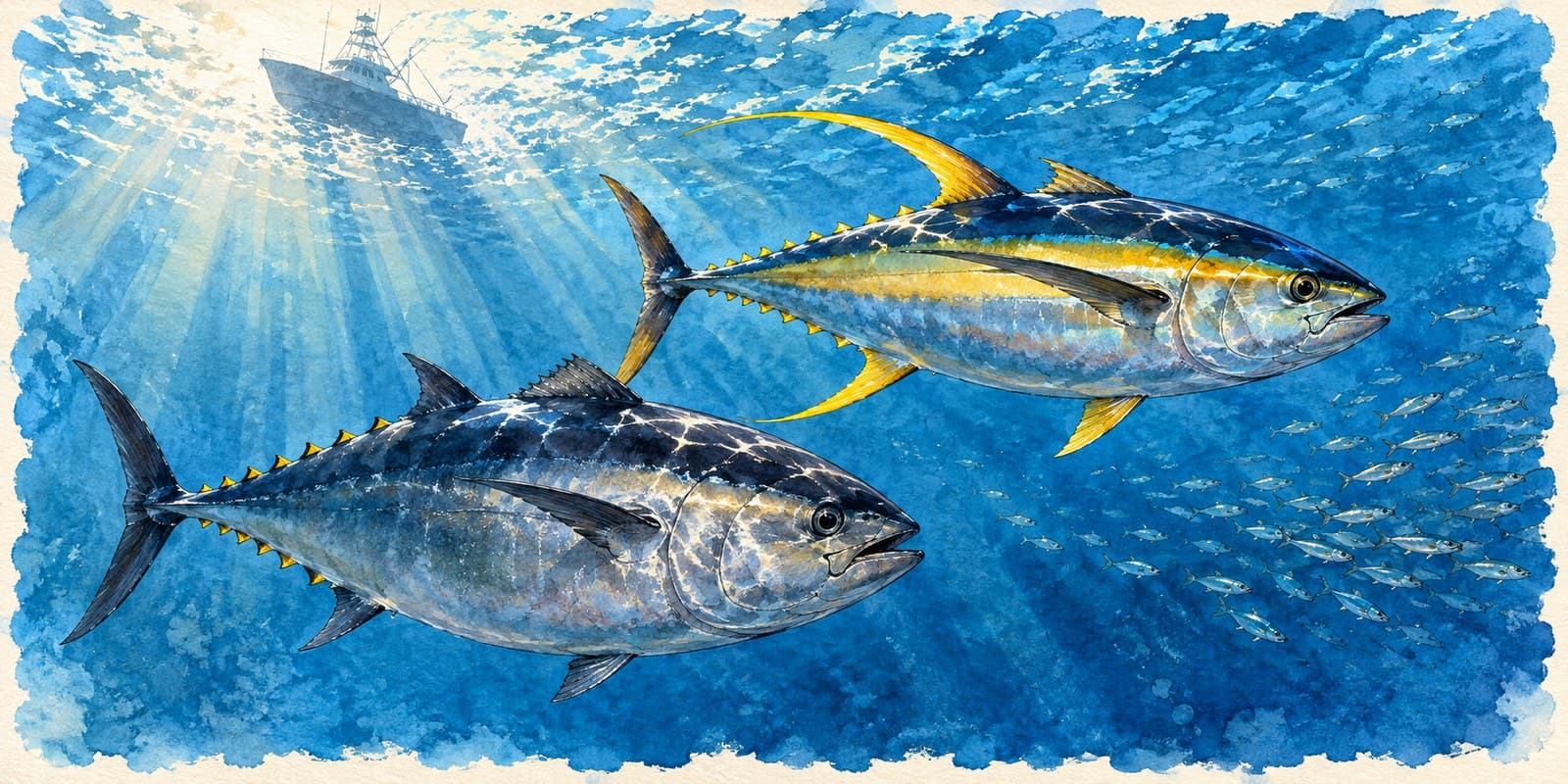
Every fall someone on the boat swings a tuna over the rail and the deck splits into two camps. Half say yellowfin. Half say bluefin. On a 15 pound fish in bad light, both camps can look pretty sure of themselves.
It matters more than bragging rights. Yellowfin and bluefin have separate limits, and in October off San Diego they often come out of the same water on the same day. You need to know which one is in the box before you count it. Here is how to tell them apart on deck, plus the one check that settles it when the fins will not.
Why you see both in October
Fall is the overlap. Yellowfin are warm-water fish that ride the summer push up from Mexico and leave when it cools. Bluefin are built for cooler water and hang on later. In late September and October the warm edge is backing south and offshore, and both fish can be working the same bait on the same break around the 9 Mile Bank, the 302, the 371 and the 43 Fathom Spot.
That is why most of the arguments happen on boats out of Point Loma this time of year. Our fall yellowfin guide covers where the yellowfin go as the water drops, and fall bluefin in Southern California covers the fish that stay.
Start with the pectoral fin
The side fin behind the gill plate is the fastest tell, and it works on most fish of any size.
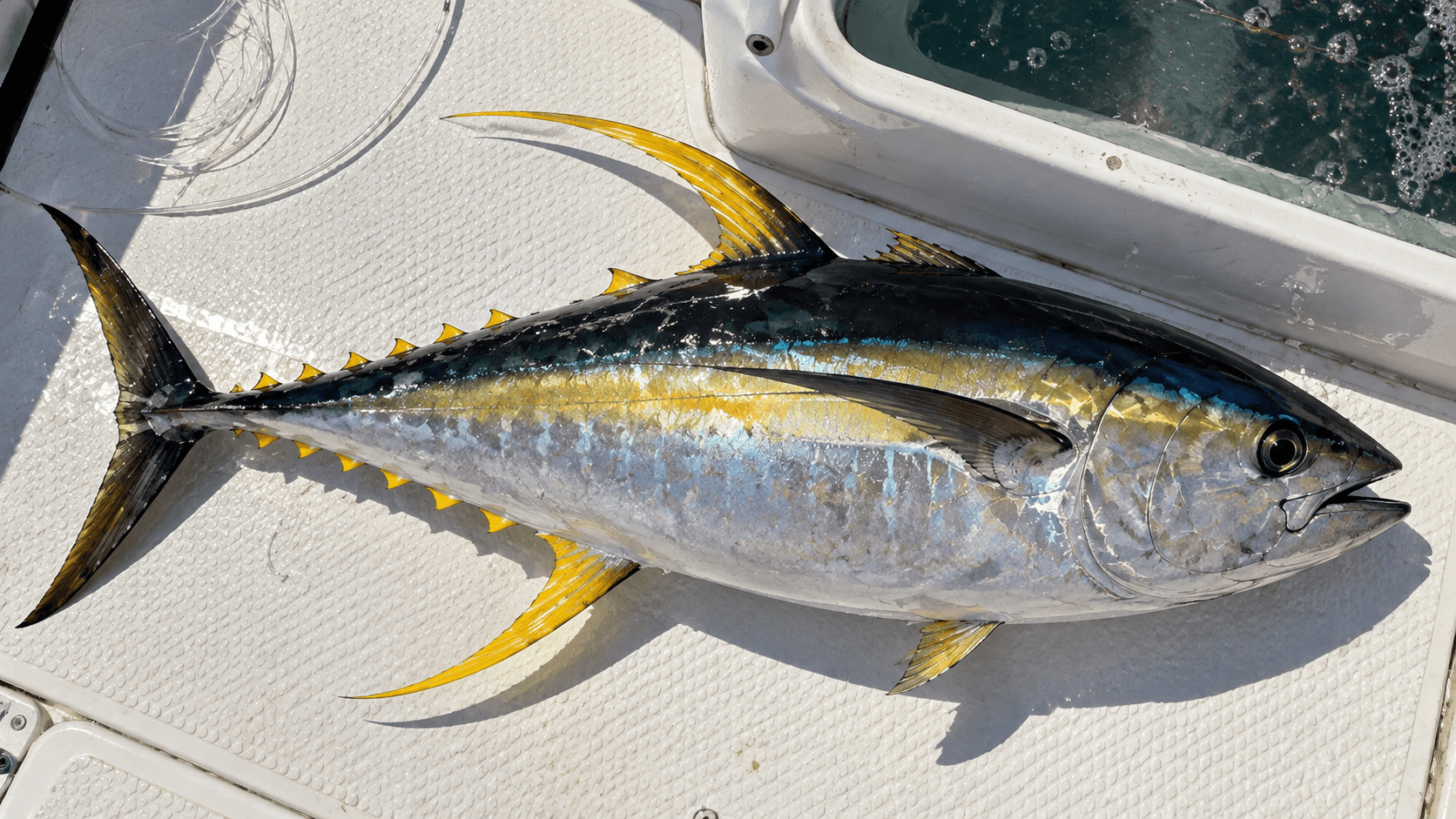
- Yellowfin: the pectoral is long and slender. Lay it flat against the body and the tip reaches back to about the start of the second dorsal fin.
- Bluefin: the pectoral is short. Laid flat, it stops well short of the second dorsal.
If you only check one thing, check this. It is also the fin that tells you when you have something else entirely: a pectoral that runs back past the second dorsal, long like a sword, is an albacore.
Then look at the fins along the back and belly
On a yellowfin, the second dorsal fin and the anal fin are bright yellow. On bigger fish they grow into long, curved sickles that can reach most of the way to the tail. That is where the name comes from, and on a grown yellowfin it is hard to miss.
On a bluefin, those same fins are short. The second dorsal is dark, more reddish brown or grey than yellow.
Smaller yellowfin do not have the long sickles yet, so do not wait for them. A school yellowfin with short fins is still a yellowfin. Go back to the pectoral.
Both fish have a row of small finlets running to the tail, yellow with dark edges on each. Finlets are not a reliable way to separate these two, so do not settle the argument on them.
Body shape and color
Shape helps once you have seen a few of each.
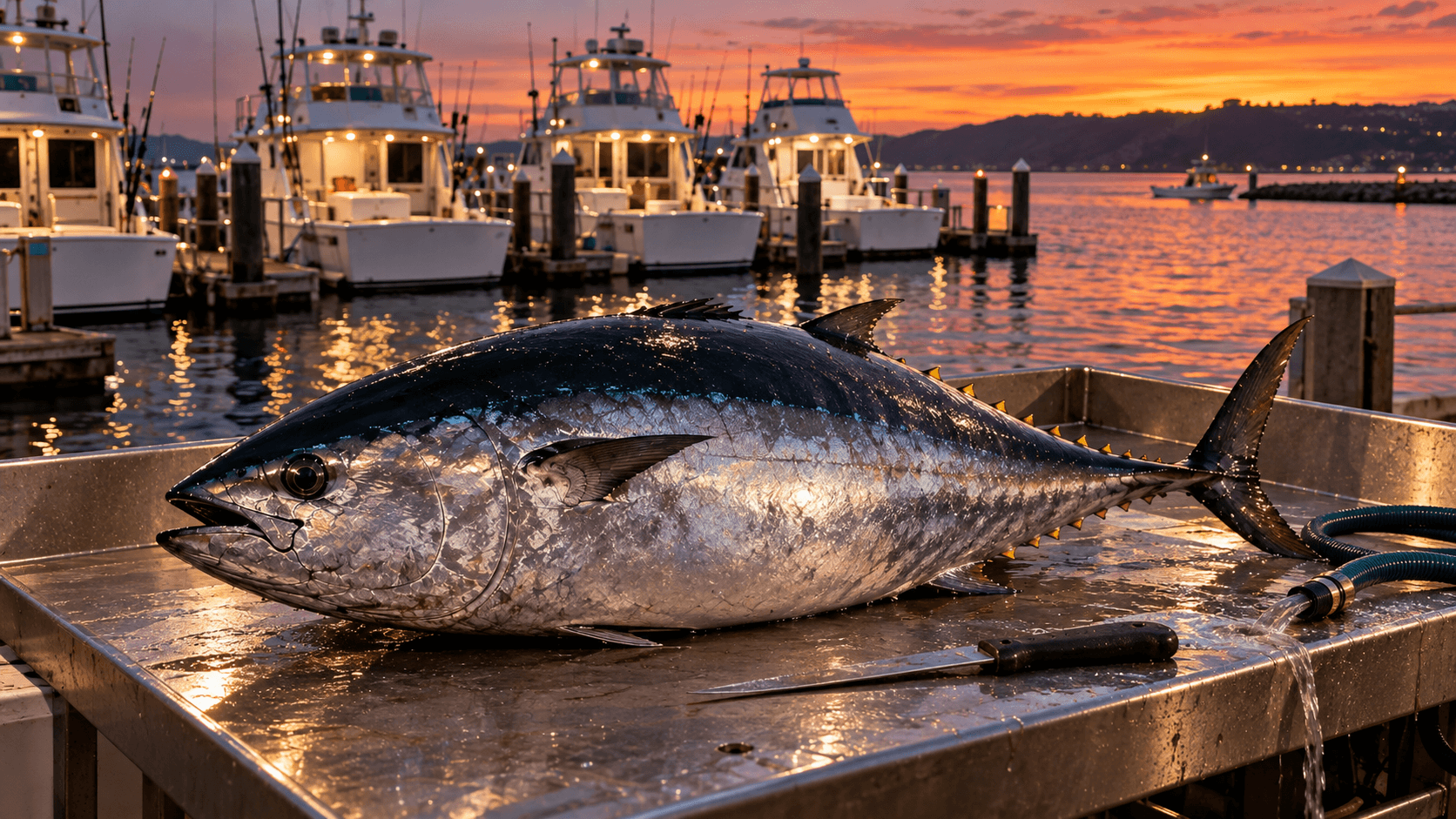
- Bluefin are thick and round through the middle, built like a football. The back is a very dark blue that looks almost black out of the water.
- Yellowfin are longer and leaner for their weight, more torpedo than football. Fresh out of the water, many show a gold or yellow stripe along the side between the dark back and the silver belly.
Color fades fast once a fish dies, and both species carry pale bars and spots on the lower sides. Use color as backup, not as the deciding vote.
When the fins will not settle it
Small fish, a fish that has been in the slush for a few hours, or a crowd of opinions on the deck can all leave you unsure. The check that does not care about any of that happens when the fish is cleaned.
Look at the underside of the liver. A bluefin liver has fine lines, or striations, running across its surface. A yellowfin liver is smooth. A bigeye also has a striated liver, but bigeye are an occasional visitor here and have a long pectoral and a big eye that set them apart from bluefin. Between yellowfin and bluefin, a smooth liver means yellowfin.
The deckhands on the San Diego boats see more tuna in a season than most of us see in a lifetime. If you are on a charter and not sure, ask before you tag the fish.
Why it matters for your limit
The two species do not share a limit, and the rules are not the same in US and Mexican waters. A lot of the best fall tuna water sits south of the border, which also needs a Mexican fishing licence. Check the current CDFW ocean sport fishing regulations before every trip rather than going off what you remember from last year.
The practical rule is simple. Identify every tuna as it comes aboard, keep a count by species, and if a fish is a toss-up, call it by the pectoral and confirm at the cleaning table.
A quick checklist for the rail
- Pectoral fin. Long, reaching the second dorsal: yellowfin. Short: bluefin. Very long, past the second dorsal: albacore.
- Second dorsal and anal fins. Bright yellow and long: yellowfin. Short and dark: bluefin.
- Body. Lean torpedo with a gold side stripe: yellowfin. Round football with a near-black back: bluefin.
- Liver. Smooth: yellowfin. Striated: bluefin.
And if it is green and gold with a blunt head, it is not a tuna at all. That is a dorado, and dorado season in Southern California covers when they show.
Where Fish or Pass fits
The Bite Score is set per species, so yellowfin and bluefin get their own verdict of Catching, Fishing or Pass for the grounds and the day. In the fall overlap those two verdicts can be very different on the same water, because the score weighs water temperature and breaks, kelp and bait, recent reports from the landings and sea conditions, and yellowfin and bluefin want different temperatures.
What it cannot do is tell you what is on the end of your line. That part is still on you and the pectoral fin.