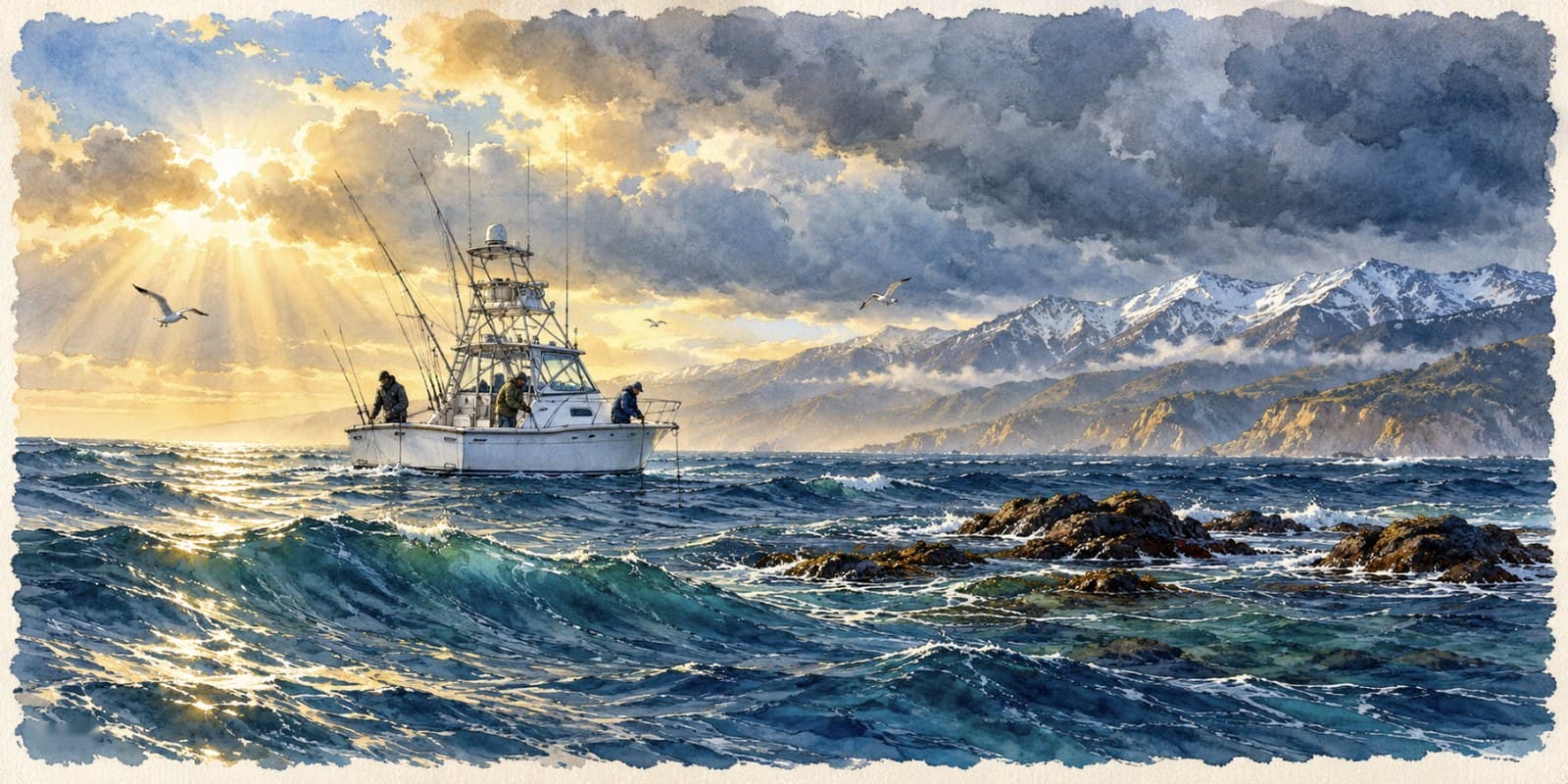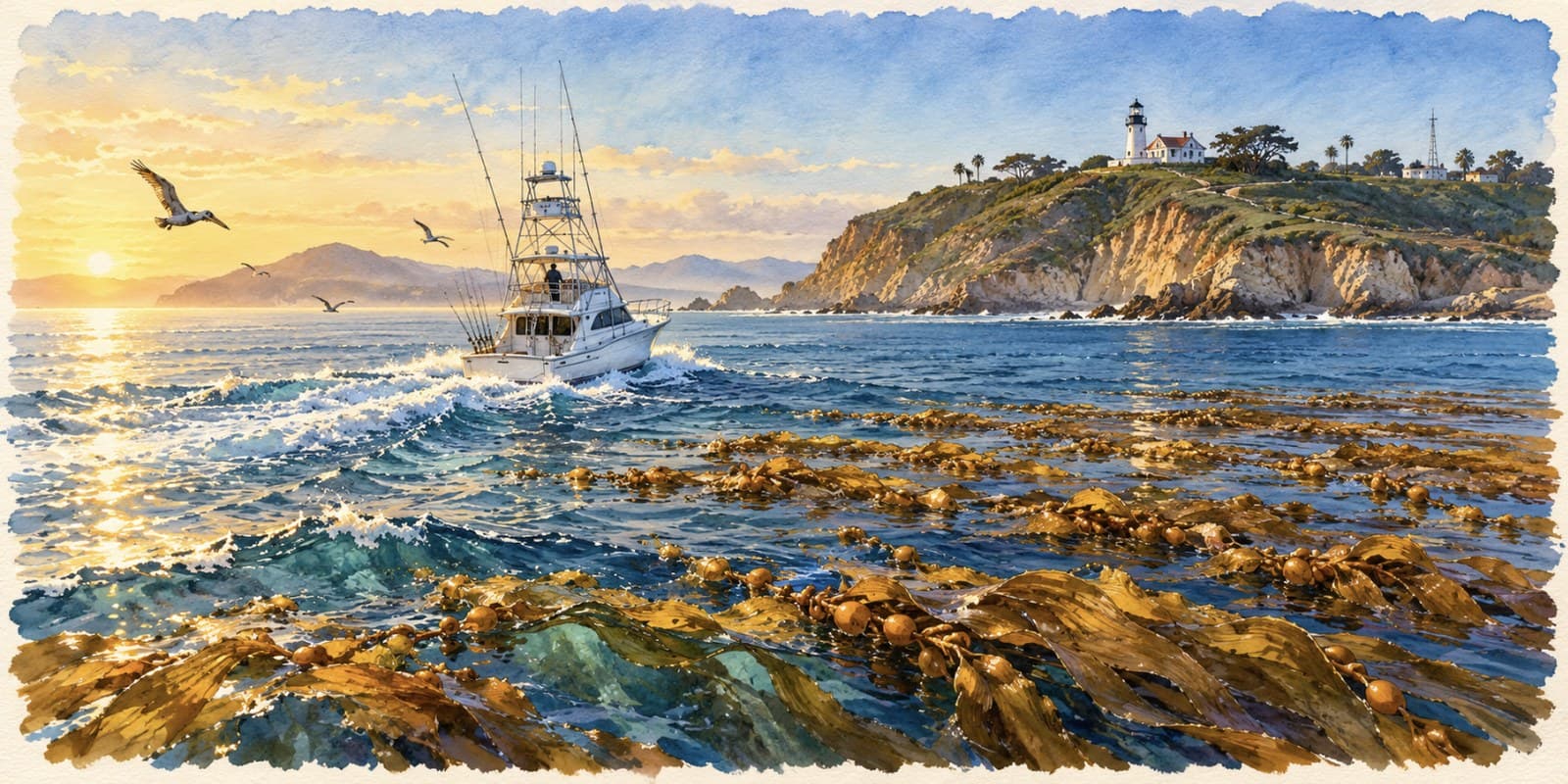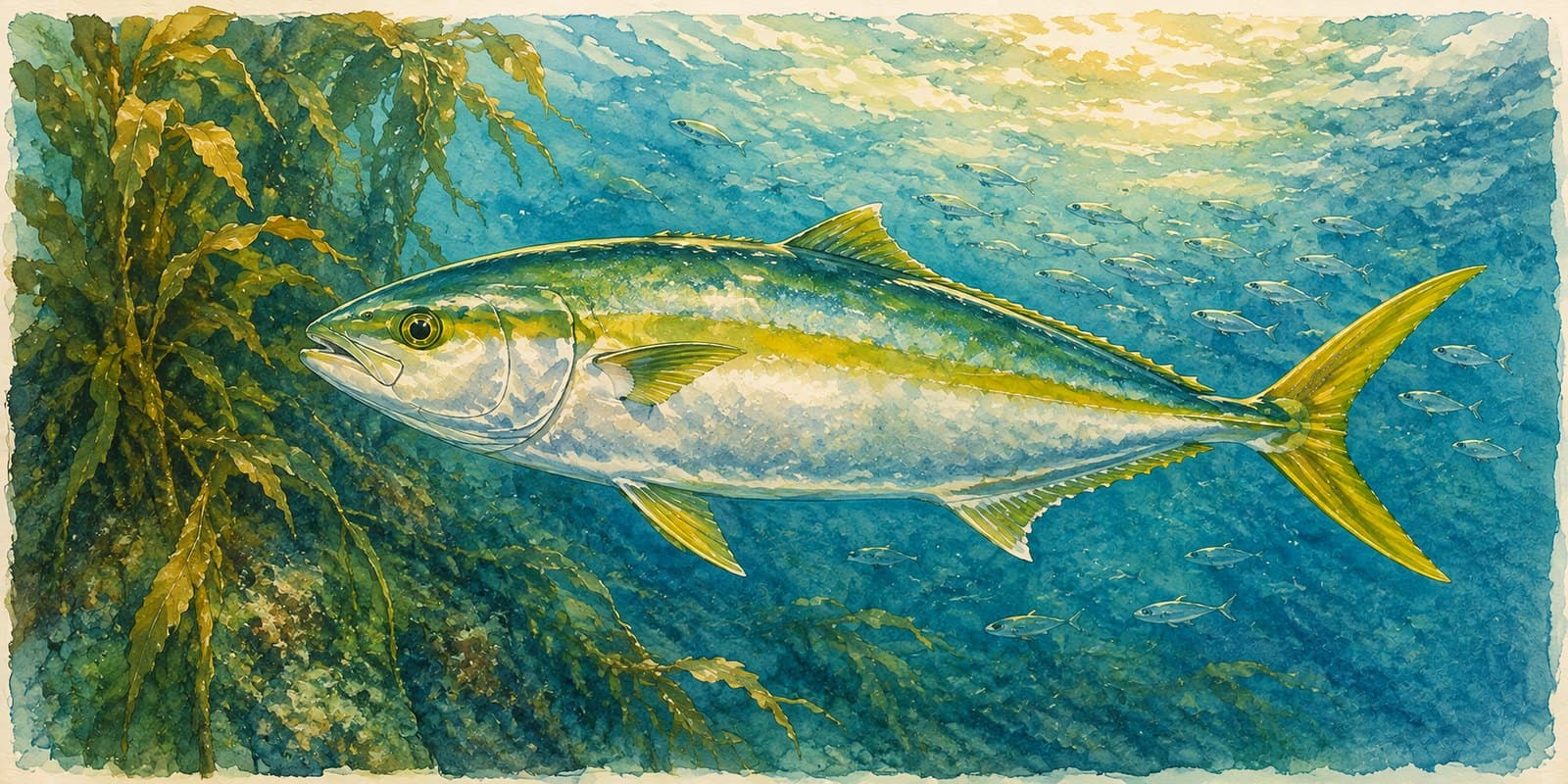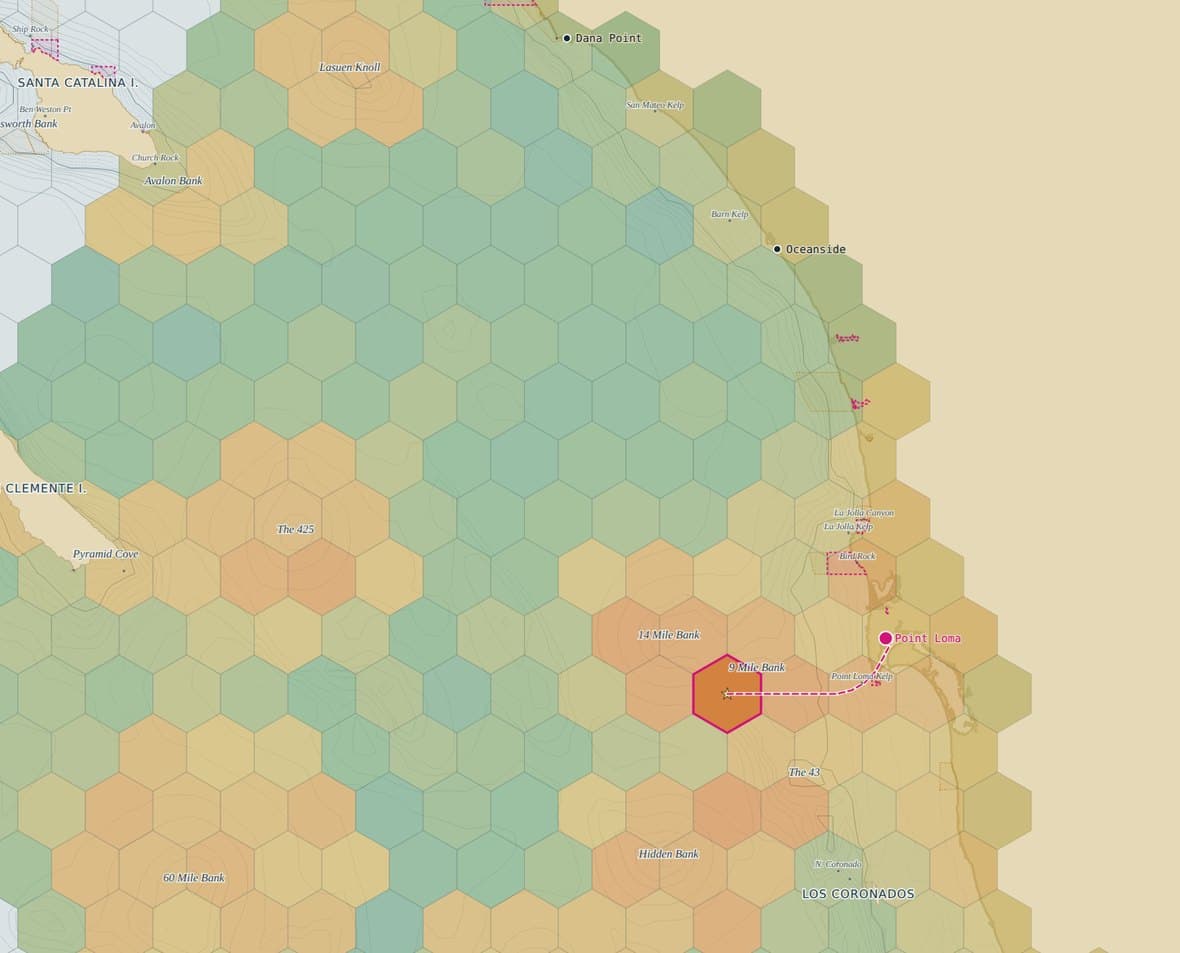
Every fall there is a stretch when most of the Southern California coast has gone quiet. The water has cooled, the kelp paddies have thinned out, and the fleet in the northern harbors has turned to rockfish. In San Diego, boats are still coming home with yellowtail.
The reason sits a short run south of the harbor mouth: the Coronado Islands. This is why they keep fishing after everywhere else has slowed, and what you need to know before you point the bow at them.
Four small islands, just over the line
The Coronados are a small group of rocky islands off the coast of northern Baja California, within sight of San Diego on a clear day. They are not part of California. They are in Mexican waters, and that single fact shapes every trip there. More on that below.
For an angler, they are a compact piece of exactly the habitat this fishery runs on. There is steep rock dropping into deep water, kelp along the edges, boiler rocks where swell breaks, and points where current wraps around the ends of the islands. It is a lot of structure in a small area, close to a major harbor.
Closest to the warm water
Southern California's warm-season fishing is driven by warm water arriving from the south. It reaches the bottom of the Bight first and leaves it last.
That gives the water around the Coronados a head start in spring and a longer tail in fall. When the surface temperature farther up the coast has dropped below what yellowtail prefer, the southern end is often still in range. The season does not end on the same day everywhere. It retreats south, and the islands are about as far south as a day trip from a California harbor goes.
Structure that keeps fish in place
Warm water explains when. Structure explains why the fish stay.
Yellowtail are a structure fish. They hold on hard bottom, kelp and current edges where bait gathers, and they favor the side the current is pushing onto. The post on how yellowtail relate to structure covers that habit in detail. The Coronados offer every version of it at once, so when conditions change the fish can shift from one side of an island to another without leaving the area.
Some yellowtail stay around the islands through the cold months. The fishing is slower and far less consistent in winter, but it does not switch off the way it does to the north. That is the heart of the long season: not that the islands are always good, but that they are rarely empty.
Why San Diego gets the benefit
Geography does the rest. Point Loma is the southernmost launch in the state, and the run to the islands is short enough to fish them and be home the same day. From harbors farther up the coast the same trip is a much bigger commitment in fuel and hours.
That short run is also why San Diego is the most flexible home port on this coast. The same morning can go to the islands, to the close-in banks, or to the kelp at La Jolla, depending on what the day looks like.
The line matters: paperwork and rules
The Coronado Islands are in Mexico. Fishing there is under Mexican regulations, not California ones.
- Everyone aboard who is fishing needs a Mexican fishing license.
- Mexico has its own requirements for visiting boats and passengers, including an FMM if you go ashore, and those requirements change. Confirm what is currently required before you leave.
- Limits, seasons and protected areas are set by Mexico and are different from California's.
- When you return, your catch has to be legal on both sides. Check the CDFW ocean fishing regulations for what you may bring back into California.
If you ride a charter or party boat out of San Diego, the landing will tell you what to bring and often handles the permits. If you run your own boat, it is on you. Do not treat any of this as a formality, and do not rely on this post for the current rules.
How to fish them
The approach is the same as on any island structure.
- Work the edges. Fish the outside of the kelp, the points, and the up-current side of rocks and high spots.
- Watch for life. Birds, bait on the surface, and marks on the meter tell you which side is working today.
- Carry both kinds of iron. A surface jig for fish that show on top and a heavy jig for fish holding deep. The guide to picking jigs that get bit covers the choice.
- Fish heavy enough gear. Rock and kelp are close, and a yellowtail will use them.
Live bait fished near structure is the other standard method, and squid on the bottom takes fish when they are deep.
What the long season does not mean
The longest season is not the same as a sure thing. Fish move, weather closes the window, and plenty of late-season trips come home light. Open water between the harbor and the islands deserves respect in any month, and winter conditions can change quickly.
A conditions read helps you choose the day. It can show that the water down south is still in the range yellowtail like and that the sea state is workable. It cannot promise the fish will be home or willing, and it is not a navigation or safety tool. Check the NOAA marine forecast, check the rules on both sides of the line, and make your own call at the dock.