Most fish on a Southern California reef trip are caught in deep water. The cabezon is the exception. It lives in the shallow rock, often close enough to shore that you can fish for it from the rocks themselves, and it spends its life sitting in a hole waiting for a crab to walk past.
That makes it a different kind of fishing from a rockfish drop: shallower, rougher, closer to the kelp and the surge, and over in a few seconds once the fish bites. This post covers where cabezon live in the Bight, what they eat, how to get one out of the rock, and the one part of the fish you never eat. The cabezon species guide has the short version of the fish itself.
What a cabezon is
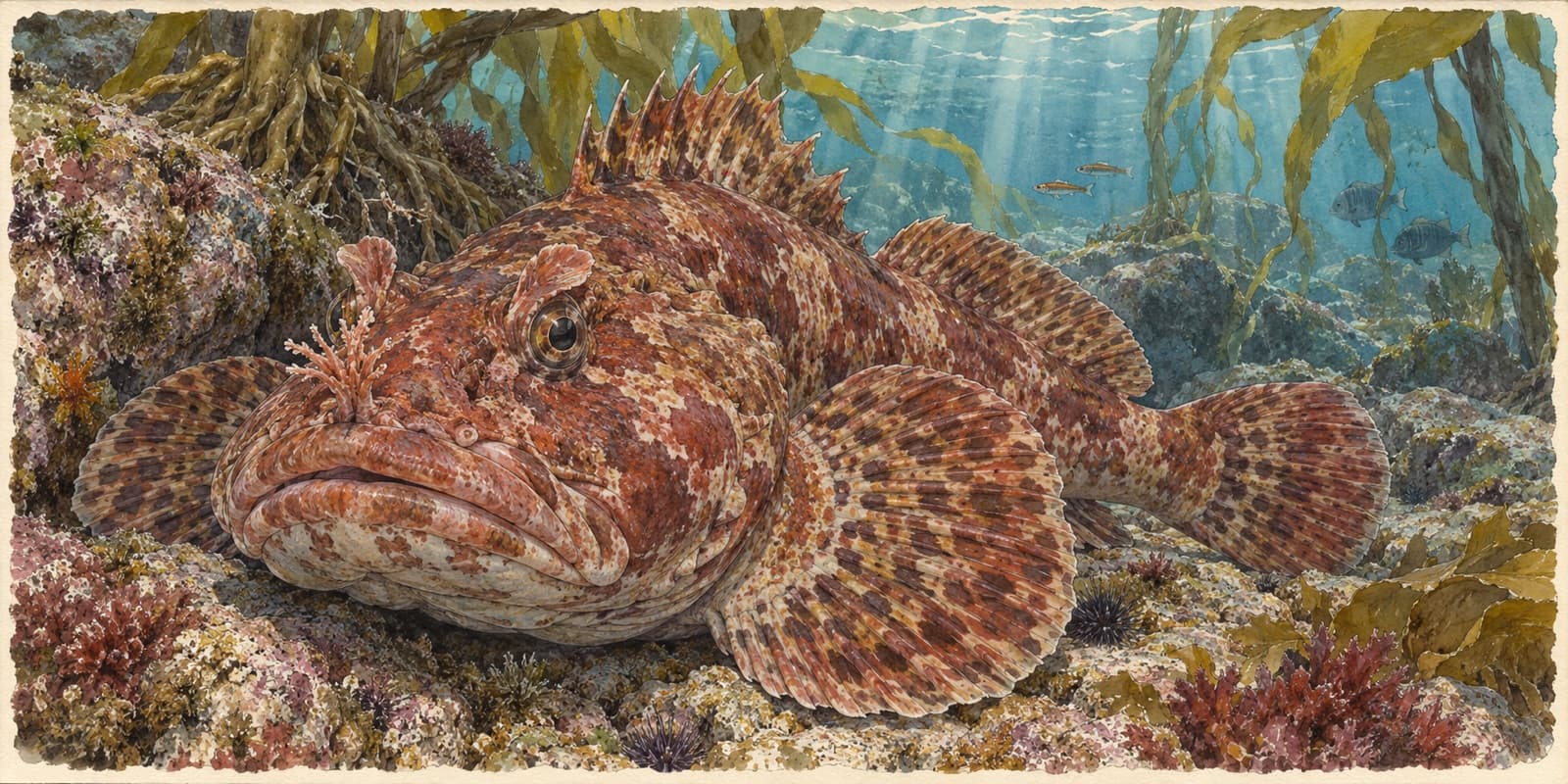
The name is Spanish for big head, and it fits. A cabezon is a sculpin: a broad, flat-skulled fish with a wide mouth, no scales, huge fan-shaped pectoral fins, and a branched flap of skin on the tip of the snout that is the easiest way to tell it from anything else on the rock.
A few things worth knowing:
- It is not the venomous one. Southern California anglers call the California scorpionfish a sculpin, and that fish has venomous spines. The cabezon is a true sculpin and does not. Our post on sculpin, spines and season covers the spiny one.
- Colour tells you the sex, mostly. Cabezon come in mottled brown, green and red. Most red fish are males and most green fish are females.
- They get big. California Sea Grant gives the maximum as about 3 feet and over 24 pounds, with females usually larger than males of the same age. A typical keeper is a lot smaller than that.
Where they live in the Bight
Cabezon range from Alaska to central Baja California and can turn up from the tide line down to several hundred feet. Most of them live in the shallows: rough, kelp-covered rock, jetty and breakwater boulders, and the reef just outside the surf.
In Southern California that means the rocky stretches of coast, not the sand beaches:
- Palos Verdes. The rocky shoreline and the kelp off it are cabezon country. The San Pedro port guide covers the boats that fish the Palos Verdes kelp, and our post on fishing out of San Pedro covers the grounds.
- Point Loma and La Jolla. The kelp beds and the rock under them hold cabezon along with calico and sheephead. See the Point Loma port guide and our post on fishing out of Point Loma.
- Breakwaters and jetties. The big rock walls along the coast are artificial reef, and cabezon use them like the real thing.
- The islands. The shallow rock around the Channel Islands and Catalina holds them too, though most boats fishing there are after other fish.
Much of the best shallow rock on this coast sits inside marine protected areas, including the tip of Point Loma, La Jolla Cove and parts of Palos Verdes. Check the CDFW marine protected areas page before you fish any rocky shoreline.
What they eat
Cabezon are ambush feeders. They sit still, blend into the rock and wait. Their diet is mostly crustaceans, along with mollusks and small fish, and adults have been seen swallowing whole crabs, including red rock crabs.
That tells you what to put on the hook:
- Crab. A small whole crab or a piece of one is the classic cabezon bait.
- Shrimp. Fresh or frozen ghost shrimp and market shrimp both work.
- Squid. A strip of squid is tough, stays on the hook and works on everything else on the reef too.
Cabezon do not chase a bait far. It needs to be on the bottom, right against the rock, close to wherever the fish is hiding.
Getting one out of the hole
Hooking a cabezon is the easy part. Landing it is where most of them are lost. A hooked cabezon heads straight back into the rock, wedges itself in with those big pectoral fins, and stays there.
- Fish heavier line than you think. You are fishing in rock and kelp and you will need to lift a heavy fish straight up. Light line loses fish and tackle.
- Keep the rig simple. A sinker and a single hook on a short leader snags less than a long rig with several hooks. Tie the sinker on with lighter line so it breaks off in a snag and saves the rest.
- Lift hard and steady. When the fish bites, set the hook and pull it up off the bottom before it can turn. Give it slack and it is in the rock.
- If it does hole up, try slack. Many rock fishermen ease off the pressure for a moment and wait for the fish to move before pulling again.
From shore, fish a low or incoming tide and stay well back from the wash. Rocky points in a swell are dangerous, and no fish is worth a wave.
Winter nests
Cabezon spawn on shallow rock. A female lays her eggs on bare rock surfaces in crevices and under ledges, from the intertidal zone down, and the male fertilizes them and stays to guard the nest until they hatch. In California, hatching rises from February and peaks in late March and early April.
A guarding male defends the nest hard and does not leave it. It is the same pattern as the lingcod, which nests on deeper rock over the same months. Our post on lingcod in winter covers that fish and why the nest guarder matters.
The roe: throw it away
Cabezon eggs are poisonous to people. Researchers have identified a toxic compound in the roe, and eating it causes vomiting, diarrhea, chills and fever. Cooking does not make it safe.
The flesh is excellent and perfectly safe. If you keep a cabezon, take the egg mass out whole, throw it away, and keep it off the fillets. Some cabezon have blue-green flesh, like lingcod. It cooks out white and is harmless.
Rules
Cabezon are managed as part of the rockfish, cabezon and greenling complex and count toward its combined bag. For boat-based anglers the season and depth rules are set every year and can close the nearshore fishery for months at a time. Shore-based anglers and spear divers are exempt from the season and depth restrictions, but not from the bag rules. Check the CDFW recreational groundfish summary before every trip.
The neighbours
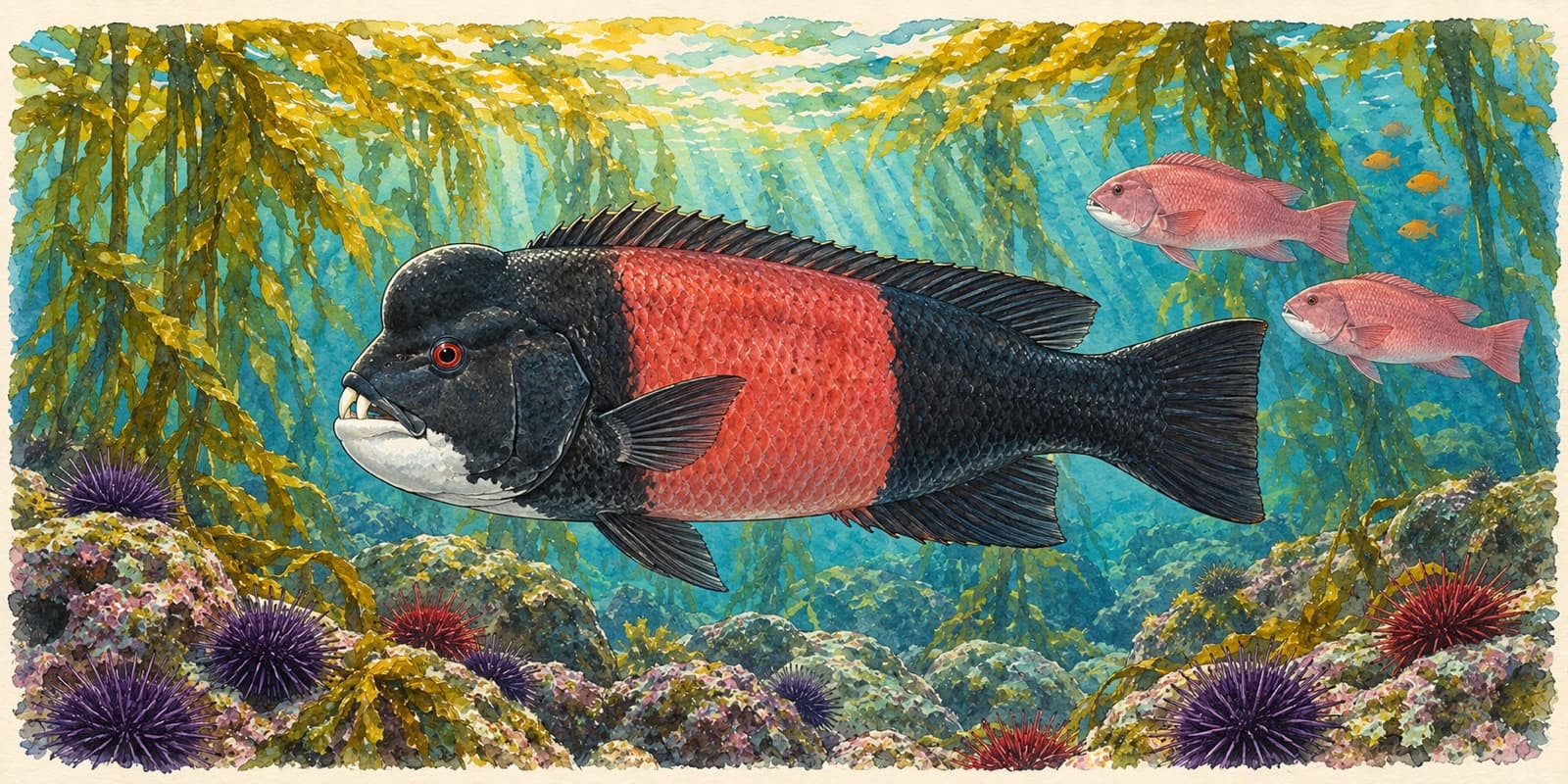
Cabezon share the shallow kelp and rock with calico bass and with the red-and-black wrasse that crunches urchins and changes sex. That fish has its own post: California sheephead on the reef. If you are fishing the kelp for calico, our Southern California calico guide covers the same water.
Where Fish or Pass fits
The cabezon guide is a profile of the fish. Fish or Pass does not grade cabezon. The Bite Score reads conditions for rockfish and calico, the fish that share the cabezon's rock, as Catching, Fishing or Pass. It weighs sea conditions, but it is not a safety tool for the rocks or the surf, and it cannot make a cabezon come out of its hole.