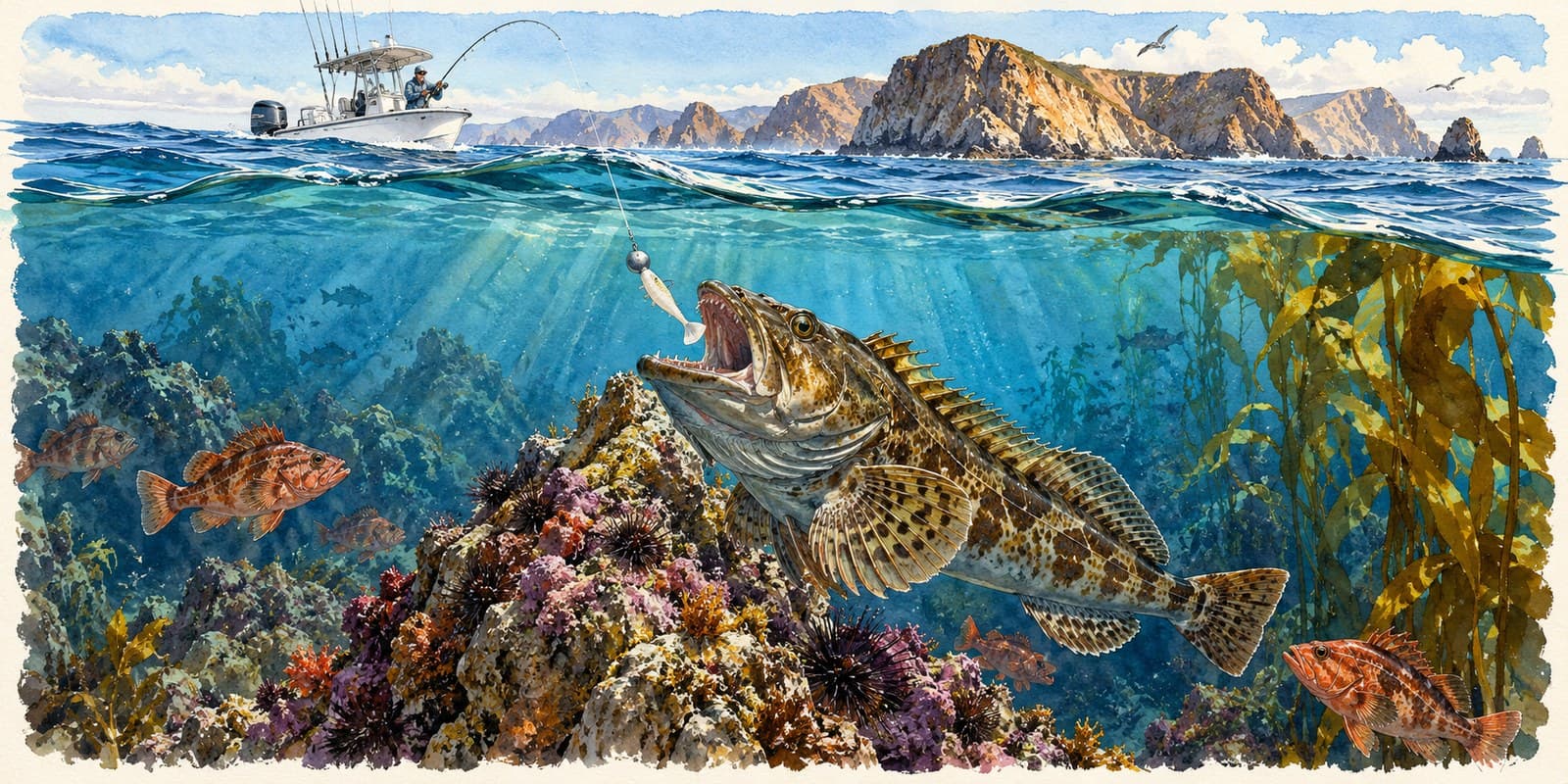
Most lingcod in Southern California get caught by accident. Somebody is winding up a rockfish, the rod loads up hard halfway to the surface, and a ling with a mouth the size of a coffee can is hanging onto the rockfish. That is a fine way to meet one. But if you want lingcod on purpose, you fish for them differently: bigger baits, heavier jigs, and a much better idea of where they sit.
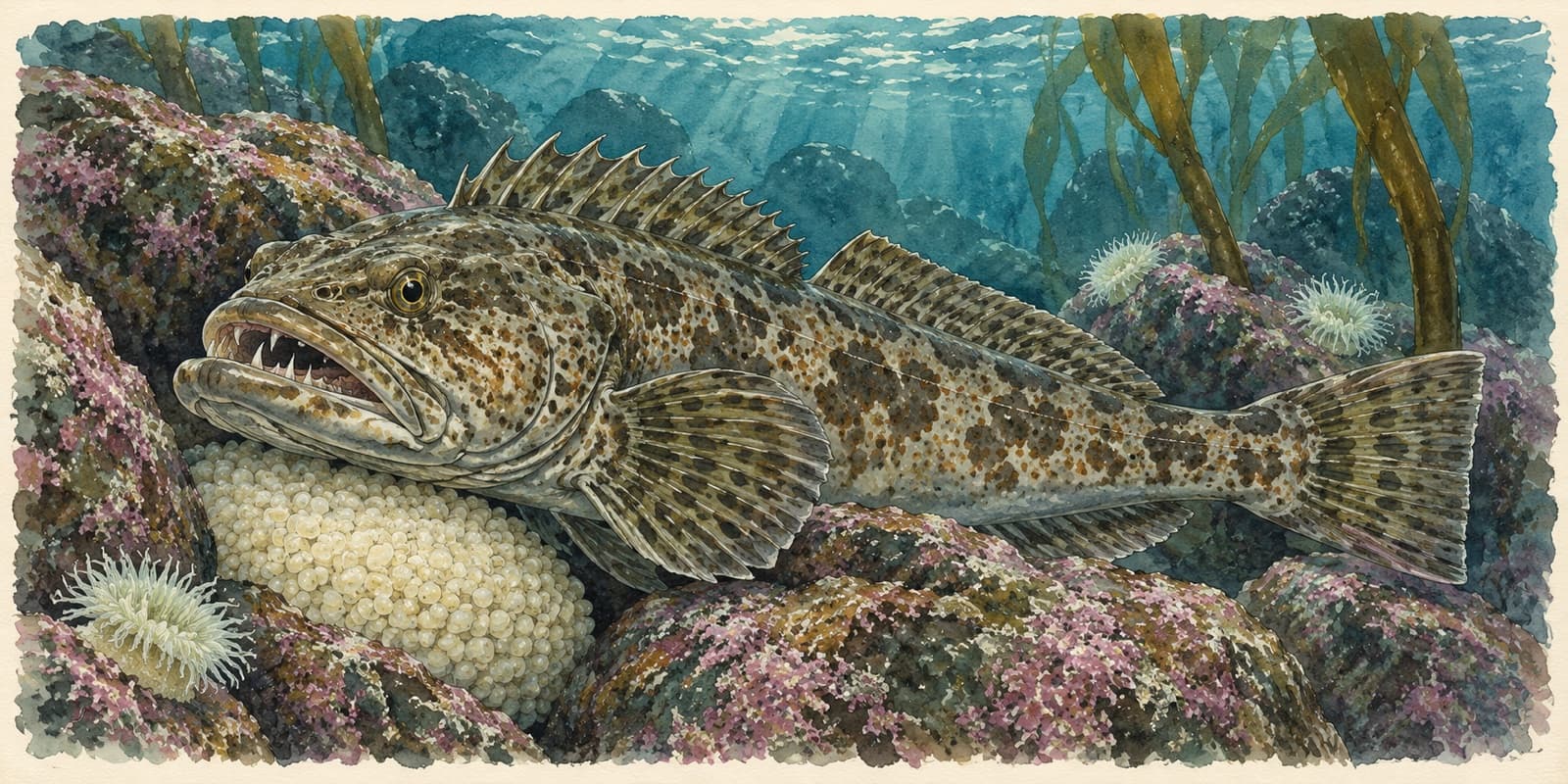
Fall is when that starts to pay. From about October the adults move up onto the shallower rock to spawn, and they stay there into winter. Our post on what the spawn does to lingcod in winter covers that side of it. This one is about the fishing: where to drop, what to drop, and how to get a ling into the boat or back in the water. If you are new to the fish, start with the lingcod species guide.
Where lingcod hold
A lingcod is an ambush fish. It does not cruise around looking for food. It sits on the rock, tucked against a ledge or on top of a high spot, and waits for something to come past in the current. Find that kind of rock and you have found the lingcod.
What to look for:
- High spots and pinnacles. A peak that rises off the bottom pushes current over it and stacks bait and rockfish around it. Lings sit on the top and the up-current face.
- Ledges and edges. The break where a reef drops off, or where rock meets sand, is where a lot of the bigger fish live.
- Current. Dead water is usually slow lingcod water. A drift with some push to it puts food in front of them and keeps them feeding.
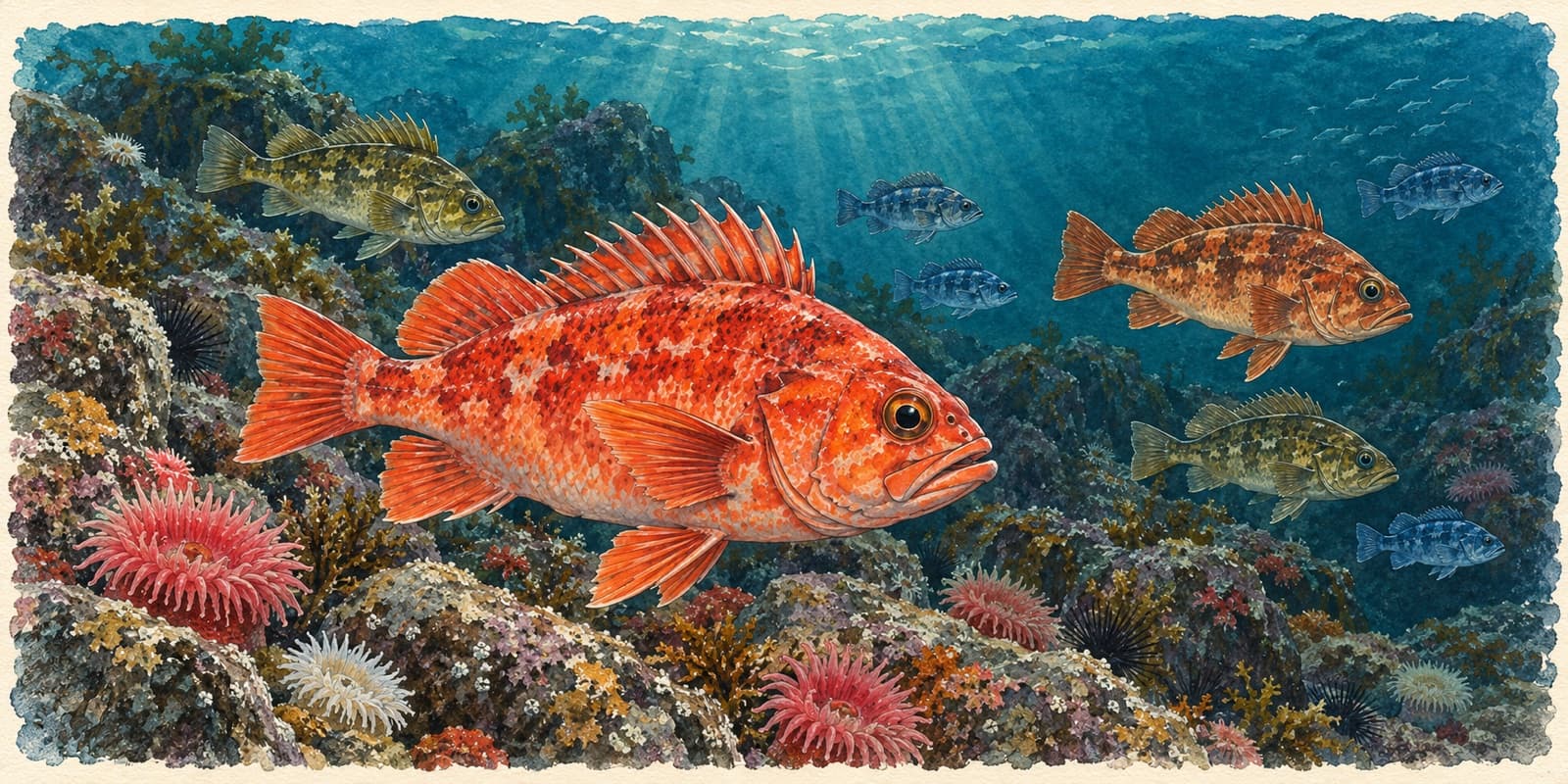
- Rockfish on the meter. Lingcod eat rockfish. A spot covered in rockfish marks is a spot worth a lingcod drop.
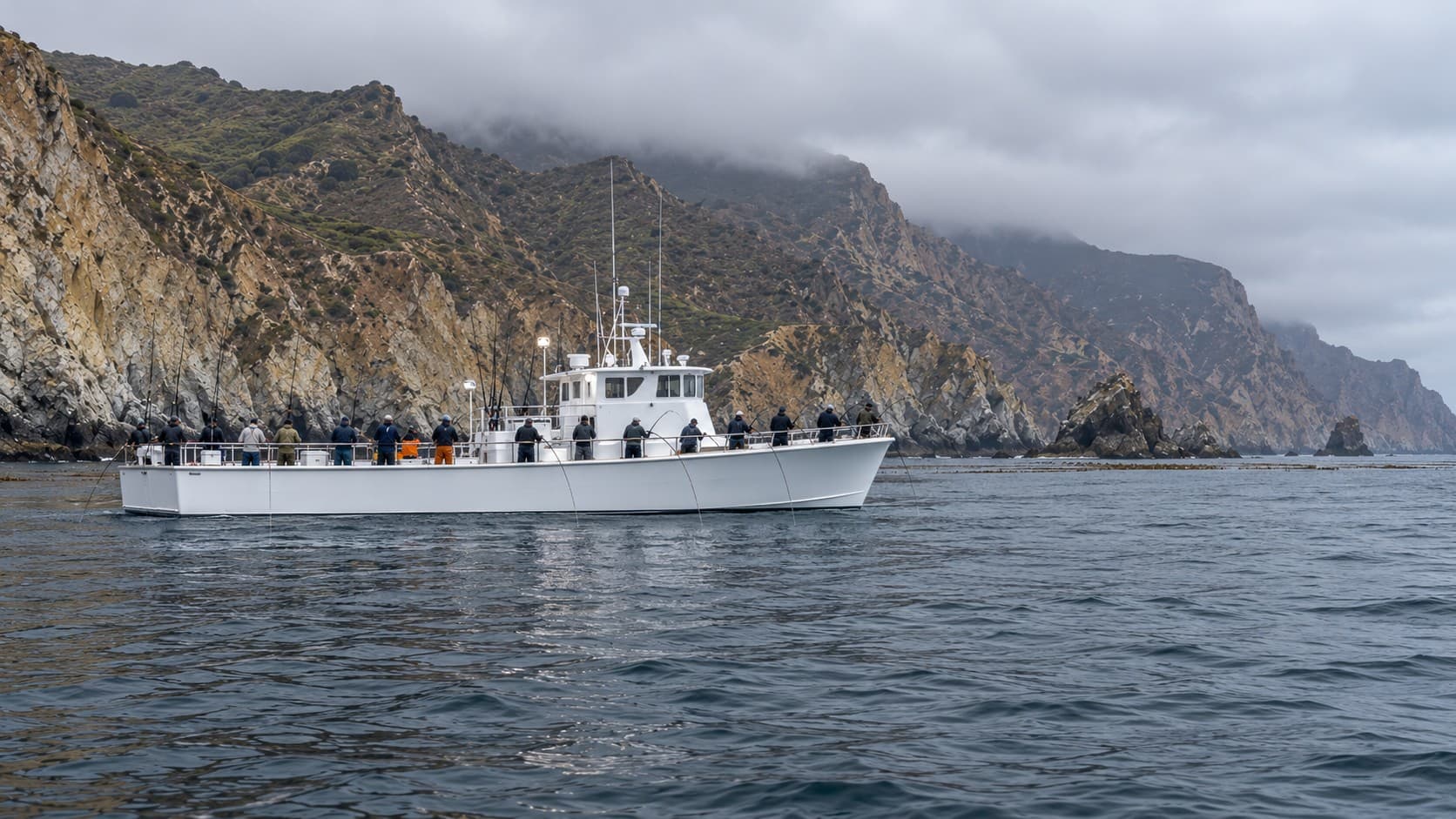
Geography matters too. The best lingcod water in the Bight is the cold, rich rock at the north end, around Santa Rosa, Santa Cruz and San Miguel. Boats out of Santa Barbara and Channel Islands Harbor fish that ground all season, and our post on rockfish at the north end of the Bight explains why it holds so much life. Farther south, lingcod come mostly from deeper structure: the outer island edges, deep reefs and the banks. San Diego boats run late-season rockfish trips over that kind of ground, and our guide to fishing out of Point Loma covers where they go.
The outfit
You are fishing the same rock as a rockfish trip, so start with the rockfish outfit and scale it up. Our guide to rockfish rigs, dropper loops and shrimp flies covers the basics of rod, reel and braid.
For lingcod specifically:
- A rod with real backbone. A ling has to be lifted off the bottom right away, before it gets its head back into the rock. A soft rod lets it win that first fight.
- Braid on the reel. You need to feel the bottom and the bite from a long way up. Braid does that. Monofilament stretches too much at depth.
- A heavy leader. Lingcod have a mouth full of sharp teeth and they live in rock. A few feet of heavy monofilament or fluorocarbon between the braid and the lure takes the wear.
- Spare jigheads and sinkers. You are going to lose gear. That is the cost of fishing where lings live.
Swimbaits and jigs
Artificials catch a lot of lingcod, and they let you cover rock fast.
Leadhead swimbaits are the standard. A big soft plastic on a heavy jighead, sent to the bottom and worked in short lifts. Use enough weight to stay near the bottom on the drift, which may mean a lot more than you think on a windy day at the islands. If your line is trailing off at an angle, go heavier.
Metal jigs work the same way. A heavy jig bounced on the structure takes lingcod and rockfish both. Our post on picking jigs covers metal in general.
How to work either one:
- Touch bottom, then lift. Let it hit, take a turn or two off the bottom, and lift the rod tip in short hops.
- Watch the fall. Lingcod hit as the bait drops back down. If the line goes slack early or the bait stops before it should, reel down tight and set.
- Stay close to the rock. A swimbait swimming well above the reef gets ignored. Check bottom often.
- Expect snags. If you never snag, you are probably not close enough.
When the hit comes, it is usually not subtle. Come up hard and start winding. The first few turns decide whether the fish ends up in your boat or back in a hole.
Live bait and the hitchhiker
A lingcod will eat almost anything it can fit in its mouth, and live bait is hard for it to pass up.
- Live mackerel is the classic. A lively one on a dropper loop or a sliding sinker rig, fished just off the bottom, is a lingcod bait anywhere in the Bight. Our post on catching mackerel on a sabiki covers how to fill the bait tank yourself.
- Sanddabs are a lingcod favorite. If you can catch them, our sanddab fishing guide covers where to find them.
- Big strips or whole squid work when nothing is alive. Not as well, but they work.
With bait, give the fish a moment. A ling often grabs a bait crosswise and turns it before swallowing. Wait for the weight to load the rod, then set.
Then there is the hitchhiker. When a lingcod grabs a rockfish you are already reeling up, do not stop and do not jerk. Keep winding at a steady pace. The ling is not hooked. It is holding on, and it will usually stay holding on as long as the rockfish keeps moving. Most of them let go right at the surface, so tell the crew before it gets there and have a net or a gaff ready.
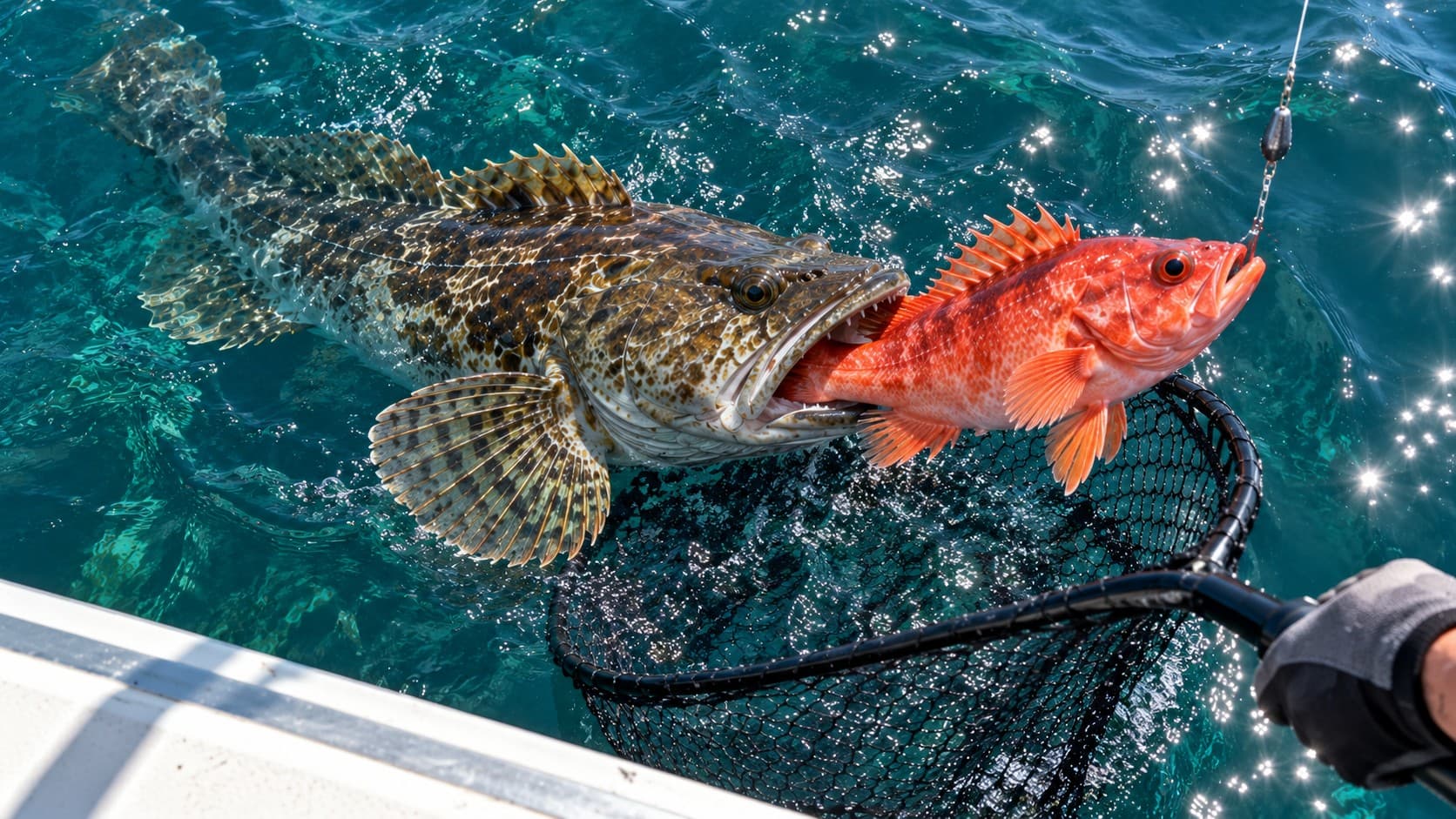
Landing and releasing a lingcod
Lingcod are easy to handle badly. The teeth are sharp and the gill rakers cut, so keep your fingers out of the mouth and away from the gills. A net or a gaff at the rail, then a firm grip behind the head, is the safe way to deal with one.
One thing works in your favor. Lingcod do not have a swim bladder, so they do not come up bloated the way rockfish do. A ling you do not want to keep, or one that is under the size limit, can usually go straight back over the side if you unhook it quickly. The rockfish that come up on the same drop still need a descending device, which is required on any boat fishing for groundfish in California.
Seasons, depths and limits
Lingcod are managed with the rest of the federal groundfish. Seasons, depth limits, bag and size limits and hook limits all change from year to year and differ by management area. Check the CDFW recreational groundfish summary before every trip. It also lists the closures and exemptions that apply to shore anglers and divers. The Coronado Islands are Mexican water with Mexican rules and a Mexican fishing licence.
Lingcod do not have their own Bite Score yet. The rockfish card is the nearest read, because the two live on the same rock and get fished on the same trips. It will not tell you where the big ling is sitting, but if it says Pass because the wind and swell will make the islands miserable, that call holds for lingcod too. You can see what goes into the score on how it works.