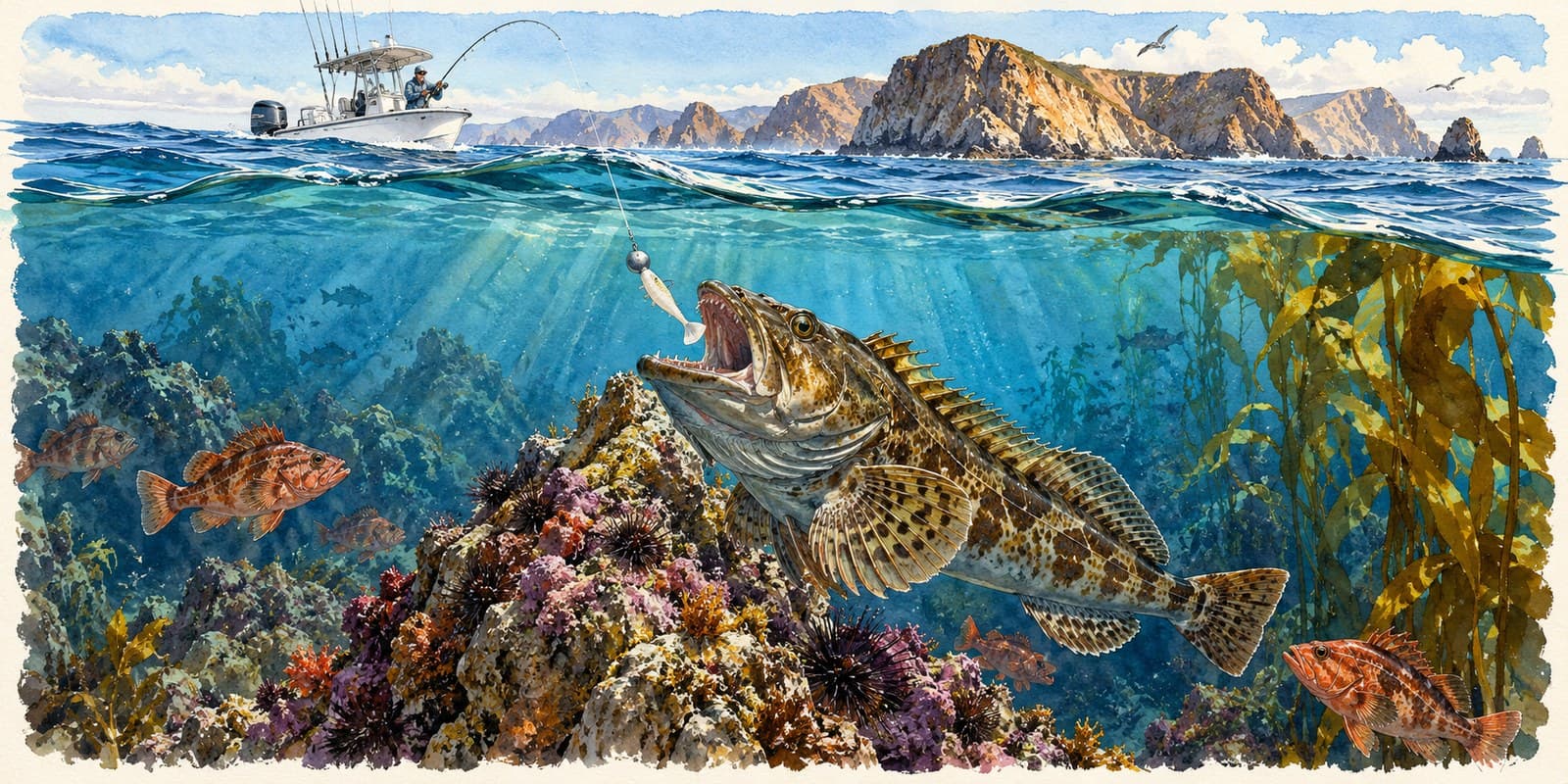
Ask a Southern California bottom fisherman when the lingcod are best and a lot of them will say the cold months. The surface fish are gone, the boats have turned back to the rock, and the lings seem to be everywhere they were not in August.
There is a reason for that, and it is the same reason the rules get tight at that time of year. Late fall and winter is when lingcod spawn. Knowing what the fish are doing in those months tells you where to look, which fish you are catching, and why you should think about the fish you keep. If you are new to the fish itself, the lingcod species guide covers who it is and what it looks like.
A northern fish at the bottom of its range
Lingcod live from Alaska to Baja California, but they are not spread evenly along that coast. A Pacific Fishery Management Council review of the stock notes that their numbers taper off quickly south of Point Conception. The Southern California Bight is the southern end of the lingcod's good water.
That shapes everything about lingcod fishing here:
- The northwest is the lingcod address. The colder, richer water around the northern Channel Islands, Santa Cruz, Santa Rosa and San Miguel, holds the best of them. Boats out of Santa Barbara and Channel Islands Harbor fish that rock all season.
- Down south, they live deeper. Off Los Angeles, Orange County and San Diego, lingcod come mostly from deep structure: the outer edges of the islands, deep reefs and banks. A shallow-water lingcod in San Diego is a surprise. One at San Miguel is not.
Our post on rockfish at the north end of the Bight covers why that water is so productive. The same upwelling that feeds the rockfish feeds the lings.
What lingcod do as the water cools
Lingcod have one of the more interesting spawning routines on the coast, and it runs right through the late-season fishery.
- The move starts in fall. From about October, adult lingcod head for nearshore spawning ground. The males go first and stake out nest sites in rock crevices and on ledges, usually in places with strong current running over them.
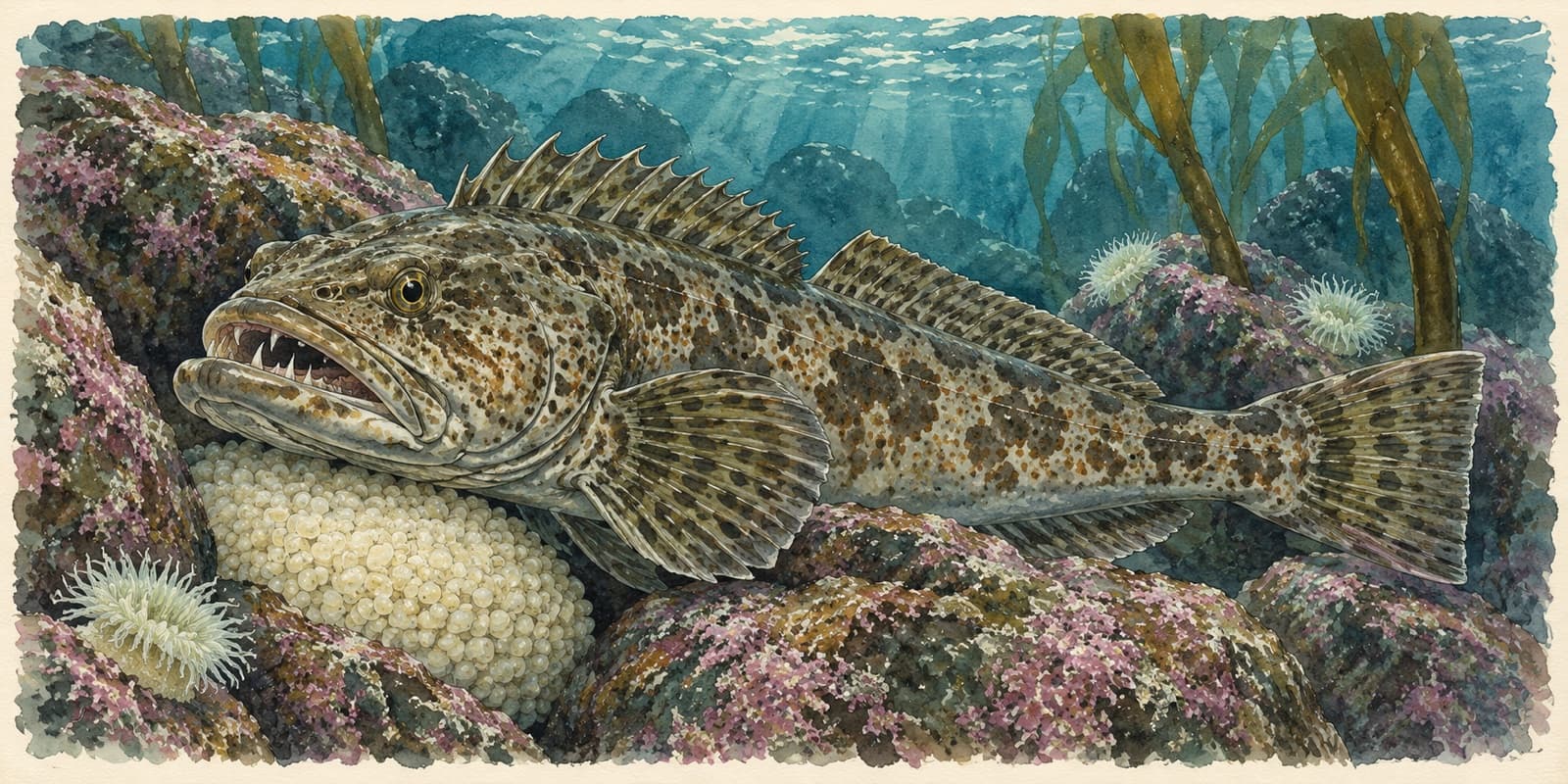
- Eggs go down in winter. In California, females lay their eggs between about December and March, with the peak in midwinter. The egg mass is a big, pale clump wedged into the rock.
- The female leaves. The male stays. A female lays her eggs and goes straight back to deeper water. The male stays with the nest and defends it against everything that wants to eat it, including crabs and rockfish, for the several weeks it takes the eggs to hatch. A single male can end up guarding more than one nest.
- The young hatch in spring. Eggs hatch from about early March through April, and the males disperse after that.
The two sexes also live differently the rest of the time. Females grow larger, live longer and tend to hold deeper. That is why the trophy lingcod, the fish over 30 pounds the species guide mentions, are almost always female and come off the deeper, rougher ground.
Why the nest guarder matters
A lingcod egg mass with no male on it does not last. Fisheries agencies in Alaska and elsewhere describe the same pattern: take the guarding male off a nest, and the eggs are soon eaten by the fish and invertebrates around them. Removing one nesting male can cost a whole nest.
That is worth knowing because a nest-guarding male is about as easy a fish to catch as exists. He is sitting on a fixed spot, defending it, and attacking anything that comes close. It does not take much to put a jig in front of him.
None of this is a rule you can be cited for. It is a reason to think about what goes in the box late in the year. Release is easy with a lingcod hooked in the jaw: unhook it quickly at the rail, keep your hands away from the teeth and gill rakers, and get it back in the water.
How the rules shape a winter trip
In the Southern Management Area, which covers everything from Point Conception to the Mexican border, the lingcod season and its depth limits are set with the rest of the federal groundfish and they change from year to year. In recent seasons the first months of the year have been closed to boat-based groundfish fishing, and the late months have been open only on certain ground. Check the CDFW recreational groundfish summary for this year's months, depths, bag and size limit before you go. That page also notes the exemptions for shore-based anglers and spear divers.
A few practical points follow from that:
- Expect to fish deep. When the late-season rules keep boats over deeper water, that is where the fishing happens. Bring heavier sinkers and more braid than you used in summer.
- Rockfish rules come along. Lingcod and the shelf rockfish are managed together, but the nearshore rockfish, cabezon and greenlings have their own schedule. A lingcod trip and a nearshore rockfish trip are not always open at the same time.
- Carry a descending device. It is required aboard any boat fishing for federal groundfish in California, and you will need it for the rockfish that come up with the lings.
- The Coronados are Mexico. Some of the deep rock around the Coronado Islands holds lingcod, but those are Mexican waters, with Mexican rules and a Mexican fishing licence.
How to fish deep rock for lingcod
The tackle is the rockfish tackle, scaled up. Our guide to rockfish rigs, dropper loops and shrimp flies covers the outfit, braid and sinker weight in detail, and our post on how to catch lingcod in Southern California goes further on where they hold and what to drop. For lingcod specifically:
- A heavy jig or a leadhead swimbait. Bounce it on the structure and lift it in short hops. Lingcod hit on the fall. Our post on picking jigs covers metal in general.
- Big bait. A live mackerel or a whole sanddab on a dropper or sliding sinker rig is a lingcod-sized meal. Lings want something bigger than a squid strip.
- Fish the edges. Lingcod ambush from high spots, ledges and drop-offs. Keep the rig close to the rock without letting it settle into a crack.
- Watch for the hitchhiker. A lingcod will grab a rockfish you are already winding up. Keep winding steadily, do not jerk, and have the gaff or net ready before the fish is in sight. It is often not hooked at all and lets go at the surface.
One more thing to know before you clean one: some lingcod have startling blue-green flesh. It cooks out white and is harmless.
The rest of the rock
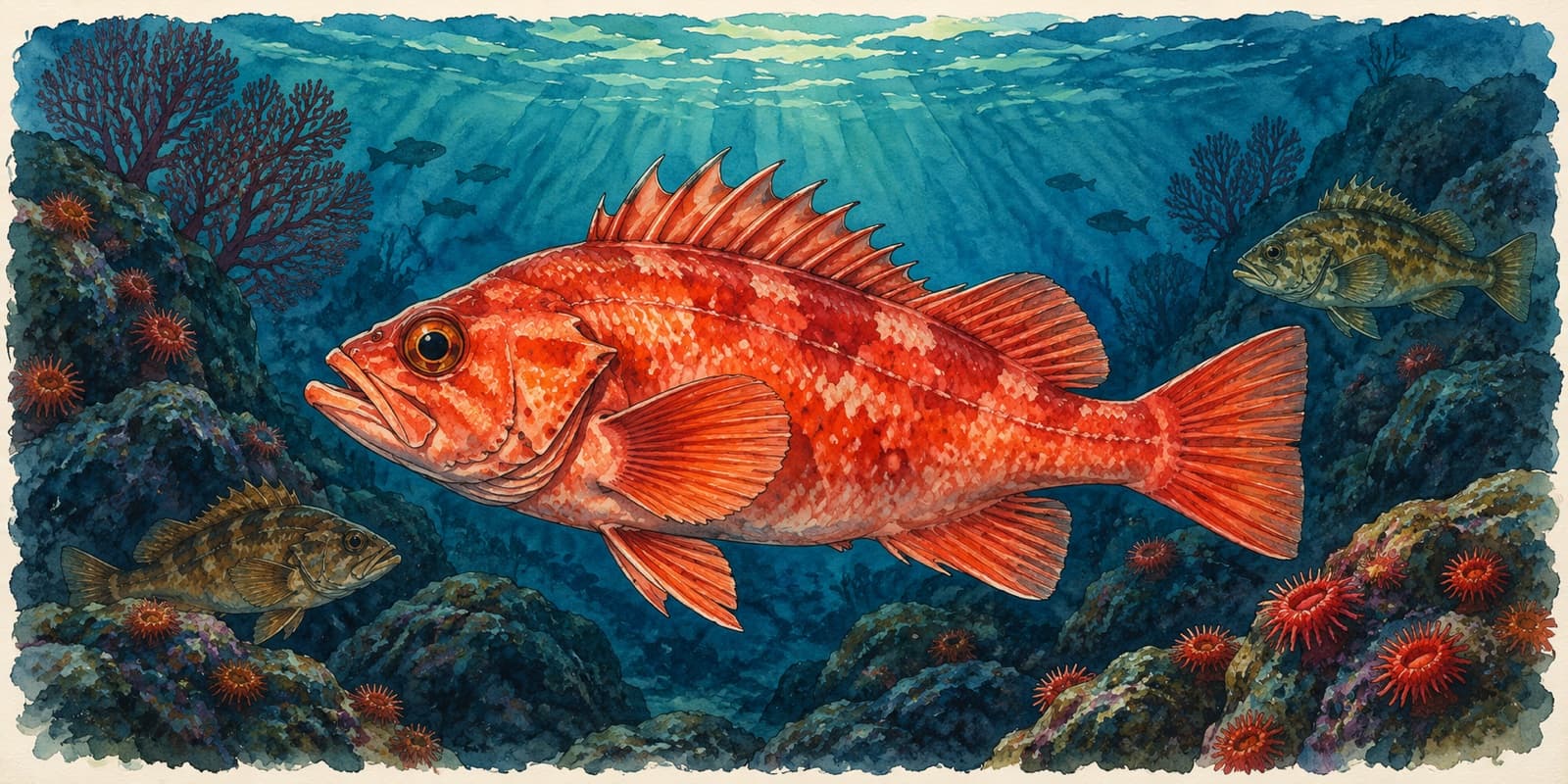
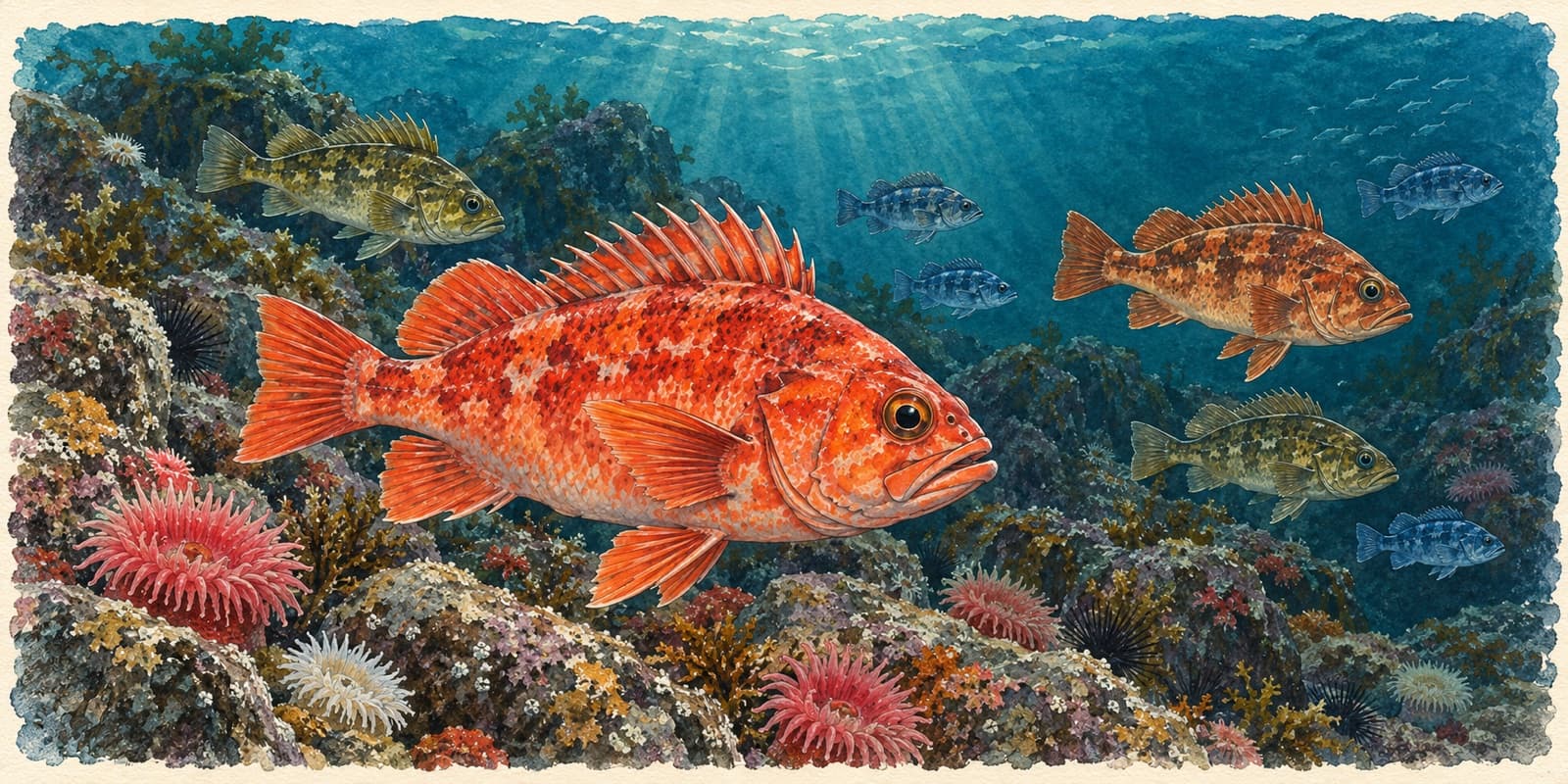
The same deep reef that holds lingcod holds a lot of other fish. Rockfish are the main event, and the Southern California rockfish guide covers the species in the sack. Closer to shore, the shallow rock and kelp belong to the cabezon, which nests through the same winter months and has its own story in our post on cabezon and shallow reef fishing. And the spiny, venomous fish that comes up on the same drops in the south is covered in sculpin: spines, handling and season.
Where Fish or Pass fits
The lingcod guide is a profile of the fish. Fish or Pass does not give lingcod their own grade. The Bite Score reads conditions for rockfish, the fish that share the lingcod's rock, as Catching, Fishing or Pass, weighing the sea state, the habitat and recent landing reports. A calm, fishable day on the deep reef helps a lingcod trip too. The score cannot see a nesting male in a crack in the rock, and it cannot make a lingcod bite.