When the warm water leaves the Bight, a lot of the fishing leaves with it. The tuna head south, the dorado are a memory and the yellowtail get scarce. The fish that do not care about any of that are on the bottom.
Rockfish are the deep-reef fish of Southern California, and the best of that water is at the north end of the Bight, out of Santa Barbara and Channel Islands Harbor. This is how rockfish behave, where the northern grounds are, how to fish them, and how to send back the ones you do not keep.
One name, dozens of fish
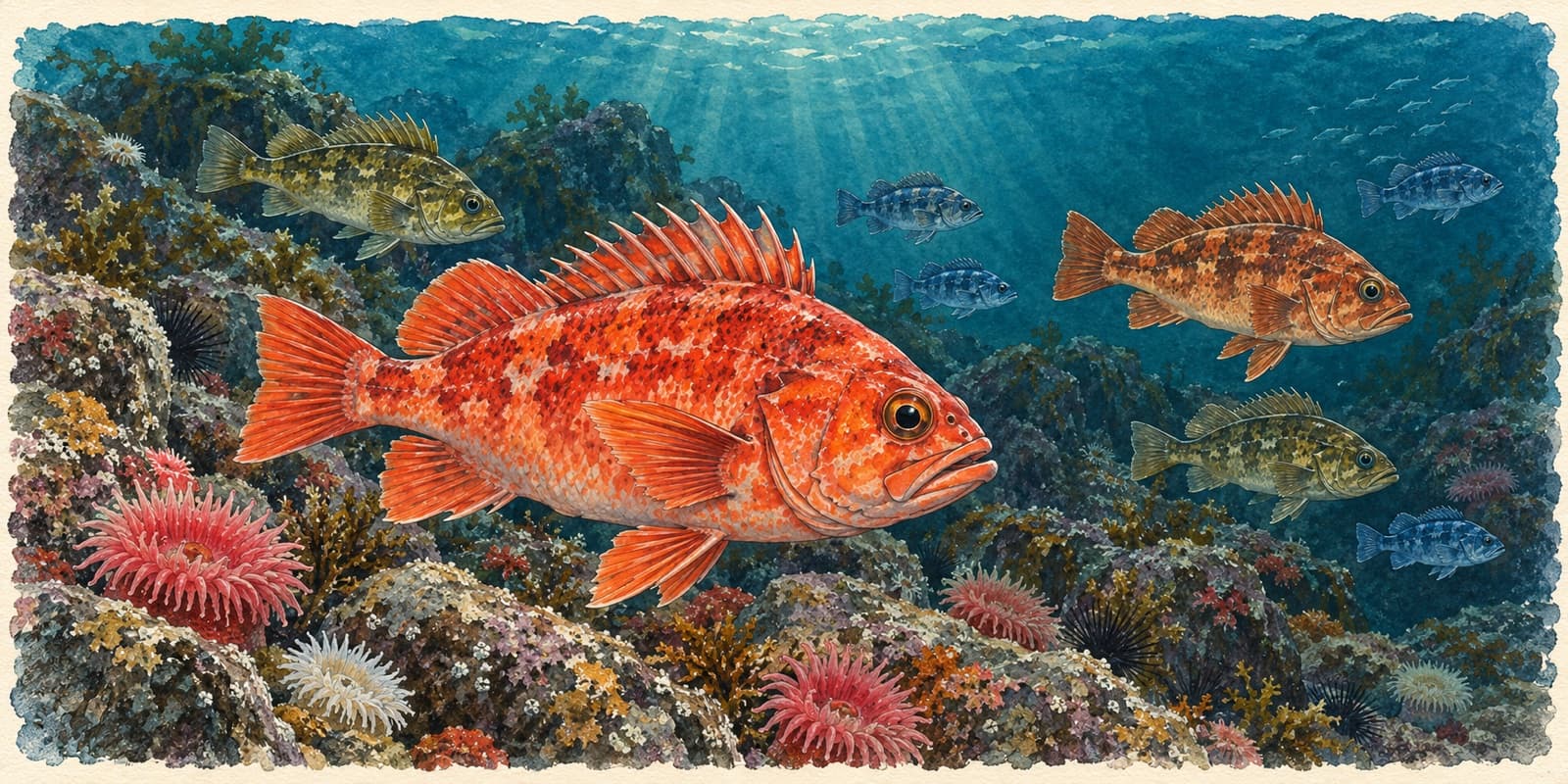
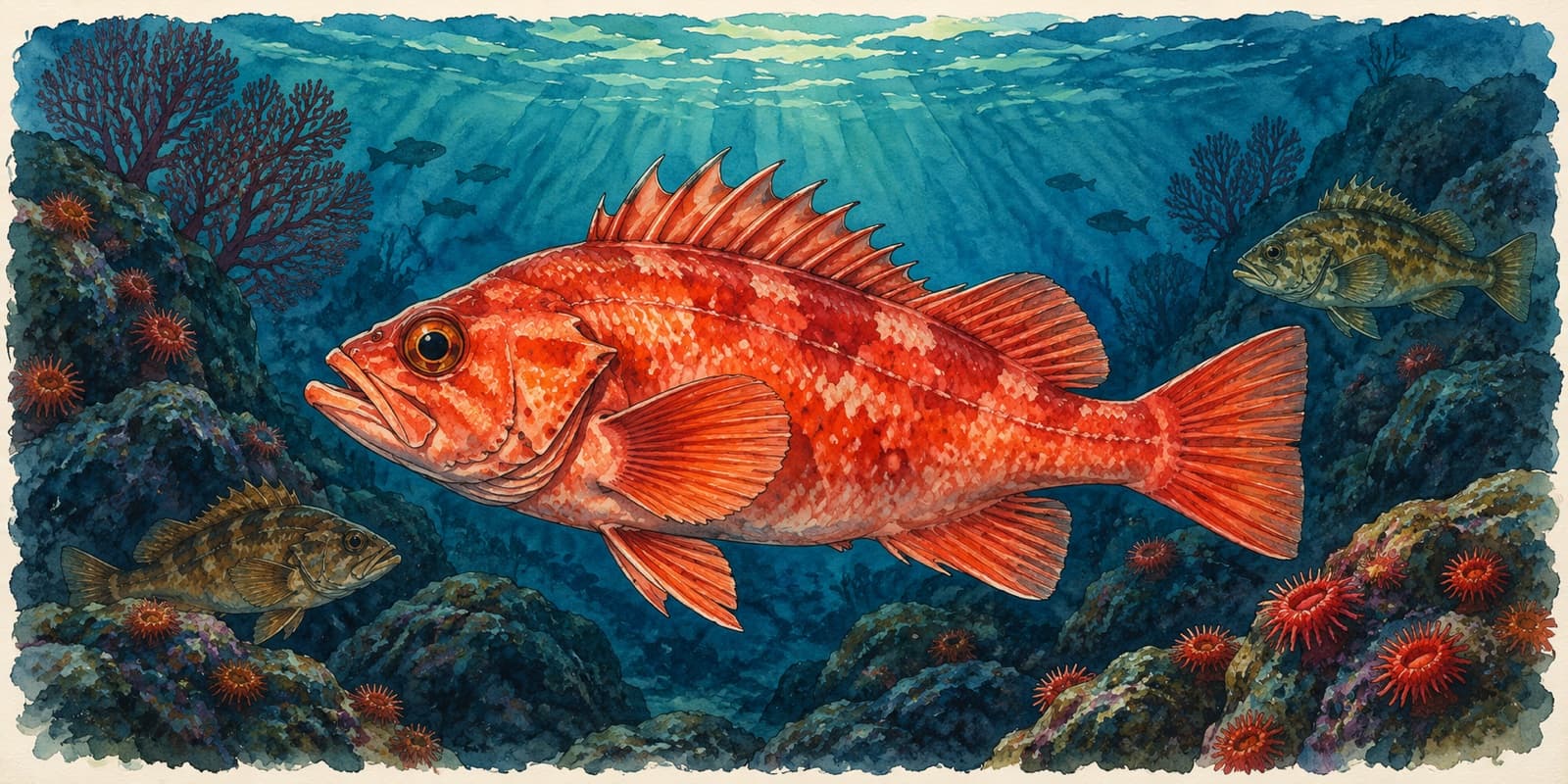
"Rockfish" is not one fish. It is a family of dozens of species that share a body plan: big eyes, a big mouth and a spiny dorsal fin. On a typical day you might see bright red vermilion, coppers, blues, olives and others, often several kinds on the same drop. The Southern California rockfish guide goes through the common species.
What they share matters more than what separates them. Rockfish live on structure, many of them live a very long time, and some species grow so slowly that a big fish on the reef may be older than the angler who caught it. That long life is why the fishery is managed carefully, and why the rules change from year to year.
Structure, not temperature
Pelagic fish follow water temperature. Rockfish follow rock.
They hold on reefs, pinnacles, ledges and broken hard bottom, often 100 to 400 feet down and sometimes deeper. They do not migrate with the warm water. A good reef holds rockfish in a cold year and a warm one, in spring and in fall. Finding them is about reading the bottom on your electronics, not reading a sea surface temperature chart.
This is why rockfish fill the gap. When the surface fishing slows, the bottom is still there.
Why the north end
The northern Bight is colder and richer than the water down south. Santa Barbara sits in the lee of Point Conception, and upwelling feeds the Channel with cold, nutrient-rich water. That makes for productive reefs and some of the best rockfish and lingcod water in the state.
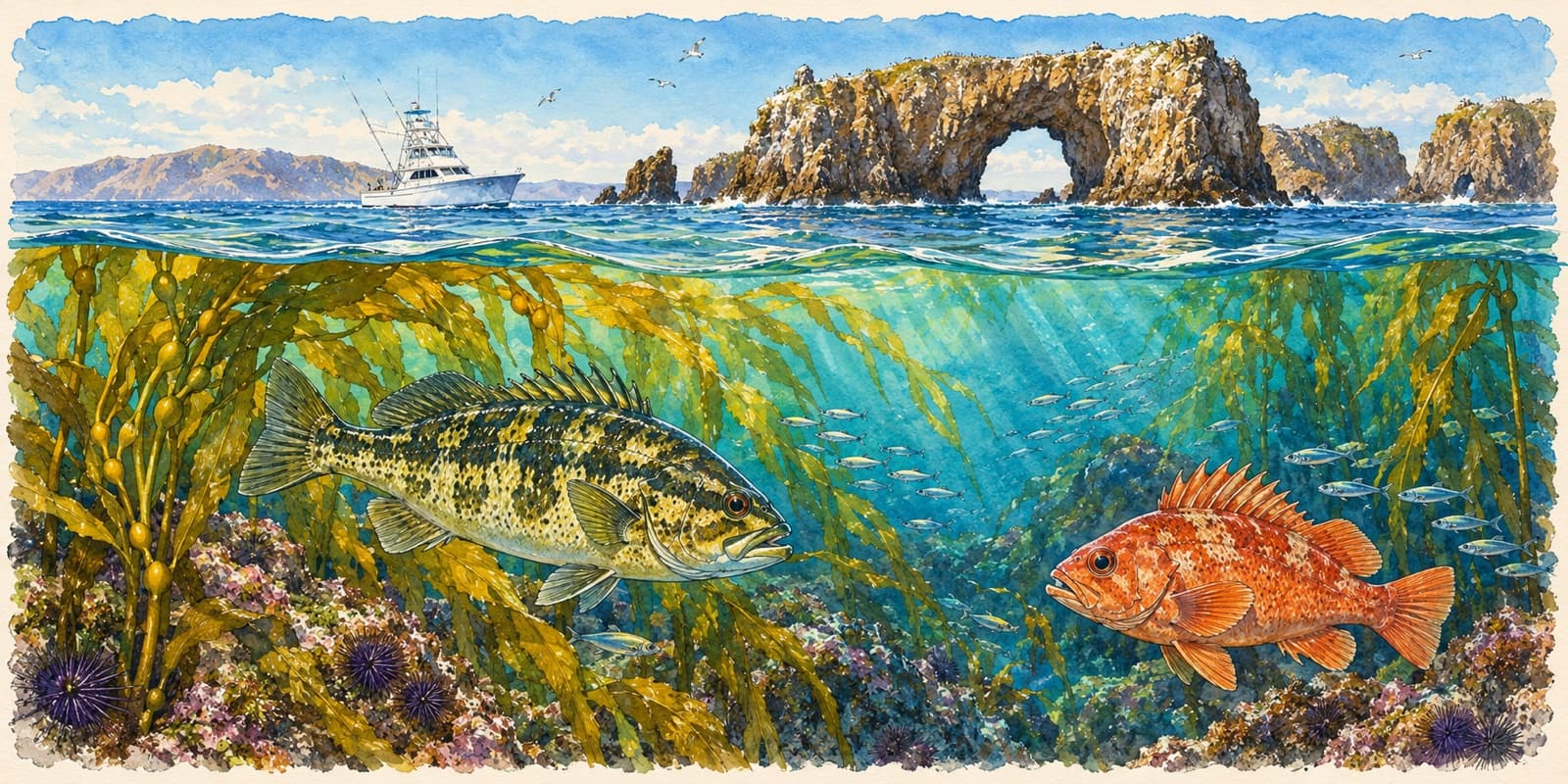
Out of Santa Barbara, the northern Channel Islands are the main event. Santa Cruz Island, the largest of them, has miles of kelp and deep reef. Santa Rosa and San Miguel are farther out and wilder, with cold water and outstanding bottom fishing when the weather allows a run that far. Anacapa is the closest. The Santa Barbara fishing guide covers the landing and the seasons.
Out of Channel Islands Harbor, the shortest island runs on the coast put Anacapa and Santa Cruz within easy reach. The hard bottom around the islands is where the rockfish are when the season is open. Fishing out of Channel Islands Harbor and Ventura covers the landings there.
Large parts of the waters around the northern Channel Islands are marine protected areas, where fishing is restricted or banned. Know where the lines are before you drop.
How to fish them
Rockfish fishing is simpler than chasing tuna, but it rewards doing it carefully.
- Find the structure first. Idle over the reef and watch the meter for hard bottom, ledges and fish holding just off the rock. Then set up a drift that carries you across it.
- Use a dropper rig. The standard is a dropper loop rig: a sinker on the bottom and one or two hooks above it, baited with strips of squid or fish. Shrimp flies, small feathered hooks on a dropper, are just as common and often fish better.
- Fish heavy enough to stay down. In deep water and current, you need enough weight to hold the bottom. If your line is streaming out at an angle, go heavier.
- Stay just off the bottom. Drop to the bottom, then reel up a turn or two. Rockfish sit on and just above the rock, and a rig dragged through the reef gets snagged.
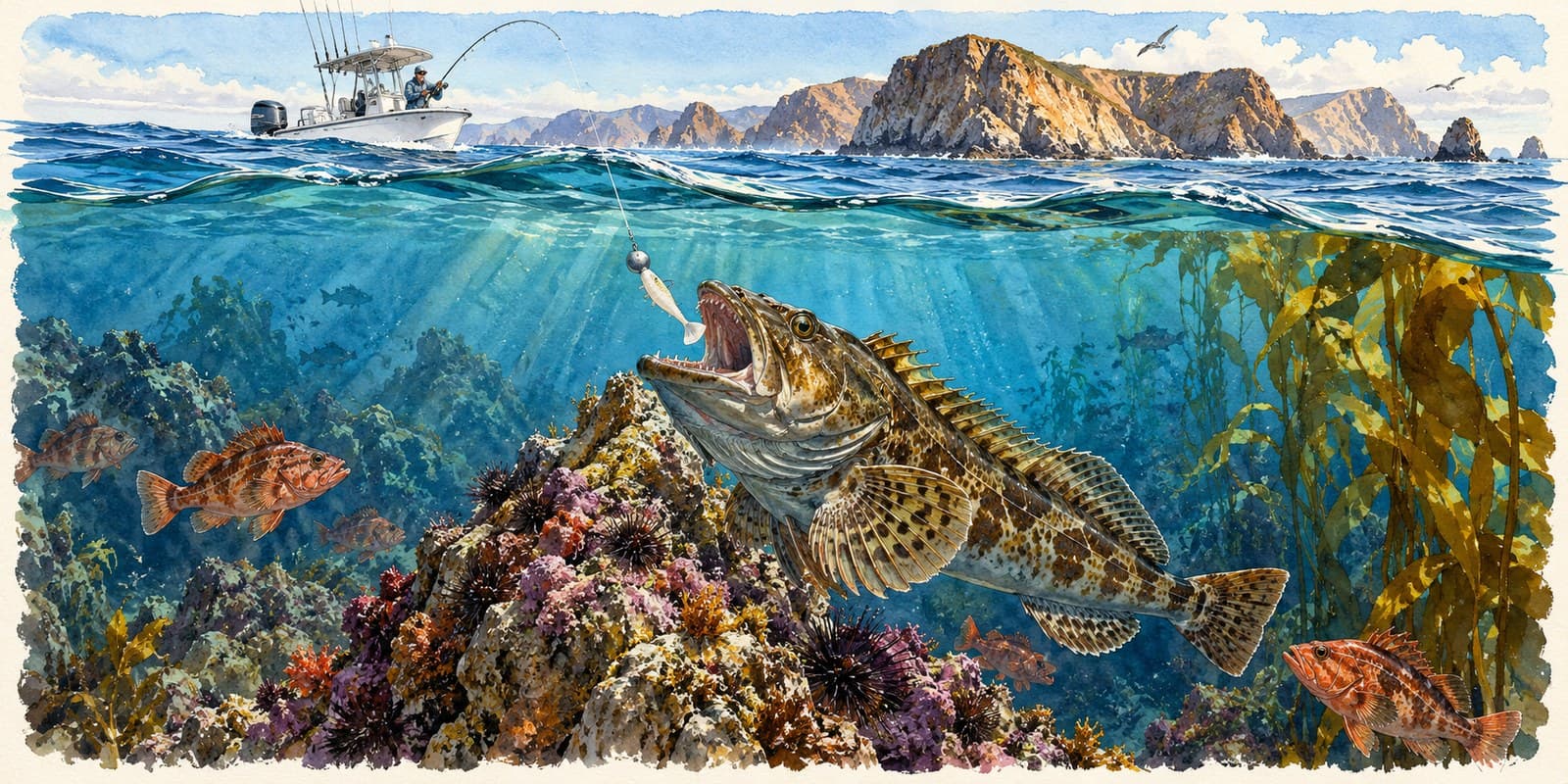
- Try a jig. A heavy metal jig bounced on the structure catches rockfish and lingcod, and it can draw the larger fish. Our guide to picking jigs that get bit covers metal in general.
Send them back down
This is the most important part of rockfish fishing, and it is the part that is easiest to get wrong.
Rockfish have a gas-filled swim bladder. When they are pulled up quickly from deep water, the gas expands. The result is barotrauma: bulging eyes, a stomach pushed out of the mouth, and a fish that floats on the surface and cannot swim back down. Tossed back at the surface in that state, many rockfish cannot get down, and many do not survive.
The fix is a descending device: a weighted clip or an inverted, weighted hook that takes the fish back down to depth, where the pressure recompresses the gas, and then lets it go. It takes a minute, and it gives undersized, out-of-season or unwanted rockfish a real chance of surviving. Keep one rigged and ready before the first drop, not buried in a tackle bag. CDFW has its own rules on carrying and using one, so check them along with the season.
Weather runs the north end
The northern islands are open ocean, and the Channel can be rough. The wind and swell build from the northwest, and some days the far islands are simply out of reach. That matters more for rockfish than for most fish, because the season and the weather both have to line up.
Check the NOAA marine forecast before any island run, carry fuel for the trip plus a margin, and remember that a conditions read is not a navigation or safety tool.
Where Fish or Pass fits
The Bite Score weighs each species on its own terms. For rockfish, that means structure and depth matter far more than surface temperature. It turns the conditions into a verdict of Catching, Fishing or Pass for the grounds and the day.
What it cannot do is tell you which ledge the fish are stacked on, or whether the reef has been fished hard all week. And it does not know the season or the depth rules for the day. CDFW does.
Regulations
Rockfish seasons, depth limits, bag limits and which species you may keep are set by CDFW and change from year to year. Some species cannot be kept at all. Check the current CDFW groundfish regulations before every trip, along with the marine protected areas around the islands.