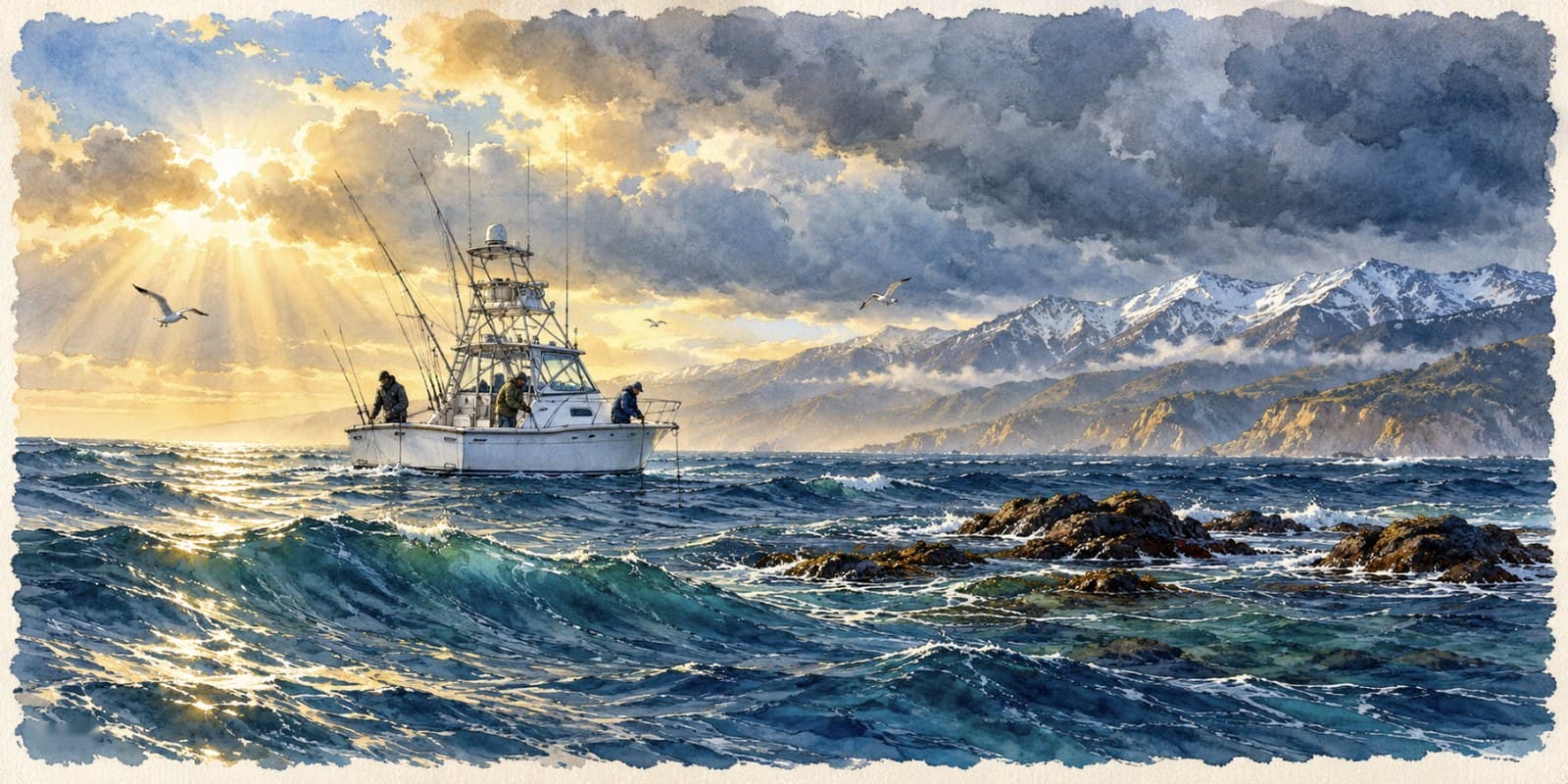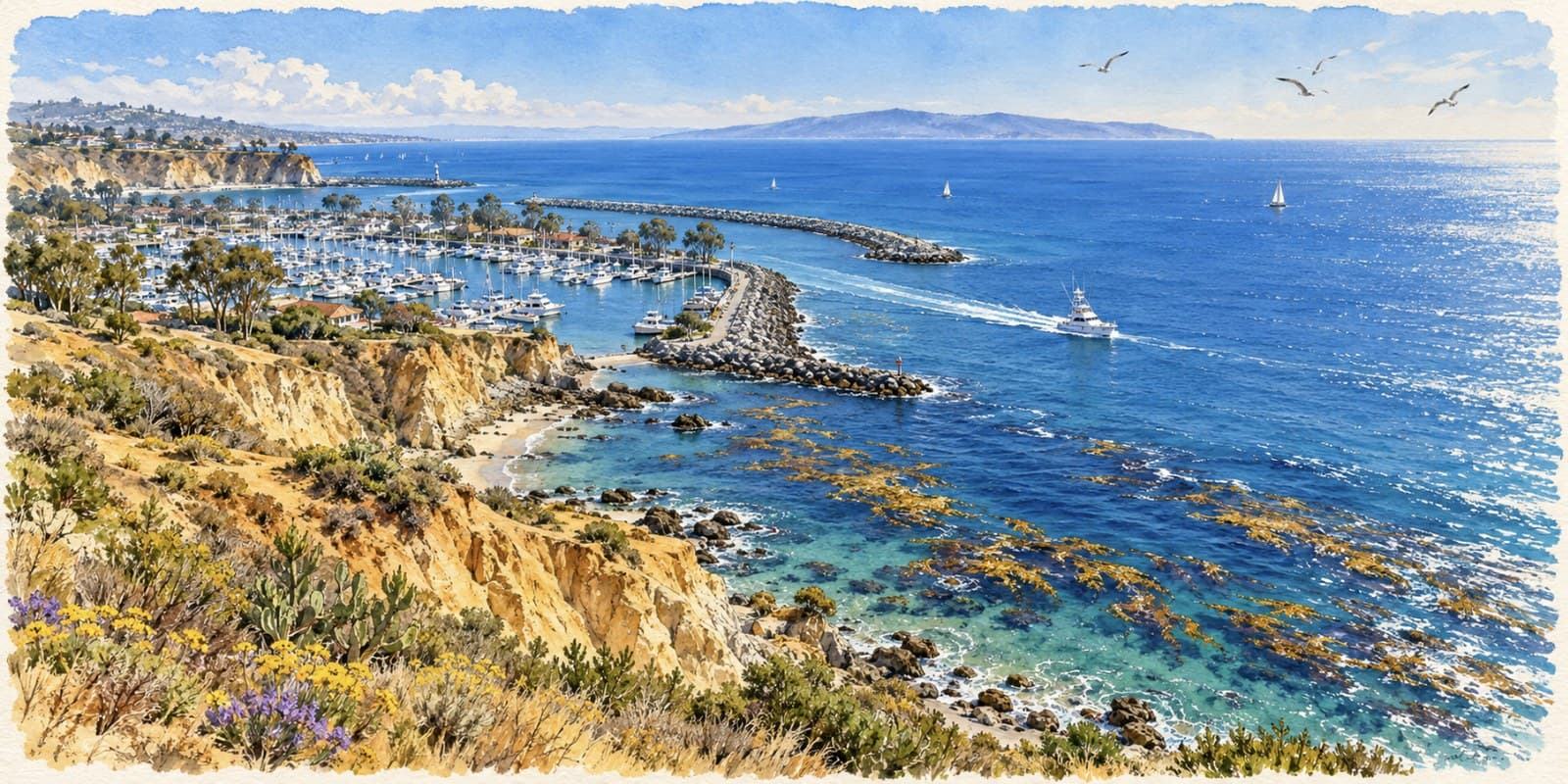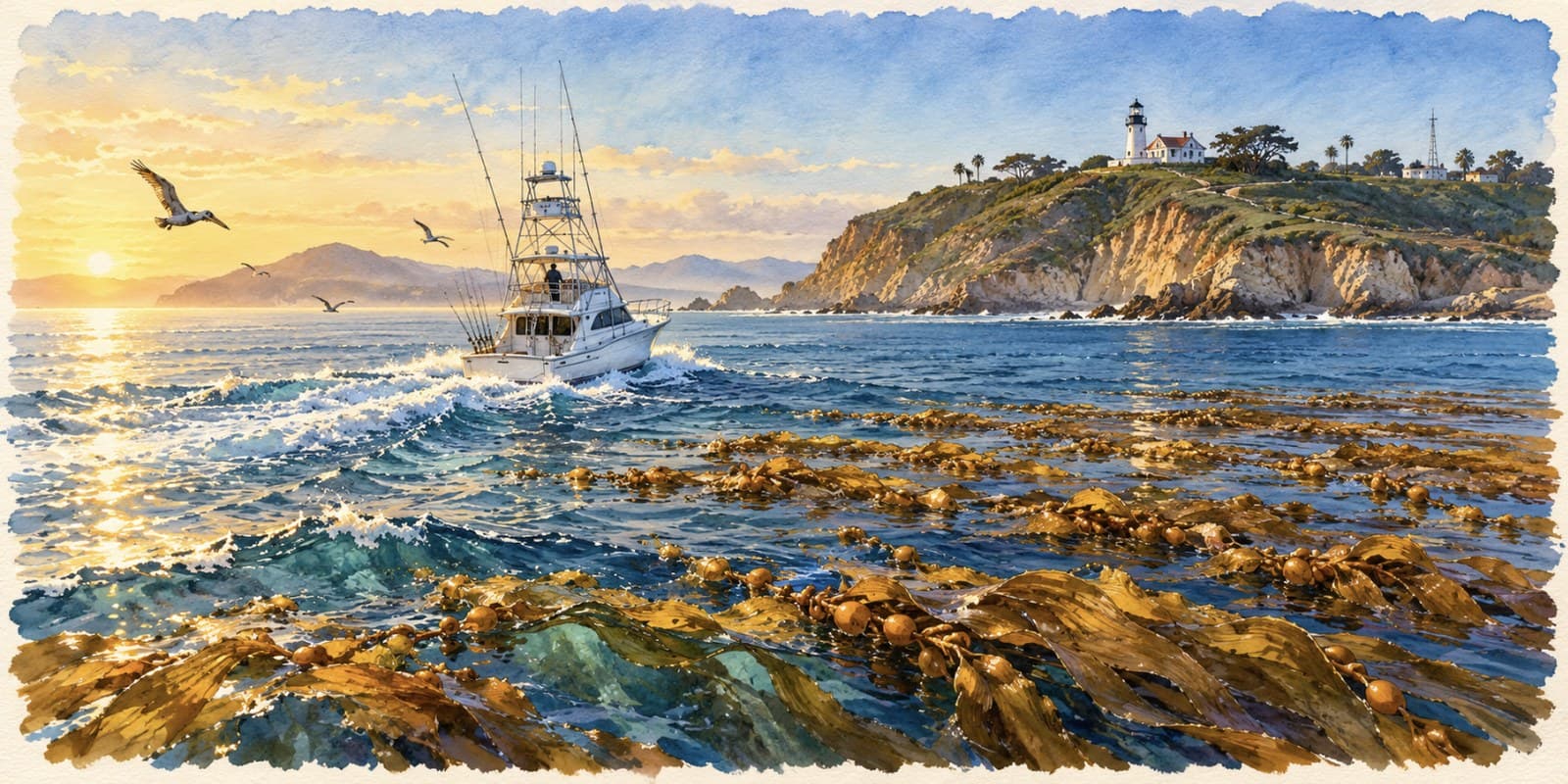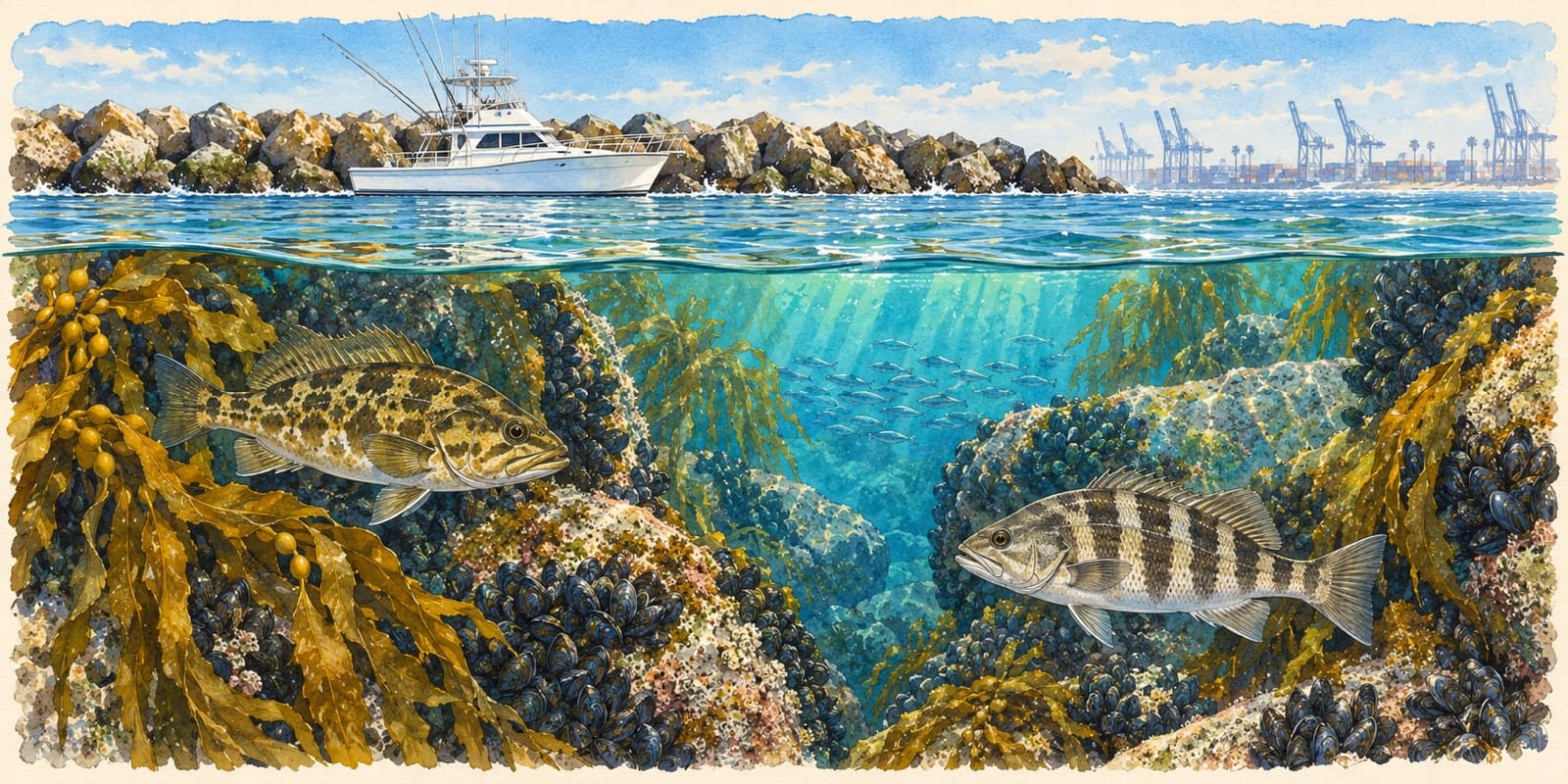
Long Beach sits behind the longest breakwater on the coast. That wall of rock shapes almost everything about fishing here. It makes the water inside calm, it holds fish of its own, and it puts the Huntington Flats and the run to Catalina just outside the gate. If you want to get bit close to home without a long, rough ride, this is one of the easiest places in Southern California to do it.
This is a working guide to fishing out of Long Beach: the landings, the grounds the fleet fishes, and what they target through the year. The Long Beach port guide has the quick version and today's conditions.
The landings
Two sportfishing landings run open-party boats out of Long Beach.
-
Pierpoint Landing is on the downtown waterfront, by the Aquarium of the Pacific. It runs a small fleet of large party boats built for big passenger loads. The name has a long history. The original Pierpoint Landing operated from 1948 into the early 1970s and was at one time described as the largest sportfishing operation in the world.
-
Long Beach Sportfishing is inside the Port of Long Beach at Berth 55, the old Queen's Wharf site. It books a group of smaller, privately owned boats.
Between them, the two landings offer half-day, three-quarter-day, full-day and twilight trips, overnight island runs and private charters. Schedules shift with the season and the fishing, so check each landing's trip calendar before you plan around one.
The breakwater
The breakwater is the home field. Miles of rock run across the outer harbor, and the rocks hold calico bass, sand bass, sculpin, sheephead and whitefish. Because it is inside the outer harbor, you fish it out of the worst of the swell.
That makes it the backbone of the half-day boats. A short run, sheltered water and fish on the rocks most of the year make it a good first trip for kids and newer anglers. It is also where the fleet goes when the weather outside is too rough for anything else.
The breakwater fishes in winter too, which is not true of every spot. When the water cools, the calicos and sand bass slow down but do not leave, and reports from the harbor breakwaters through the colder months include calico, sand bass, sculpin and the odd legal halibut. Fish low and slow when it is cold. The calico bass guide covers how the fish change with the temperature, and calico in the LA and Orange County harbors covers the breakwater bite.
Huntington Flats
Outside the breakwater to the southeast, the Huntington Flats are a broad spread of sand bottom off Huntington Beach. They are the reason Long Beach is known as a summer sand bass port. Newport's boats work the same flats from the south; see fishing out of Newport Beach.
In the warm months, barred sand bass gather on the flats to spawn, and when that aggregation sets up it can produce big numbers of fish on half-day and three-quarter-day trips. Barracuda show on the flats in summer as well. In the cooler months, the same sand is better known for halibut drifting.
The flats are close, which is the point. You can fish them on a half-day trip and still be back by lunch.
Horseshoe Kelp
The Horseshoe Kelp is a deeper area of hard bottom off the harbor that the Long Beach and San Pedro fleets both work. It holds bass on the reef, and it is one of the spots the boats use for rockfish when the groundfish season is open. The state has listed it among the more productive kelp bass areas in Los Angeles County.
Rockfish have their own season, depth rules and limits, and they change more often than most. Check the CDFW groundfish page before any trip where you plan to keep them. The rockfish guide explains how those fish relate to structure.
The run to Catalina
When the fleet wants island fish, it crosses to Catalina. The island's kelp and boiler rocks hold calico bass, yellowtail and white seabass, and the three-quarter-day, full-day and overnight boats make the run when they are biting.
Catalina is best from spring into fall. Yellowtail are the big draw in the warm months. They live around the island's structure and run for it when hooked, which is covered in the post on yellowtail and structure. The yellowtail guide has the basics on the fish itself.
Catalina is a real crossing of open water. Wind and swell matter on the way out and the way back, and a trip that looks fine at the dock can be uncomfortable in the channel. Check the NOAA marine forecast for the crossing, not just the harbor.
Offshore
In warm years the larger boats also run overnight and longer trips offshore for tuna, and Long Beach landings have advertised trips as far as the offshore banks. What is available depends entirely on the season. When the warm water and the fish are there, the trips go. When they are not, they do not. The guide to fall yellowfin tuna explains how that warm-water window opens and closes.
The year at a glance
-
Winter. Quiet. The breakwater still gives up calico, sand bass and sculpin, and the flats are better known for halibut. Our winter fishing guide covers what still bites from November to March.
-
Spring. The water starts to warm and the bass wake up. Catalina starts to fish as the season builds.
-
Summer. The peak. Sand bass on the flats, calico on the rocks and the kelp, bonito and barracuda on a warm push, yellowtail at the island.
-
Fall. Good as long as the water holds its warmth. Island fish and, in a warm year, offshore trips carry on until it cools.
If you are choosing between LA harbor ports, the San Pedro port guide covers the other side of the harbor, with a shorter run to the Palos Verdes kelp, and fishing out of San Pedro walks through its grounds.
Where Fish or Pass fits
Fish or Pass gives each of these grounds a daily Bite Score for each species the Long Beach fleet fishes. It weighs water temperature, bait in the area, kelp and structure, recent landing reports and sea conditions, and turns them into a call of Catching, Fishing or Pass. You can see how it is built on how it works.
It cannot tell you which boat to book or make a fish bite. It tells you which days the conditions are on your side and which grounds look best. Before you keep a fish, check the current CDFW ocean sport fishing regulations.