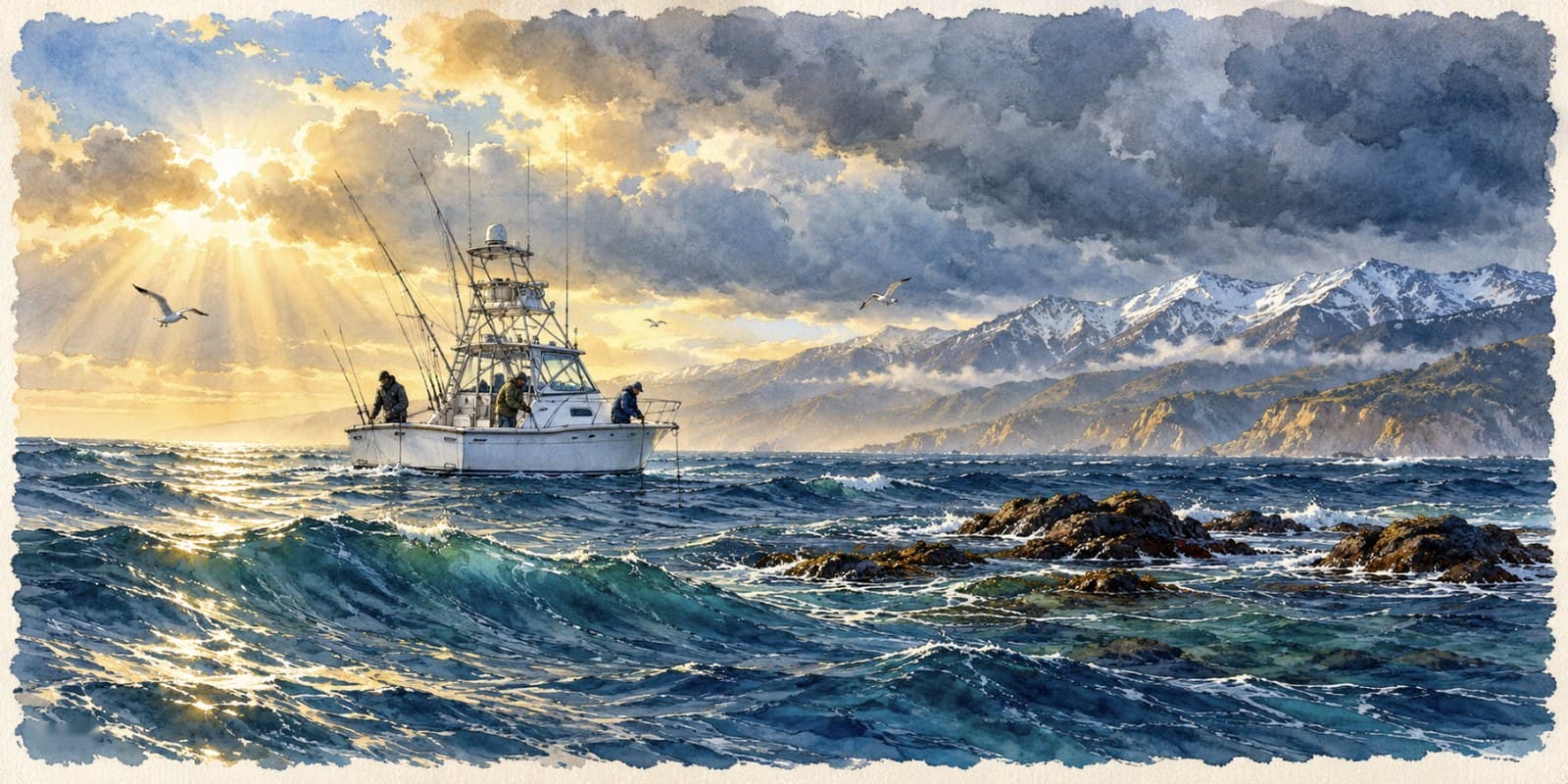
Ask anglers from Los Angeles and Orange County what they caught on their first trip, and a lot of them will say calico bass. No long offshore run, no waiting for a warm-water year. Just a half-day boat, a bucket of bait and a kelp line or a breakwater a few minutes from the dock.
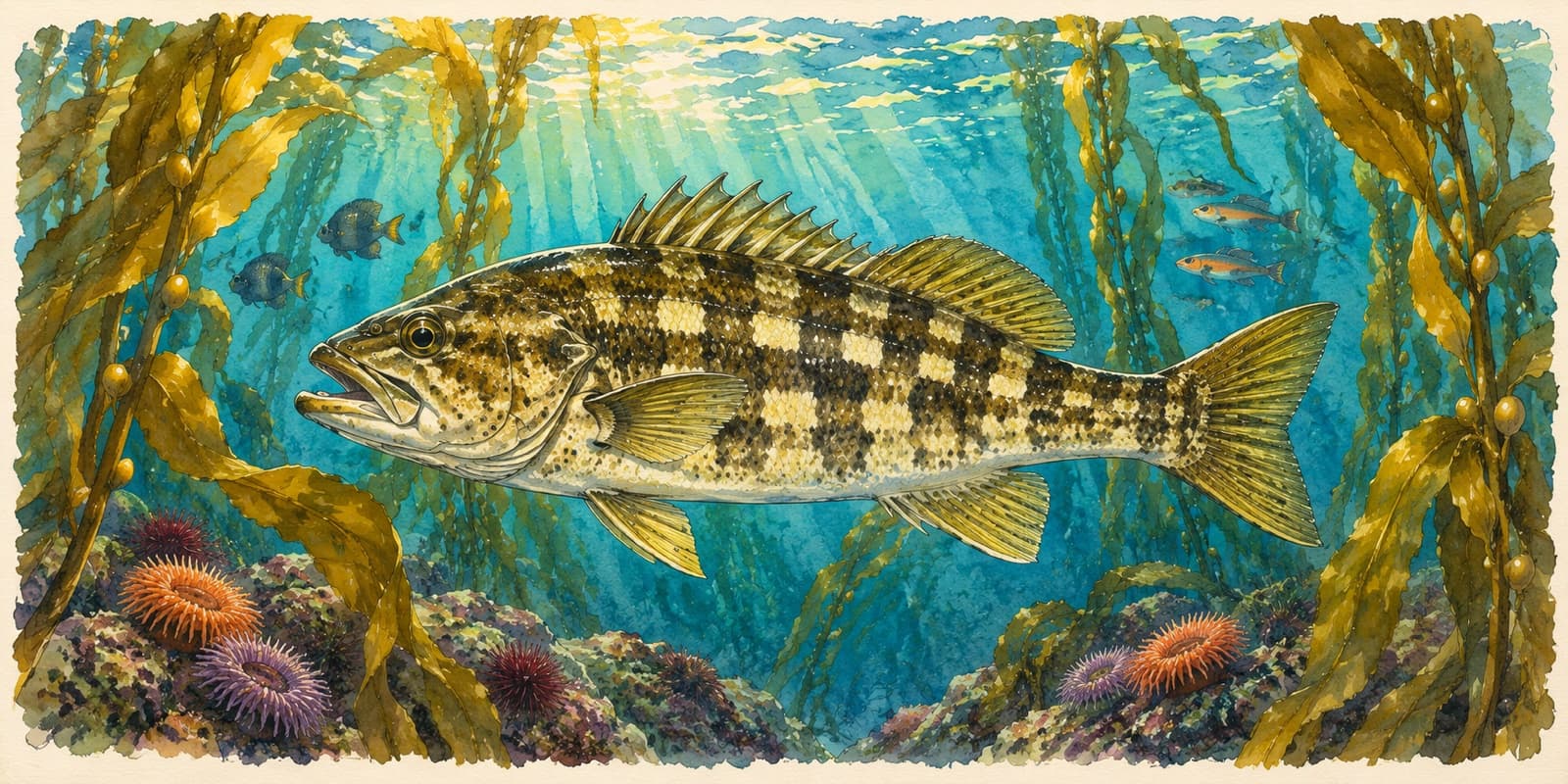
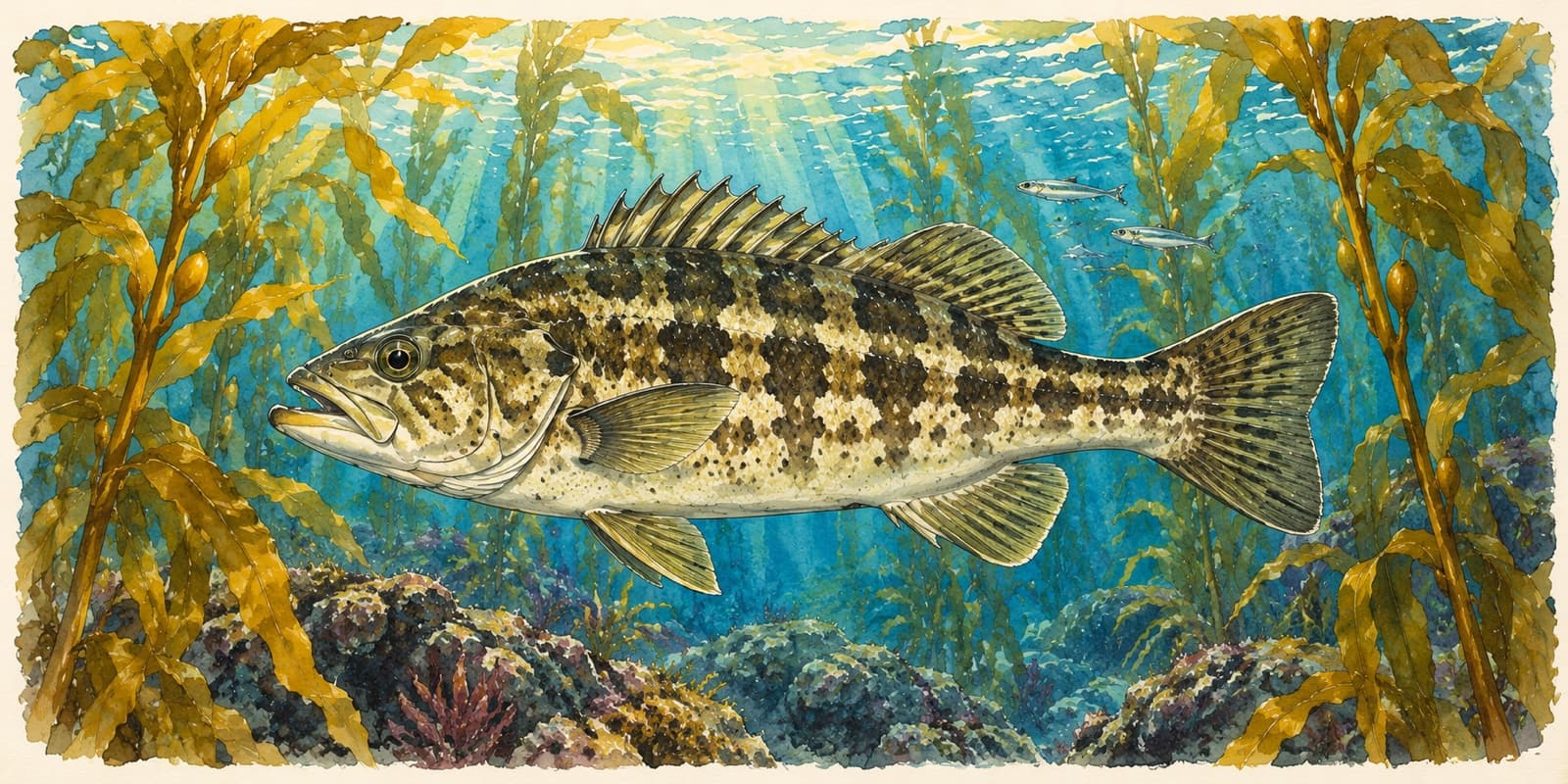
Calico bass, or kelp bass, are the home-team fish of Southern California. They live here all year, they live close to shore, and they are around whether the tuna show up or not. This is where to find them out of the LA and Orange County harbors, how they behave through the year, and how to get them out of the kelp once they bite. For the whole coast, see calico bass in Southern California.
A fish that stays home
Most of the fish people chase on this coast are visitors. Yellowfin, dorado and bluefin ride warm water in and leave when it cools. Calico do not go anywhere. They are resident fish that settle on a patch of reef or kelp and stay there.
That has two consequences. A good spot keeps holding fish year after year. And a spot that gets hammered stays hammered, because the fish are not replaced by a fresh school riding in on the current.
Calico also grow slowly and live a long time. A fish over five pounds, a "grade" calico, may be decades old. That is why so many local anglers let the big ones go. It is also why CDFW sets a size limit and a bag limit for them, which you should check before you keep anything.
Kelp, rock and the edge between
Calico are ambush predators. They hang in cover and wait for bait to come close, then pounce and dive back into the structure.
- Kelp. The classic habitat. They hold in and along the kelp, often on the up-current edge where bait gets pushed into the stalks.
- Boilers and reef. Rock that rises close to the surface, with whitewater breaking over it on a swell. The rougher and more broken the bottom, the better.
- Breakwaters and jetties. Man-made rock is still rock. The harbor walls along the coast hold calico in the gaps and along the base.
The common thread is cover with moving water near it. A calico wants somewhere to hide and something drifting past to eat.
Where to fish them from LA and Orange County
Long Beach. The Long Beach harbor sits behind the longest breakwater on the coast. That wall is miles of rock with calico on it, in sheltered water, minutes from the launch. It is one of the best places on the coast for a short trip or a newer angler. Fishing out of Long Beach covers the landings and the grounds.
San Pedro. Next door, San Pedro has the same harbor breakwater plus the Horseshoe Kelp a short run out, and it is the shortest crossing to Catalina, where the island kelp and boilers hold some of the best calico fishing in the region. Fishing out of San Pedro covers the Horseshoe Kelp and the Catalina run.
Marina del Rey. On Santa Monica Bay, Marina del Rey has its own breakwaters and jetty rock for bass close to the ramp, with the Malibu kelp and the Horseshoe Kelp within range. Fishing out of Marina del Rey covers the bay through the year.
Newport. From Newport, the local reefs and kelp along the Orange County coast hold calico through the warm months, and Catalina is a run across from there too. Fishing out of Newport Beach covers the canyon, the flats and the island.
How the year goes
Calico bite all year, but not equally.
Late spring through fall is the main season. The water warms, the fish get active and aggressive, and the kelp lines come alive. Summer brings the spawn, when fish gather and feed hard.
Fall can be some of the best of it. The water is often still warm into October, the bait is around, and there are fewer boats on the kelp than in July.
Winter is slower. Colder water makes calico sluggish, and they hold tighter to the bottom and deeper in the structure. They still bite, but you have to put the bait in front of them and fish more slowly.
How to get bit
Calico are not picky in the way bluefin are. The hard part is not getting them to eat. It is getting them out of the kelp after they do.
- Swimbaits and plastics. A swimbait or plastic on a leadhead, cast right at the kelp or the rock and swum back, is the standard. Let it sink a little before you start the retrieve if the fish are sitting deeper. The swimbait and plastics guide covers weights, sizes and retrieves.
- Live bait on the edge. A lively anchovy or sardine pitched to the edge of the kelp and allowed to swim toward it is hard for a calico to ignore. Half-day boats often chum with live bait to pull fish up and out of the cover.
- Surface lures in low light. Early morning and late evening, a topwater lure worked along the kelp line can draw explosive strikes.
- Iron. A jig thrown along the edge of the kelp will get bit by calico as well as yellowtail. Our guide to picking jigs that get bit covers the choices.
When one bites, lean on it. The first few seconds decide the fight. A calico that turns its head back into the kelp will wrap the line around a stalk and break off. Fish heavier line than the size of the fish suggests and keep its head coming toward you.
Treat the big ones well
If you plan to release a fish, handle it quickly. Wet your hands, support its weight, and get it back in the water fast. A calico pulled up from shallow kelp usually swims off strong.
Releasing a big calico is not just good manners. On a resident fish that takes years to reach that size, the big breeders are what keep a spot worth fishing.
Where Fish or Pass fits
The Bite Score weighs each species on its own terms, and for calico that means kelp, structure and water temperature as much as anything offshore. It turns those into a verdict of Catching, Fishing or Pass for the grounds and the day.
What it cannot tell you is which side of the kelp the fish are on this morning, or which gap in the breakwater is holding bass. That still takes casting.
Regulations
Calico bass have a size limit and a bag limit, and those can change. Check the current CDFW ocean sport fishing regulations before you keep any fish, and mind the marine protected areas along the coast and around the islands.