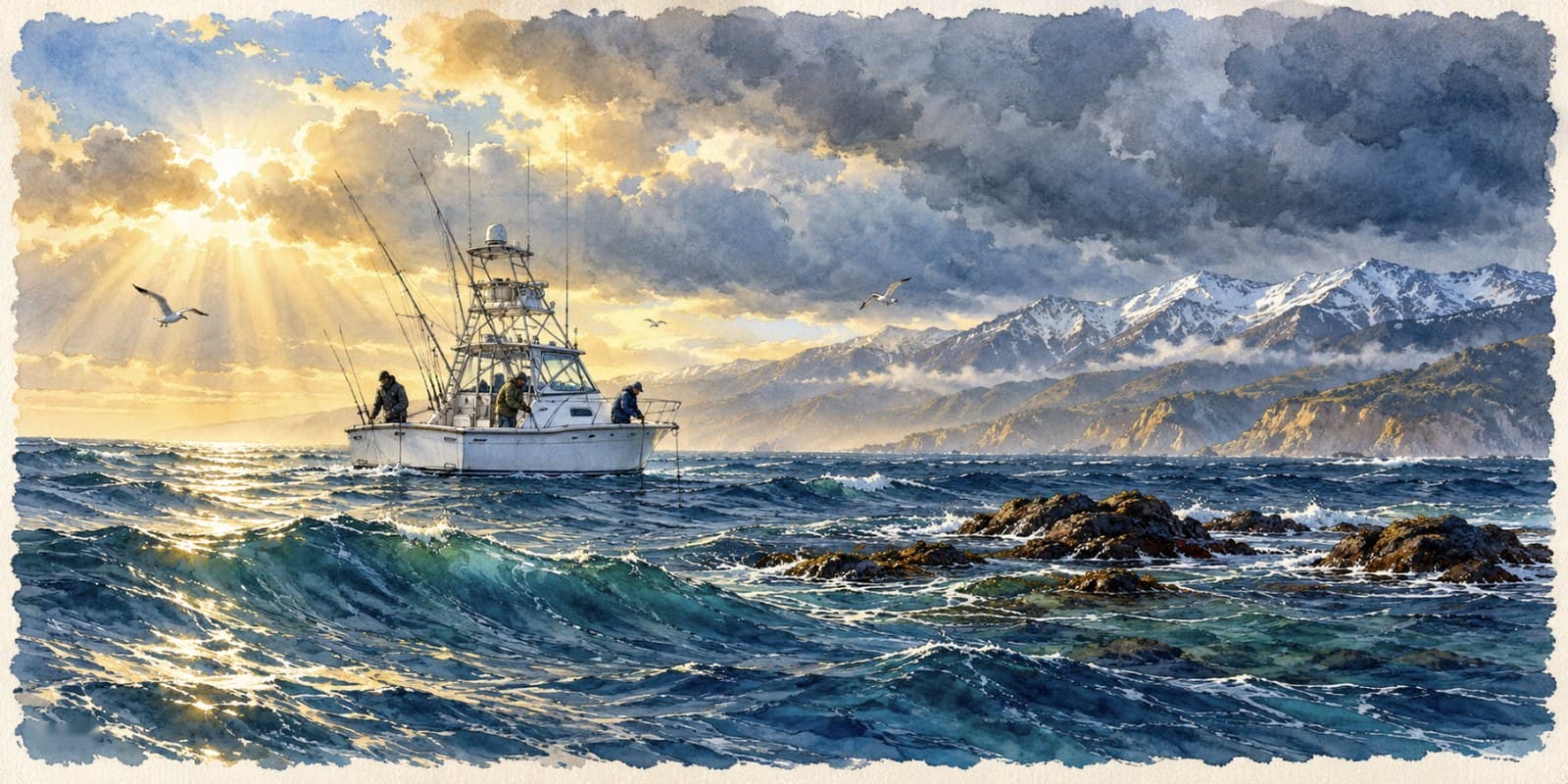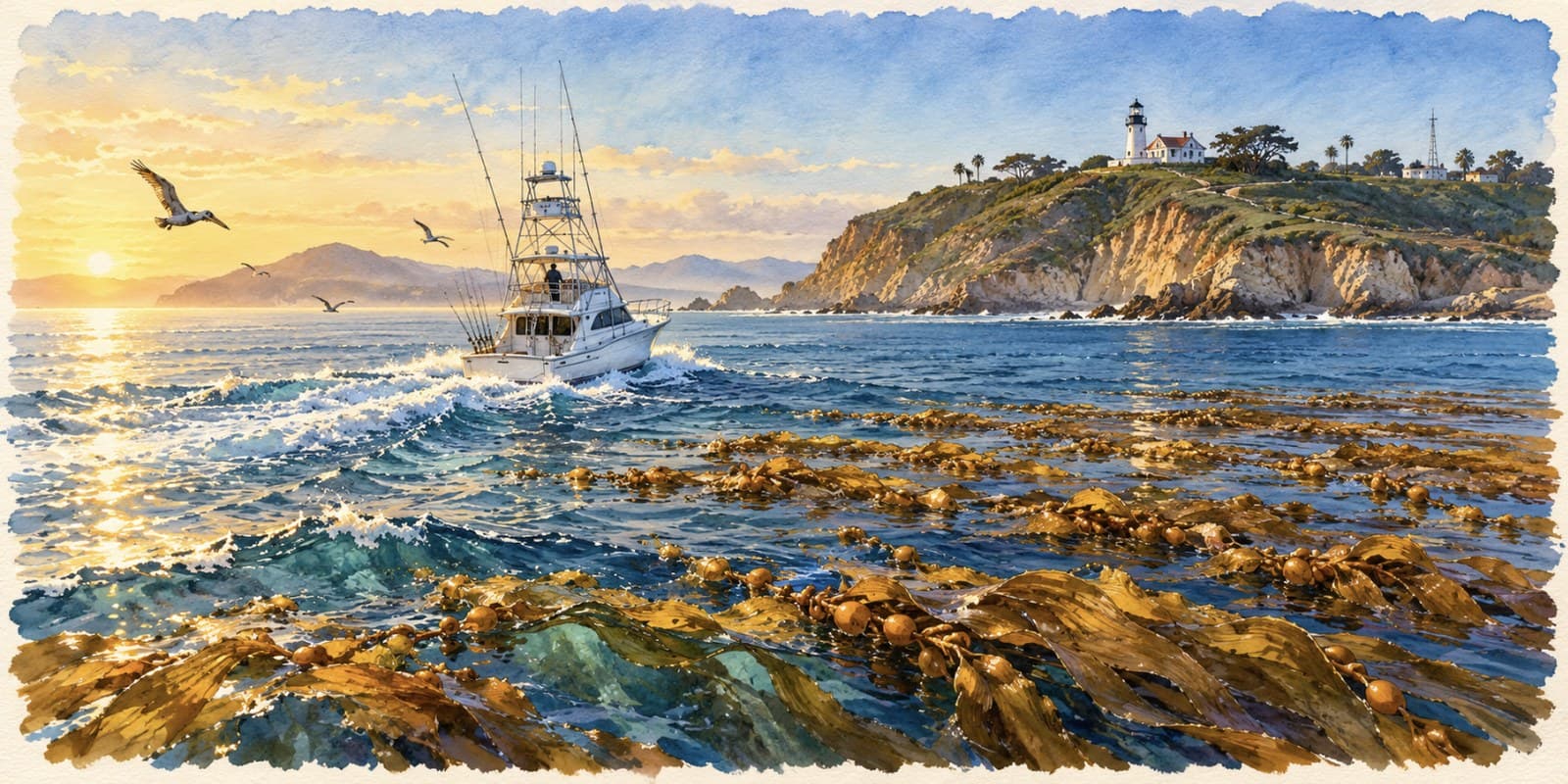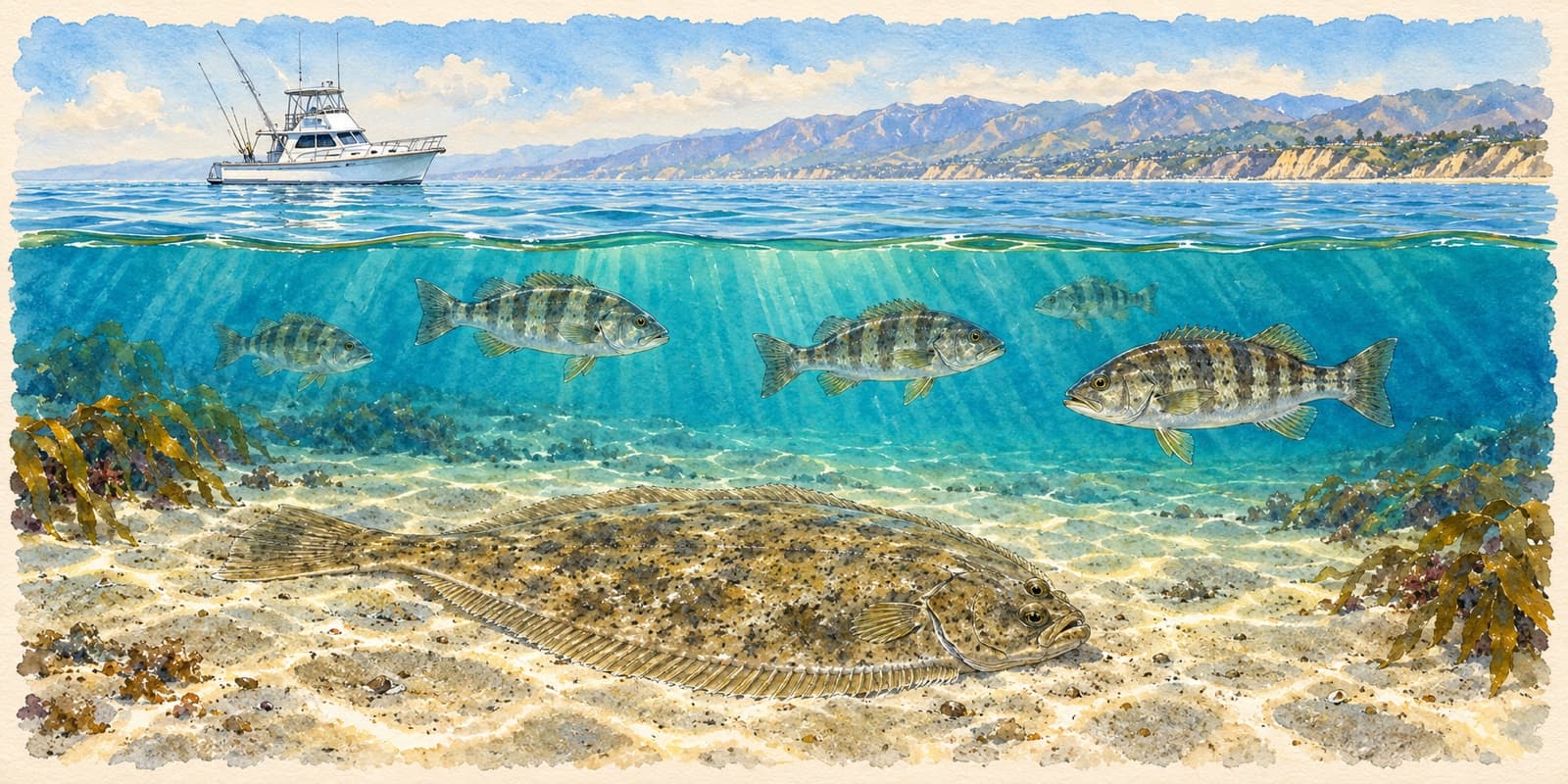
Santa Monica Bay is a wide, mostly sandy bay that runs from Malibu around to the Palos Verdes Peninsula. It does not have the deep canyon of some ports or the island just offshore. What it has is a lot of flat, soft bottom, rocky edges at both ends, and harbor rock right at the dock. That makes it a halibut and bass bay first, with rockfish below and the island game when the water warms.
If you fish out of Marina del Rey, the question on most mornings is which of those to work. This is how the bay's grounds fish through the year, what the landing runs, and how to decide where to spend the day.
The landing and the harbor
Marina del Rey is a large small-craft harbor on the bay, and its party boats sail from Marina del Rey Sportfishing on the east side of the harbor, with live bait at the dock.
The landing runs half-day and three-quarter-day trips. Its boats include the Betty-O, a 65-foot boat that marked 100 years in Southern California waters in 2021 and has fished out of the marina since the 1960s. On the bay, the regular targets are rockfish and, when the season provides, bass, barracuda, bonito and yellowtail. The three-quarter-day boats cross to Catalina when the bass and yellowtail are biting there.
The other South Bay harbor is King Harbor in Redondo Beach, just down the coast. The Redondo Canyon starts a short way outside its breakwater, and the kelp off Palos Verdes and Rocky Point is close. If you run your own boat, both harbors put you on the same bay.
Santa Monica Bay flats
The flats are the signature water. Broad sand is classic halibut ground, and the bay is one of the best-known places on this coast to drift for them.
Halibut lie on the bottom and ambush bait that passes over. The standard approach is a slow drift with live bait on the bottom, or a swimbait dragged along the sand. Speed matters. Too fast and the bait never stays down; too slow and you cover no ground. The halibut drift picks up in spring and carries into summer.
In summer the flats also hold barred sand bass, which gather over the sand to spawn when the water warms. They bite plastics, jigs and live bait fished near the bottom, and on a good day the bass and halibut share the same drift.
Barracuda and bonito are the other warm-water visitors. They come into the bay on a warm push, sometimes in good numbers and sometimes barely at all. When they show, they are a fast, light-tackle fishery near the surface.
The breakwaters and jetties
The marina's north and south jetties and the breakwater outside the harbor entrance are rock in a sandy bay, and that rock holds fish. Calico bass, sand bass and the occasional halibut live along the edges a few minutes from the ramp.
This is the easiest fishing in the port. On a short morning, a windy day, or a first trip with a newer angler, working the rock with plastics or live bait can be the whole plan. Calico bite best when the water is warm and slow down in winter, but they are a year-round resident and do not leave.
Horseshoe Kelp and the reefs
The bay's hard bottom is at its edges. Down toward Palos Verdes and the LA Harbor side sits the Horseshoe Kelp, deeper hard-bottom grounds that hold bass and, when the season is open, rockfish. It is also home water for the San Pedro boats, so expect company. Fishing out of San Pedro covers that side of the kelp.
Rockfish are the steady bottom catch out of this port and a big share of what the landing's boats bring back over a year. They are a structure fish, not a temperature fish, so they can fill a slow day when nothing on the surface will bite. Two rules apply every time. Rockfish seasons, depth limits and which species you may keep are set by CDFW and change, so check the CDFW groundfish rules before you drop. And carry a descending device so released fish go back down alive.
The rocky coasts at both ends of the bay, Malibu and Palos Verdes, also include marine protected areas. Check the CDFW marine protected area maps before you fish a new piece of reef.
Catalina Island
Catalina is the longer run from Marina del Rey, a real crossing rather than a hop, and it is a spring-to-fall trip. The island adds what the bay cannot: thick kelp, steep points and current. In the warm months it holds yellowtail, calico and white seabass.
Yellowtail are a structure fish that move with bait and current, so the read is the same as anywhere in the Bight. Fish the up-current side of points and the outside edge of the kelp, and watch the birds and the meter. The post on yellowtail and structure goes deeper on that, and the guide to surface and yo-yo iron covers what to throw when they come up.
In a warm year, yellowtail and other warm-water fish can also turn up closer to the mainland, and in an unusually warm year the offshore tuna can come within reach of Los Angeles boats. Neither is something to plan a season around from this port. Treat them as a bonus when the water says so.
The crossing is open ocean. Check wind and swell before you go, and keep watching it through the day.
Marina del Rey through the year
In broad strokes:
-
Spring. Halibut drifting on the flats picks up, calico start to bite harder on the rock, and the first island trips go out.
-
Summer. The busiest stretch. Sand bass gather on the flats, halibut are still on the sand, calico are at their best, and barracuda and bonito may show on a warm push. Catalina fishes for yellowtail.
-
Fall. The bay holds on while the water stays warm, and the island can still produce. As it cools, the fishing shifts toward the bottom.
-
Winter. The bay is slower. Bottom fishing carries the boats when the rules allow it, and calico are still on the rock, if less willing.
Where Fish or Pass fits
Out of this port, the call is often between the flats, the rock and the long run, and conditions decide which one is worth it. The Bite Score weighs things like water temperature, bait, kelp, recent landing reports and sea conditions into a verdict of Catching, Fishing or Pass, for each species on each grounds. The details are on how it works.
It can tell you that the bay has warmed enough for the bass, or that the swell makes the crossing a poor bet. It cannot set up your drift, pick the bait, or make a halibut bite. Use it to choose the grounds, then make your own call at the dock.
Before you keep anything, check the current CDFW ocean fishing regulations for size, bag and season rules on halibut, bass, rockfish and the rest.