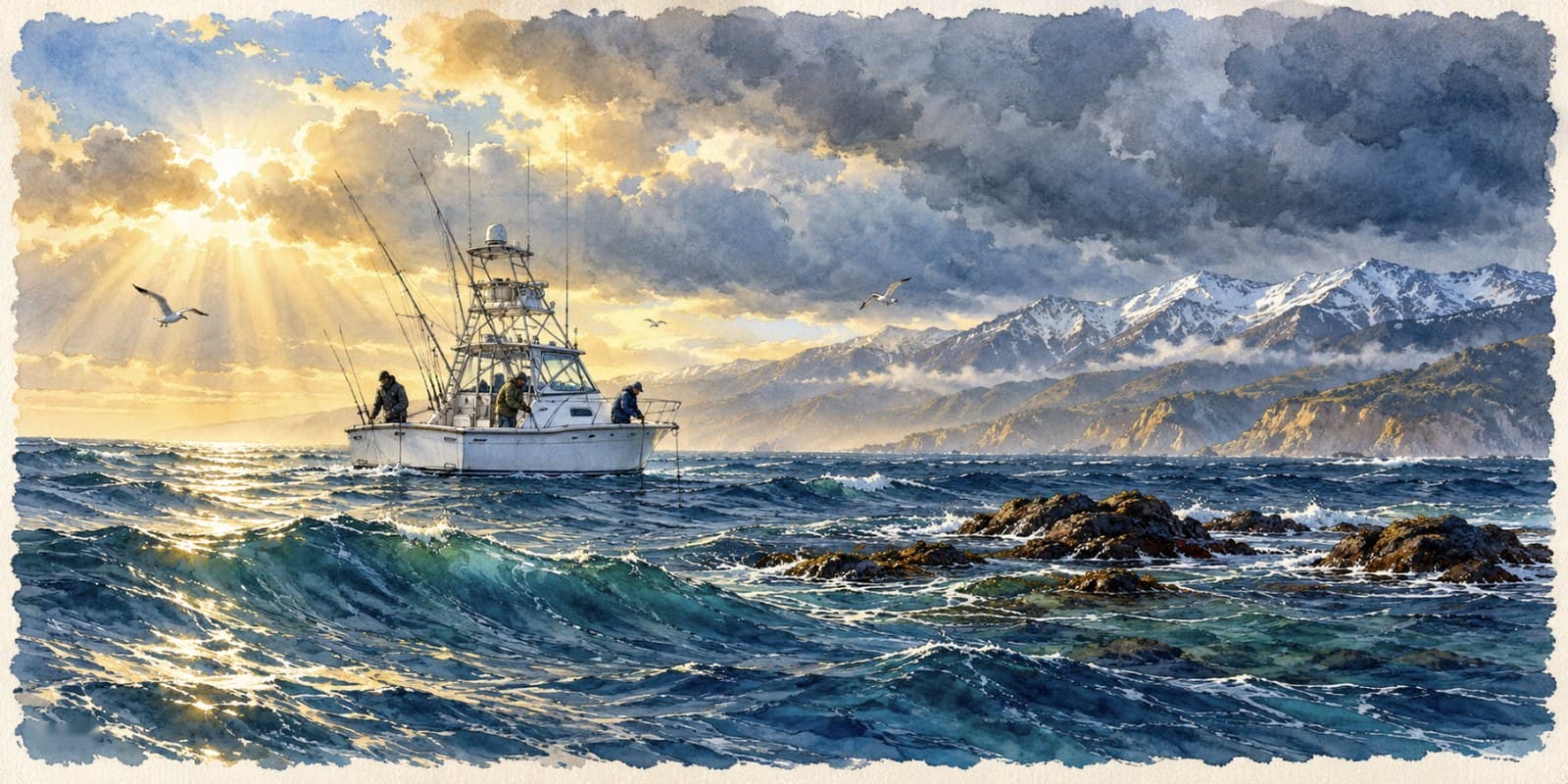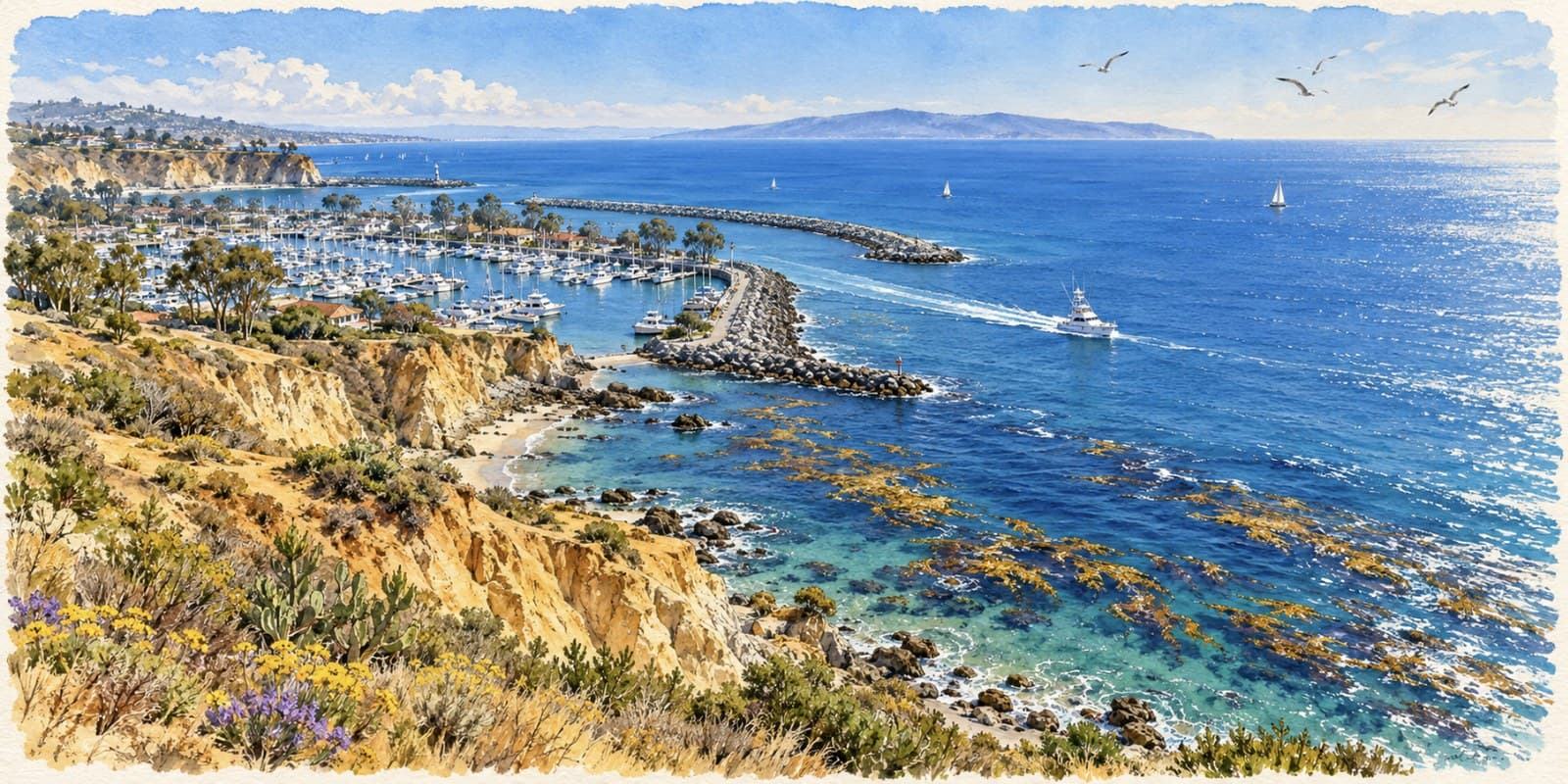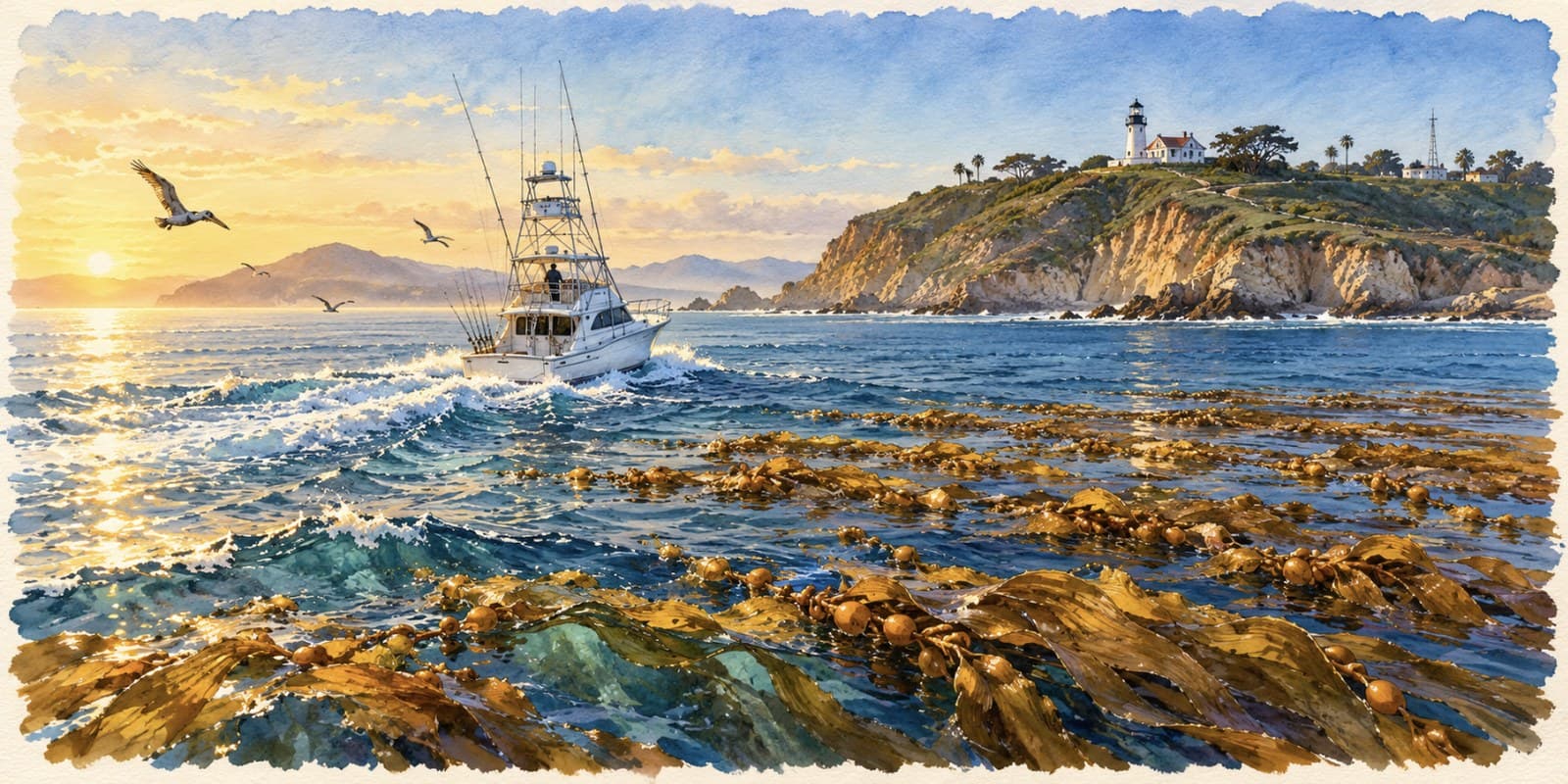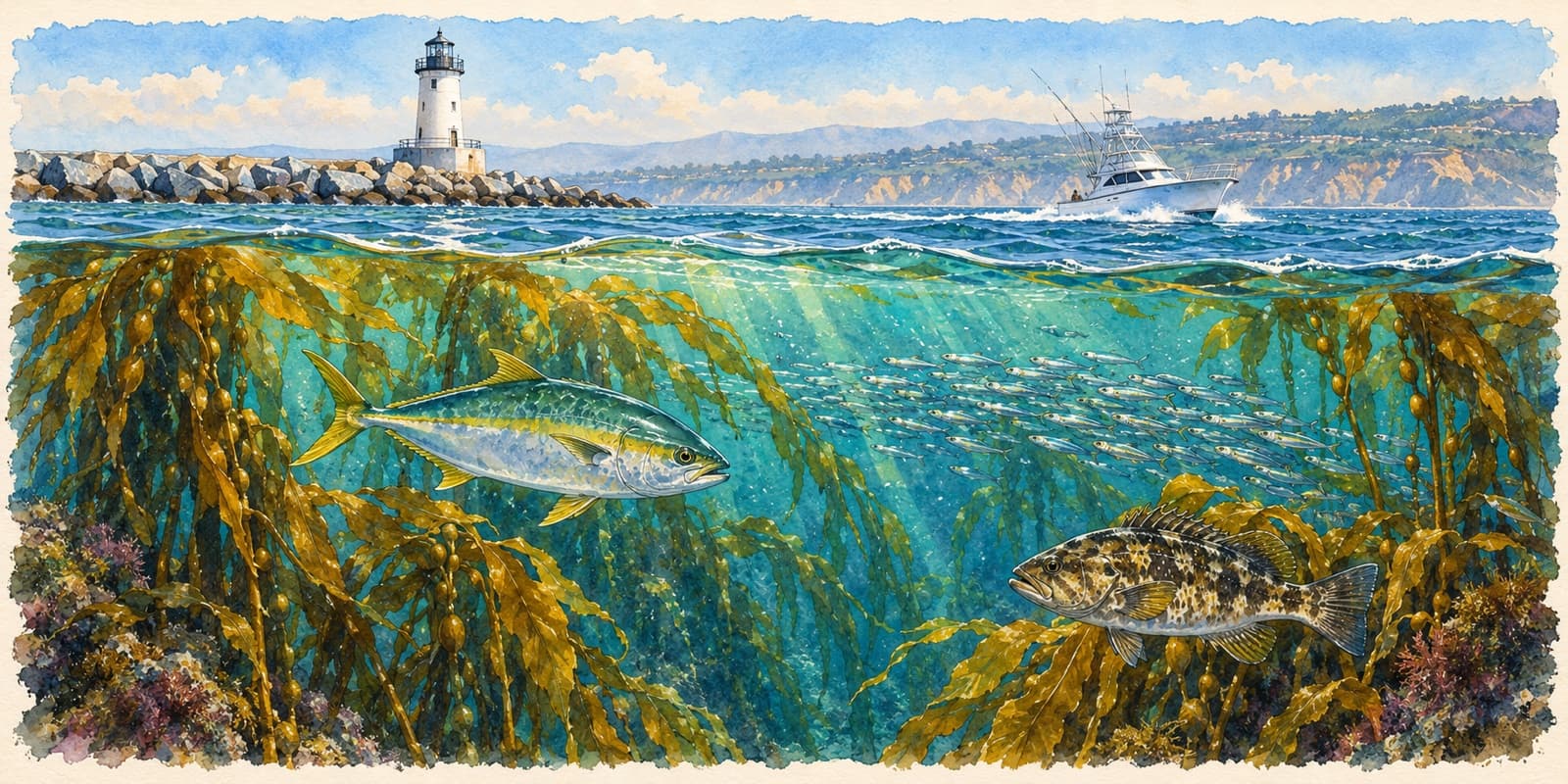
San Pedro is where Los Angeles sportfishing grew up. It is a working harbor at the foot of the Palos Verdes Peninsula, and its boats leave through Angels Gate, the opening in the breakwater marked by the old lighthouse, straight into the San Pedro Channel. From there the Palos Verdes kelp is just up the coast, the Horseshoe Kelp is minutes away, and Catalina is a straight run across.
This is a working guide to fishing out of San Pedro: the landings, the grounds the boats fish, and how the season plays out. The San Pedro port guide has the short version and today's conditions.
The landings
San Pedro's party boats run out of two landings on the west side of the harbor.
-
22nd Street Landing is one of the largest party boat landings in the Los Angeles area. Its fleet runs everything from half-day and three-quarter-day local trips to full-day Catalina runs, overnights and multi-day trips. It sits close to Angels Gate, so its boats are out in the open channel within minutes of leaving the dock.
-
LA Waterfront Sportfishing, the former LA Harbor Sportfishing, is at Berth 79 next to the San Pedro Fish Market. Its trips lean toward Catalina on a three-quarter-day or full-day schedule, plus private charters, and it has run lobster and fishing combination trips in the fall and winter.
Boats, schedules and trip lengths change with the season. Check each landing's calendar before you plan a day around a particular trip.
Horseshoe Kelp and the harbor flats
The closest grounds are the ones that make San Pedro a bass port.
The Horseshoe Kelp is a deeper area of hard bottom a short run from the harbor. It holds bass on the reef, and when the groundfish season is open it is one of the places the boats drop for rockfish. The state has listed it among the more productive kelp bass areas in Los Angeles County. The Santa Monica Bay boats reach it too; see fishing out of Marina del Rey.
The harbor flats are the sand around the outside of the breakwater. In summer the barred sand bass gather there to spawn, and when they do, the half-day and three-quarter-day boats can load up close to home.
The breakwater itself is miles of rock holding calico and sand bass, and it gives the boats sheltered water to fish when it is rough outside.
Rockfish carry their own season, depth rules and limits, and they change more often than most. Check the CDFW groundfish page before you plan to keep them, and see the rockfish guide for how those fish use structure.
The Palos Verdes kelp
Run west out of Angels Gate, around Point Fermin, and you are on the Palos Verdes Peninsula. The shoreline is rocky, the bottom drops off fast, and the kelp beds along it are some of the best calico water on the mainland coast. Boats work the outside edge of the kelp for calico bass, and in the right summers the same beds have given up white seabass and yellowtail.
Fish the kelp the way you would anywhere: get your bait or plastic tight to the edge, especially the up-current side, and pull the fish out of the stalks fast. The calico bass guide covers how the fish hold in kelp and how they change with the water temperature.
Parts of the Palos Verdes coast are marine protected areas where fishing is restricted or closed. Know where they are before you fish. CDFW keeps the maps of California's marine protected areas.
Catalina: front side and backside
Catalina is San Pedro's signature run. The crossing out of Angels Gate is short and straight, which is why this port has been a launch point for the island for so long. The island is also where rod-and-reel big-game fishing began; see Catalina, the Tuna Club and the birth of rod-and-reel marlin fishing.
Anglers split the island in two. The front side faces the mainland and is the more sheltered water. The backside faces the open Pacific. It takes more swell and more wind, and it is often wilder, with more current pushing across its points and kelp. Boats fish both, and which one they pick depends on where the bait and the fish are and on what the weather allows.
The island's kelp and boiler rocks hold calico bass, yellowtail and white seabass, along with sheephead and whitefish on the bottom. Yellowtail are the big draw from spring into fall. They live around the island's structure and run for it the moment they are hooked. The post on yellowtail and structure explains where they sit and why, and the yellowtail guide has the basics.
The channel is open ocean. Afternoon wind can build fast, and a calm harbor says little about the crossing. Check the NOAA marine forecast for the channel and for the island's exposed side before you commit to a run.
Offshore
In warm years, the overnight and multi-day boats out of San Pedro have run offshore for bluefin and yellowfin tuna in summer and fall. Those trips depend on the water. When it is warm and the fish are within range, they go. In a cool year, the fleet stays closer to home. The guide to fall yellowfin tuna explains how that warm-water window opens and closes.
The year at a glance
-
Winter. Slow close to home. The bass are on the rocks but sluggish, and the harbor trips are about what will bite in cold water.
-
Spring. The water warms, the kelp bass wake up, and Catalina starts to fish.
-
Summer. The peak. Sand bass spawning on the flats and the kelp, calico on the Palos Verdes kelp and the breakwater, bonito on a warm push, and yellowtail and white seabass at the island.
-
Fall. Good as long as the water holds. Island trips carry on, and offshore trips run in a warm year until the water cools.
Across the harbor, the Long Beach port guide covers the other LA harbor fleet, which leans more on the Huntington Flats and the long breakwater, and fishing out of Long Beach walks through its grounds.
Where Fish or Pass fits
Fish or Pass gives each of San Pedro's grounds a daily Bite Score for each species the fleet targets. It weighs water temperature, bait in the area, kelp and structure, recent landing reports and sea conditions, and turns them into a call of Catching, Fishing or Pass. You can see how it is built on how it works.
It cannot tell you whether the boat will pick the front side or the backside, or make a fish bite. It tells you which days the conditions favor going and which grounds look best. Before you keep a fish, check the current CDFW ocean sport fishing regulations.