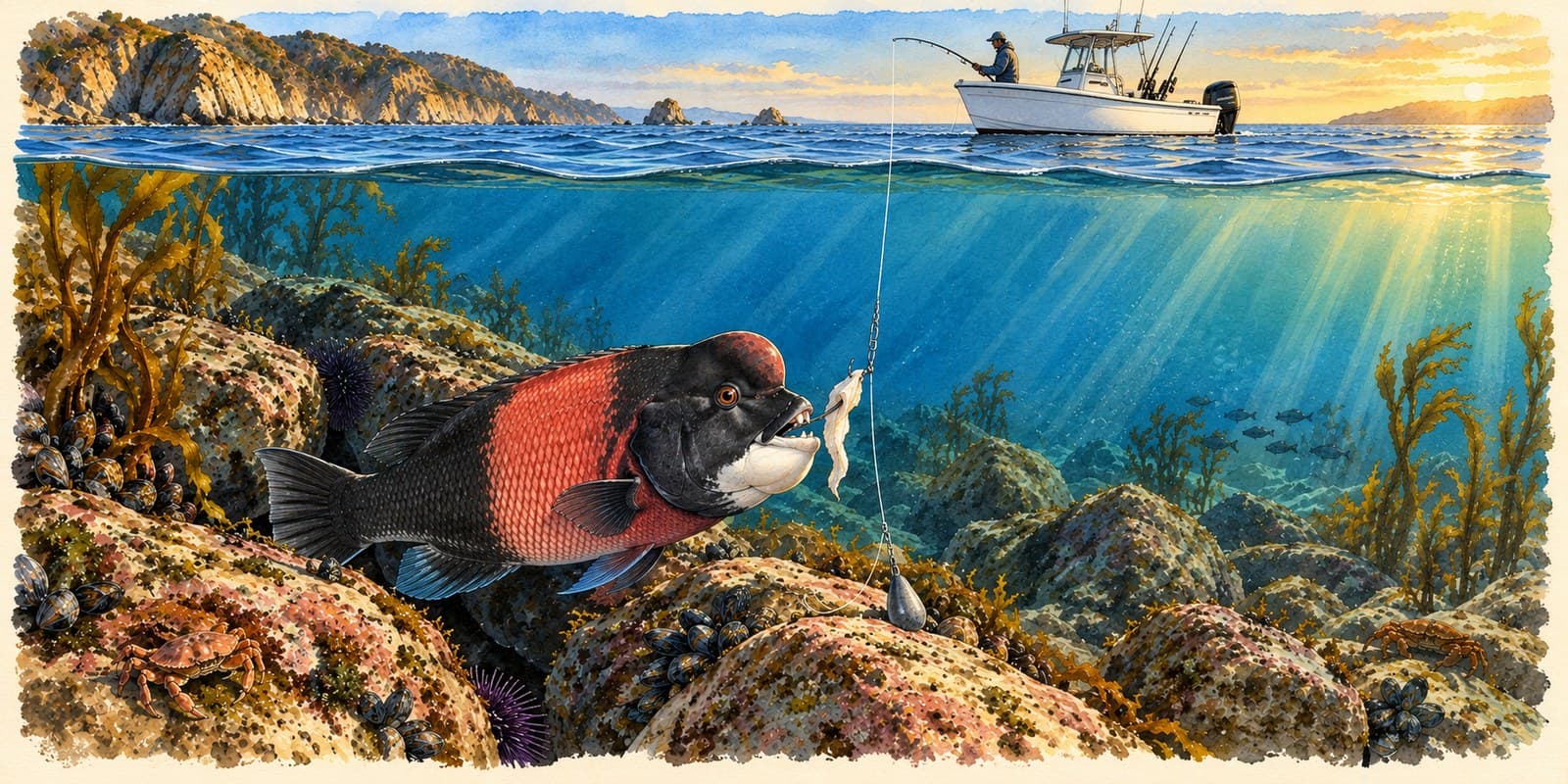
If you fish the kelp in Southern California for long, a sheephead will find you. You drop a shrimp or a squid strip for calico or rockfish, something taps it, the bait comes back bare, and eventually a fish comes up that looks like nothing else on the coast: a black head, a red middle, a white chin and a mouth full of buck teeth.
The sheephead is one of the most interesting fish in the Bight once you know how it lives. It eats urchins, it stays on one patch of reef for years, and every one of them starts life as a female. That last part changes how you should think about the big ones. The sheephead species guide covers the basics. This post goes into how the fish actually lives on the reef.
A wrasse with goat teeth
The California sheephead is a wrasse. It ranges from Monterey Bay to the Gulf of California but is a fish of the south: California Sea Grant describes it as found from Point Conception southward, on rocky reef and kelp bed habitat.
How to tell what you have:
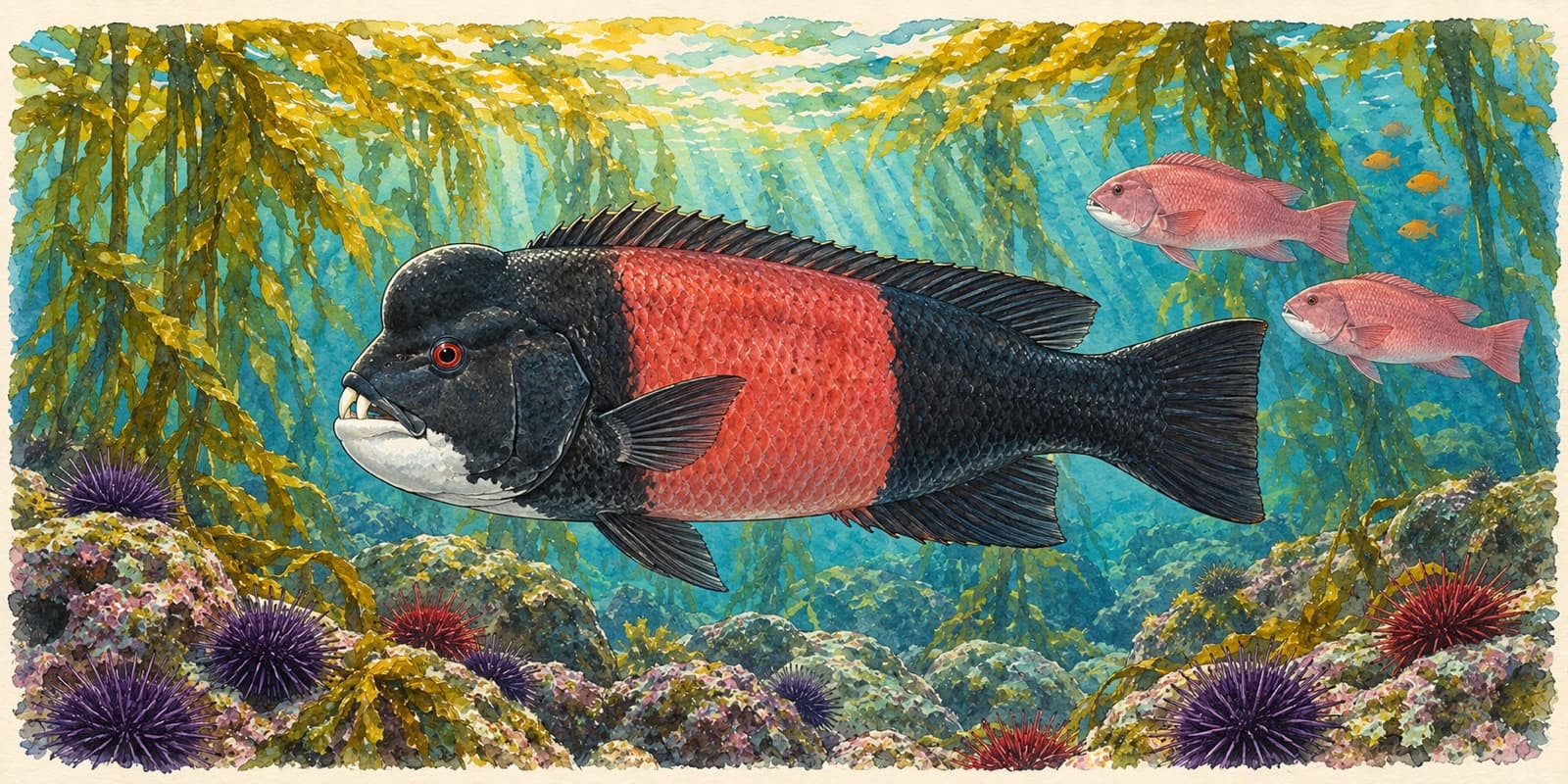
- Males have a black head and a black rear third, with a broad red to pinkish band around the middle. The chin is white, and big males grow a rounded fleshy bump on the forehead.
- Females are a plain rosy pink all over, with a white chin.
- Both have thick lips and big protruding canine teeth at the front of the mouth, built for prying shellfish off the rock and crushing them.
They can reach about 3 feet and 35 pounds, though fish that size are rare. The oldest sheephead on record was a 53-year-old male.
A fish that stays home
Sheephead are residents. Once a fish settles on a reef it tends to stay there, with an average home range the Aquarium of the Pacific puts at around 600 square meters, not much bigger than a couple of tennis courts. They feed by day and tuck into rock crevices at night.
Their food is the hard-shelled life on the reef: sea urchins, crabs, mussels and other shellfish, barnacles and the small animals that live on the rock. Adults are especially important as predators of purple sea urchins. Where big sheephead are common they help keep urchin numbers down, and urchins left unchecked can graze a kelp forest down to bare rock.
For an angler, the stay-at-home habit cuts both ways. A reef that holds sheephead tends to hold them for years. But a reef that has had its big fish taken does not refill quickly from somewhere else.
Harems and the sex change
Sheephead live in groups led by one large male, with a set of females in his territory. Spawning runs from about July to September. During that time males defend territories along the reef, and the fish spawn in batches, releasing eggs and sperm into the water several times over the season.
Every sheephead matures as a female. Most later change into males, usually somewhere between 5 and 13 years old. What triggers it is partly social. When the male of a group is removed, the largest female changes sex and takes his place, growing the colours and the forehead over a period of months. The change runs one way only.
What fishing does to it
Put that biology together with how people fish and you get an unusual problem. Anglers and spearfishermen tend to keep the biggest sheephead, and on most reefs the biggest sheephead are the males.
A 2007 study led by researchers at UC Santa Barbara measured how much. They compared sheephead collected in 1998 with data gathered at the same places 20 to 30 years earlier. At Catalina, where recreational fishing had grown, and at San Nicolas Island, where a commercial fishery had grown, both sexes had shifted to smaller sizes. Females matured earlier and changed into males at smaller sizes and younger ages. At a lightly fished site in Baja California, nothing had changed.
Two kinds of fishing were pushing on the fish from different ends. Anglers keep the big ones, which are mostly males. The commercial fishery that grew up in the 1990s was a live-fish trade aimed at smaller sheephead, sold live to restaurants and markets, which are mostly females.
None of this is a reason to stop keeping sheephead. It is a reason to think about which ones. Anglers are often encouraged to let the big males go and keep a smaller legal fish instead.
Where to find them
Sheephead live in and around the kelp and on rocky reef, most commonly in water from about 10 to 100 feet but well deeper than that too. In practice they turn up anywhere there is hard bottom with kelp over it:
- Catalina. Sheephead are a fixture of the island's kelp. Boats out of San Pedro and Long Beach fish its kelp and reef, and our post on fishing out of Long Beach covers the run across.
- San Clemente Island. The farther island holds plenty, and island trips that fish the rock bring them up with rockfish and whitefish.
- The coast. The Palos Verdes kelp, La Jolla and the Point Loma kelp all hold sheephead. See the Point Loma port guide.
- The Coronados. Good sheephead water, but Mexican, with Mexican rules and a Mexican licence. Our post on the Coronado Islands' long season covers fishing there.
How to get bit
Sheephead are not shy, but they are very good at cleaning a hook. The basics are below; our guide to catching sheephead covers the fall bite, the rig and where to drop in full.
- Use shellfish baits. Shrimp, squid, a piece of crab or a mussel. They want what they eat naturally and are less interested in fish baits.
- Fish on the rock. Drop to the bottom and lift the bait a little so it sits just off the reef.
- Go small and strong. A smaller, stout hook catches more sheephead than a big one they can strip.
- Fish braid. The bite is often a series of light taps. Braid lets you feel it.
- Lift fast. Once hooked, a sheephead heads for the rock. Get it up off the bottom.
The neighbours
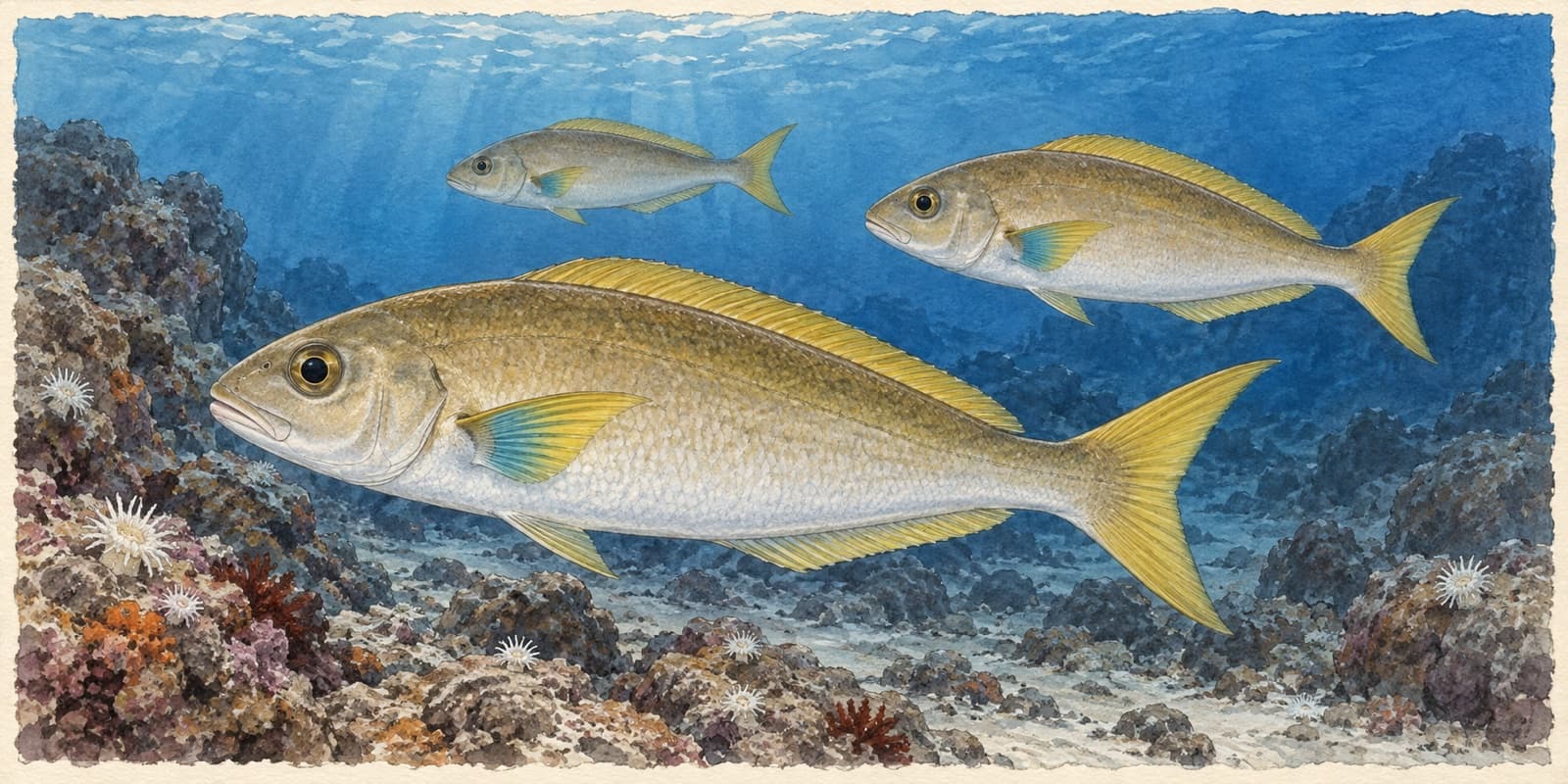
Two other fish share the sheephead's island reefs and are worth knowing. The tan, yellow-finned fish that comes up over the sand edges of the same reef is the ocean whitefish, the island fish nobody books a trip for and most people take home. Our post on ocean whitefish on the island reefs covers it. And the giant that sometimes cruises past a sheephead reef at Catalina or Anacapa is a giant sea bass, which is fully protected in California. Its story is told in the recovery of the giant sea bass.
Rules
Since 2023, California has set the sheephead season separately from the groundfish rules, with a boat-based season and year-round access for shore anglers and divers. The bag limit was cut in the same change. Check the current CDFW Southern Region regulations for the season, bag and size limit before you keep one, and the marine protected areas page before you fish any reef.
Where Fish or Pass fits
The sheephead guide is a profile. Fish or Pass does not grade sheephead. The Bite Score reads conditions for the fish that share its water, calico in the kelp and rockfish on the reef, as Catching, Fishing or Pass. Our calico bass guide covers the kelp you will be fishing. The score cannot tell a male from a female, and it cannot make a sheephead bite.