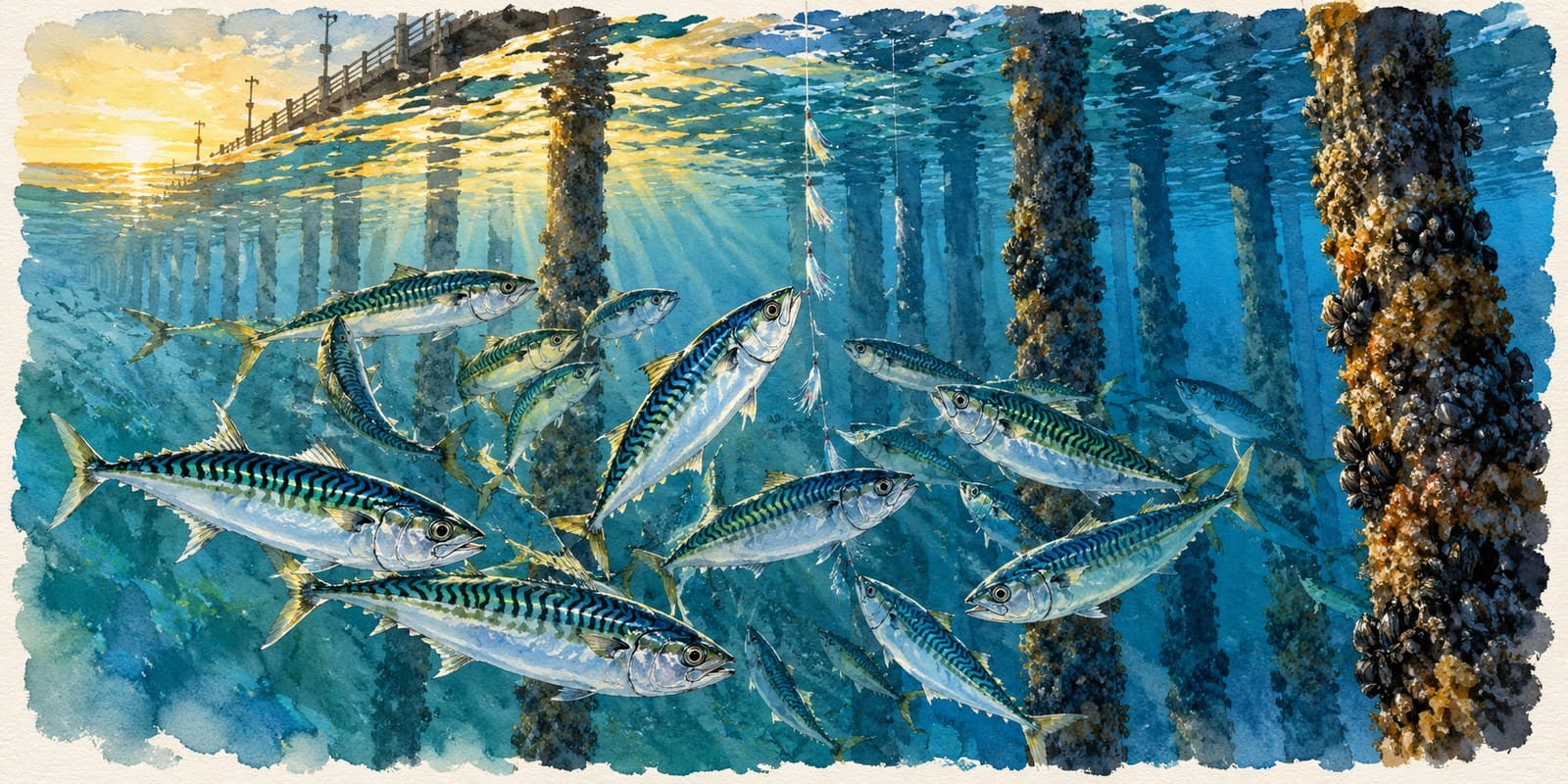
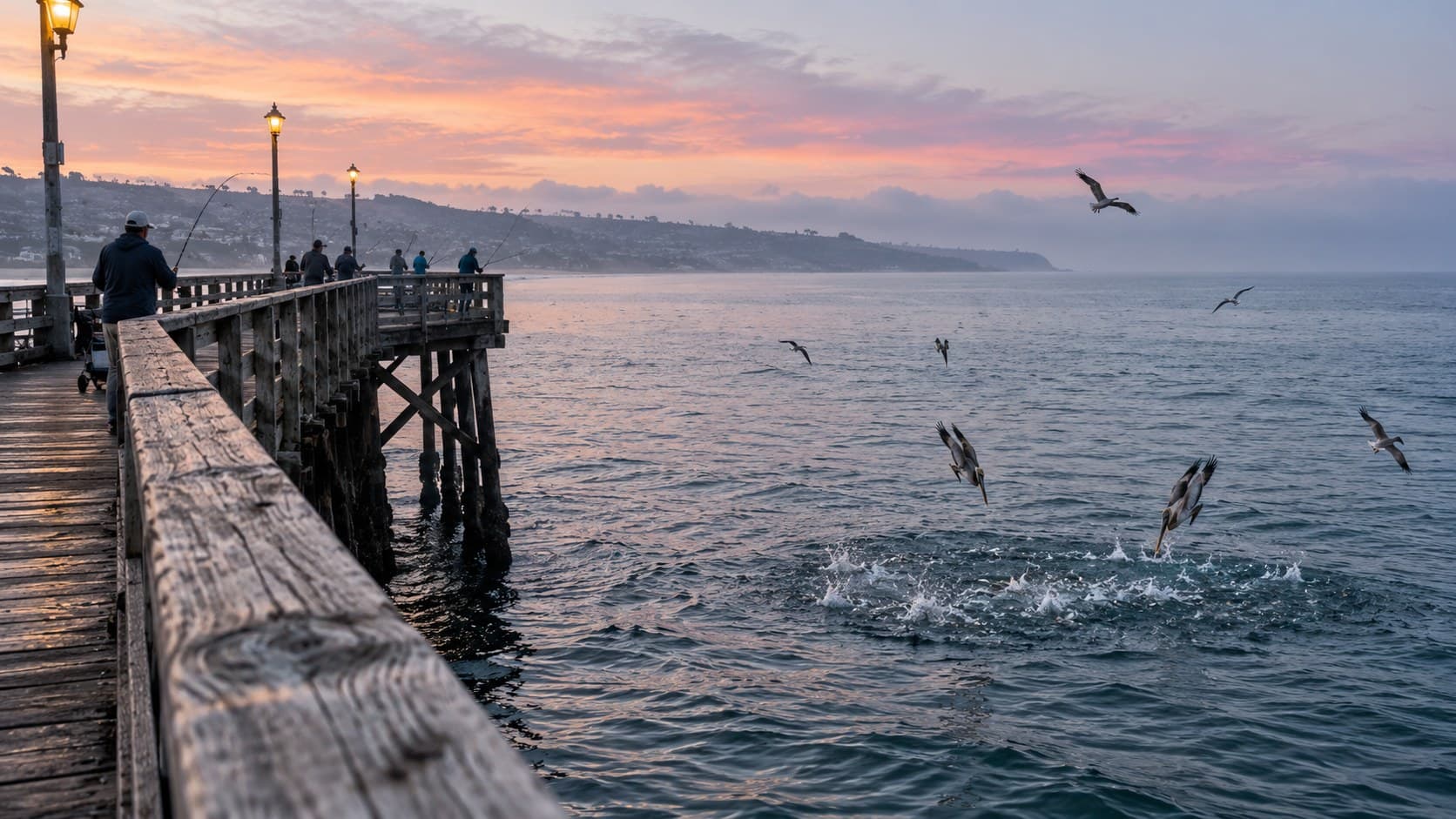
Mackerel are the pier fish that shows up for everybody. Kids catch them, first-timers catch them, the regular with the bucket and the folding chair catches them six at a time. When a school of Pacific mackerel pushes under a Southern California pier, the rail fills up and rods start bending in every direction.
This post is for the pier and shore angler: where mackerel hold around a pier, when they come up, what to tie on, and what to do with them once you have them. If you fish from a boat and want them for bait, our guide to catching mackerel on a sabiki for bait covers that side. For the fish itself, see the Pacific mackerel species guide.
Why a pier holds mackerel
A pier is structure sitting in open water. The pilings grow mussels and weed, small bait gathers around them, and the pier throws shade in the day and light at night. Mackerel are roaming schooling fish that follow bait, so a pier that reaches past the surf line into deeper, cleaner water is exactly where they end up.
They do not live there. A school moves through, feeds, and moves on, which is why a pier can be wide open at sunrise and dead by nine. Pier mackerel fishing comes in waves. When the wave shows up, be ready.
Which piers
The long ocean piers that reach well past the breakers give you the best shot, because they put you over the deeper water where schools travel. Up and down the Bight that means piers like Redondo Beach, Huntington Beach, Newport and Balboa, Oceanside and Ocean Beach in San Diego. Harbor and breakwater spots inside Long Beach, San Pedro and San Diego Bay see mackerel too, especially around lights at night.
Fish the end of the pier first. That is usually the deepest water and the cleanest current. If the regulars are all bunched in one spot, there is usually a reason.
CDFW keeps a list of public piers, jetties and breakwaters and the rules that apply to fishing from them. Check it before you go, along with the CDFW ocean sport fishing regulations for limits on what you keep.
When they bite
Low light is the rule. Mackerel tend to sit deeper in bright sun and come up to feed at first and last light. Dawn is the classic window. Dusk is a close second.
Night is the other good time. Mackerel feed in the dark and gather under lights, and a well-lit pier end after sunset can be the best mackerel fishing of the day. Bring a headlamp and a jacket.
Water temperature matters too. Our mackerel species guide puts their preferred water at 60 to 70 degrees. In colder spells they can be harder to find from shore or sit deeper, so you may have to fish lower in the water column. Late summer and fall, when the nearshore water is still warm and the bait is thick, is when piers tend to see the most schools. That is a pattern, not a promise. Some days they show, some days they do not.
The gear
You do not need much. A light to medium spinning rod around 7 feet with 10 to 15 pound line handles mackerel fine and stays fun. Mackerel fight hard for their size, so lighter gear is the point.
Three setups cover most pier days.
- The sabiki. A string of small dressed hooks with a sinker on the bottom. Drop it straight down off the rail, let it sink to where the fish are, and jig it gently. Size 8 or 10 hooks are a good pier choice because they also pick up sardines and anchovies. Go bigger if only greenbacks are around. Use just enough weight to get down, often 1 to 2 ounces.
- A single hook and bait. A small hook with a strip of squid or a piece of cut mackerel, fished under a float or on a light sinker. Slower than a sabiki, but it tangles far less on a crowded rail.
- A small chrome lure. A little spoon or casting jig, cast out and cranked back fast. When a school is boiling on the surface off the end, this can be the quickest way to get bit.
Before you buy anything, check the hook rules. California limits hooks and lines when you fish from shore and piers, and the details are in the CDFW regulations linked above.
Pier manners with a sabiki
A sabiki has a lot of hooks on it and a crowded pier has a lot of lines. Drop straight down rather than casting. Keep your rod tip close to the rail. When you hook a fish, bring it up and swing it in without swinging it across your neighbor.
Unhook mackerel over the deck, not the rail, and keep a rag handy. They thrash, they bleed, and they are slippery. When you are done, wrap the sabiki back on its card or cut it up. A loose sabiki on a pier deck is a hook in someone's foot.
What a pier mackerel is good for
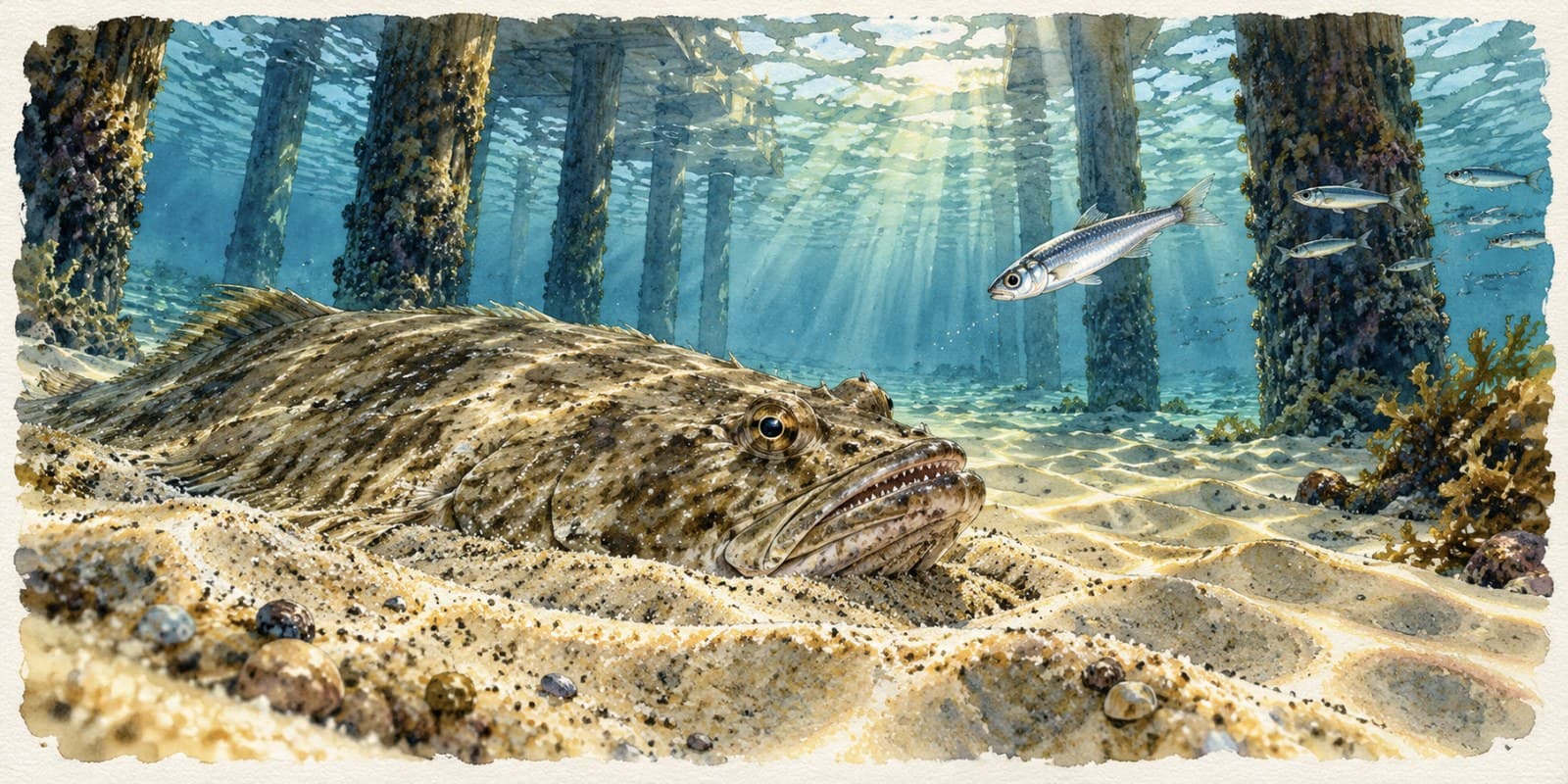
Bait for something bigger. A lively mackerel is a serious bait. Pier anglers use them for California halibut on the sand around the pilings, and our post on catching halibut off piers, beaches and jetties covers the rest of that game. Keep the bait alive in an aerated bucket and change the water often, because mackerel use up oxygen quickly.
Bait for later. Cut mackerel is good strip bait for almost anything that eats on the bottom. Freeze some for the next trip.
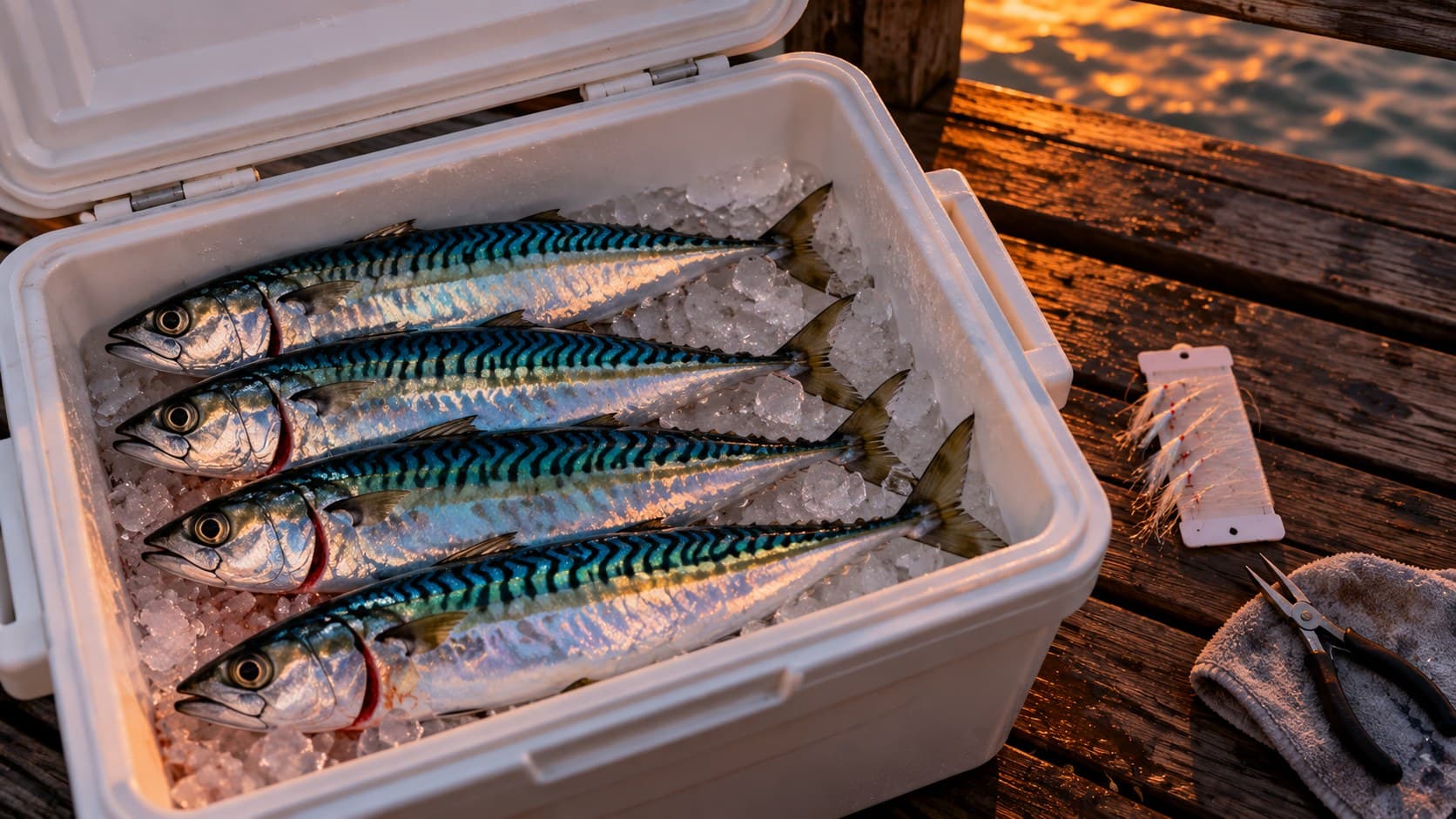
Dinner. Mackerel are oily and good to eat if you treat them right. Bleed them right away by cutting the gills, then put them on ice, not in a warm bucket. They soften fast in the heat. Fresh mackerel is good grilled or smoked, and it is at its best eaten the same day.
Telling mackerel apart
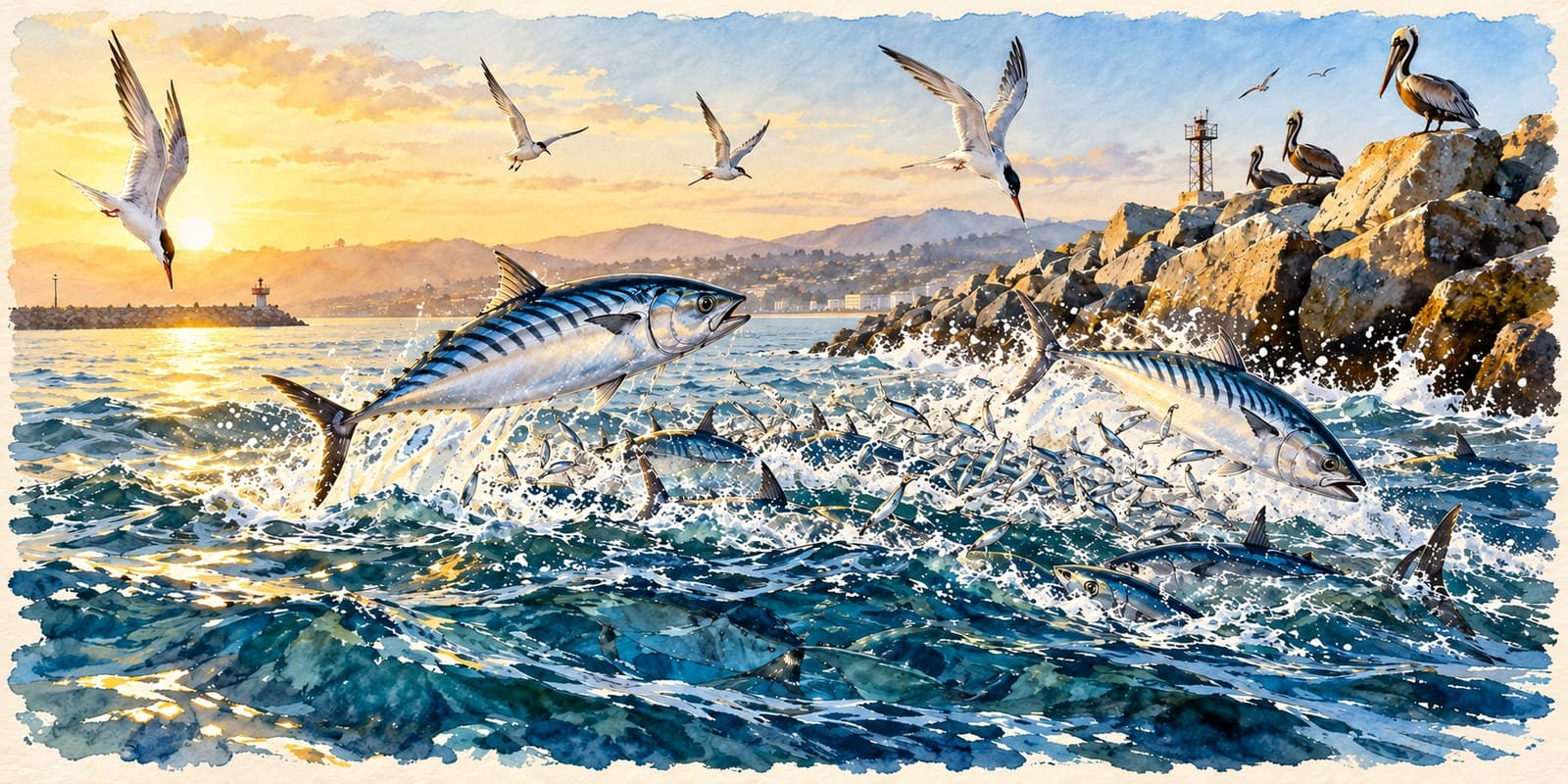
What comes up on a pier sabiki is often a mix. Pacific mackerel, the greenback, has a dark blue-green back crossed by wavy dark lines and a row of small finlets behind the second dorsal fin. Jack mackerel, which the boats call Spanish mackerel, has a line of hard bony scales along the side that dips partway down. Small bonito sometimes run with mackerel too, and those have dark stripes slanting across the back. The sabiki bait guide has a fuller breakdown of what you might pull up.
A note on the score
Fish or Pass grades six species for anglers running boats out of the Southern California ports, and mackerel are not one of them. For pier mackerel, the best read is still the old one: go at first light, watch for birds and boils off the end of the pier, and talk to whoever has been out there the longest. If the surf is up, check the NOAA marine forecast before you walk out to the end. Big swell over a pier is no place to stand.