Ask anyone who fished Southern California in the 1960s about bonito and you tend to hear the same story: boils of them, everywhere, all summer. The records back that up. They also show what happened next, and why a bonito bite today is something you watch for rather than count on.
This is the history of the Pacific bonito off this coast, from the party boat boom to the 1999 low, and what it means for fishing them now. For the fish itself, see our bonito guide.
The boom: over a million fish
Bonito were made for the post-war party boat fleet. They school close to shore, they eat anything shiny, and they pull hard on light tackle. As the fleet grew after World War II, the bonito catch grew with it. According to the CDFW status report on Pacific bonito, party boats took 36,500 bonito in 1947 and over one million in 1960. Most of those fish were caught between Malibu and the Coronado Islands.
The 1960s stayed strong, with more than a million fish landed in 1964, 1968 and 1969. In most years bonito ranked among the top 15 species Southern California anglers went looking for.
The 1970s and 1980s: a lower plateau
The party boat catch dropped in the 1970s and then held at a lower level. CDFW puts the decade averages at 313,200 fish for the 1970s and 372,700 for the 1980s. Some of that catch moved rather than vanished: in the 1980s more than half the bonito were landed from private boats, as private boat fishing took off.
Commercially, the story ran the other way for a while. Purse seiners, including the San Pedro wetfish boats that worked the Santa Barbara and San Pedro Channels, landed a record 31.9 million pounds in 1975. From 1943 to 1958 and again from 1975 to 1978, at least half and often more than 90 percent of the bonito landed in California came from Baja waters. As Mexico restricted foreign boats in its nearshore waters, that share fell below 10 percent.
California imposed a size limit on bonito in 1982, and CDFW judged its effect on the catch to be limited. Current limits are in the CDFW ocean sport fishing regulations.
The 1990s: the low
The party boat catch dropped again in the 1990s, to a decade average of 101,700 fish. The 1999 catch was the lowest on record, and the decade average was the lowest since the 1940s.
CDFW's report did not settle on one cause. It listed several:
- Better fish to catch. In the 1980s and 1990s, yellowfin, bluefin and albacore were at times available in big numbers, and anglers chased them instead.
- Low demand. Canneries wanted little bonito, so commercial boats had little reason to target it.
- A changing ocean. The fish's distribution and migration may have shifted with the ocean conditions of those two decades.
- Fewer fish. The decline, in the report's words, "may well be due to a decline in stock abundance."
That honesty is worth holding onto. The records show the catch falling. They cannot fully separate fewer bonito from fewer people fishing for them.
What moves bonito
The same report is the best plain description of how this fish behaves off our coast.
- They follow warm water. The northern population centers between Southern California and central Baja and migrates roughly 600 miles along the coast, south in winter and north in summer. In El Niño years more of the stock moves north into California waters. In La Niña years, fewer do.
- Some stay all winter. Bonito tagged in the warm-water discharges of coastal power plants were recaptured near where they were released up to three years later. Anglers have long fished the warm outlets at King Harbor in Redondo Beach in winter for the same reason.
- They grow fast. A one-year-old is around 20 inches and four pounds, and a two-year-old about 25 inches and eight pounds. Most of the recreational catch is one-year fish. The California record, 22 pounds, came off Malibu in 1978.
- They mostly spawn south of us. Spawning starts in January and runs about five months, peaking off central Baja. It can reach Southern California late in the season or during an El Niño.
Fishing bonito now
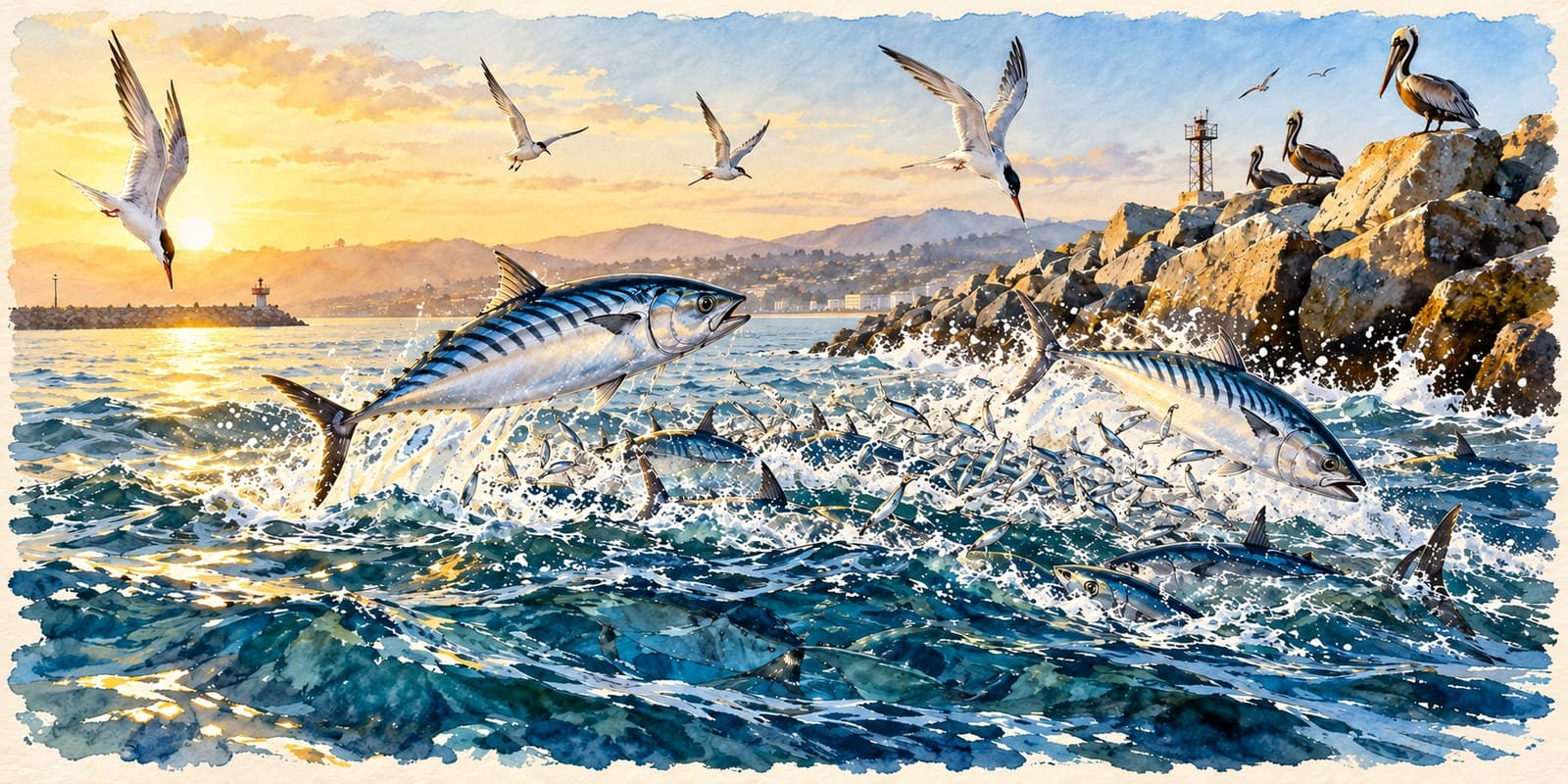
The modern bonito bite is a warm-year bite. When the water comes up, the fish show along the Long Beach and San Pedro breakwaters, at harbor mouths and along the kelp line, and offshore around paddies. Our guide to catching bonito in Southern California covers where they show and how to rig for them in full. In short:
- Lures. Small chrome, or a bonito splasher with a feather trailing behind it, cast out and wound fast. Our guide to the iron covers casting metal in general.
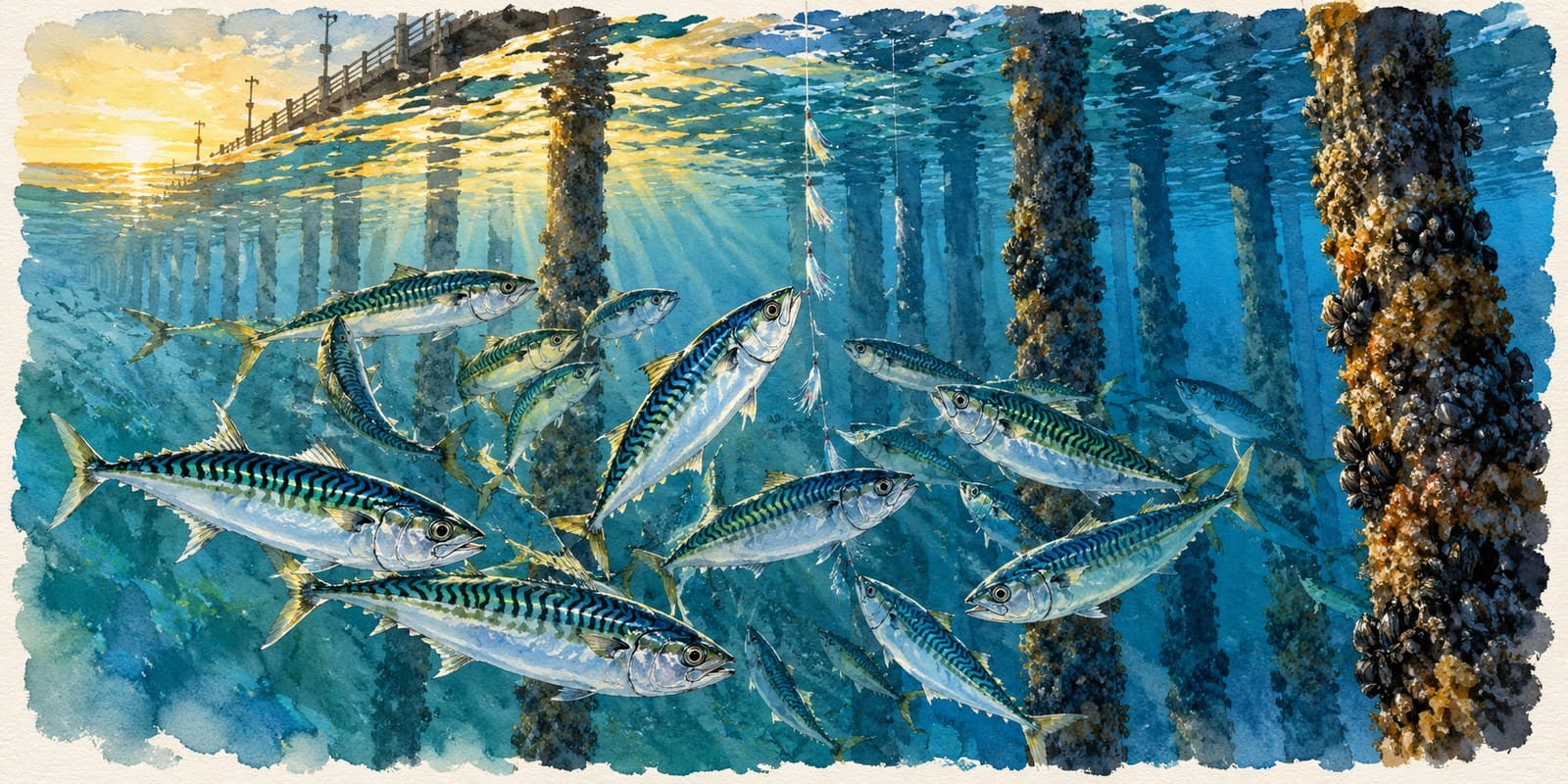
- Bait. A fly-lined anchovy or sardine. When the bait tank is empty, a string of mackerel on a sabiki does double duty as bait and as a sign of what is feeding.
- Company. Bonito share the same summer surface water as Pacific barracuda, and the same iron and splashers take both.
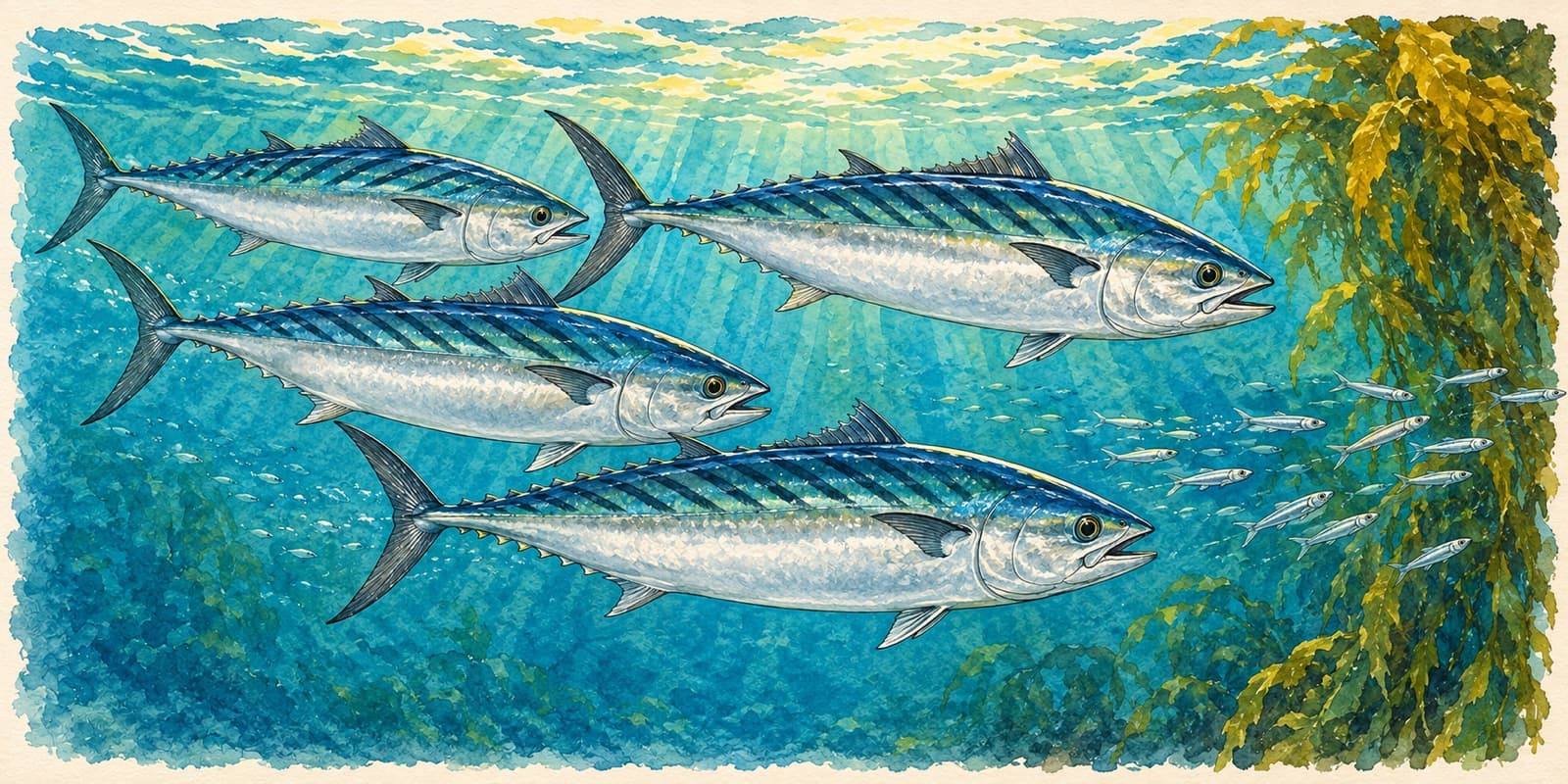
Tell a bonito from a small tuna by its stripes. Bonito carry dark slanting stripes along the back. A skipjack has its stripes running lengthwise along the belly, with a plain back. Bleed bonito the moment they come aboard. The meat is dark and strong if you do not.
Where Fish or Pass fits
Bonito are a profile species on Fish or Pass, not a graded one. The bonito guide describes the fish. The Bite Score grades the warm-water fish that tend to show in a bonito year, like yellowfin, dorado and yellowtail, from water temperature, bait, recent reports and sea conditions. It cannot count the bonito in the harbor, and it cannot make one bite.