Bonito are the fish a lot of Southern California anglers catch first and respect last. They show up close to shore, they hit hard on light line, and they run like something twice their size. Then they vanish for a week. This is how to find them when they are around, and how to rig for them from a breakwater, a pier or a boat.
For the fish itself, see the bonito guide. For why the big bonito years ended, read our history of bonito off this coast.
When bonito are around
Bonito are a warm-water fish. When the nearshore water is warm, they push along the coast and into the harbors. When it cools, most of them move south. That makes summer and fall the usual window, and the fall bite near the harbors is the one a lot of shore anglers wait for.
It is not a calendar fish. In a warm year they can hang around well into late fall and sometimes through winter. In a cool year you may see a few in late summer and that is it. The water decides, not the month.
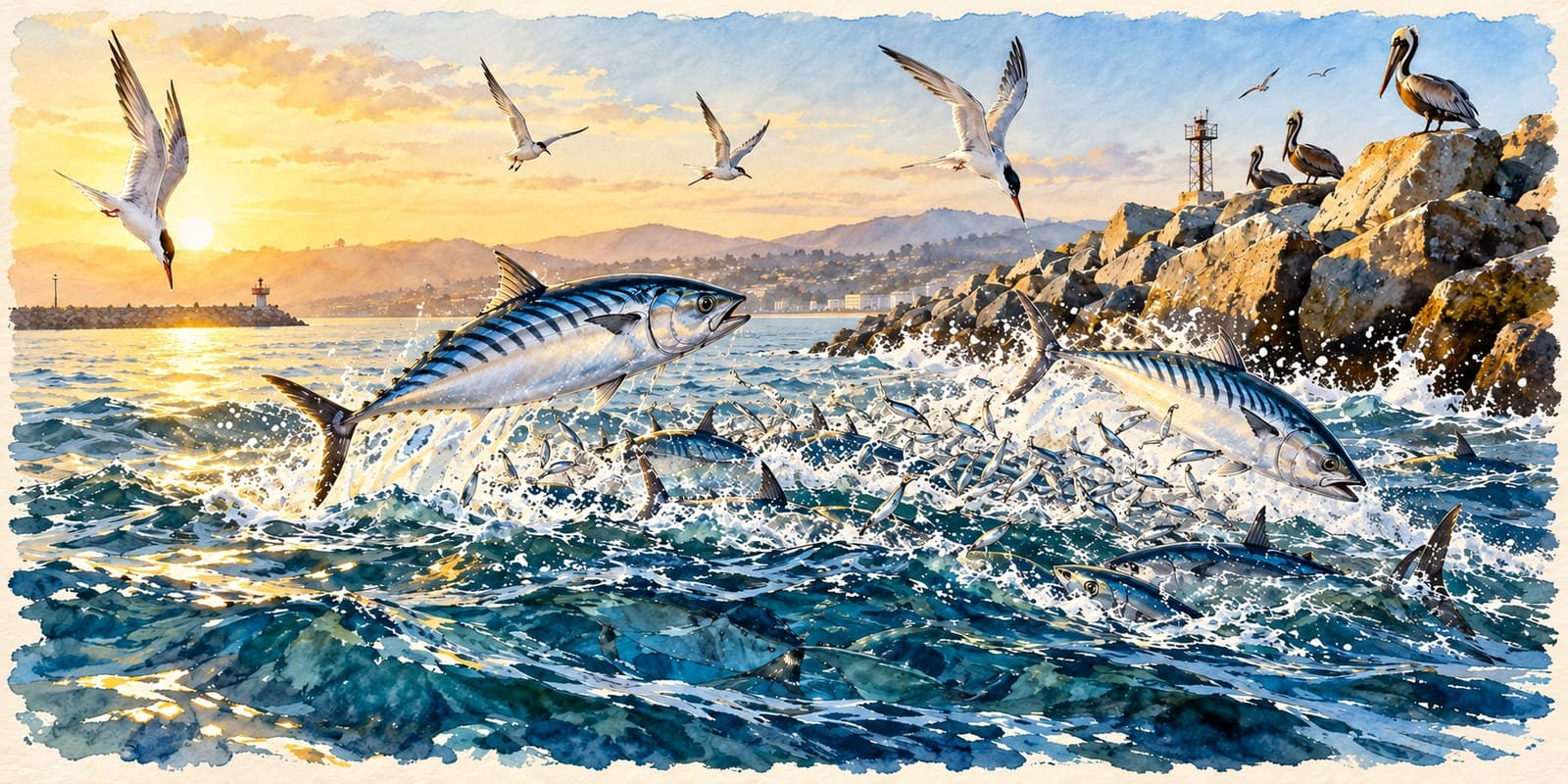
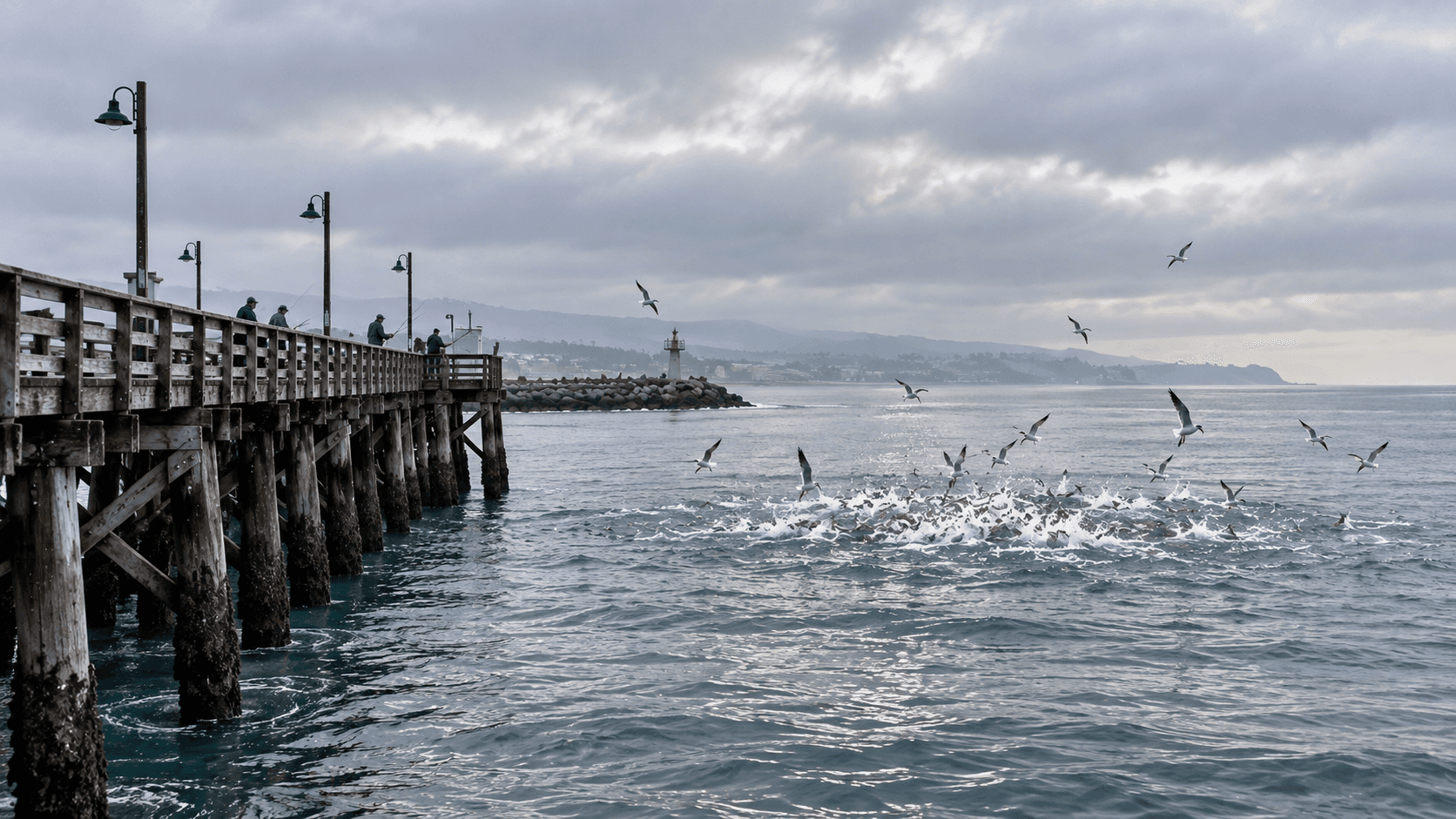
The best tell is the bait. Bonito follow anchovies and small sardines. When you see bait balled up along a breakwater or a kelp line with terns and pelicans working it, that is the sign to have a rod rigged.
Where to look
Bonito like edges and moving water. Three kinds of spots produce more than the rest.
- Breakwaters and harbor mouths. The rock walls hold bait, and the tide pushes it through the gaps. The breakwaters off Long Beach and San Pedro are the classic example, along with the jetties at Mission Bay and the harbor entrances from Newport down to Dana Point.
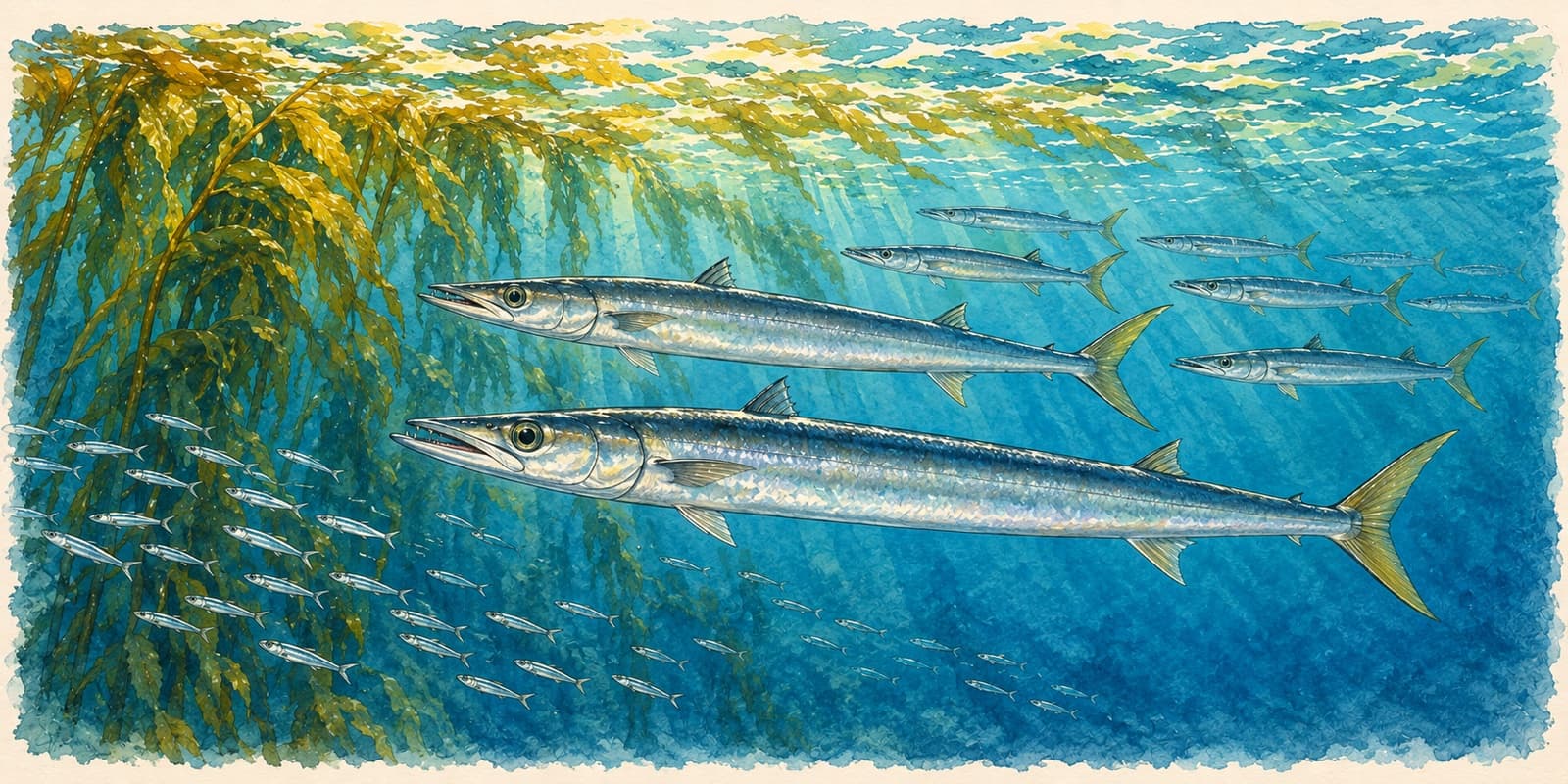
- Kelp lines. The outside edge of the kelp off Point Loma and along the Palos Verdes coast holds bait and gives bonito something to pin it against. Fish working the kelp for calico bass see them come through.
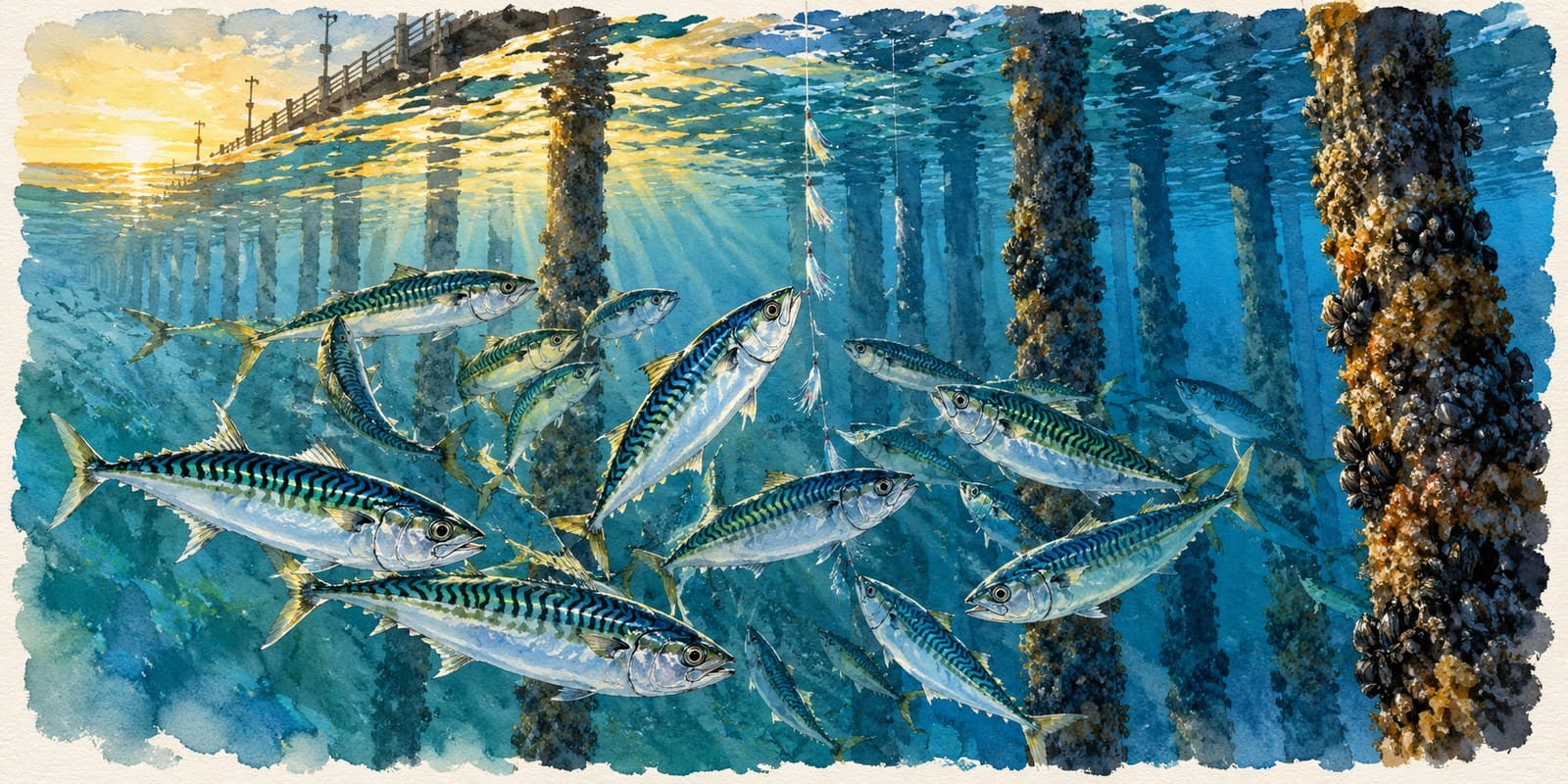
- Piers near harbor mouths. When fish are inside, a pier puts you over the same water a boat would fish. Get there early. The surface bite is often best at first light and fades once the sun is high.
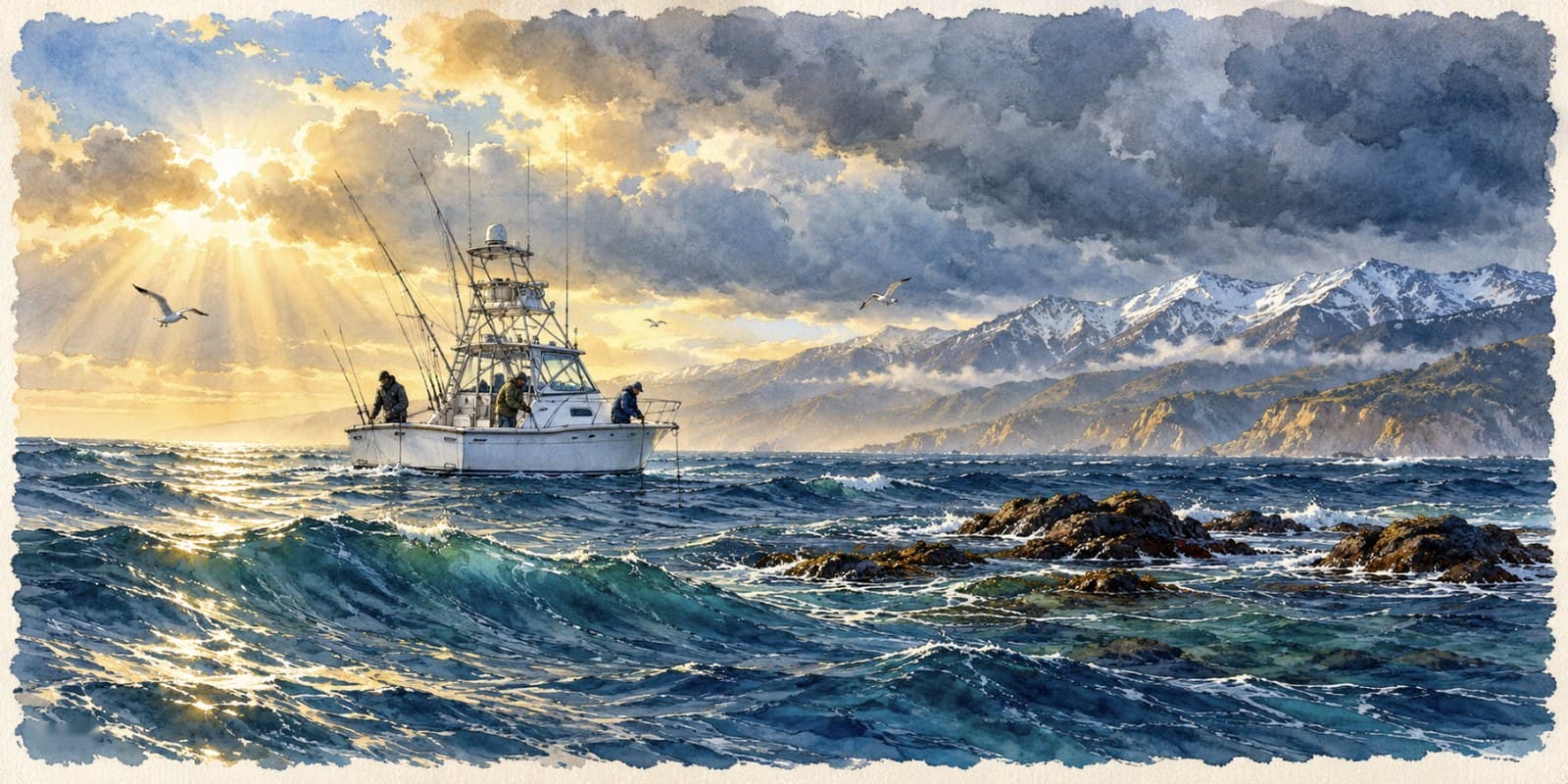
On a boat, look for birds, boils and the nervous water of bait pushed to the top. Bonito school by size, so if the first one is small, the rest probably are too.
The tackle
Bonito are not big, but they are fast, and they have good eyes. Light gear gets bit. Heavy gear gets ignored.
- Rod. A 7 to 8 foot light spinning rod. Long enough to cast a small lure a long way, soft enough to keep a bonito from tearing the hook out.
- Line. 10 to 15 pound test. Braid casts farther. If you use braid, add a few feet of fluorocarbon leader in the same range.
- Reel. A spinning reel with a smooth drag and a fast retrieve. Speed matters more than size.
That same outfit covers Pacific mackerel and small barracuda, which tend to be in the same water.
Four ways to get bit
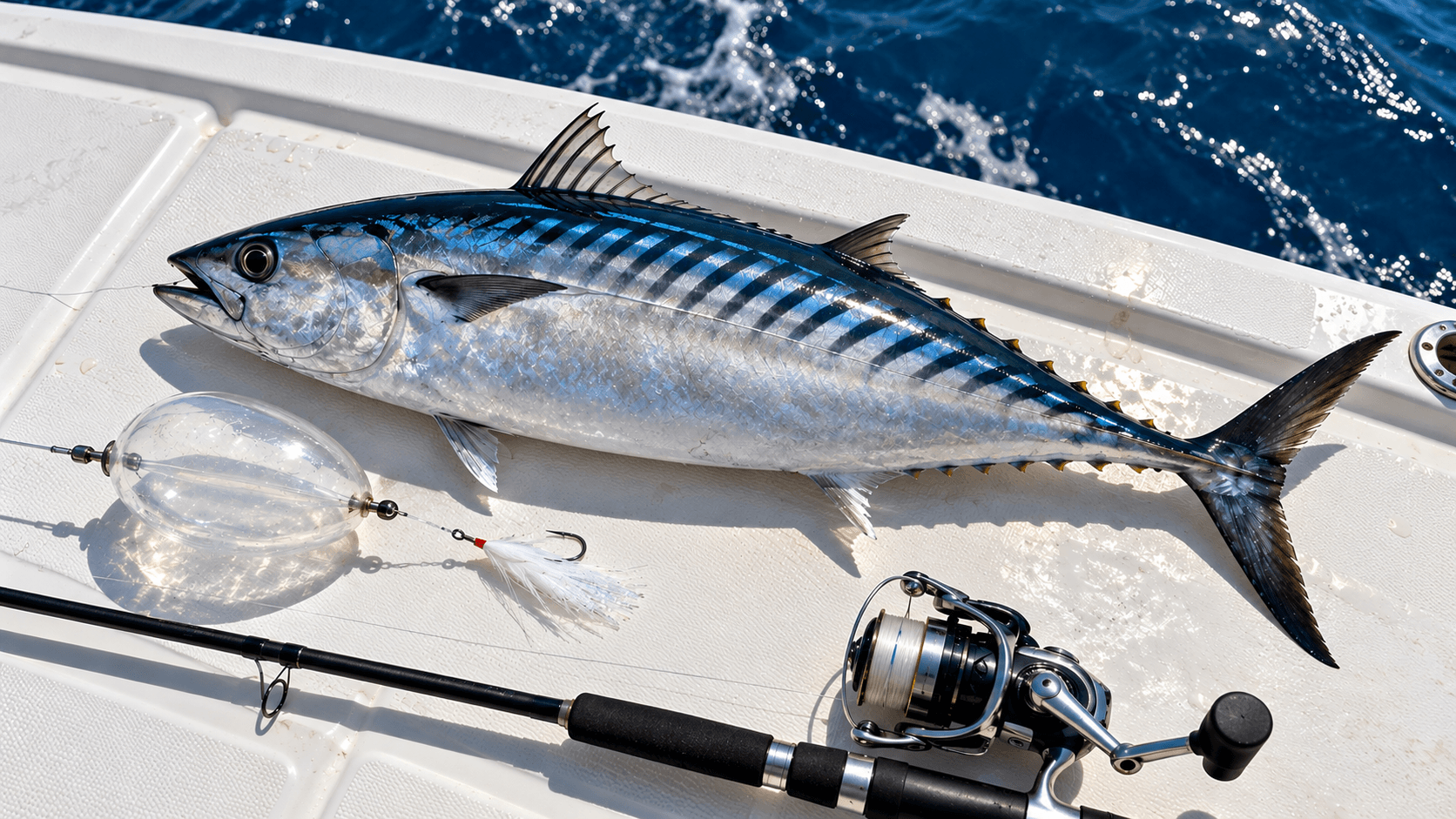
Casting bubble and feather. The shore angler's classic. Slide a clear plastic casting bubble on the main line, fill it partway with water for weight, tie on a swivel, then 4 to 6 feet of leader to a small feather or fly. Cast past the fish and reel steadily. The bubble gets the distance, and the feather looks like a small baitfish behind it. It works from piers and breakwaters where you cannot reach the fish with a light lure alone.
Small chrome. A small spoon or a light jig, half an ounce to an ounce. Cast long and wind fast, faster than feels right. Bonito are built to run down bait, and a slow lure gets looked at and refused. This is the same idea as casting the iron for yellowtail, scaled down.
Splasher and feather. A bonito splasher is a small float that throws water on the retrieve, rigged ahead of a feather. The splash draws fish up and the feather is what they eat. It shines on calm mornings when fish are showing on top.
Fly-lined bait. On a boat with live bait, a lively anchovy or small sardine on a light hook and no weight. Toss it out, keep the bail open and let it swim. If the fish are deep, a split shot a couple of feet up gets it down. When bait is short, a sabiki will usually fill the tank with small mackerel, which bonito also eat.
Boats also troll for them. A small feather pulled at a brisk pace along the kelp or a bait line finds scattered fish, and when one hits, the boat stops and everyone casts to the school.
Reading a bonito bite
Bonito rarely sit still. A school will boil, go down, and come up again 50 yards away. Chasing every boil with the boat puts them down. Getting ahead of the direction they are moving and waiting works better.
If you see them busting and they will not touch your lure, go smaller and faster first. If that fails, swap to a feather on a bubble. Clear, calm water makes them more line-shy, so a lighter leader helps on those days.
Expect the bite to come and go with the tide and the light. A dead hour at the breakwater does not mean the fish are gone. It often means the bait moved.
Landing and keeping them
A bonito will run hard two or three times before it comes up. Keep the drag light enough that the hook holds. From a pier or a high breakwater, a drop net saves fish that would otherwise come off on the lift.
If you are keeping one, bleed it right away. Cut the gills or the throat and let it bleed out in a bucket of seawater, then get it on ice. Bonito have dark meat, and an unbled fish that sat in the sun tastes like it. Bled and iced, it is good fish, and it smokes well.
Bonito carry dark slanting stripes along the back. A skipjack has stripes running lengthwise along the lower sides and belly. It matters, because the regulations do not treat them the same.
Rules
Bonito have a size limit and bag limits, and they change. Check the current CDFW ocean sport fishing regulations before you keep any, and know where the marine protected areas are along the stretch you plan to fish. Anyone 16 or older needs a California sport fishing license to fish from shore or a boat. Public piers are the exception. CDFW has the details.
Where Fish or Pass fits
Bonito are a profile species on Fish or Pass, not a graded one. The bonito guide describes the fish and where it lives. The Bite Score grades species like yellowtail and calico bass for each port, from water temperature, bait, recent reports and sea conditions. When those warm-water fish are grading Catching or Fishing near the coast, the water is often warm enough for bonito too. The score cannot see a school of bonito on the breakwater, and it cannot make one bite. Your eyes on the birds still matter.