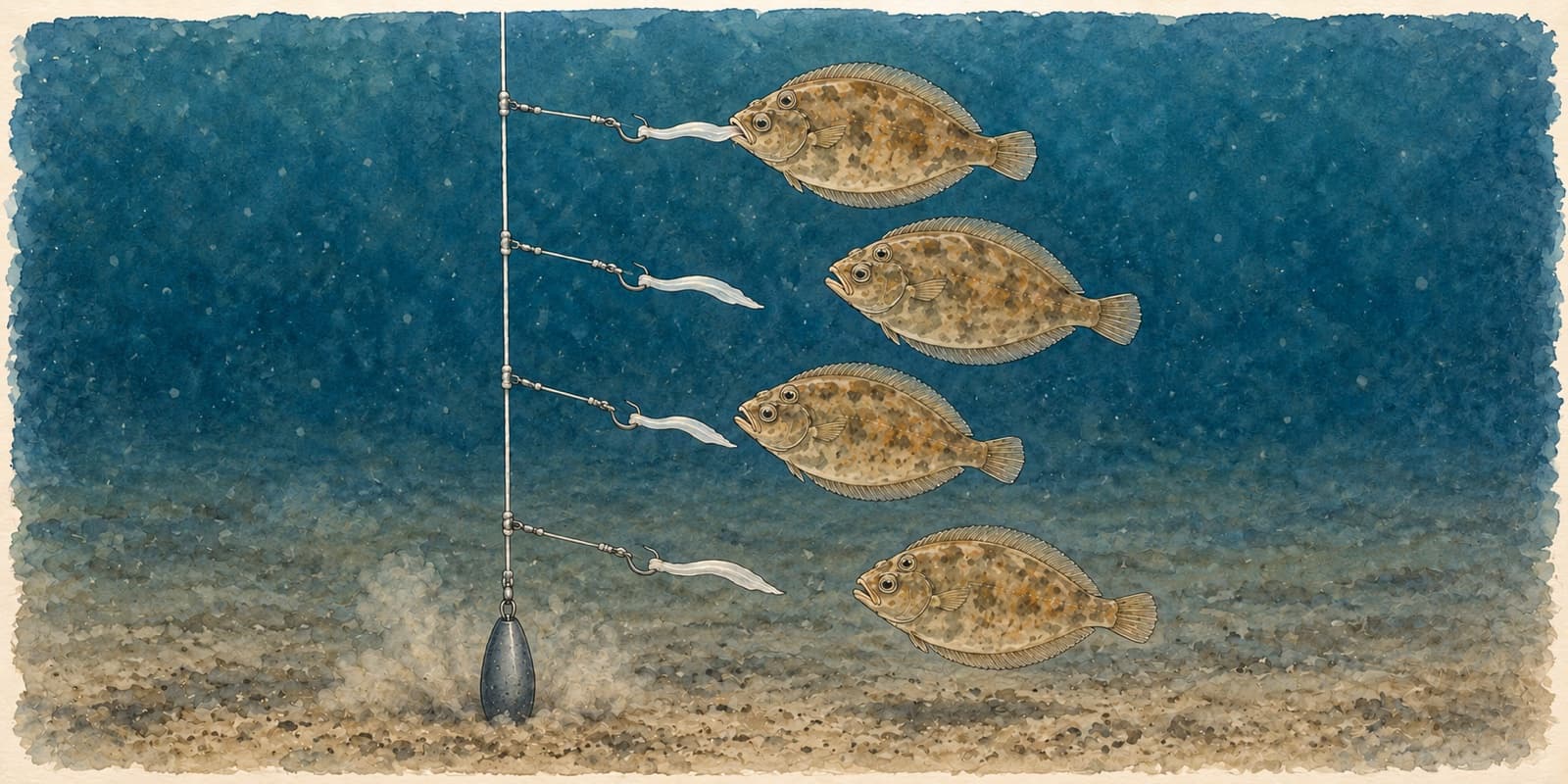
Sanddabs are the fish you clean last and eat first. They come up three at a time off the mud, they go in the sack without anyone paying much attention, and then at dinner they are the ones that disappear. The catch is that they are small, a little slimy and shaped like a dinner plate, and a lot of people who know how to fillet a rockfish are not sure what to do with one.
The short answer: you mostly do not fillet them. You take off the head and the guts, keep the rest whole, and cook it on the bone. This post covers how to keep them right on the boat, the one cut that does most of the work, when filleting is worth it, and how to cook and eat one without picking bones out of your teeth. For where to find them and how to rig, start with our post on sanddab fishing in Southern California. The sanddab species guide has the fish itself.
Before you clean anything: is it a sanddab
Every small flatfish in the sack gets one look before the knife comes out. A short California halibut can pass for a sanddab at a glance, and halibut have a minimum size. The quick check is the mouth. A sanddab's mouth is small and stops short of the eye. A halibut's jaw runs back past the eye and is full of teeth. If you are not sure, it goes back. The halibut species guide and our halibut drifting and swimbait guide cover the bigger flatfish.
Rules for the fish you keep, and for anything else that comes up on a multi-hook rig, are on the CDFW Southern region regulations page. Read it before the trip, not at the cleaning table.
Keep them cold from the first drift
Sanddabs are thin fish with delicate meat, and they go soft faster than a rockfish does if they sit in a warm bucket. The fix is simple.
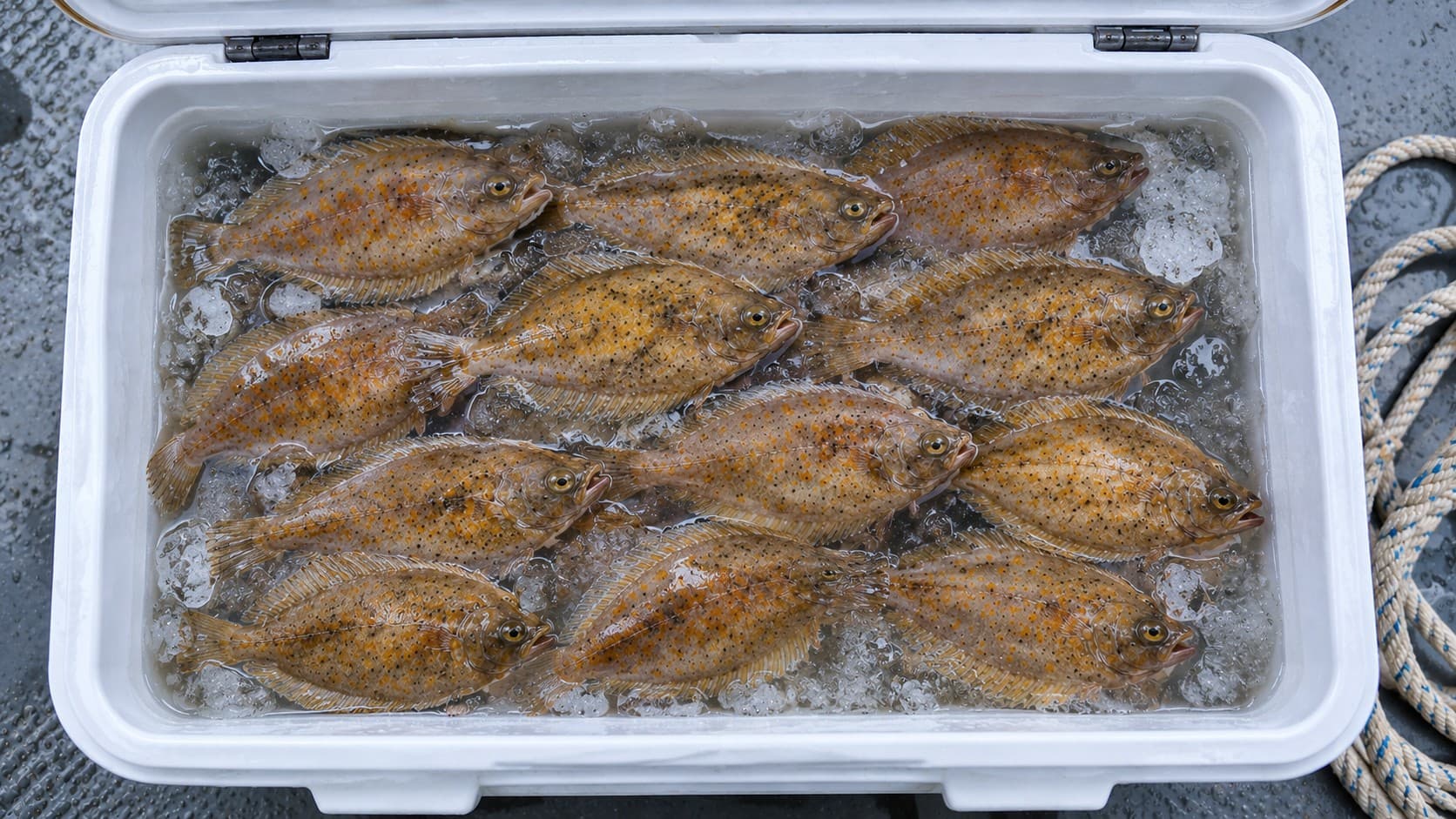
- Ice slurry, not loose ice. A cooler with ice and a few inches of seawater chills a small fish all the way through in minutes. Fish lying on top of bare cubes cool on one side only.
- Straight from the hook to the slurry. Do not leave them in a sack on the deck while you finish the drift. They are small enough that the sun gets to them quickly.
- Keep the meltwater cold. Add ice as the day goes on so the slurry stays a slurry and not a warm bath.
A sanddab that went into the slurry alive and stayed there is firm, cleans easily and cooks up sweet. One that cooked on the deck for an hour is mush no matter how well you clean it.
The one cut: head and guts together
A flatfish keeps its guts in a small pocket right behind the head, on the belly side, under the pectoral fin. That makes cleaning one quick.
- Wipe off the slime. A rag or a quick rinse makes the fish less slippery to hold. Lay it dark side up.
- Make one angled cut behind the head. Start just behind the gill cover on the top edge and angle the knife back and down so the cut follows the curve of the gut pocket toward the vent. Done right, the head and the guts come away in one piece.
- Clean out the cavity. Scrape out anything left behind, including the dark blood line along the spine, with a thumbnail or the tip of a spoon.
- Rinse in cold water and back on ice.
That is a dressed sanddab, and for most fish it is all the cleaning they need. A sharp, thin knife helps more than a big one. A pair of kitchen shears does the job just as well and is safer on a rolling deck.
Scales and fins are optional. The scales are small, and the skin is thin enough that it crisps in the pan. If you want to scale them, scrape the dark side from tail to head with the back of a knife before you make the cut. The thin fringe of fins around the edge can be trimmed with shears, or left on to fry up crunchy. Plenty of people eat that part first.
If you have cleaned a sculpin, this is the easy one. No spines to clip, nothing venomous. Our post on how to clean a sculpin is the opposite end of the cleaning table.
When filleting is worth it
Every flatfish has four fillets, two on each side, split down the middle by a line of bone along the lateral line. On a big sanddab you can take them off the same way you would on a halibut: cut down the center line to the spine, then work the knife outward over the rib bones toward the edge, one side at a time, and repeat on the white side.
On a typical sanddab, though, those four fillets are each about the size of two fingers, and you lose a good part of the fish to the knife. Filleting is worth it when:
- The fish are on the big side and you want boneless pieces for tacos or a kid who will not deal with a backbone.
- You are freezing them. Flat fillets wrapped tight store better than whole fish.
Everything else, cook whole.
Cooking them whole
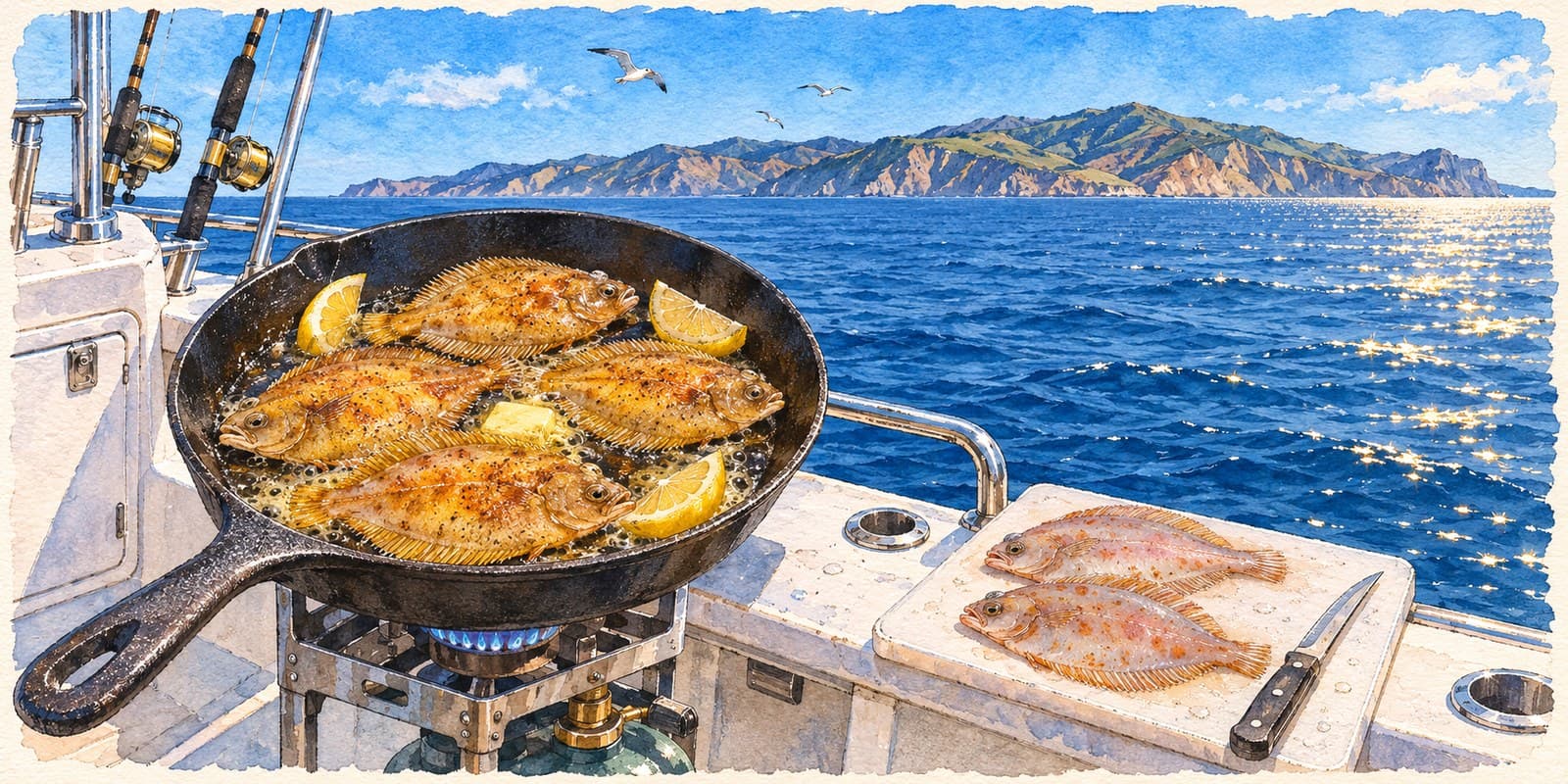
The classic way is a pan and some butter, and it is hard to improve on.
- Dry the fish with a paper towel. Wet fish steam and stick.
- Season and dredge in flour with salt and pepper. Shake off the extra.
- Hot pan, oil or butter or both. Lay the fish in dark side down and leave it alone for a few minutes until the edge fins turn golden and crisp. Turn once and do the other side.
- It is done when the meat lifts off the spine with a fork at the thickest part. A sanddab cooks fast, so stay at the stove.
Finish with lemon and a little more butter in the pan. Baking on a sheet pan and grilling in a fish basket both work too, and are easier when you are cooking a big batch.
How to eat one off the bone
This is where people who have never had sanddabs get nervous. They do not need to.
- Run a fork or butter knife down the center line of the top side.
- Push the two top fillets off the bone, one to each side.
- Lift the backbone by the tail. On a properly cooked sanddab the whole frame comes up in one piece, with the little side bones attached.
- Eat the two bottom fillets that are left on the plate.
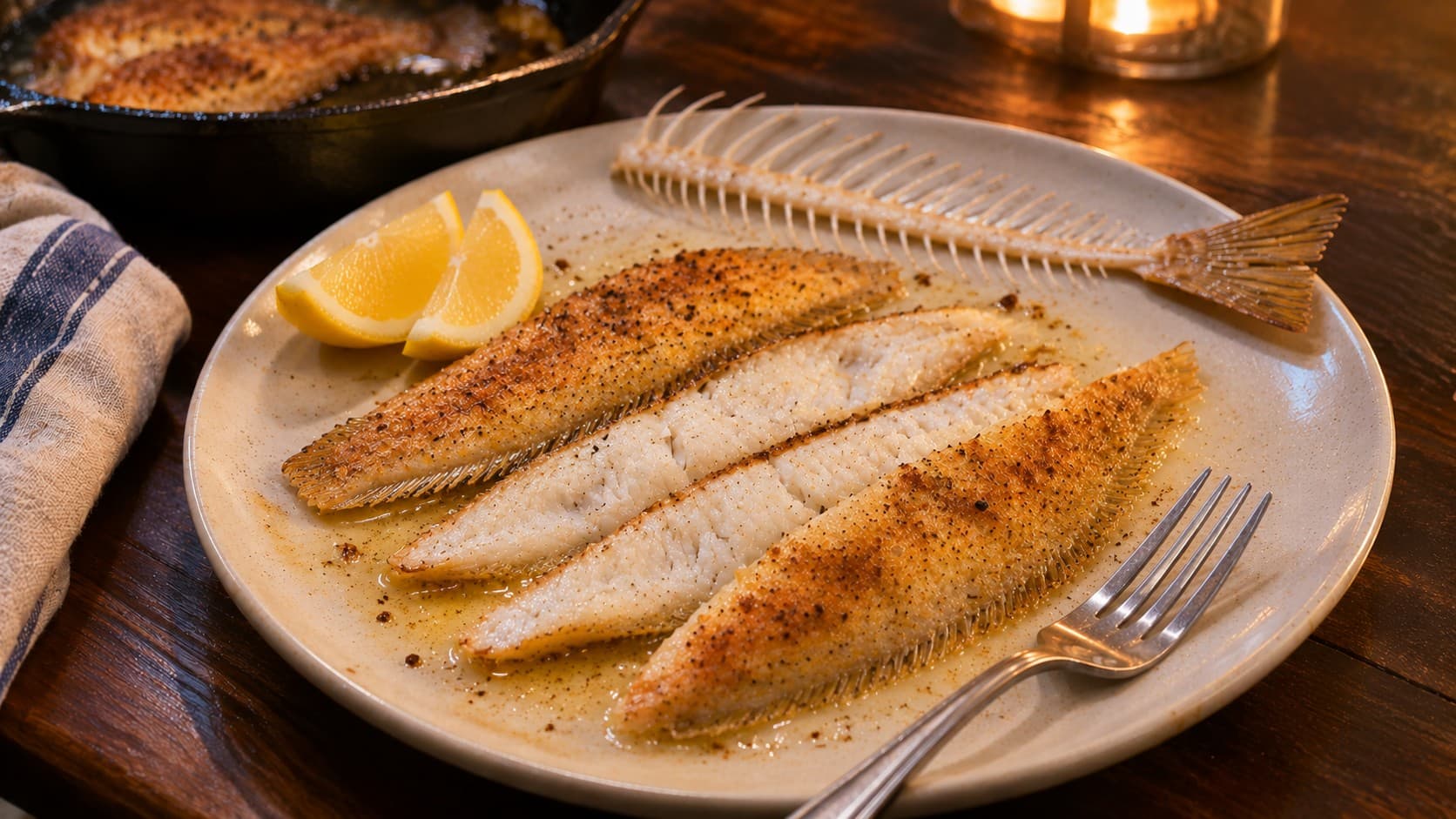
Watch the very edge, where the fin bones are. Everything in the middle is clean.
Where Fish or Pass fits
Nothing on Fish or Pass grades sanddabs. The Bite Score does read conditions for rockfish, which often share the trip, and a calm day that suits a deep rockfish drift out of Santa Barbara, Channel Islands Harbor or Newport suits a drift over the mud too. When the surface fish are gone for the winter, our post on winter fishing in Southern California covers what else is still biting. Finding the right patch of mud is still up to you and the sounder. Cleaning them is the easy part.