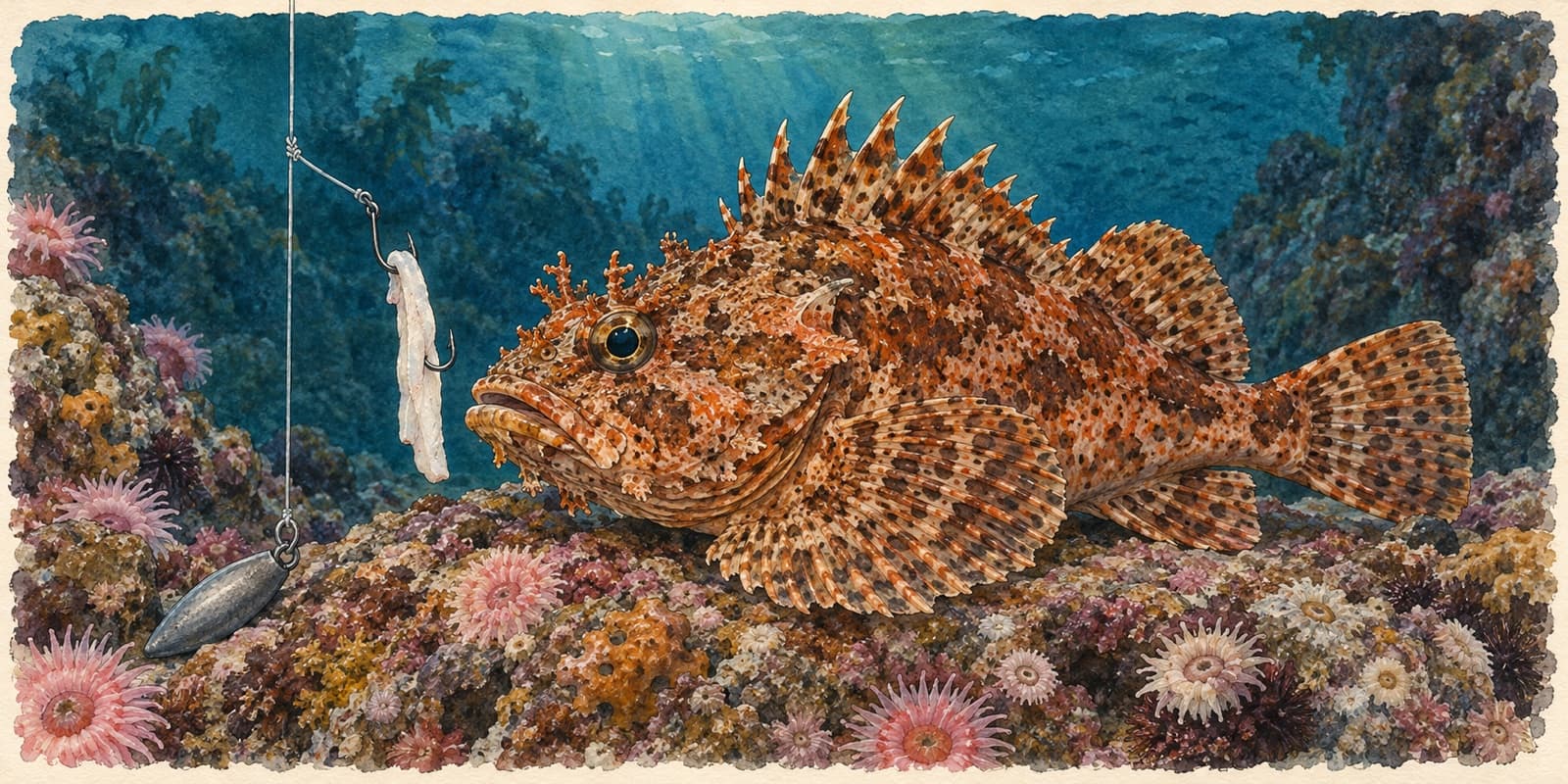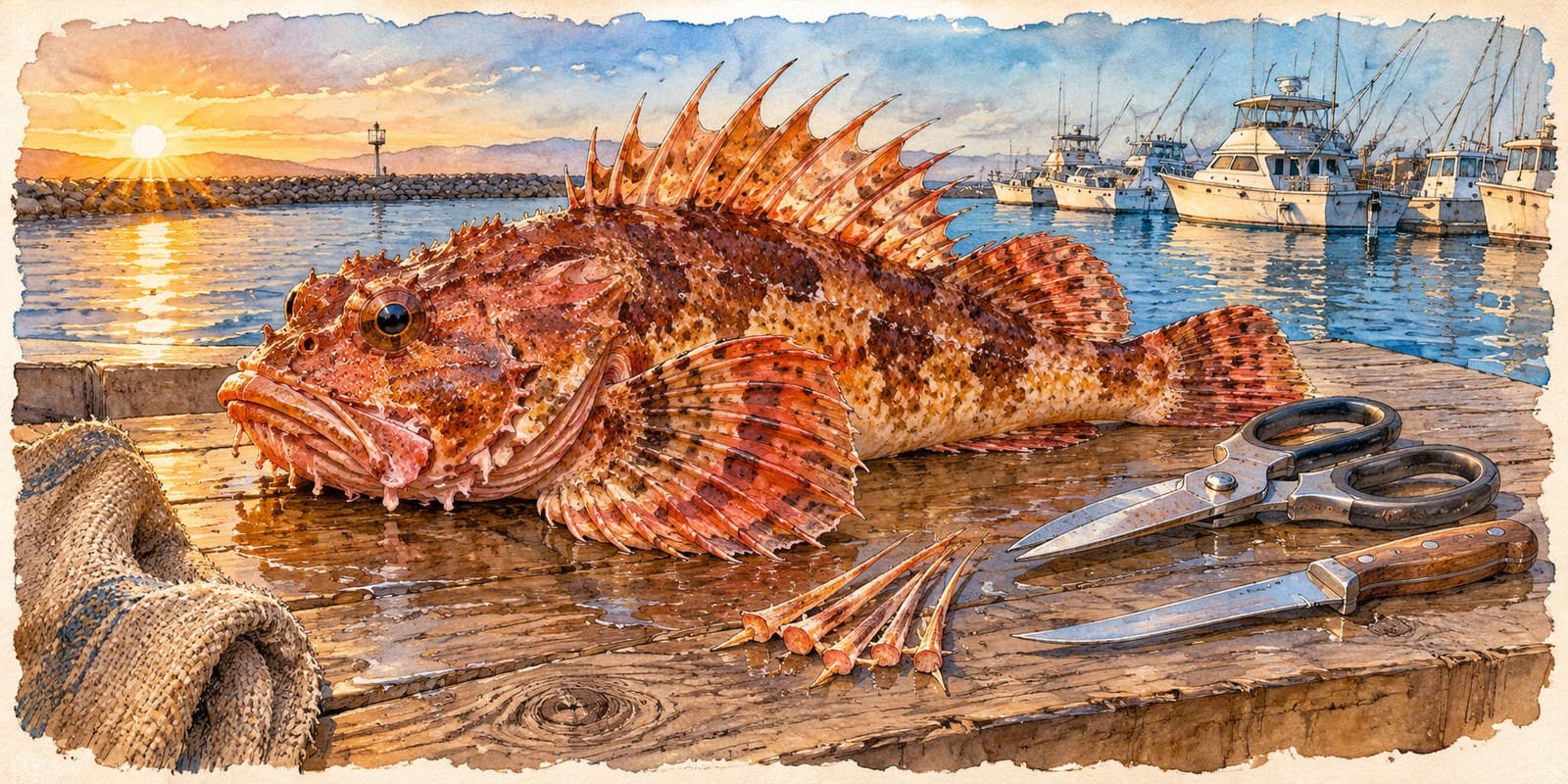
A sculpin is easy to catch and a little harder to eat. The fish comes over the rail flaring venomous spines, and it does not stop being dangerous when it stops moving. The spines of a dead sculpin can still sting you, in the sack, in the cooler and on the cleaning table. Most of the stings people talk about on the dock happen after the fishing is over.
This post is about the part after the fishing: getting a sack of sculpin from the boat to the kitchen with your hands intact, and what to do with the meat once you get there. For the rig, the bait and first aid for a sting, read our post on sculpin rigging, spines and season. For the fish itself, start with the sculpin species guide.
Why the cleaning is the risky part
Sculpin, the California scorpionfish, carry venom in the spines of the dorsal fin along the back, the anal fin underneath and the pelvic fins on the belly. On the boat everybody is careful, because the fish is alive and obviously hostile. At home, two hours later, the fish is cold and still and it looks harmless. It is not. The venom sits in the spines whether the fish is alive or not, and a spine goes through a thin glove or a careless thumb just as easily.
So the whole method below comes down to one idea: get the spines off first, before you do anything else to the fish.
Getting them home
A few habits make the cleaning easier before you ever pick up a knife.
- Let the deckhand sack them. On a party boat the crew unhooks and bags your fish. Take them up on it.
- Keep the sack separate. Spines poke through gunny sacks. Carry it away from your legs, and do not dump it into a cooler with your lunch or your other fish where you will be reaching in blind.
- Ice them. Sculpin hold up well, but cold fish are firmer and fillet cleaner than warm ones. Get them on ice as soon as you are off the boat.
- Use the fish cleaners if you want. Many landings have someone cleaning fish for a fee at the dock. For sculpin that money is well spent. Before you pay for fillets, though, know that California has rules about how fish can be cut up and kept before they are landed. Check CDFW, starting with the groundfish regulations summary rather than taking anyone's word for it.
The tools
You do not need much, but you need the right things.
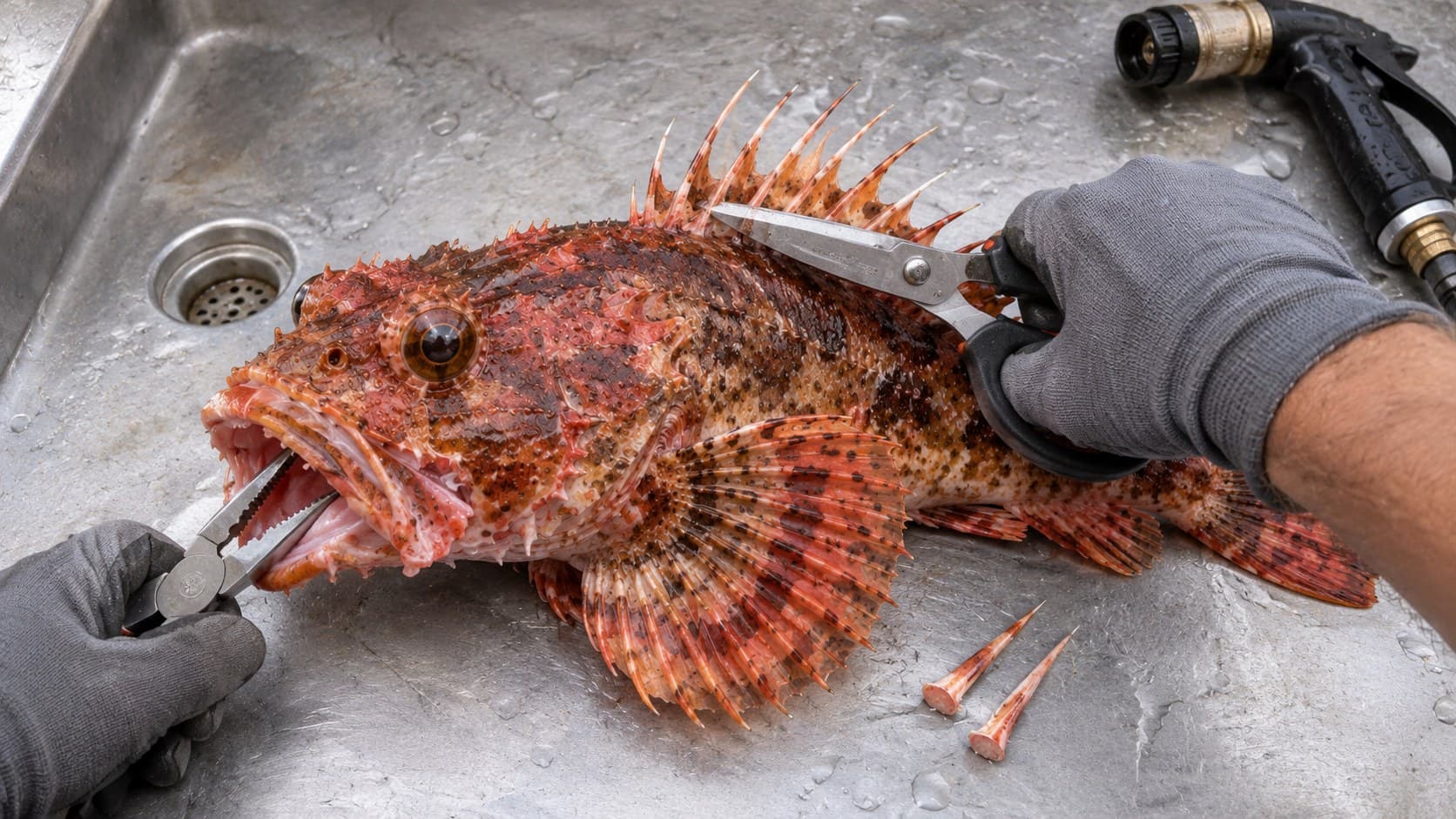
- Heavy kitchen shears or game shears. This is the most important tool on the list. You use them to cut the spines off.
- A thin, flexible fillet knife, sharp. A sculpin has a lot of bone and a big head, and a dull knife makes you push, which is how hands slip.
- Pliers or a fish gripper to hold the fish by the lip or the head.
- Gloves. Cut-resistant fillet gloves help with the knife. They do not stop a spine from going through. Treat them as a backup, not a shield.
- A flat, stable surface with room to work, and a bucket for the scraps.
Clip the spines first
Every sculpin gets this before anything else, including the ones a deckhand already trimmed.
- Hold the fish by the lower lip or the head with pliers or a gripper, so your hand is nowhere near the fins.
- Cut the dorsal spines off along the back with the shears, as close to the body as you can. Work from the head toward the tail so the spines fold away from you.
- Roll the fish and cut the anal fin spines underneath, behind the vent.
- Cut the pelvic fins on the belly, just behind the head.
- Put the trimmings straight into the scrap bucket. A loose spine on the table is just as dangerous as one on the fish.
Once the spines are off, the fish is just a bony, ugly fish with a lot of head. You can handle it normally from here.
Fillet or cook it whole
There are two ways to go, and both are common.
Fillets. Cut in behind the head and the pectoral fin down to the backbone, turn the knife flat and run it along the spine toward the tail, the same as you would on a rockfish. Lift the fillet off the rib cage, then skin it if you want skinless meat. A sculpin carries a lot of its weight in the head and the frame, so the fillets come out smaller than the fish looks. That is normal, not bad knife work.
Whole. Plenty of SoCal anglers never fillet a sculpin at all. Clip the spines, scale it, gut it, take the gills out and rinse it, and you have a fish ready to cook on the bone. Cooking it whole wastes less of a fish that does not give up much in fillets.
If you are filleting, keep the frames and the heads. They make good stock.
How to cook it
Sculpin meat is white, firm and mild, which is the reason people put up with everything above. It is forgiving, and it takes most of the usual methods for white fish.
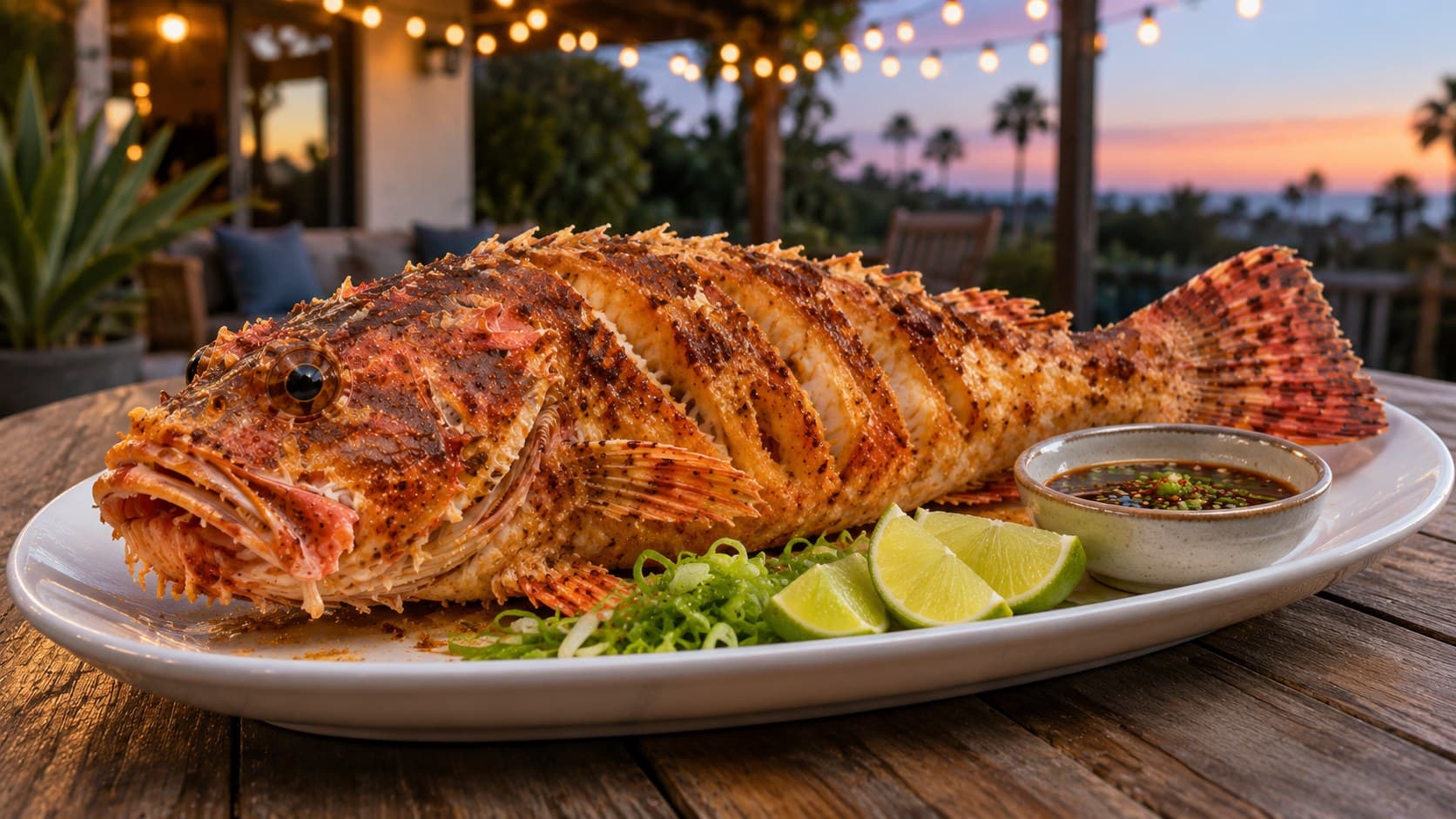
- Fried whole. Score both sides down to the bone, season, and deep fry until the skin is crisp. This is a favorite for good reason. The bones come away easily once it is cooked.
- Steamed whole. Steamed with ginger, scallion and a little soy, the mild meat stays moist and the fish looks good on the table.
- Fillets in the pan. Dredge in flour or panko and pan fry, or use them for fish tacos.
- Soup and stew. Firm white meat holds together in a pot, and the heads and frames make the broth.
One more time on the spines: if you are serving a whole fish, make sure every spine was clipped before it went in the pan. Cooking does not make a missed spine any less sharp.
When you will be doing this
Sculpin are groundfish, managed with the rockfish, and their seasons and rules change from year to year. In some winters, sculpin have been a big part of what the half-day boats bottom fish for, as our winter fishing guide and the Newport Beach post describe. Do not assume last year's rules hold. CDFW lists sculpin separately on its Southern California regulations page, and that is the page to read before the trip.
The rig is the same one you use for rockfish, covered in our rockfish rigs guide.
Where Fish or Pass fits
The Bite Score does not grade sculpin. The nearest read is the rockfish card, which grades the same rock and depth sculpin live on, from habitat, depth, sea conditions and recent landing reports, as Catching, Fishing or Pass. It can tell you whether the drift will be worth making. It cannot clean the fish for you.