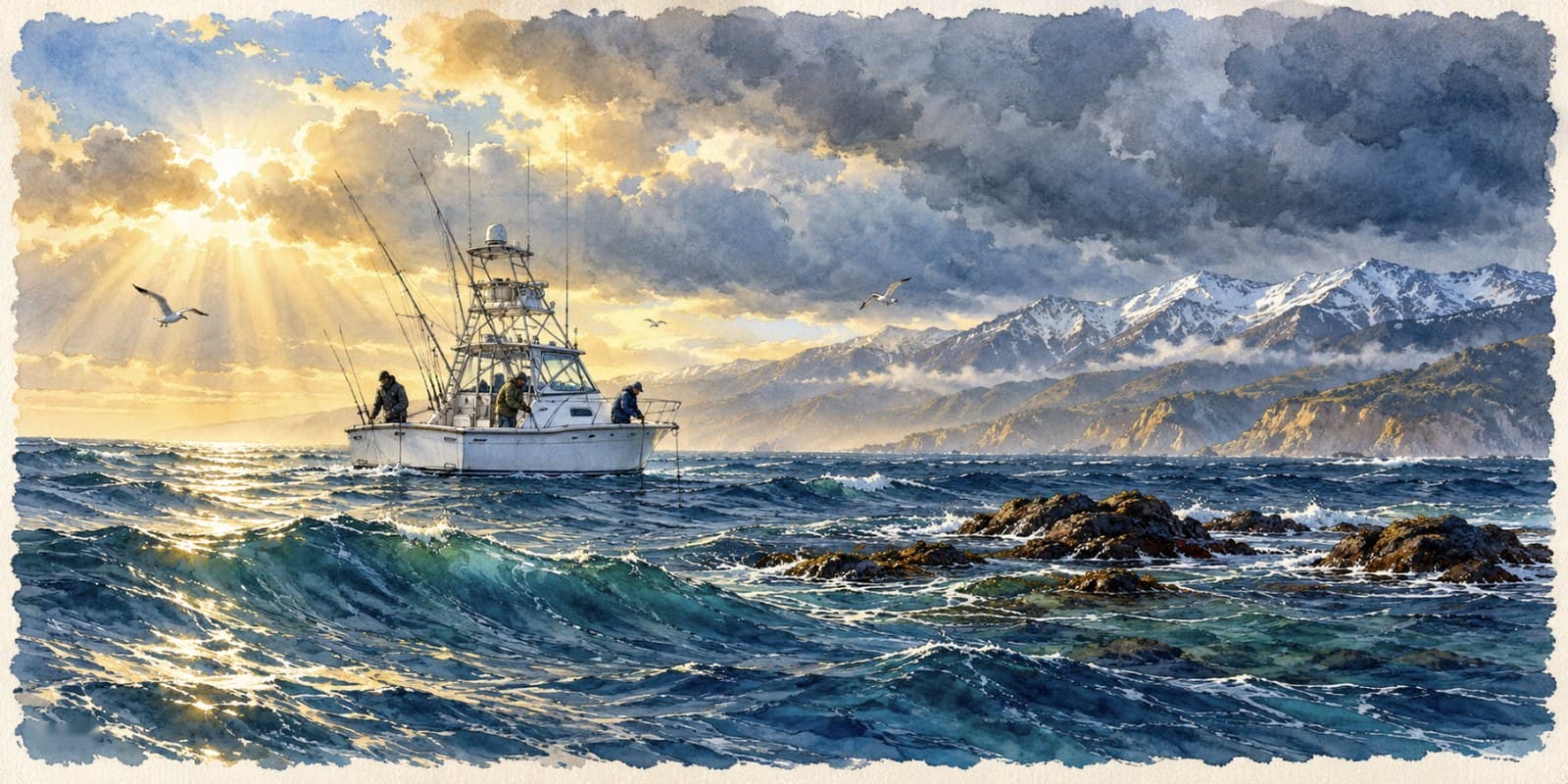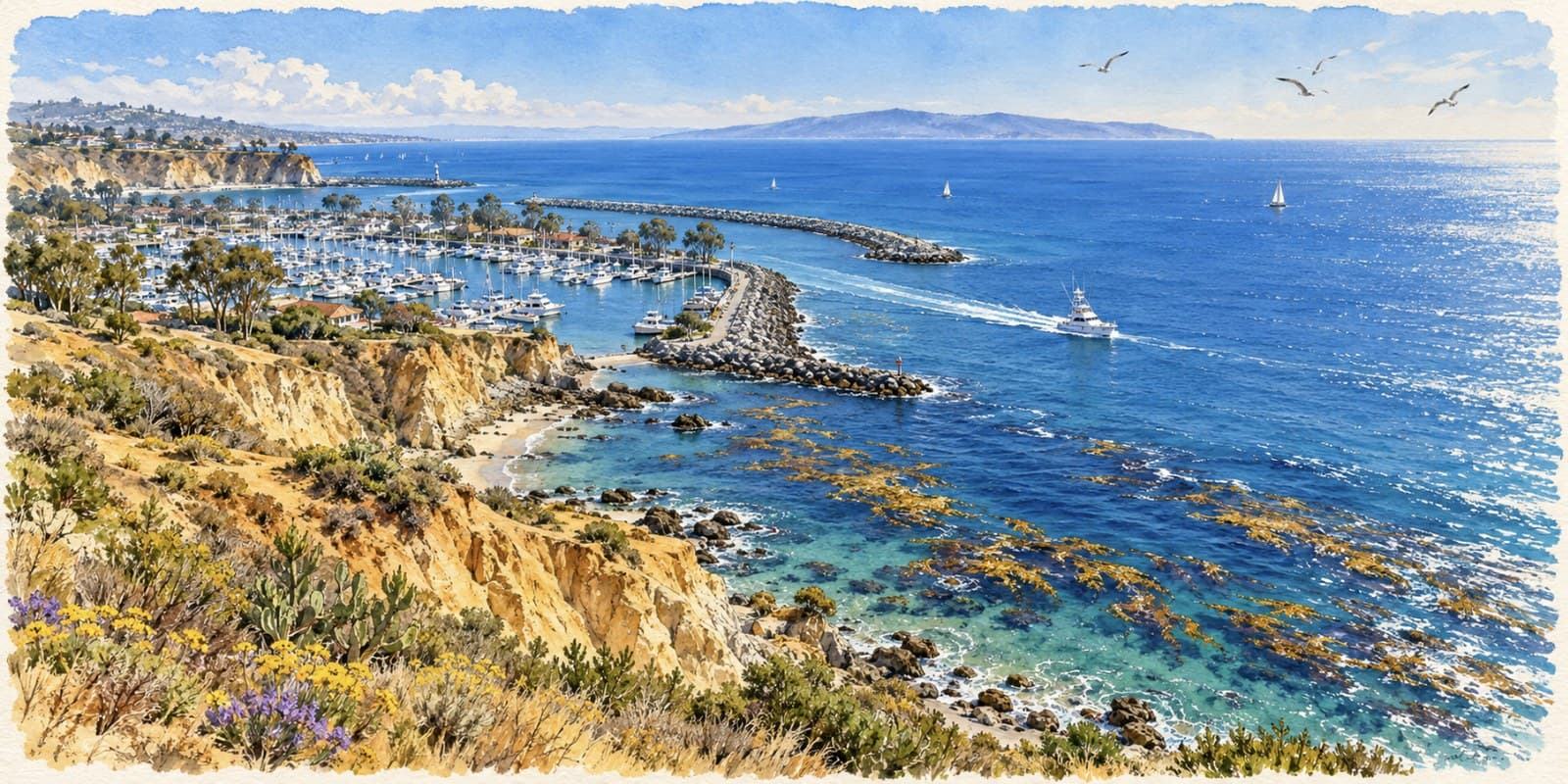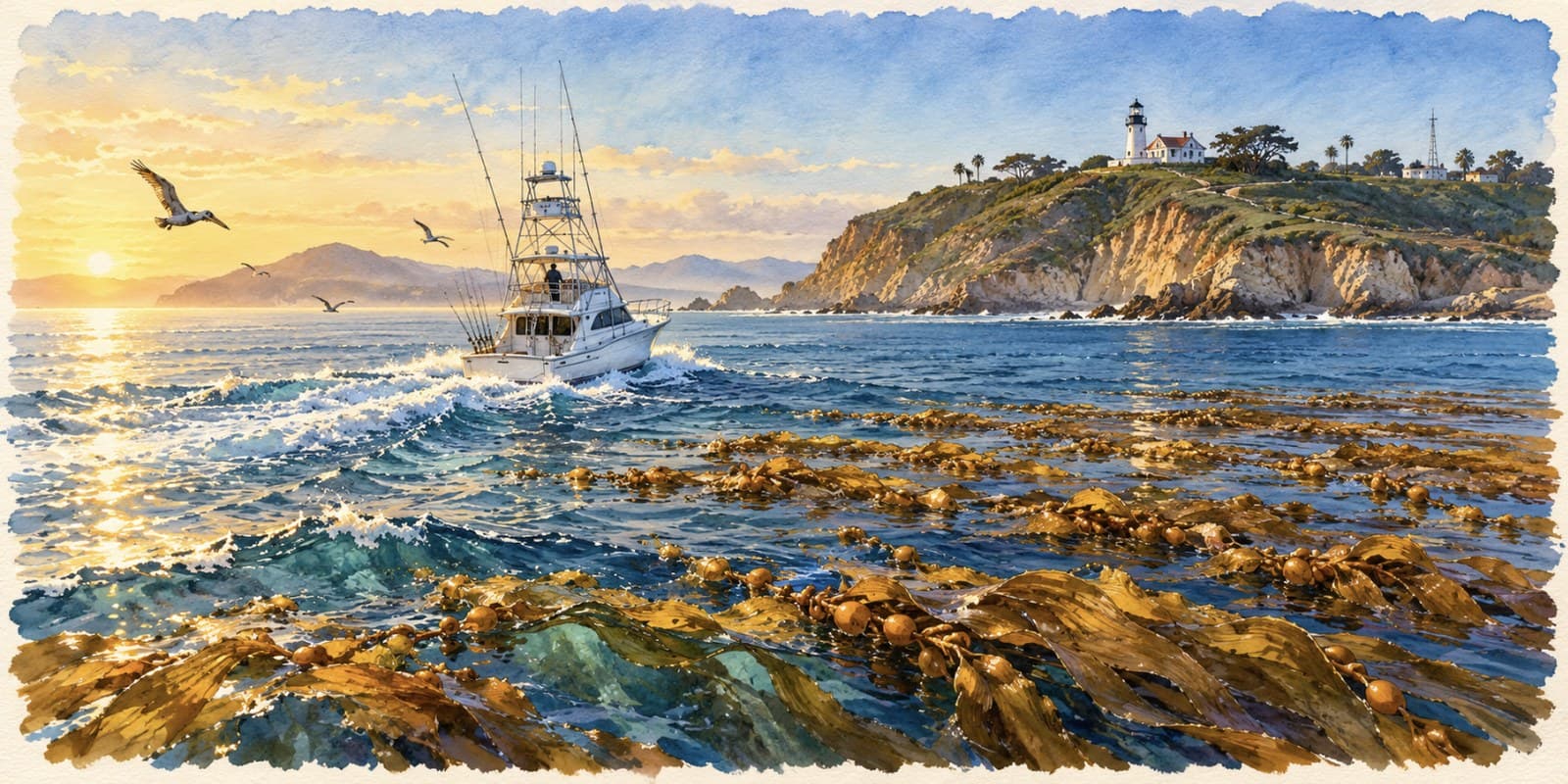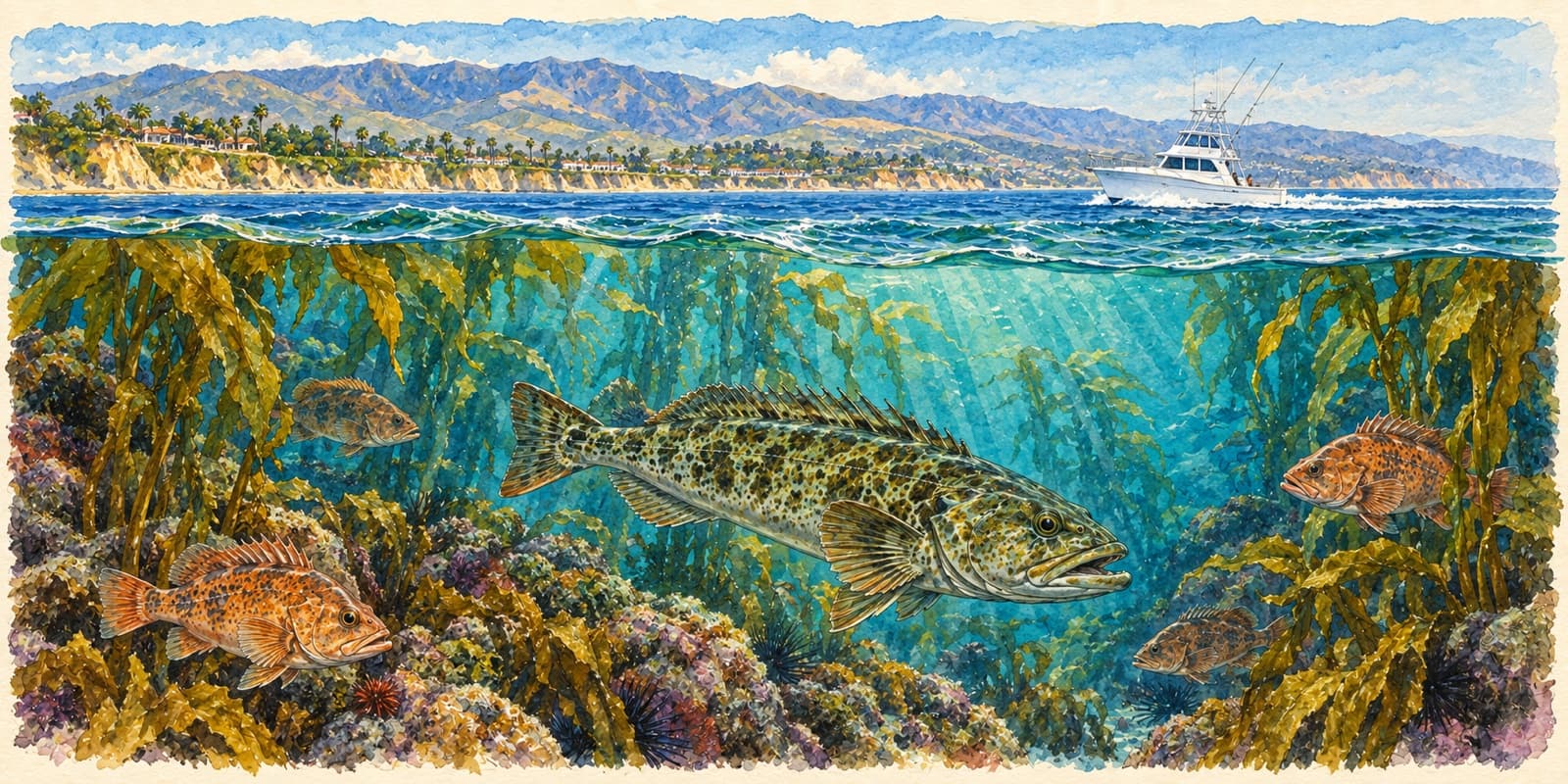
Santa Barbara sits at the very top of the Southern California Bight, tucked into the lee of Point Conception. The water here is colder and richer than it is down south, fed by upwelling, and the reefs around the northern Channel Islands are some of the best rockfish and lingcod ground in California. It is not only a bottom-fish port. The Channel kelp holds big calico, spring brings white seabass on the squid, and warm years push yellowtail up into the Channel.
This is a working guide to fishing out of Santa Barbara: the landing, the grounds, what to target in each season, and what makes this end of the coast different. The Santa Barbara port guide has the quick reference.
The top of the Bight
Point Conception is where the coast turns. North of it, the shoreline runs north and takes the full force of the open Pacific. South and east of it, the coast runs east-west and the Channel Islands shelter the water behind them. That sheltered water is the Southern California Bight, and Point Conception is its northern edge. It is also the northern edge of what Fish or Pass covers.
The point matters in two practical ways.
-
Weather. Point Conception is a genuine weather line. Northwest wind and swell build fast west of the point and around the outer islands, and a run that looks easy from the harbor can be a different trip by the time you reach San Miguel.
-
Regulations. CDFW uses Point Conception as the boundary between two groundfish management areas, and the season and depth rules on either side are not the same. Boats out of Santa Barbara fish the southern side, but if you run your own boat west, know which set of rules you are under. The CDFW groundfish regulations summary lays out both.
The landing
Santa Barbara's sportfishing landing is Santa Barbara Landing in the harbor on Cabrillo Boulevard, the landing many anglers still know as Sea Landing from before its change of ownership. It has a bait and tackle shop.
Stardust Sportfishing runs the Stardust and the Coral Sea from the landing on open party trips and private charters. It is the closest landing to the western islands, which puts Santa Rosa within reach of a three-quarter-day trip. Trip lengths and destinations shift with the season and the weather, so check with the landing for what is running.
The grounds
Santa Cruz Island. The largest of the Channel Islands, straight across the Channel. Miles of kelp along the shoreline hold calico, and the deep reef off it holds rockfish and lingcod.
Santa Rosa and San Miguel. Farther west, wilder and colder. These are the outer islands, exposed to the cold water and weather that come around Point Conception, and when weather allows they offer outstanding rockfish and lingcod. They are committing runs. A good weather window is the first requirement for fishing them.
Anacapa Island. The closest island to the mainland, but at the far eastern end of the chain from Santa Barbara. Kelp and reef for calico, white seabass and rockfish.
The Channel kelp. The mainland kelp along the coast from Santa Barbara west toward Gaviota, including the Naples area. Big calico live in it, and white seabass come into it when the squid spawn. Part of this coast sits inside marine protected areas, including the reef at Naples, so check the CDFW marine protected areas page before you fish a spot you do not know. The islands carry their own network of reserves.
What to target, season by season
Rockfish and lingcod, whenever the season is open. This is what Santa Barbara is known for. The deep reefs around the islands produce reds, coppers and a mix of other rockfish, with lingcod on the same rock. The open season and the depth rules are set by CDFW and change from year to year; in recent seasons the early months of the year have been closed. The rockfish guide covers the species and how the rules work, and the post on rockfish at the north end of the Bight covers the island reefs.
Spring: white seabass on the squid. When market squid spawn along the mainland coast and around the islands, white seabass follow them. Live squid fished near the bottom is the standard approach. Halibut feed on the same squid and come up on the sandy edges off Goleta and along the coast. White seabass have their own size and bag rules on the CDFW white seabass page.
Summer: calico in the kelp. Calico bass work the Channel kelp and the island kelp through the warm months. Live bait along the outside edge of the kelp, or plastics cast tight to it, is how most are caught. The calico bass guide covers the fish.
Summer into fall: yellowtail in warm years. Santa Barbara is at the far north end of the Bight, and in a cool year yellowtail may not show at all. In a warm year, yellows push up into the Channel and the islands. When they do, they hold on the same points, kelp and current edges they use farther south. The post on how yellowtail relate to structure explains where to look.
Winter: weather and closures. Cold water, short days and northwest wind. With the groundfish season closed early in the year, winter is the slowest time out of this harbor.
What makes it different
Most Southern California harbors are warm-water ports that turn to bottom fishing when the surface goes quiet. Santa Barbara works the other way around. It is a cold-water, bottom-fish port first, and the surface fishing is the bonus in a good year.
That shapes the gear. Expect deep drops, heavy sinkers and braided line on the rockfish grounds, and a descending device aboard, which California now requires on boats fishing for groundfish. Expect cooler air on the water than you would down south, even in summer.
It also shapes the decision. On the deep reefs, the fish are there whether the water is warm or cold. The question on most days is whether the weather will let you reach them.
Compared with Oxnard and Ventura
Channel Islands Harbor and Ventura fish the same islands from the southeast. They are the quicker jump to Anacapa and the east end of Santa Cruz, with the squid grounds and the Ventura flats close to home. Santa Barbara is the better launch for the west end of the chain and the deep reef fishing around Santa Rosa and San Miguel. The Channel Islands Harbor port guide covers that side.
Where Fish or Pass fits
The Bite Score grades each species across these grounds every day and calls them Catching, Fishing or Pass. It weighs water temperature, bait, kelp, structure, recent landing reports and sea conditions. At this end of the Bight, read the sea conditions as closely as the score, because the weather decides which islands are fishable at all. The score cannot pick the bait for you, and it cannot make a fish bite.
Before you go, check the current CDFW ocean fishing regulations for the species and the management area you plan to fish.