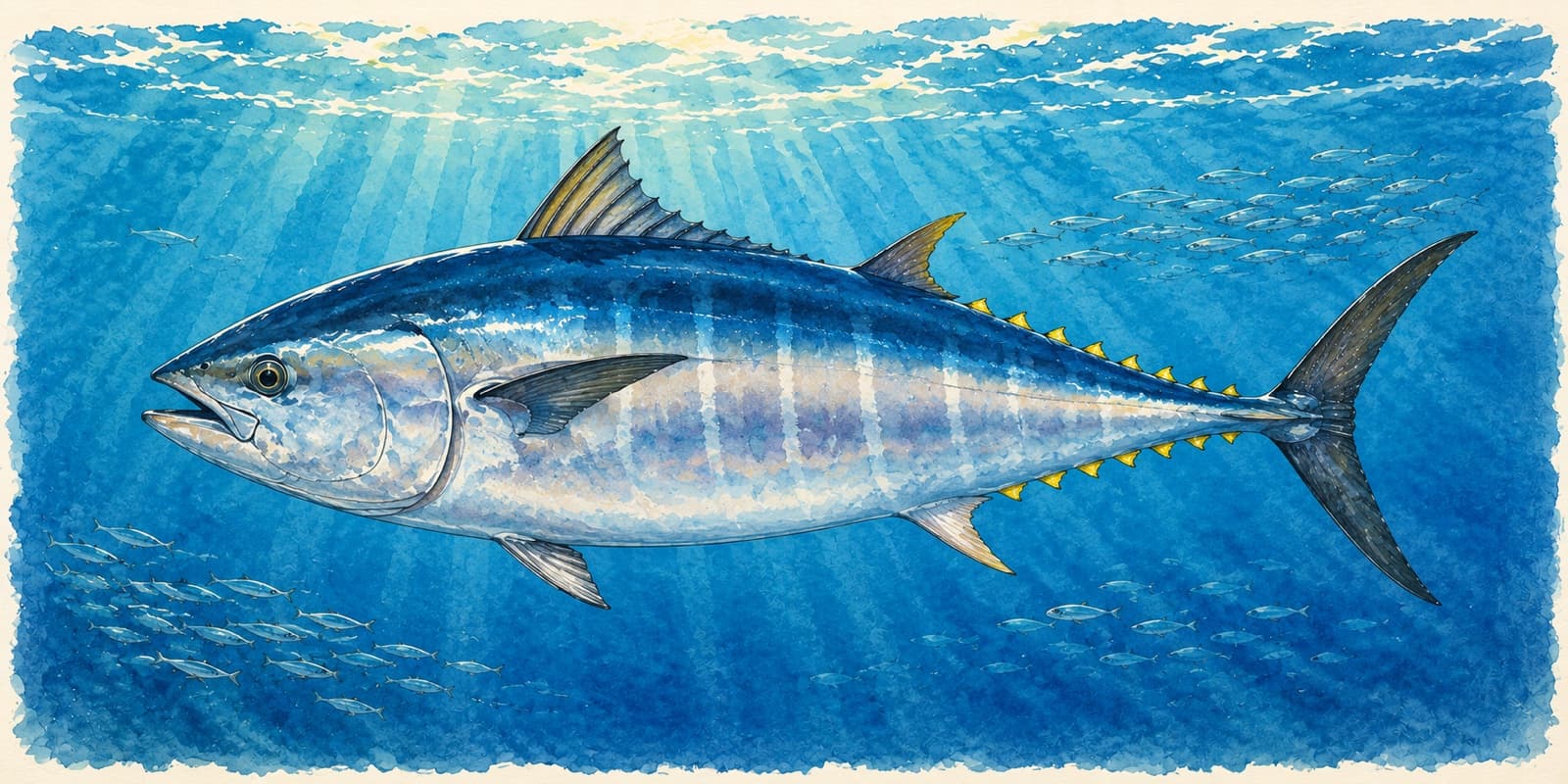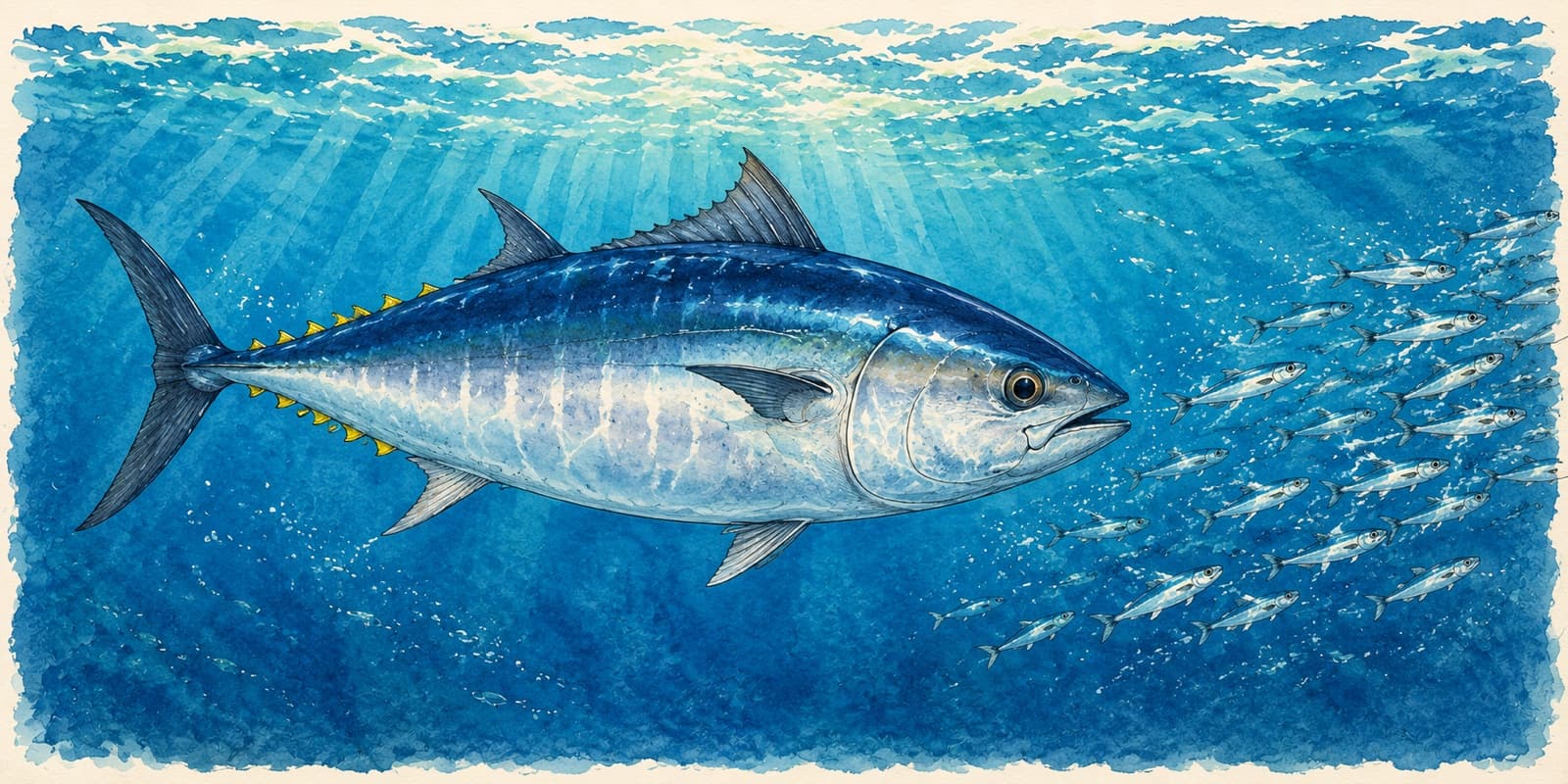
Bluefin are the tuna that stay. Yellowfin ride warm water up from Mexico and leave when it cools. Bluefin are built for cooler water, so they show earlier, spread wider across the offshore grounds and hang on later into the fall. They are also the hardest tuna in Southern California to get to bite, and the hardest to land once you do.
This is how Pacific bluefin use the Bight: when they show, where the fleet finds them, the water they want, why they are so fussy, and which kind of trip fits the fish you are after.
Where they come from
The bluefin off Southern California were not born here. Pacific bluefin spawn in the western Pacific, near Japan. Some of the young fish cross the ocean in their first years and spend several seasons feeding in the California Current before heading back west to spawn.
That is why most of the fish you meet here are young by bluefin standards. A school fish of 20 to 40 pounds is common. A good day might mix in fish from 60 pounds to well over 100. In some seasons, true giants over 200 pounds show up on the outer banks and test every knot on the boat.
Because they are warm-blooded, bluefin can work cooler and deeper water than yellowfin. That lets them sit on grounds where the yellowfin have long since gone south.
When they show, month by month
Bluefin seasons have changed over the last decade, and no two years run the same. As a rough guide:
- Winter and early spring. In some years, bluefin linger on the far outer banks into December, and early fish can turn up as soon as March or April. These are long runs on a short list of boats, and they are weather dependent.
- May and June. The season usually builds. Fish show around San Clemente Island, on the ridges and high spots to its south, and on the offshore banks.
- July through September. The core of the season. Bluefin can be spread from the outer banks to within a few miles of the coast, often mixed in with yellowfin in the warmer water.
- October and November. As the yellowfin fade, bluefin are often what is left offshore. The fall yellowfin guide covers that handover in detail, and fall bluefin in Southern California covers the fish that stay.
Our species guide lists June through November as the best months. Treat the shoulders as a bonus, not a plan.
Where the fleet finds them
Bluefin are offshore fish. The grounds the Southern California fleet works most often are:
- Tanner and Cortes Banks. The far outer banks, a long way west of San Diego. They hold bluefin across a long season and are where the biggest fish are most often found. Most boats only reach them on 1.5 day or longer trips.
- San Clemente Island and the ridge below it. A regular bluefin ground, close enough for overnight trips from San Diego and North County. The Navy closes parts of the island at times, so boats sometimes have to move.
- The offshore high spots. Banks and ridges such as the 60 Mile Bank, the 43 Fathom Spot and the 182 can hold fish on a good temperature edge.
- South of the border. Some of the best water sits in Mexican waters. That needs a Mexican fishing licence and different rules.
Most of the fleet running dedicated bluefin trips sails from the Point Loma landings. Boats out of San Pedro and Oceanside run overnight and longer offshore trips in season, and the Los Angeles fleet often fishes San Clemente Island and the banks off it. The guides to fishing out of San Pedro and fishing out of Oceanside Harbor cover those landings.
The water they want
Bluefin are less tied to warm water than yellowfin, but temperature still decides where they sit. Our guide puts their comfort range at 62 to 68°F, in deep blue water. Within that range, the edge matters more than the number. A temperature break, even a small one, stacks bait, and bait stacks bluefin.
Look for clean blue water, bait on the meter, birds working, and whales or other life on the surface. Bluefin also give themselves away a few ways:
- Breezers. A school moving just under the surface, ruffling the water.
- Foamers. Fish crashing bait on top. Easy to see, hard to stay on.
- Meter marks. Fish holding deep over a high spot, often early and late, and at night.
Why they are so hard to hook
Every bluefin angler learns the same lesson. You can sit on a school of fish all day and get a handful of bites.
Bluefin are line shy. They have good eyes and feed in clear water, and they will turn away from a bait that drags, swims wrong or trails a thick leader. They are also fast and move on quickly, so a school that comes up next to the boat can be gone before most anglers get a bait to it.
That is why bluefin anglers fish lighter fluorocarbon than the size of the fish suggests, use small hooks on bait, and pick the liveliest sardine in the tank. It is also why so many of those bites end in a break-off. You are always trading bites against the strength to land the fish.
How the fleet fishes them
No single method works every day. Most boats rotate through these:
- Fly-lined bait. A live sardine or mackerel on a small hook, no weight, swimming away from the boat. This is the standard when fish are near the surface.
- Sinker rigs. When fish are marked deeper, a rubber-band sinker or a small torpedo sinker gets the bait down to them.
- Kites. On bigger fish, crews fly a kite to dangle a rigged flying fish on the surface well away from the boat, with no line in the water for the fish to see.
- Jigs at night. On some trips the best bite is in the dark, on heavy flat-fall and knife jigs dropped to the marks and worked back up.
- Poppers and stickbaits. Thrown past foaming fish and worked back through them, these can get bit when bait cannot keep up. Our guide to picking jigs that get bit covers the surface iron side.
The tackle for each of these is very different, from light fly-line rods to heavy kite setups. Our bluefin tackle guide walks through each outfit.
Overnight, 1.5 day or multi-day
The trip you pick decides which fish you can reach.
- Overnight. Leaves at night and fishes one day. Good for San Clemente Island and the closer banks when fish are within range. The fish are usually school size, with the odd bigger one.
- 1.5 day. Leaves earlier in the evening, so it can run farther before the fishing starts. This is often the shortest trip that reaches the outer banks.
- Multi-day. Two days or more, with time to search and to fish Tanner and Cortes properly. This is the trip for bigger fish and heavier tackle.
Read the landing reports for the trips that came in before yours. They tell you where the fish are and which tackle is getting bit.
Where Fish or Pass fits
The Bite Score weighs the things that decide a bluefin day: water temperature and breaks, bait, kelp, recent reports from the landings, and sea conditions. It turns them into a verdict of Catching, Fishing or Pass for the grounds and the day.
What it cannot do is pick the sardine or make a line-shy bluefin eat. It reads the conditions, not the fish. Use it to decide whether the run is worth making, then fish what is in front of you.
Bag limits and licence rules for bluefin change, and they differ in Mexican waters. Check the current CDFW ocean sport fishing regulations before you go.