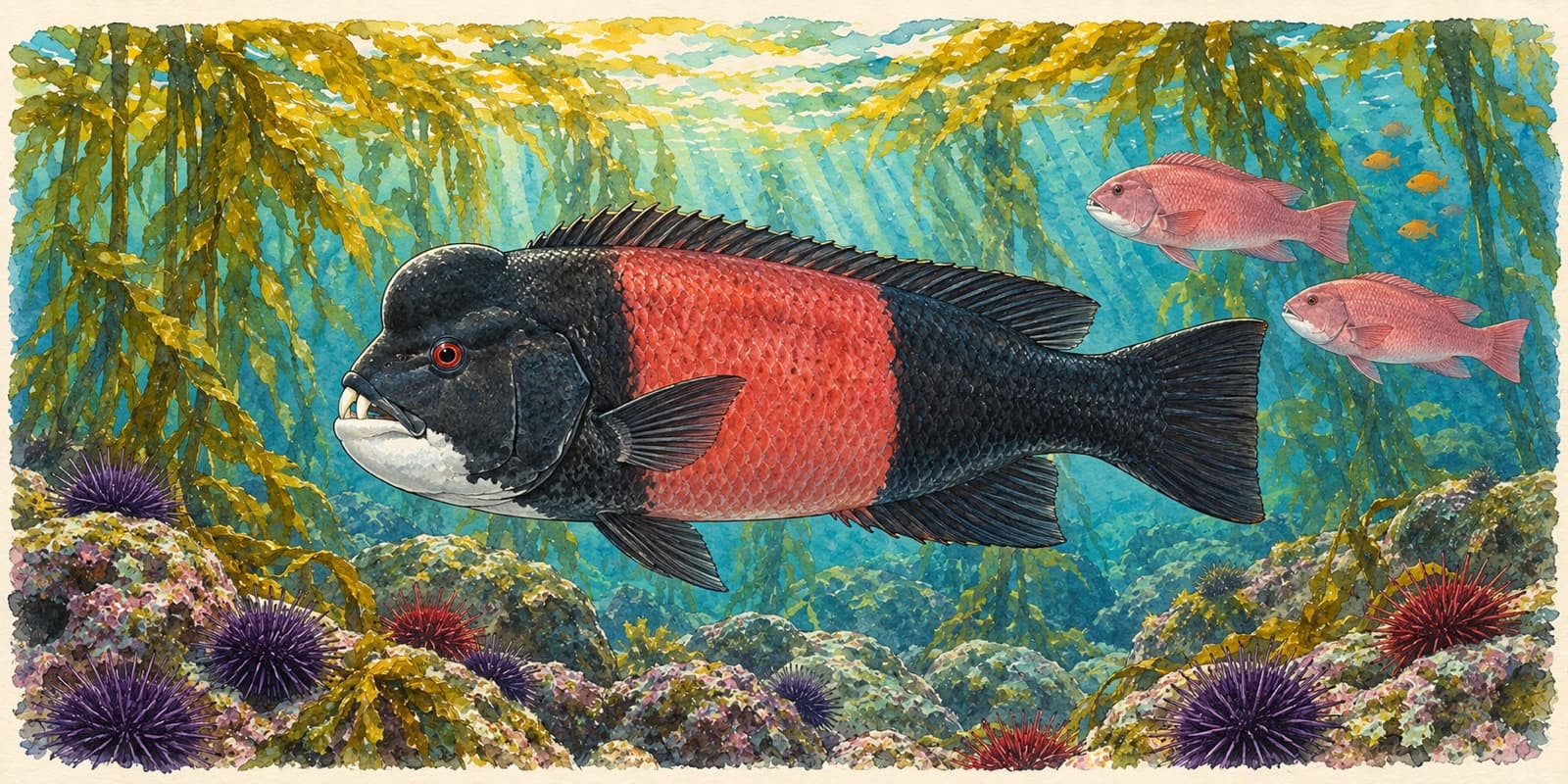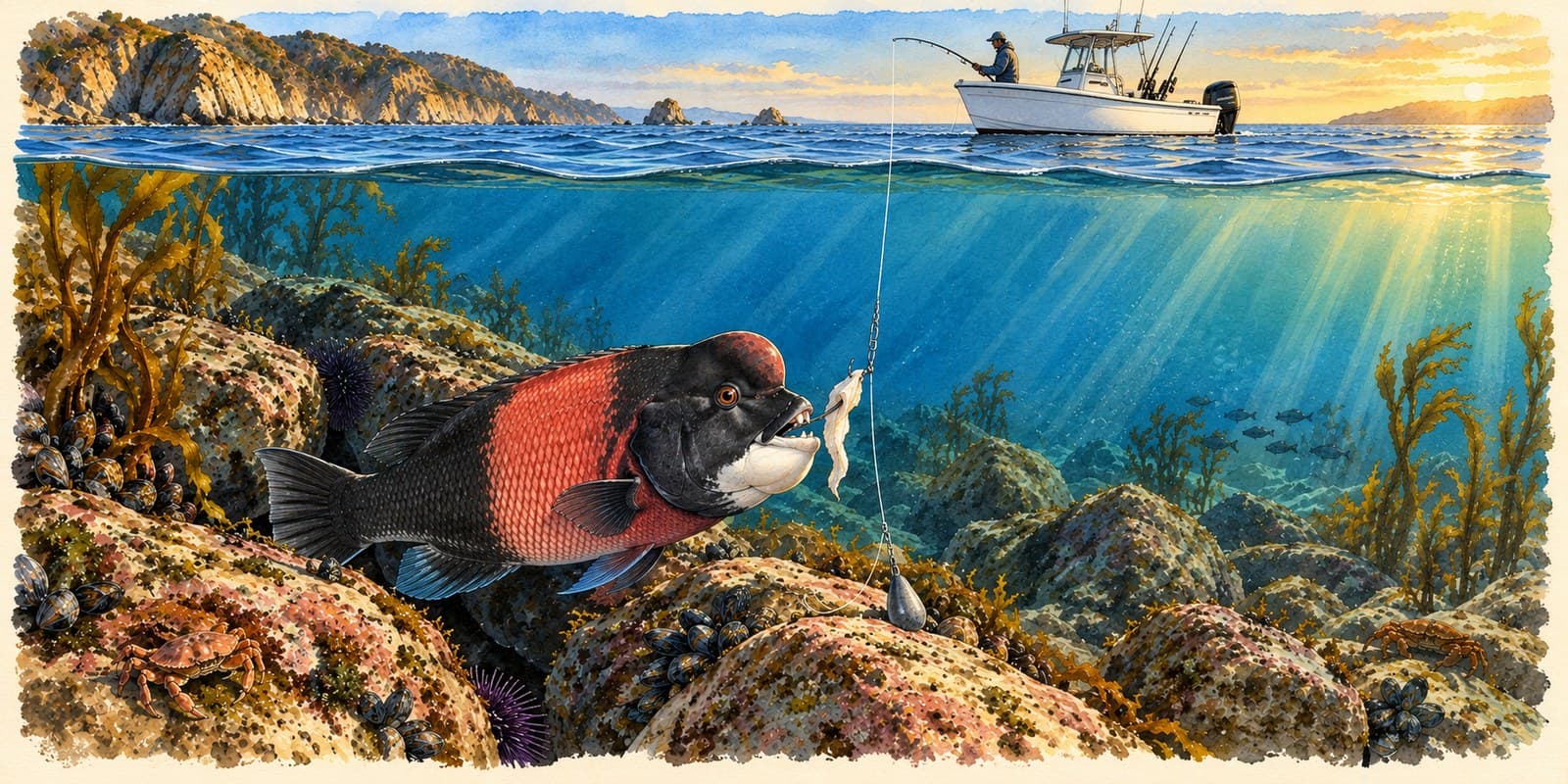
Most sheephead get caught by accident. Somebody drops a strip of squid for calico or rockfish, the rod starts thumping, and a red-and-black fish with buck teeth comes over the rail. That works. But if you actually want sheephead, fishing for them on purpose is a different and simpler game, and fall is a good time to play it.
This is a plain guide to catching California sheephead in the Bight: when, where, what to put on the hook and how to get one out of the rocks. For how the fish lives and why the big males matter, read how sheephead live on the reef first. The sheephead species guide has the basics.
Why fall is sheephead time
Sheephead do not chase bait schools. They eat what lives on the rock: urchins, crabs, mussels, snails and the small stuff hiding in the reef. That diet does not change much when the water does.
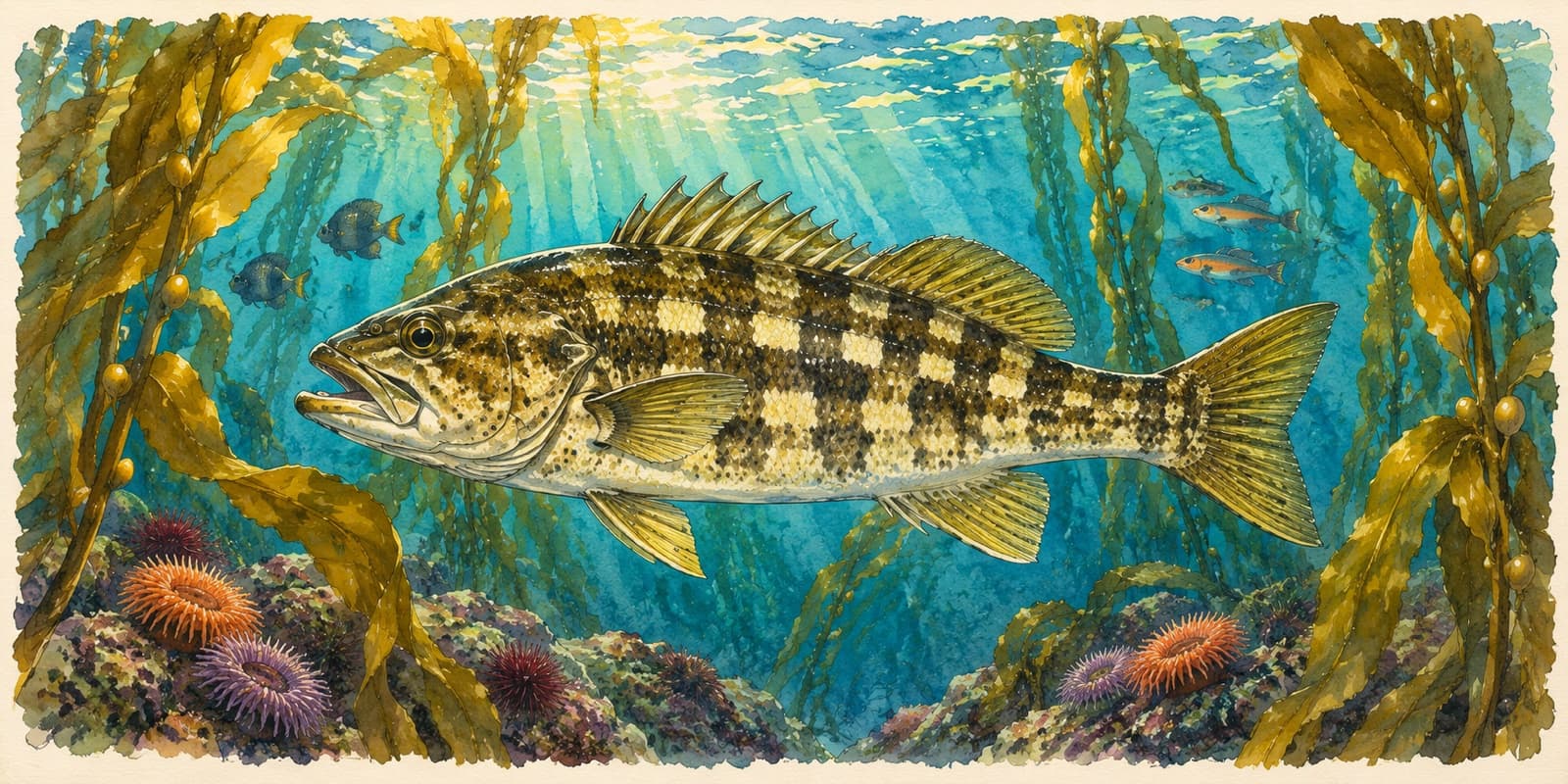
That matters in October and November. As the water slides down out of the summer highs toward the low 60s and the anchovy and sardine move around, the calico bass bite in the kelp often gets moody. The sheephead are still sitting on the same reef, still picking at the same rocks. On a day when the bass will not commit, a sheephead drop can save the trip.
They also stay home. A sheephead that lives on a patch of reef tends to be there next week too, so a good spot holds up through the season, and a spot that has been picked over stays picked over.
Where to drop
Think hard bottom, not kelp canopy. Sheephead want rock with things growing on it.
- Boulder fields and ledges in roughly 20 to 100 feet of water, especially where the reef breaks up into cracks and holes.
- The edges and inside of kelp beds where the stalks grow out of rock.
- Breakwater rubble and rocky points for pier, jetty and kayak anglers.
The classic ground is the same reef that holds calico and rockfish. Off LA, that means the Palos Verdes peninsula and the backside of Catalina out of San Pedro and Long Beach. Further south, the La Jolla and Point Loma kelp out of Point Loma. Up north, the reefs at Anacapa and Santa Cruz Island out of Channel Islands. The islands generally hold bigger fish than the mainland, which tracks with how much pressure each reef gets.
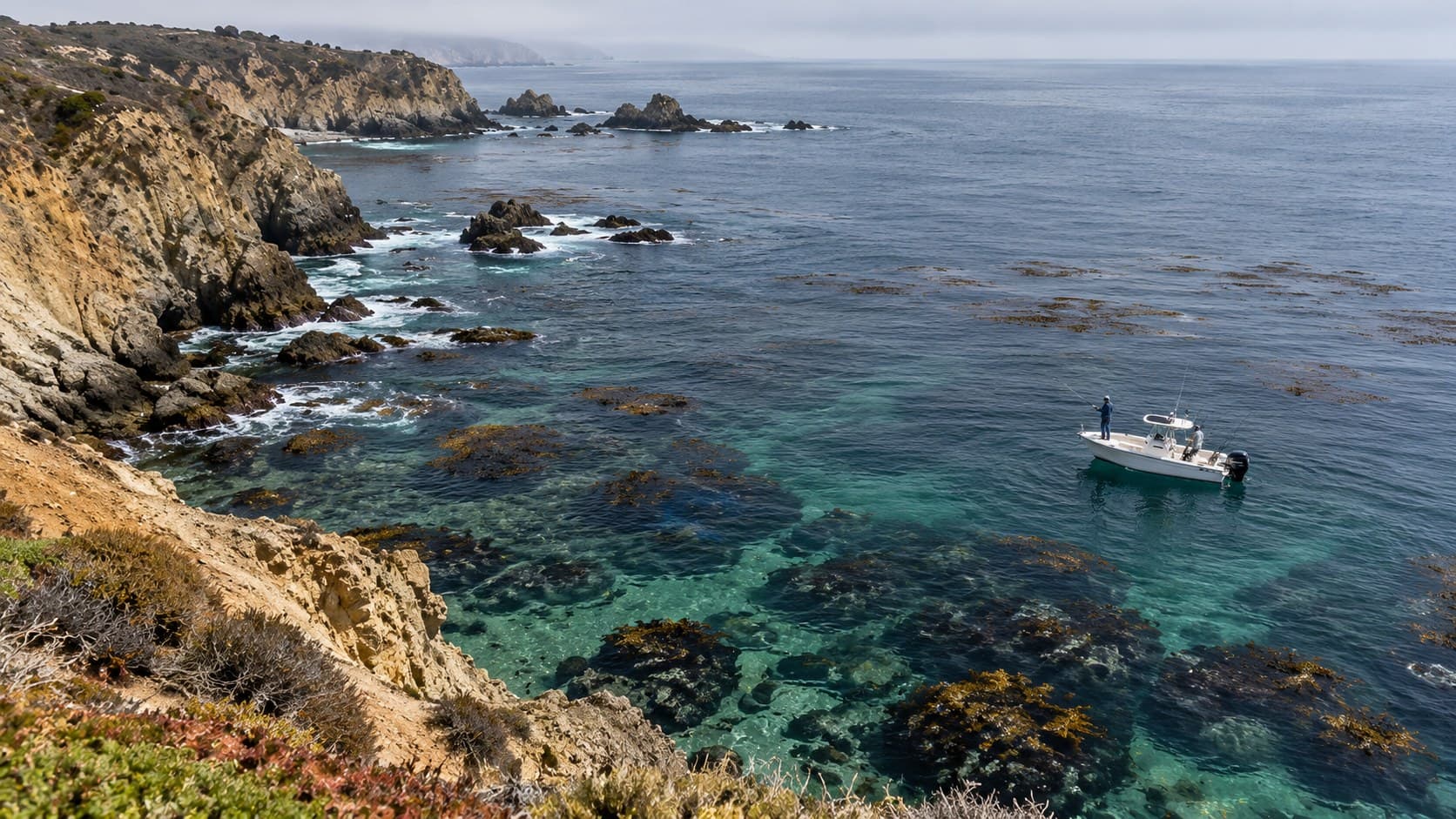
A lot of the best sheephead reef in Southern California sits inside Marine Protected Areas, including pieces of Palos Verdes, Catalina, Laguna, La Jolla and the northern islands. Check the CDFW South Coast MPA maps before you drop. A rock pile that looks perfect on the sounder may be closed.
Bait: bring the hard stuff
Sheephead have strong jaws and a lot of patience. They will tap a soft bait to pieces before you know anything is there. Bait that stays on the hook wins.
- Squid. A strip or a whole small squid. Easy to get, stays on reasonably well, and every reef fish wants it.
- Shrimp. Frozen raw shrimp, shell on. The shell is what keeps it on the hook.
- Mussels and crab. Closest thing to what they eat on their own. Hard to keep on the hook, but tough to beat when it is.
Bring more bait than you think. You will feed a few fish for free while you figure out the timing.
The rig
Keep it simple and keep it on the bottom.
- Dropper loop. A torpedo sinker on the bottom and one or two dropper loops a foot or two above it, each with a short leader to a hook. Same rig as the rockfish dropper loop setup, with sturdier hooks.
- Hooks. A short-shank bait hook in roughly 1/0 to 3/0. Thin wire gets straightened or crushed.
- Weight. Just enough to hold bottom. In a kelp bed on a calm day that might be two ounces. On the outside edge with current, more.
- Line. 25 to 40 pound on a rod with some backbone. You are not fishing light here. The fight is short and happens inches from rock.
Expect to lose sinkers. Some anglers tie the sinker on with lighter line than the main so the weight breaks off before the whole rig does.
How to get the bite and keep the fish
Drop to the bottom, take up the slack, and lift the weight a few inches off the rock. Then wait.
The first taps are usually a sheephead or a smaller fish working the bait over. Do not swing on those. Wait for the rod to load up with real weight, then set and start winding hard right away. A sheephead's first move is to turn and dive back into the hole it came out of. If you give it that first few feet, you are probably going to be pulling on a rock.
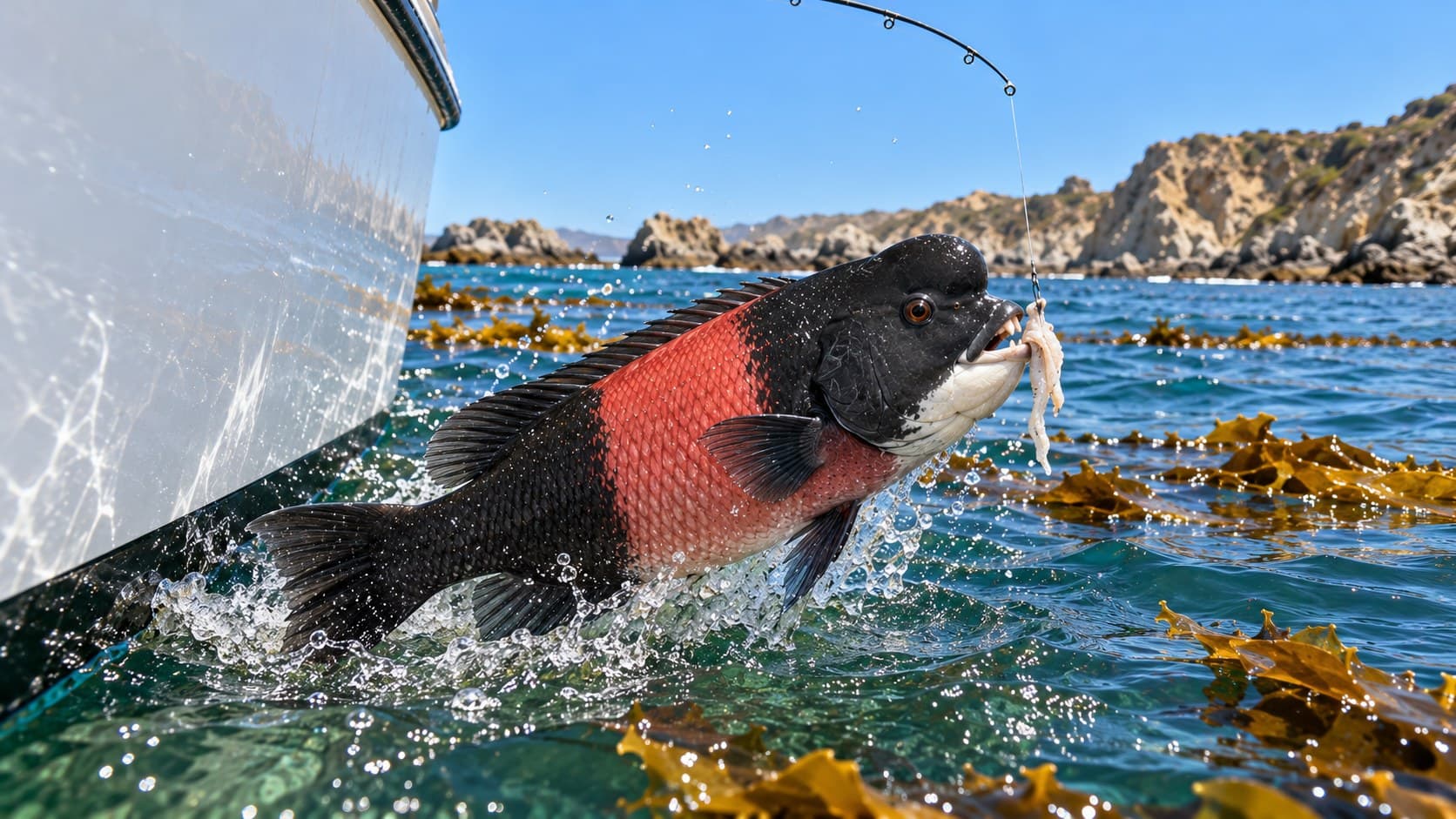
- Turn its head early. Lift and wind for the first ten feet without stopping.
- If it holes up, go slack for a few seconds. Sometimes the fish swims back out on its own. Sometimes it does not.
- Re-check the bait after every bite. A bare hook catches nothing.
Jigs and plastics
Sheephead also eat lures. Hard bottom with a lot of fish on it is where a lure earns its spot.
- Leadhead and plastic. A small grub or swimbait hopped slowly along the bottom catches sheephead, calico and the odd cabezon off the same rock. The calico swimbait guide covers the gear.
- Shrimp flies and small jigs. Fished just above the reef, these pick up sheephead mixed with rockfish.
Bait still tends to out-fish lures when the bite is slow. Lures cover more rock when you are searching.
What to keep, and what to let go
Sheephead fall under California's groundfish rules, so seasons, depth limits, size limits and bag limits all apply and can change during the year. Check CDFW's ocean sport fishing regulations before every trip, not just once a season.
Inside the rules, think about which fish you keep. Big sheephead on most reefs are the males, and each one runs a group of females. A reef that loses its big males does not get them back quickly. Plenty of anglers keep a female or a mid-size fish for dinner and let the big bulls go. That is your call, but it is worth making on purpose.
They do eat well: firm white meat that holds together on the grill and in tacos.
Checking the reef before you go
The reef holds sheephead most days. What changes is whether you can fish it. A big west swell washing over Palos Verdes, or wind that makes it impossible to hold over a rock pile, will ruin a sheephead day faster than the fish will. Fish or Pass scores calico and rockfish on that same hard bottom, and how the Bite Score works explains how it weighs sea conditions alongside the fish. If those scores read Pass because of swell and wind, the sheephead reef is probably not worth the run either.