Dorado are the summer guest of the Southern California Bight. They do not live here. They visit when the ocean gets warm enough, they stay as long as it does, and some years they never come at all. So the honest answer to "when is dorado season" is not a date. It is a water temperature, and a calendar that moves around it.
This is how that calendar usually runs, what pulls the fish north, and how to tell in early fall whether the season is still on. For the fish itself, start with the dorado guide.
Why dorado are a warm-water visitor
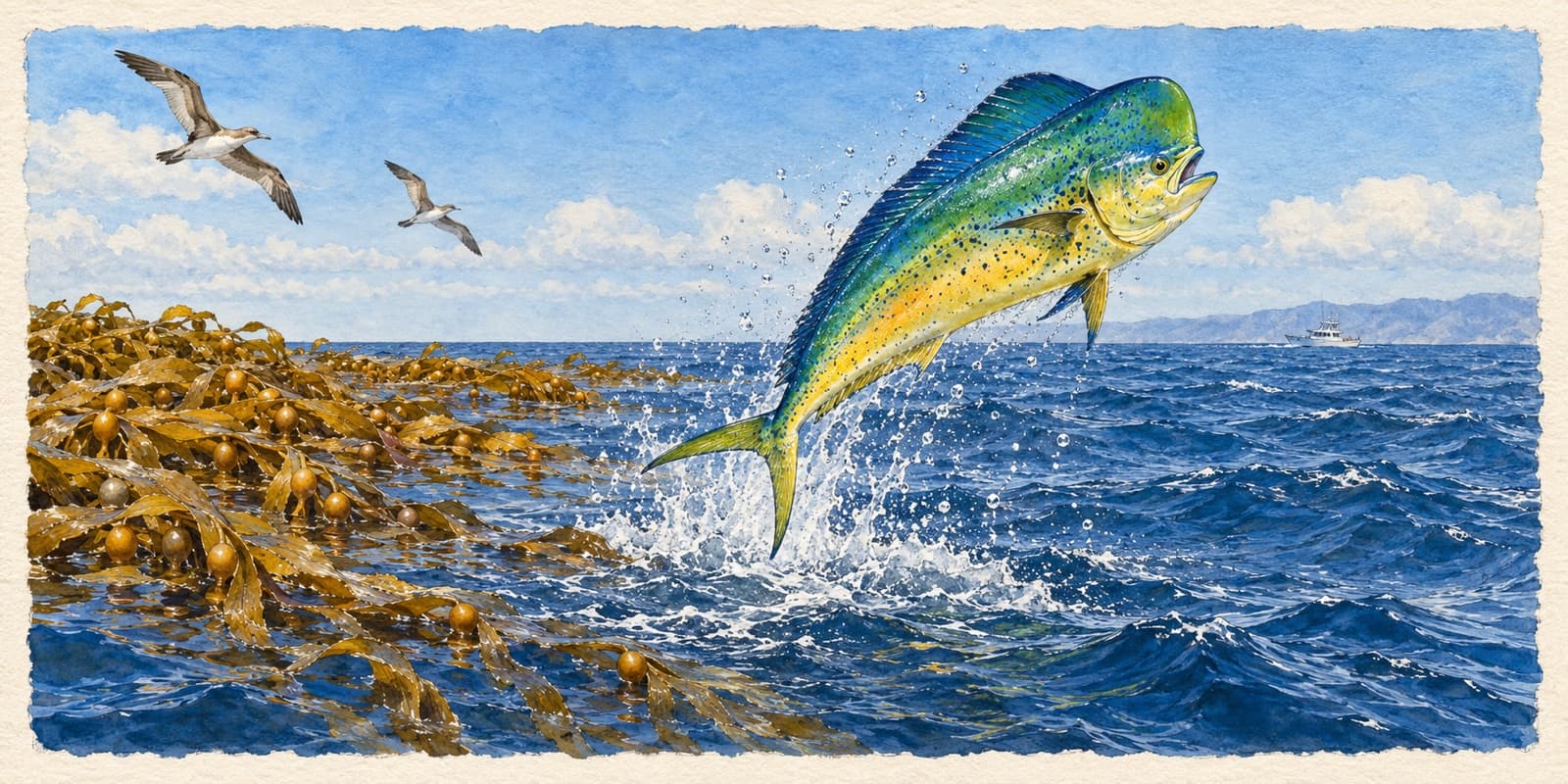
Dorado, also sold as mahi-mahi and called dolphinfish in the books, are a tropical and subtropical fish. Their home water off the Pacific coast is Baja and points south. Southern California is the northern edge of their range, and they only reach it when warm water pushes up from Mexico and sits in the Bight long enough for fish to follow.
They grow fast and live short lives, which suits a fish that roams. They are not tied to a reef or a kelp bed. They follow warm, blue water and anything that floats in it.
That is why one season can be loaded with them and the next can be nearly empty. The fish are the same. The water is not.
The usual calendar
In a normal year the rough shape looks like this. Treat it as a pattern, not a schedule.
- Early summer. Most years there are few or none. The offshore water is still cool from spring upwelling.
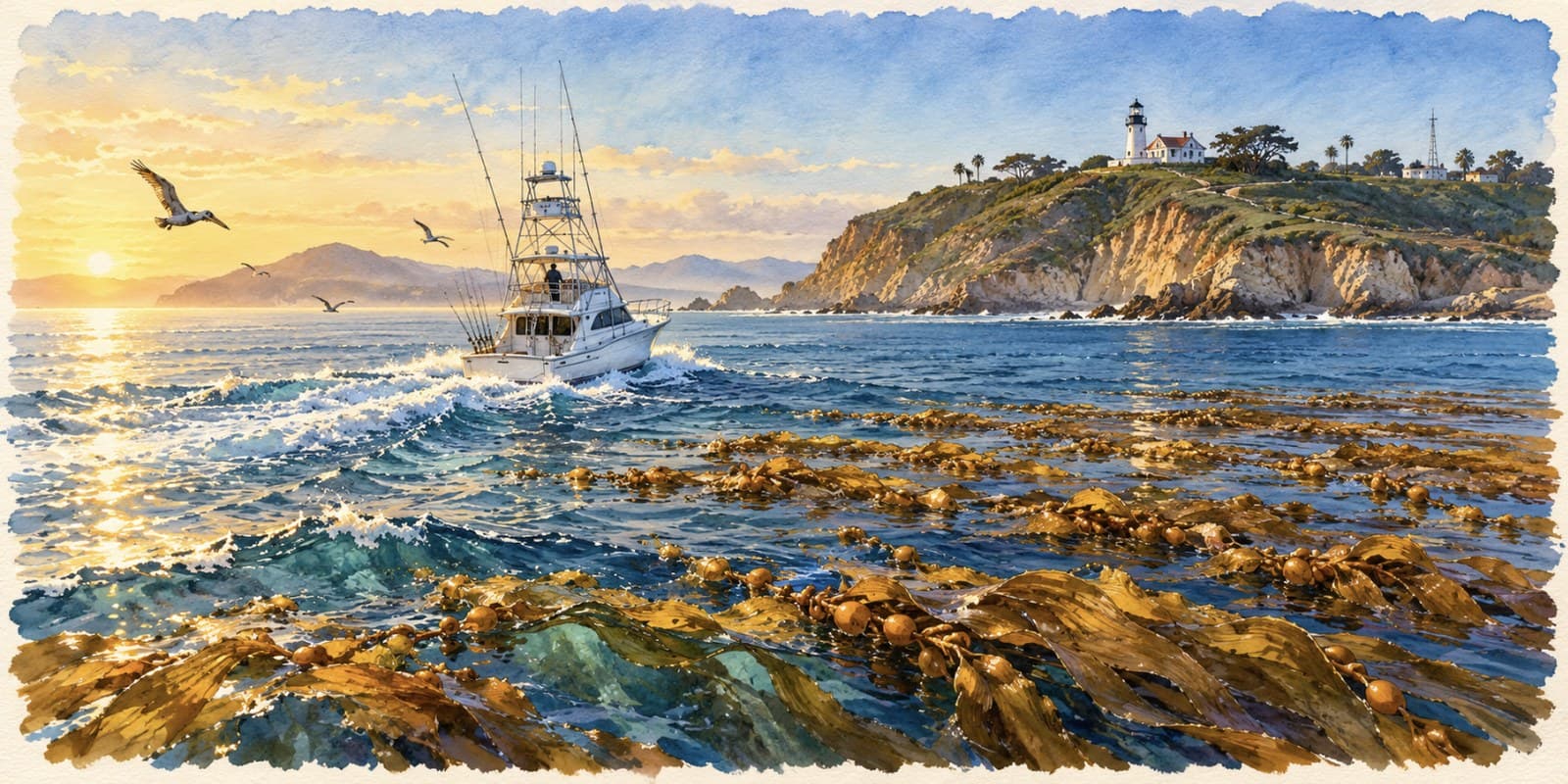
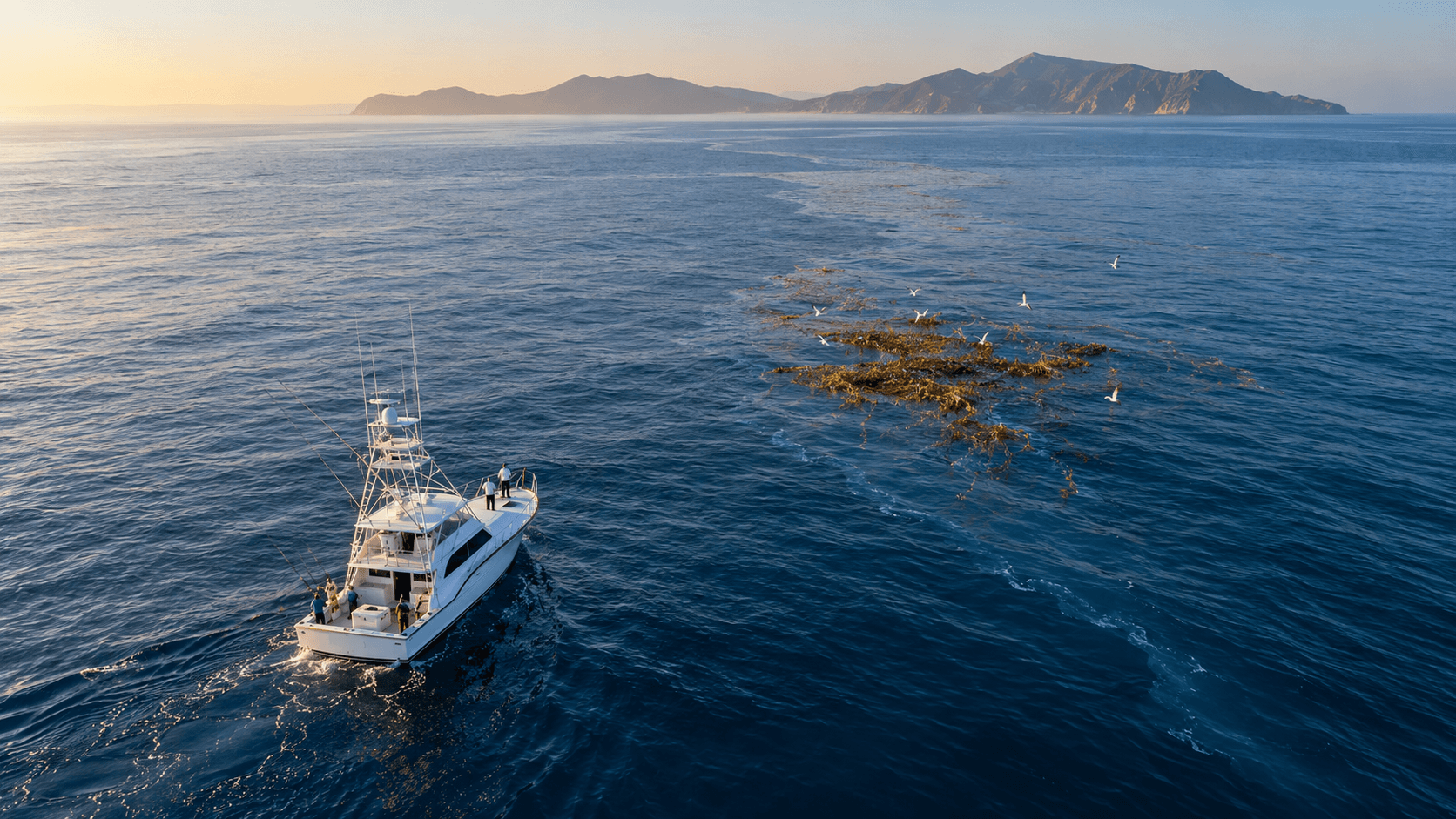
- Late July and August. The first fish tend to show on paddies offshore of San Diego once the warm water arrives from the south.
- August and September. The heart of the season in most years that have one. This is when paddy fishing for dorado is most dependable.
- October. The fade. Some years the fish hang on through the month. Some years they are gone by the first week.
In a cool year, the whole thing can shrink to a few weeks or skip the Bight entirely. In a hot year, it can start earlier, run later and reach farther north than usual.
Water temperature is the switch
If you only watch one number for dorado, watch surface temperature offshore.
Roughly 70 degrees and up is dorado water. Upper 60s can still hold fish on a warm edge, especially late in the season when they have nowhere better to be. Once the offshore water settles into the mid 60s and stays there, the season is usually done. Those are rules of thumb. Fish follow warm water, but they do not read thermometers.
Clean blue water matters almost as much as the temperature. Warm green water with nothing in it is not the same as warm blue water with bait and paddies. The post on reading a kelp paddy for dorado covers why color and current lines decide which paddies are worth a stop.
Water temperature and temperature breaks are part of what the Bite Score weighs for dorado. It can tell you whether the water within reach of your port looks like dorado water today. It cannot tell you which paddy has fish under it.
Where they show first
Because the fish come from the south, the season usually reaches San Diego first and works north if the water does.
- Offshore of San Diego. The banks and high spots out of Point Loma, like the 9 Mile Bank, the 182, the 302 and the 371, and the paddies drifting between them, are where most seasons start. A lot of that water is in Mexico, so carry the right licence if you cross.
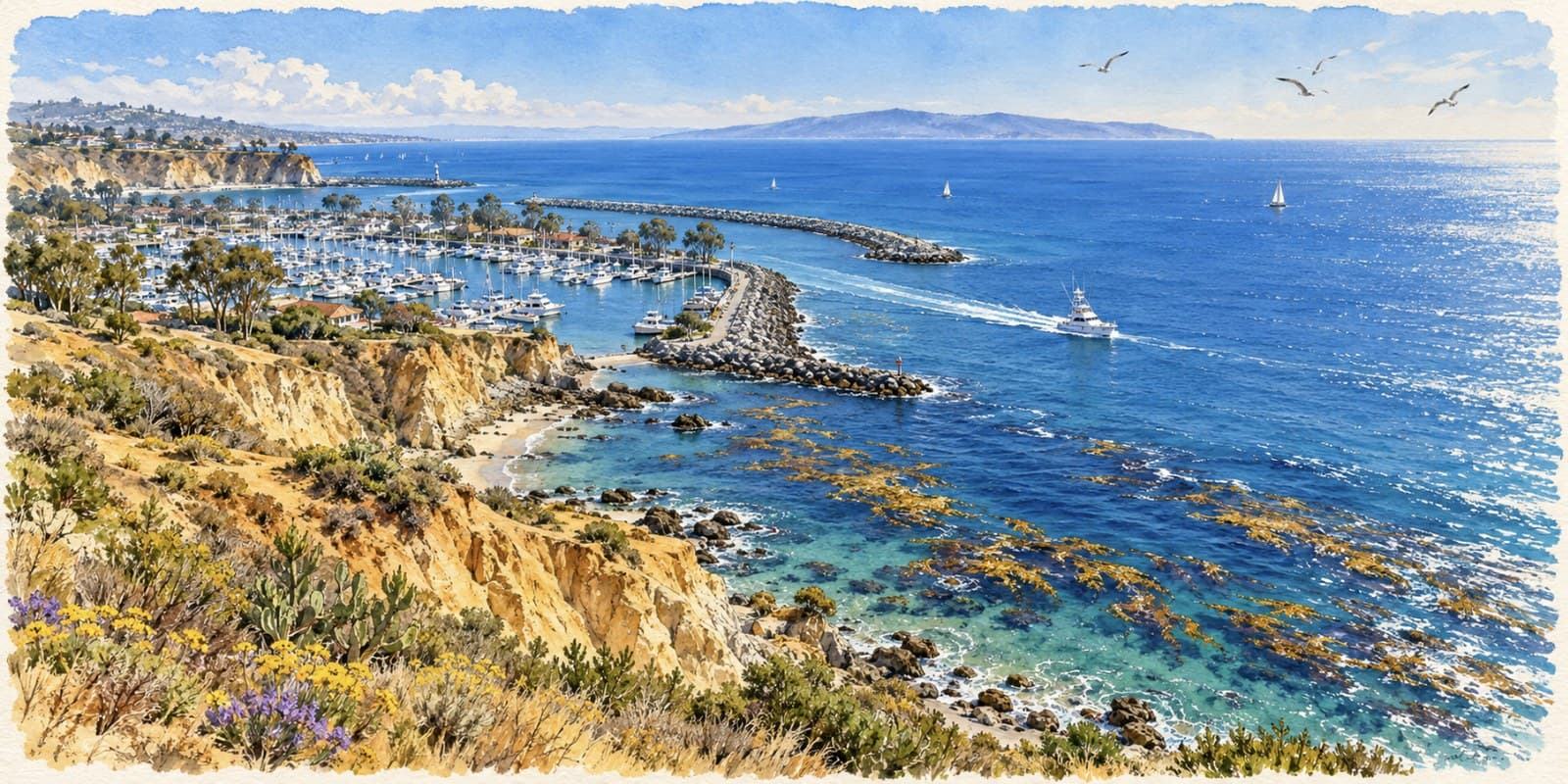
- North County and Orange County. Boats out of Oceanside and Dana Point get their shot when the warm water spreads up the coast, often on paddies along the offshore edges and the outer banks.
- Farther north. In the warmest years, dorado turn up off Catalina and San Clemente Island and in water that rarely sees them. Those years are the exception, not the plan.
The farther north your port, the more the season depends on a strong warm push.
Warm years and lean years
The years people remember are the warm ones. Strong El Nino years, and the marine heat waves of the mid 2010s, pushed warm water deep into the Bight and brought dorado with it, sometimes close to the beach and well up the coast.
La Nina years and strong upwelling seasons tend to do the opposite. The offshore water stays cooler, the warm edge stays south, and the dorado mostly stay in Mexico.
None of that is a promise. A warm year can have a quiet dorado season if the paddies are not there, and a middling year can have a good run if a slug of warm water parks offshore for a few weeks. But if the spring and summer have been cool and green, do not plan your fall around dorado.
What October looks like
October is when the season either has legs or it does not.
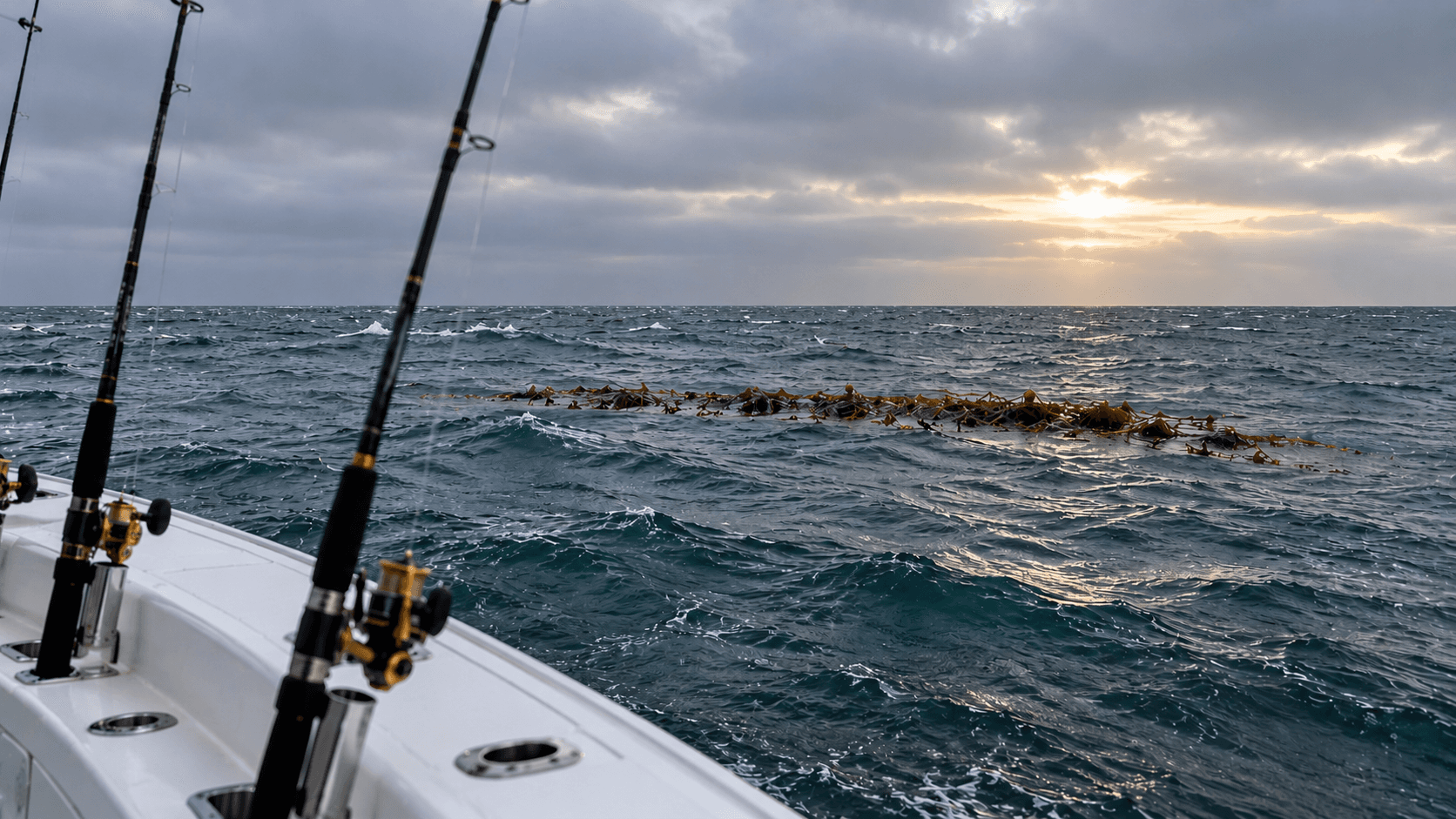
The days are shorter, the surface stops warming, and a few days of north wind can drop the offshore water several degrees. The warm edge slides south and farther offshore. The paddies are still out there, but fewer of them sit in water that holds fish.
What that means on the water:
- Fewer paddies hold fish, but the right one can still be loaded. With less warm water to go around, the fish that are left pile up on whatever structure sits in it.
- The fish get scattered. You will run more water between stops.
- Dorado become a bonus, not the target. Late-season trips usually fish for fall yellowfin, bluefin or yellowtail first and stop on paddies along the way.
When the offshore temperature breaks are gone, the paddies are in cool green water and the last few trips have been checking kelp without a strike, the season is over. Save the fuel. It will be back when the water is.
Fishing the shoulder of the season
The way you fish dorado does not change much from August to October. A lively sardine pitched to the edge of a paddy, a small jig cast past it and worked back, and keeping a hooked fish in the water so the school stays with the boat all still apply. The kelp paddy guide walks through the approach, and the guide to picking jigs that get bit covers the iron.
What changes late in the season is how picky you are about where you stop. Look harder at water color and temperature before you slow down. Give the paddies on the warmest, cleanest water your time and pass the rest.
Limits and licences
Bag limits for dorado, and licence rules for California and Mexican waters, change. Check the current CDFW ocean sport fishing regulations before you go, and sort out a Mexican licence if your trip crosses the border.
The ocean decides when dorado season starts and when it ends. Watching the water is how you stay a step ahead of it.