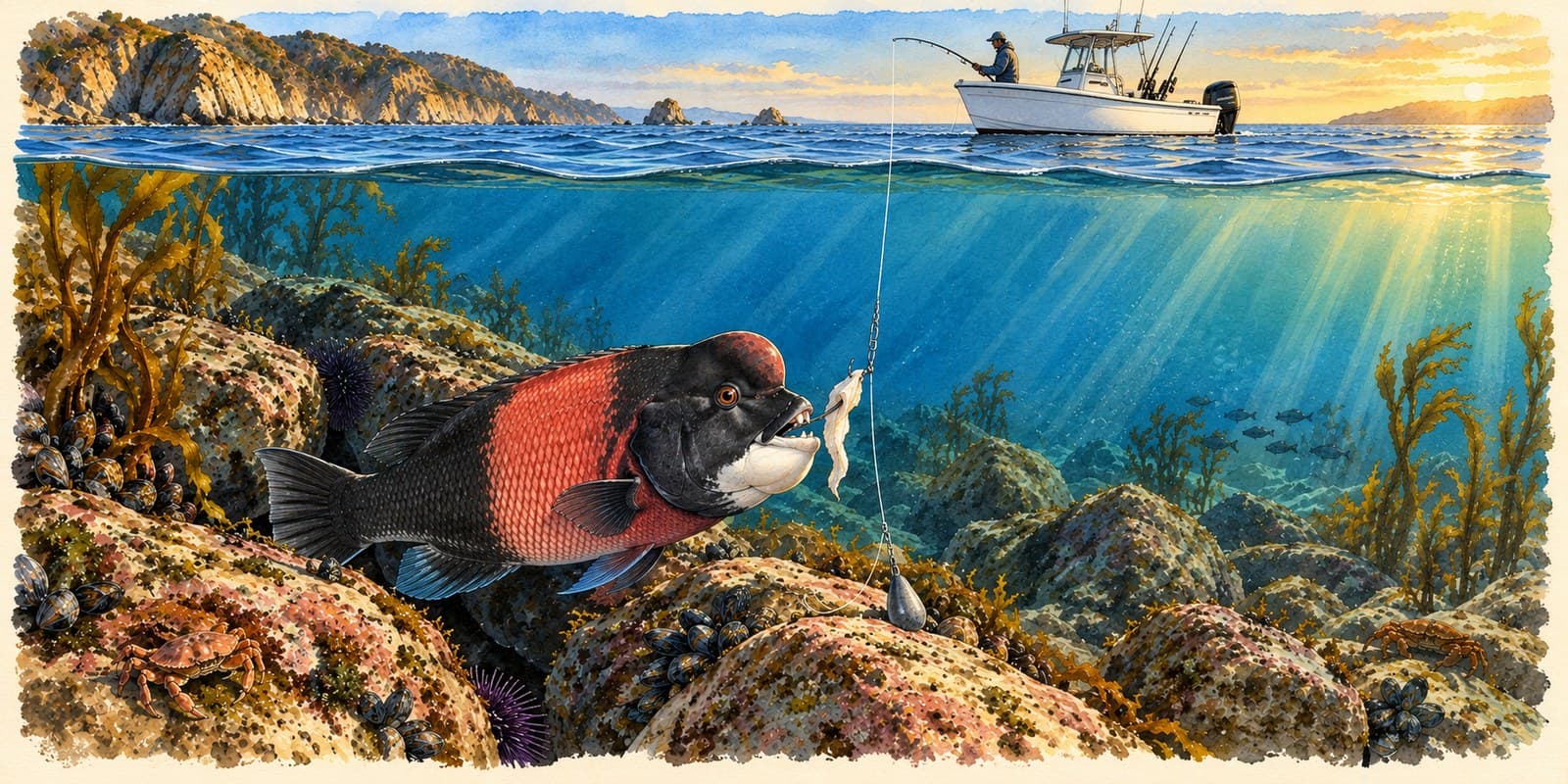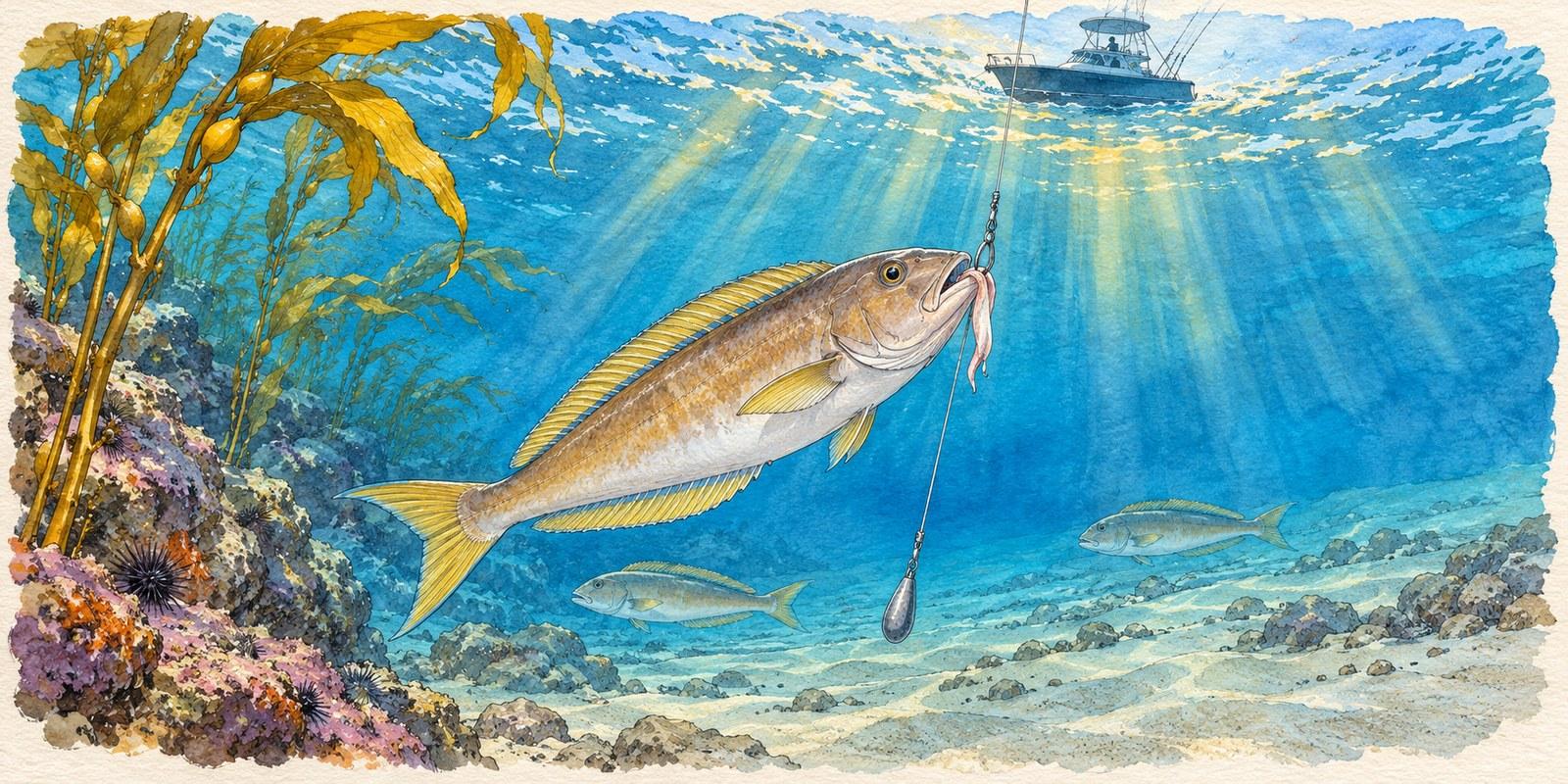
Ocean whitefish come up on the island drops in winter, usually on a rockfish rig or a squid strip meant for something else. Then the deckhand asks if you want it filleted, and a lot of people say yes without knowing what they have. The answer: a mild, soft, small-flaked fish that is very good if you handle it right and a little disappointing if you do not.
This post covers the whole job: getting it cold on the boat, the one part of the fish that cuts you, filleting, why the skin comes off, and how to cook meat this soft. For how the fish lives on the reef and where to find it, read ocean whitefish on the island reefs first, and the ocean whitefish species guide has the short version.
Know what you are holding
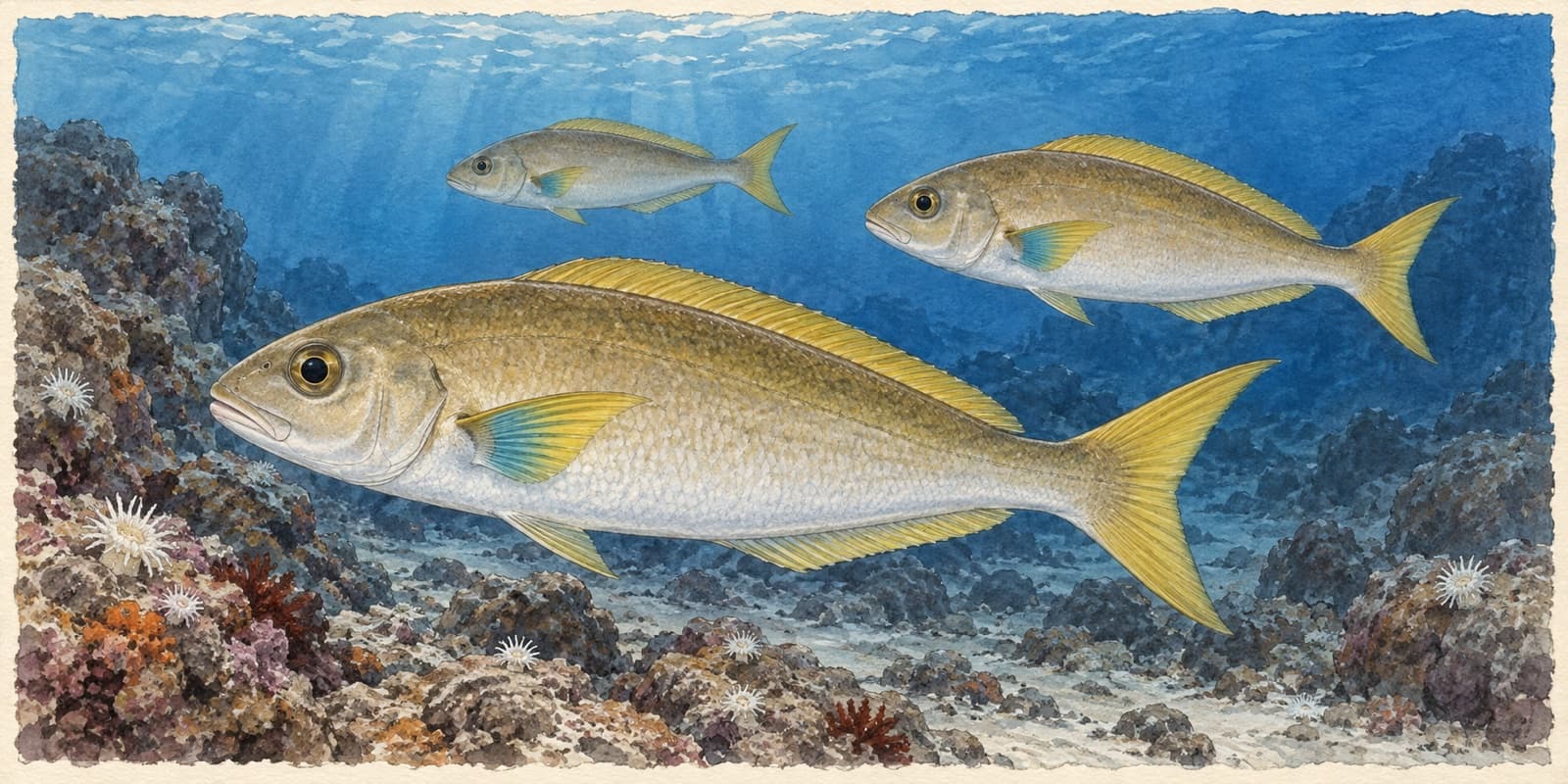
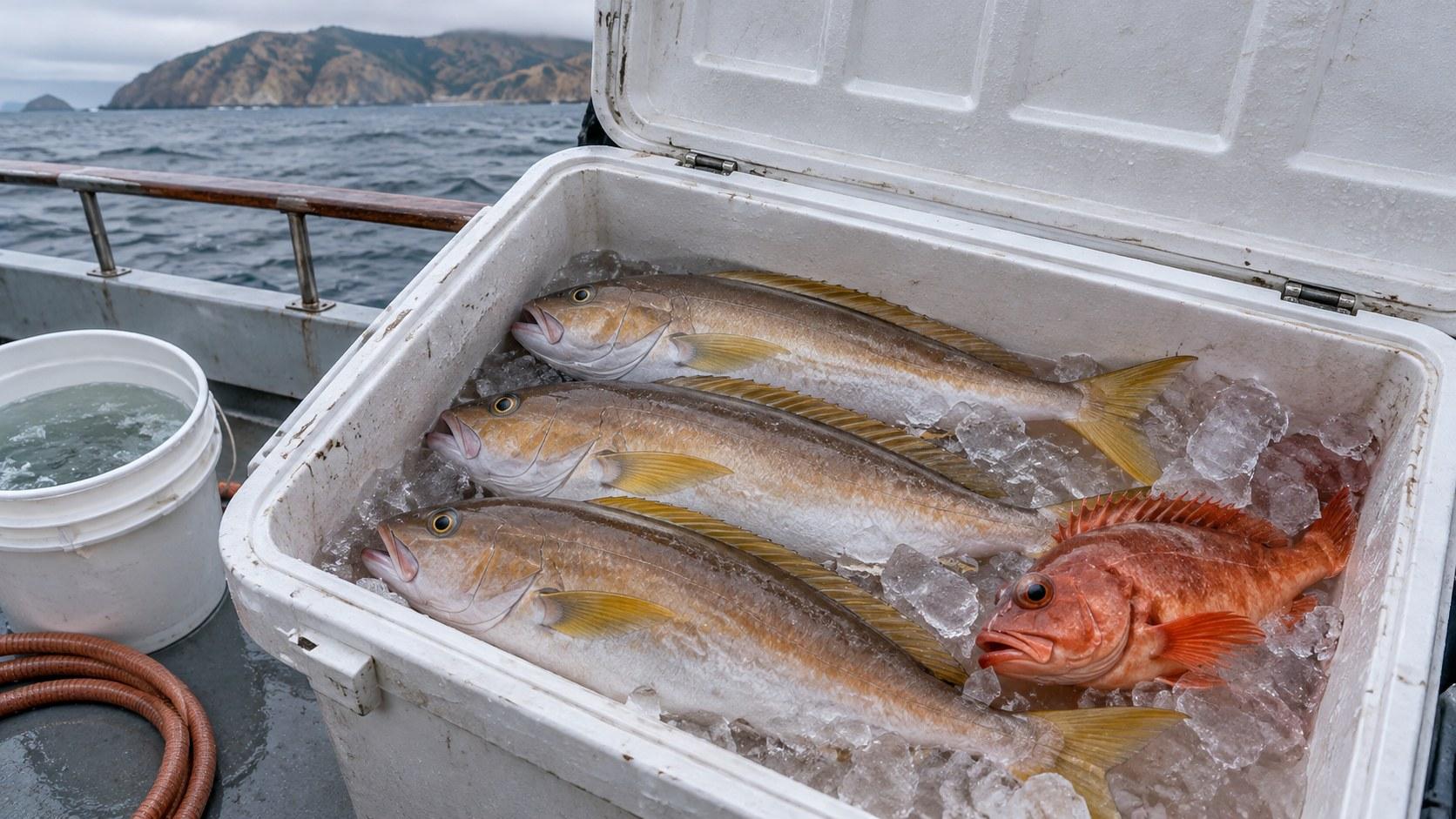
The ocean whitefish is a tilefish, not a rockfish. Long, tan to yellow-brown body, a blunt steep head, a big eye, and one long soft dorsal fin with no spiny front half. Most of the ones caught in Southern California run 2 to 4 pounds.
That shape matters at the cleaning table. There are no venomous spines to clip like there are on a sculpin, but there is one thing that bites back.
The gill cover is the sharp part
The edge of the whitefish's gill cover is serrated and sharp. Grab the fish the way you would grab a calico, with a hand slid up under the head, and it will open your fingers.
- Hold it behind the head, on top of the body, not across the gills.
- Use a towel or a glove if the fish is still kicking.
- Keep your thumb out of the gill opening when you bleed it.
If you clean a lot of island fish, the sculpin is the one with venom. Our post on how to clean a sculpin covers the spines. The whitefish just has a bad edge.
Bleed it and get it cold
Soft-fleshed fish lose the most from sitting on a warm deck. A whitefish that went straight into slush tastes like a different animal from one that rode around in a sack for six hours.
- Bleed it. Cut through the gill arches on one side with a knife or scissors and drop it head-down in a bucket of seawater for a few minutes.
- Then slush. Ice and a little seawater in the cooler, so the fish is surrounded, not resting on top of dry cubes.
- Keep it out of the sun. The sack in the stern on a party boat is fine if it goes in the fish hold, not on the rail.
The fish fades fast once it is out of the water. The yellow and blue go, and a bright fish turns plain brown. That is normal and says nothing about the meat.
Filleting a whitefish
The fillet is close to a rockfish fillet. If you already know that cut, you know this one. Our rockfish rigs post covers the drops these fish come up on.
- Lay it flat on its side with the back toward you.
- Cut behind the head and gill cover down to the backbone, angling toward the head to keep the meat at the top of the fillet.
- Run the knife down the back, along the top of that long dorsal fin, using the backbone as your guide.
- Work over the rib cage with short strokes, keeping the blade against the bones.
- Free the fillet at the tail and flip the fish for the other side.
Use a sharp, flexible blade. The meat is soft, and a dull knife tears it instead of cutting it. Go slower than you would on a lingcod. Then trim off the belly edge and any rib bones that came along.
If the deckhand fillets your fish, tip them. They have seen more whitefish than you have.
Fillet rules and the skin
California has rules about what fillets have to look like while you are still on the water, including skin left on so a warden can tell what species they are. Those rules change and they differ by species. Check the current CDFW Southern Region regulations before you skin anything at sea, and the safe default is to bring them in with the skin on.
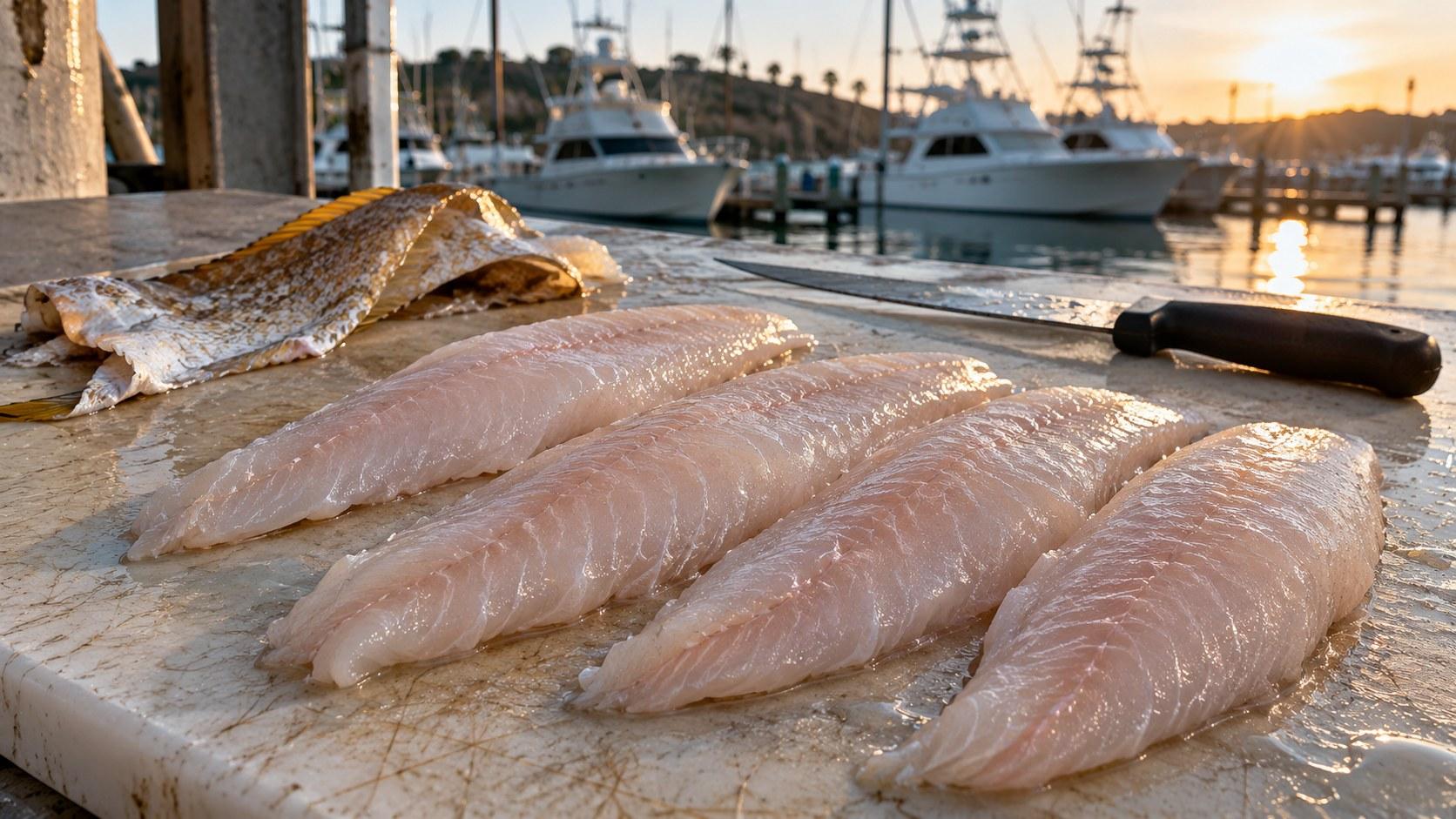
Once you are home, take the skin off. Whitefish skin has a strong taste, and most people who eat these fish regularly skin every fillet.
- Lay the fillet skin side down, tail end toward you.
- Cut down to the skin about half an inch from the tail.
- Turn the blade nearly flat, hold the tail tab, and pull the skin while you push the knife forward.
Cooking soft, mild meat
The flesh is mild with a soft texture and small flakes. That rules out a few things and makes a few things easy.
- Fry it. Small pieces, a light flour or batter, hot oil. Fish tacos are the obvious home for it.
- Pan sear thick pieces in a hot pan, and leave them alone until the first side releases. Flip once.
- Bake it in a dish with butter, lemon and something on top to keep it moist.
- Skip the grill grate. Meat this soft falls through the bars. Use foil or a plank.
Cook it the day you get home or the next day. If you are freezing it, vacuum seal it and keep it to a few months.
The other fish in the cooler
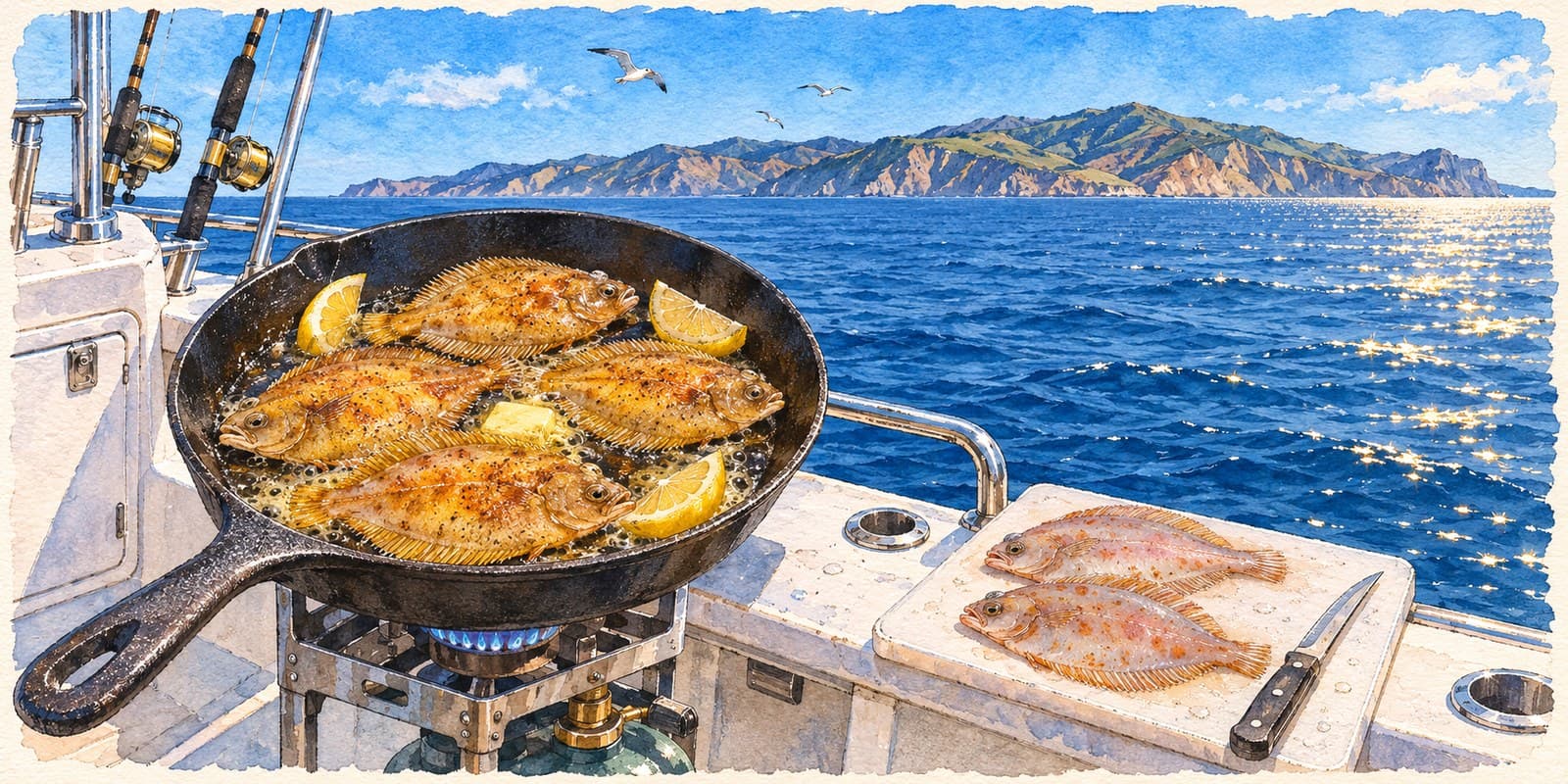
Whitefish rarely come home alone. The same island drops give up rockfish, sculpin, sheephead and the occasional lingcod. Our post on cleaning and cooking sanddabs covers the small flatfish that come up on the same winter trips, and winter fishing in Southern California covers what else is biting this time of year.
Where Fish or Pass fits
Fish or Pass does not grade ocean whitefish. The Bite Score reads conditions for rockfish, the fish whitefish share their drops with, as Catching, Fishing or Pass, and a calm day on the island reef is good for both. It cannot tell you whether the whitefish will be there, and it has no opinion on your filleting.