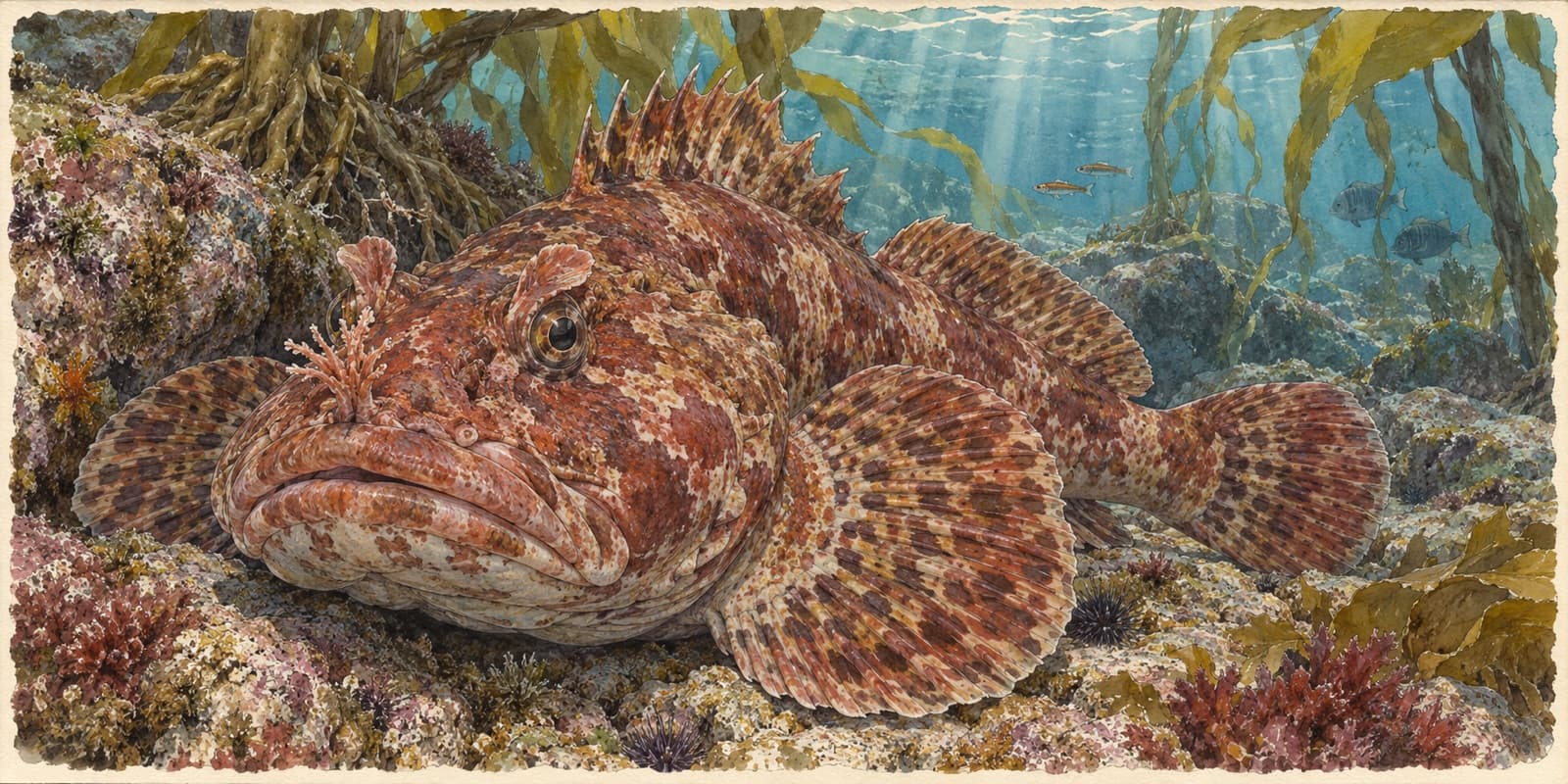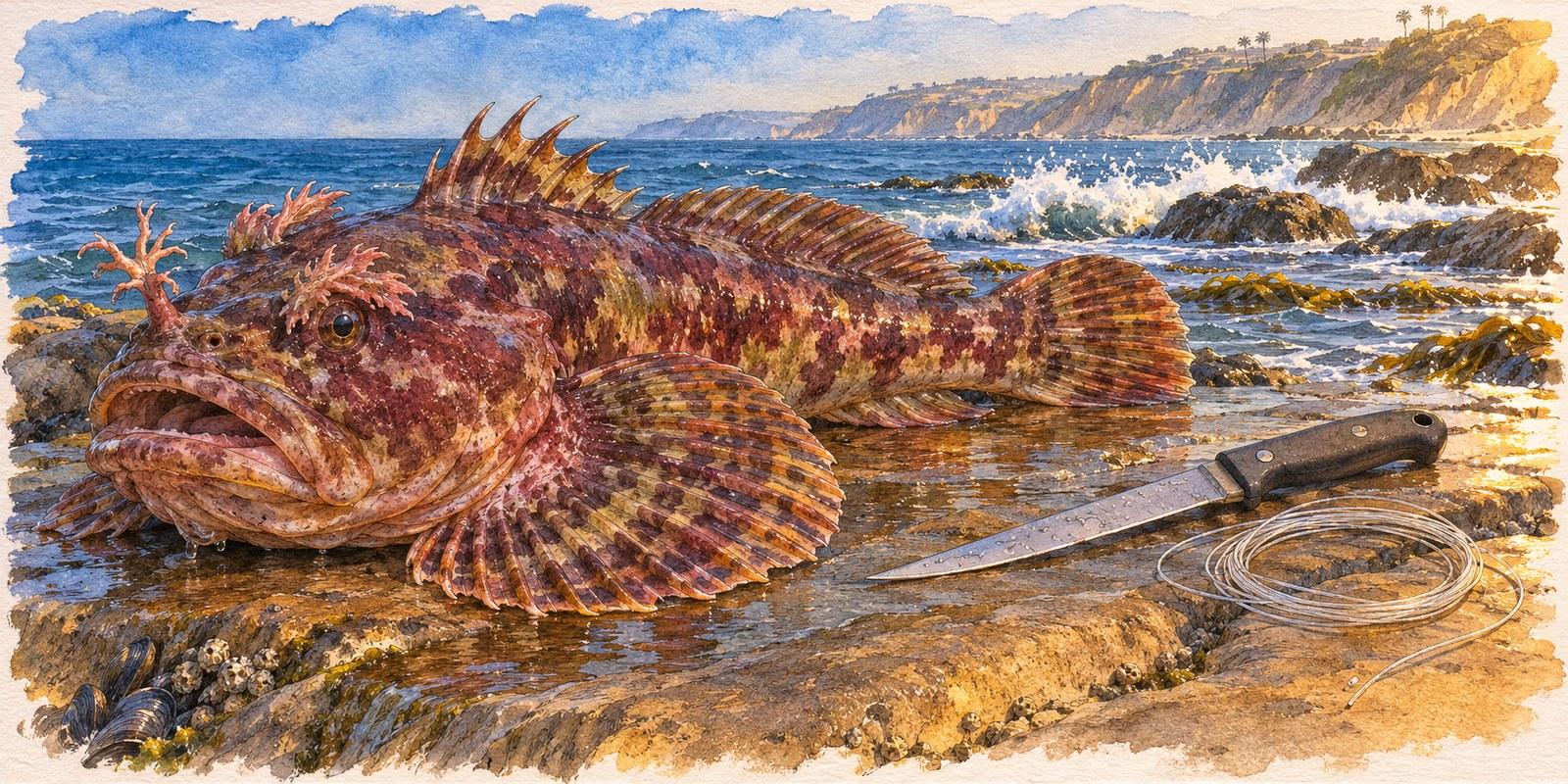
A cabezon is the best eating fish on the shallow rock and the strangest one to clean. Most of it is head. The meat may come off the frame blue. And in winter a female can be carrying an egg mass that will make you sick if any of it ends up in the pan.
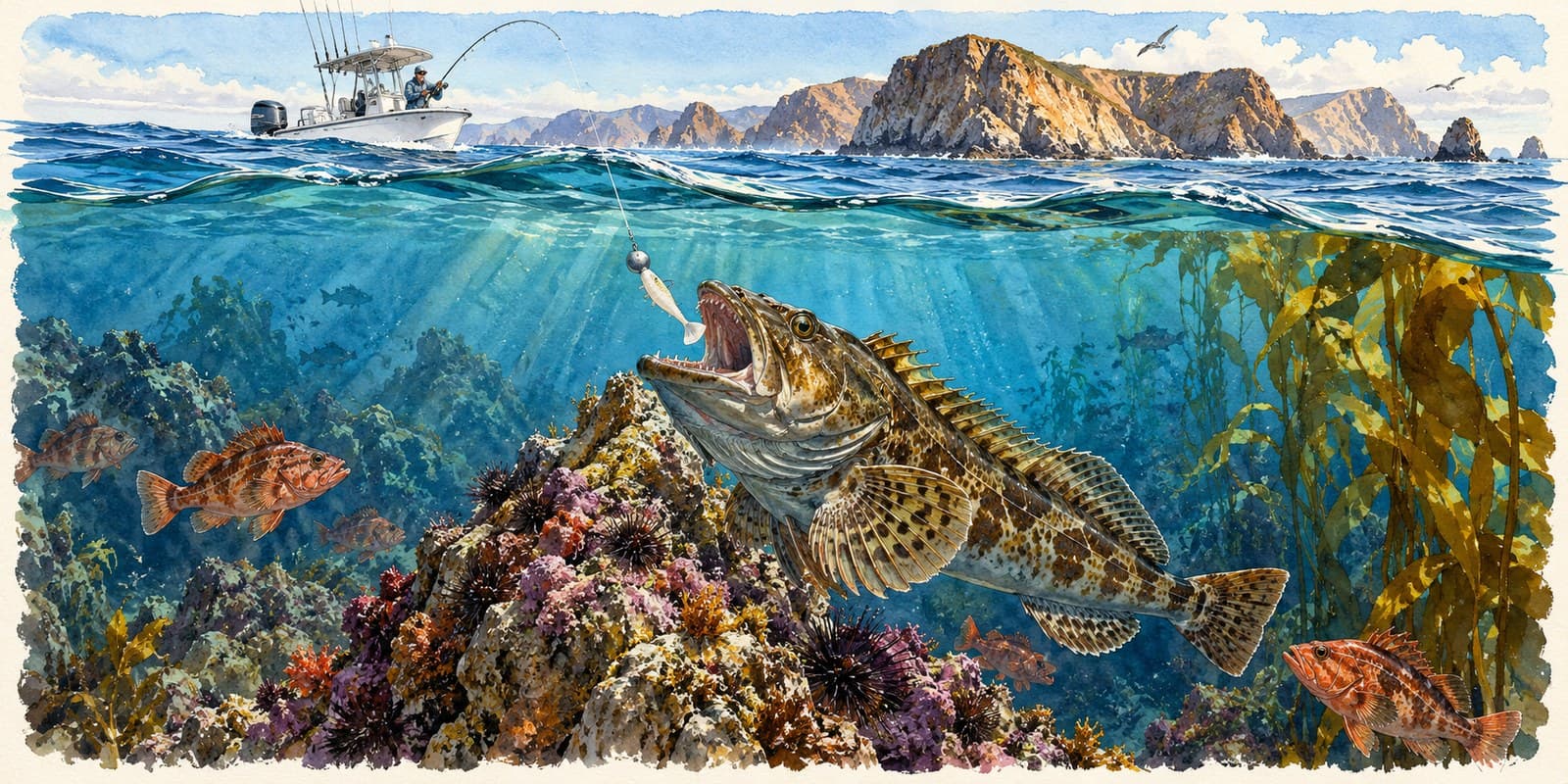
None of that is hard to deal with once you know it is coming. This post is the cleaning table half of the fish: getting it home in good shape, filleting around that head, keeping the roe away from the meat, and cooking it. For where cabezon live and how to pull one out of the rock, read cabezon on the shallow reef first. The cabezon species guide has the short version of the fish.
Before you keep one
Cabezon are managed with the rockfish, cabezon and greenling complex. There is a minimum size, they count toward the combined groundfish bag, and boat anglers have season and depth rules that change every year. Check the CDFW recreational groundfish summary before the trip, not at the cleaning table. Size limits are checked on a whole fish, so the simple habit is to bring it in whole and fillet it on land.
Winter is also nesting season. The cabezon guarding eggs on shallow rock is the male, and if he goes home with you, the nest usually goes with him. Some rock fishermen let the big winter fish go for that reason. Cabezon have no swim bladder, so unlike a rockfish pulled from deep water, one caught in the shallows usually swims off fine.
Bleed it and get it cold
Cabezon are tough fish and they stay alive a long time out of water. That is not a reason to leave one flopping in a bucket.
- Bleed it. Cut through the gills on one side and let it bleed out head down in a bucket of seawater.
- Then ice it. Slush in the cooler, ice and a little seawater, so the fish is surrounded, not sitting on dry cubes.
- Mind the spines. The dorsal spines and the edges of the gill cover are sharp. They are not venomous like the spines on a sculpin, but they will still poke a hole in you. Our post on how to clean a sculpin covers the venomous one.
The skin has no scales, so there is no scaling to do. It is slick and slimy, though, and a dry towel or a cleaning glove makes the fish much easier to hold.
Fillet it without opening the belly
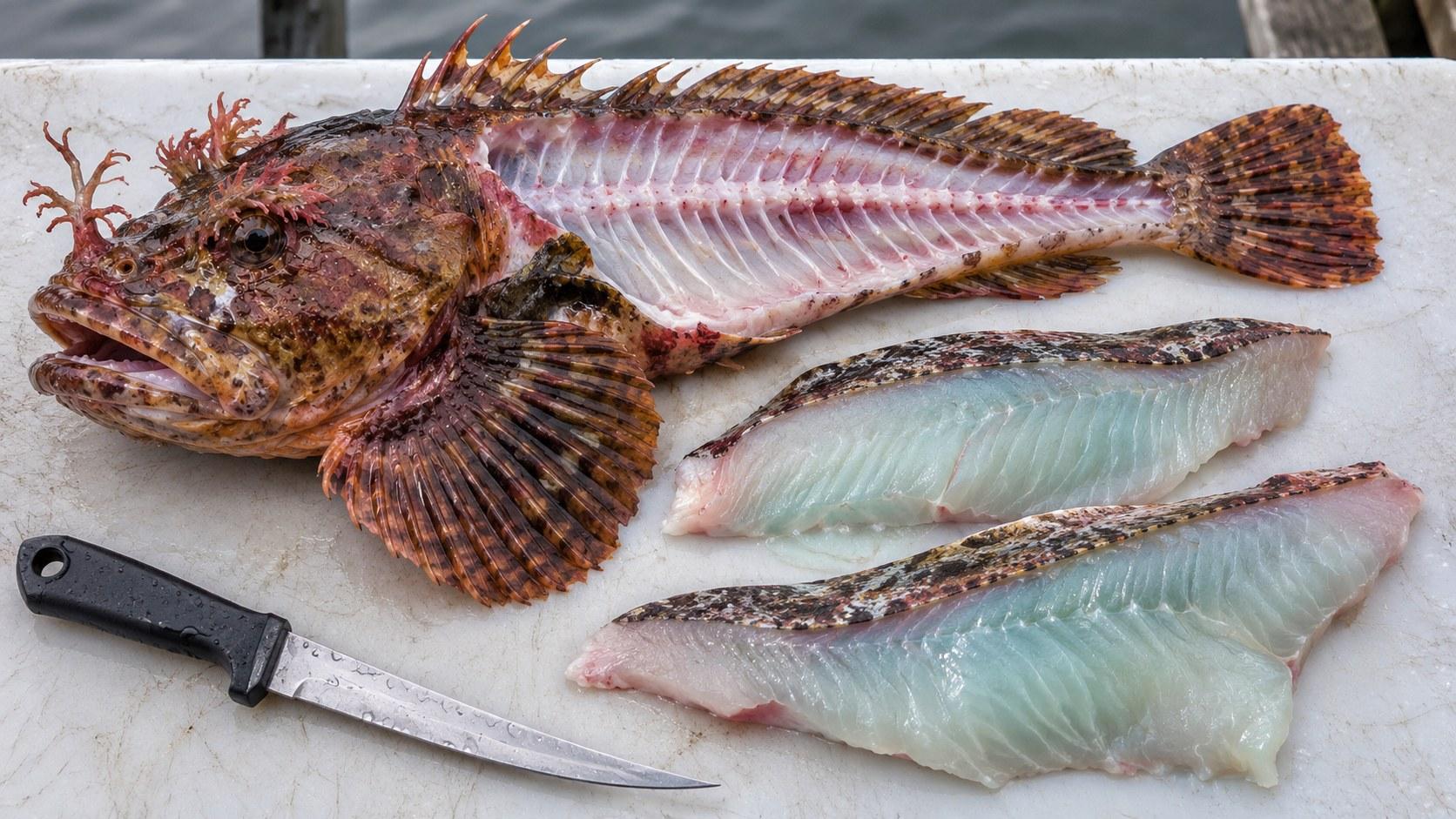
This is the one rule that matters. The roe sits inside the body cavity. If your knife never goes into the cavity, the roe never touches the meat.
- Lay the fish on its side with the back toward you. Wipe off the slime first.
- Cut behind the head, just behind the big pectoral fin and the gill cover, down to the backbone. On a cabezon this cut is further back than you expect, because the head is so big.
- Run the blade along the back, just above the backbone, from the head cut to the tail.
- Work down over the ribs with short strokes, keeping the blade on top of the rib bones. Stop at the bottom of the ribs. Do not cut through into the belly.
- Free the fillet at the tail and turn the fish over for the other side.
If you have filleted a lingcod, it is the same cut on a fish with a bigger head. Our post on how to catch lingcod covers the other big-headed fish that comes off the same rock in winter.
The yield is lower than a lingcod or a rockfish the same length. A lot of the fish is head, and that is just how a cabezon is built.
The roe goes in the trash
Cabezon eggs are poisonous to people. California Sea Grant says the roe is toxic when eaten, and points to a published case of people made acutely sick by it. Cooking does not make it safe.
If you clean the fish whole to cook it whole, or you open it to check what it was eating:
- Lift the egg mass out in one piece. Do not cut through it.
- Throw it away, sealed, where the cat or the dog cannot get at it.
- Rinse the cavity, the board and your knife before anything else touches them.
- Keep the head and frame for stock only after the roe is gone. Most of the fish is fine. The eggs are the only part that is not.
Skin the fillets once you are home. Lay the fillet skin side down, cut to the skin at the tail, flatten the blade and pull the skin while you push the knife forward. The skin is tough and it comes off clean.
Why the meat is blue
Some cabezon fillets come off blue or blue-green. That is normal for the fish and nothing to worry about. Sea Grant notes that cabezon flesh is blue and turns white when cooked. Lingcod do the same thing, which is why nobody on a winter rock trip panics about it.
The meat is firm, and Sea Grant describes the flavor as sweet and shellfish-like. That makes sense for a fish that lives on crab.
Cooking cabezon
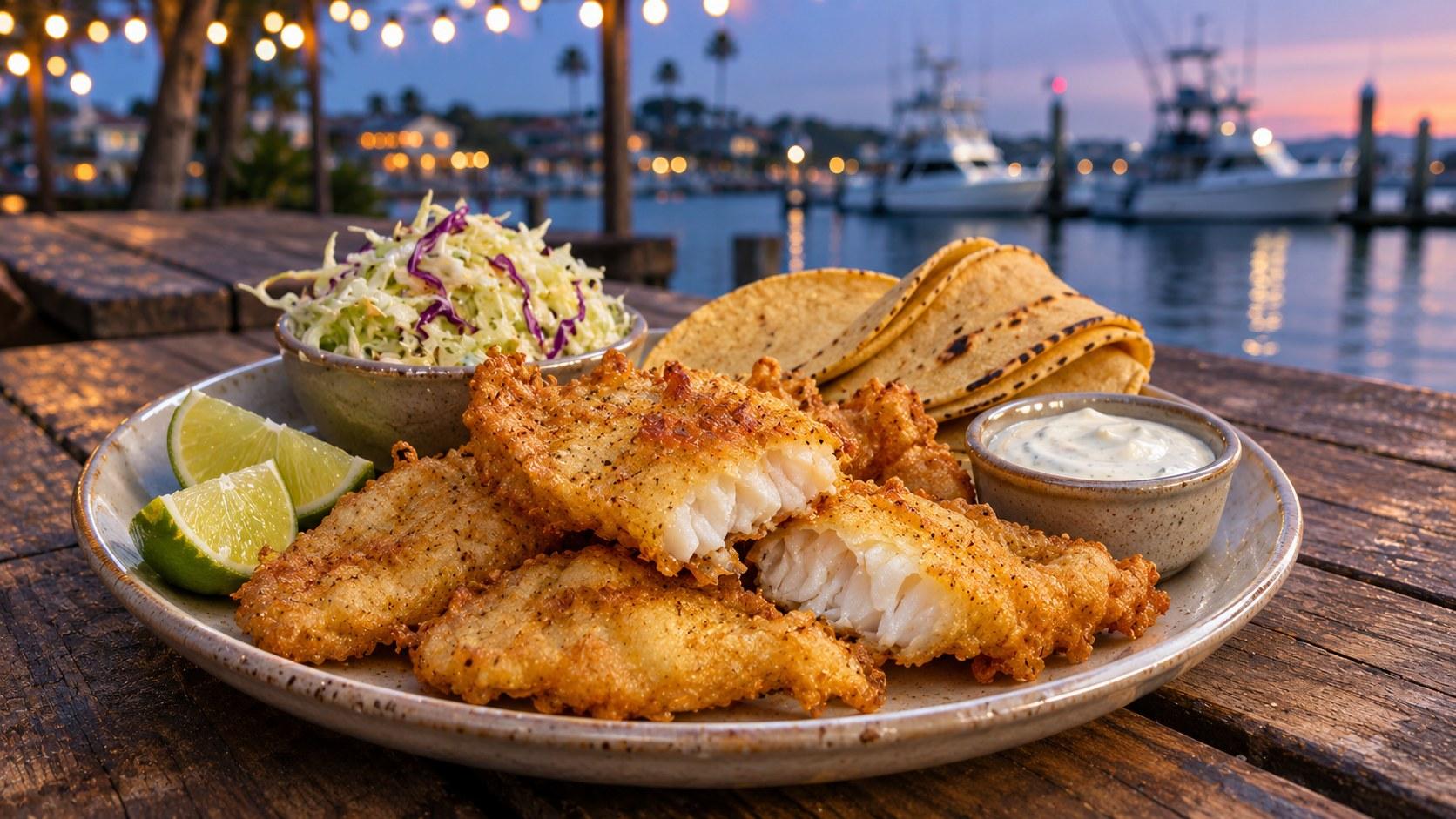
Firm, sweet meat is forgiving. According to Sea Grant it can be fried, baked, grilled or steamed, and all of them work.
- Fry it. Cut the fillets into strips, a light batter or flour, hot oil. Fish tacos with a cabezon are hard to beat.
- Steam it. Ginger, scallion and soy over a steamed fillet suits the sweet meat. The blue turns white as it cooks, so you can watch it finish.
- Bake it with butter, lemon and a little garlic. Pull it as soon as it flakes.
- Grill thick pieces. The meat holds together better than whitefish or sanddab, so a clean, oiled grate is fine for a thick fillet.
- Do not forget the cheeks. The big head has real cheeks. Cut them out with the tip of the knife and cook them with everything else.
Cook it the day you get home or the next. If you freeze it, vacuum seal it and keep it to a few months.
The rest of the cooler
A cabezon rarely comes home alone. The same shallow rock gives up calico, sheephead and the occasional rockfish, and the deeper winter trips add whitefish and sanddabs. The cleaning posts for those fish are how to clean ocean whitefish and how to clean and cook sanddabs. If you are fishing the Palos Verdes rock, the San Pedro port guide covers the water.
Where Fish or Pass fits
Fish or Pass does not grade cabezon. The Bite Score reads conditions for calico and rockfish, the fish that share the cabezon's rock, as Catching, Fishing or Pass. It is not a safety tool for the rocks or the surf, and it has no opinion on your filleting. The roe is still going in the trash.