Plenty of good California halibut in Southern California never see a boat. They come off piers, out of the surf and from the edges of the bays, caught by anglers who walked to the water. A halibut lies on the sand and eats what passes over it, and in spring a lot of that sand is shallow enough to cast to.
This is a guide to fishing halibut from shore: where to stand, how to rig, and how to land one from a pier deck twenty feet above the water. For the fish itself, see the California halibut species guide. For drifting from a boat, see halibut drifting and swimbaits.
Why shore anglers get a real shot
Adult halibut move inshore to spawn in spring and early summer, into water roughly 15 to 60 feet deep. Young halibut grow up in the bays and estuaries. Put those two facts together and a good share of the halibut population spends part of the year within casting distance of the beach, the pier or the jetty.
The species guide gives March through July as the best months, and that is the shore season too. Halibut can be caught from shore in other months, but spring is when a big one in close is worth getting up early for.
Where to fish
Halibut want sand next to something that concentrates bait. From shore that means:
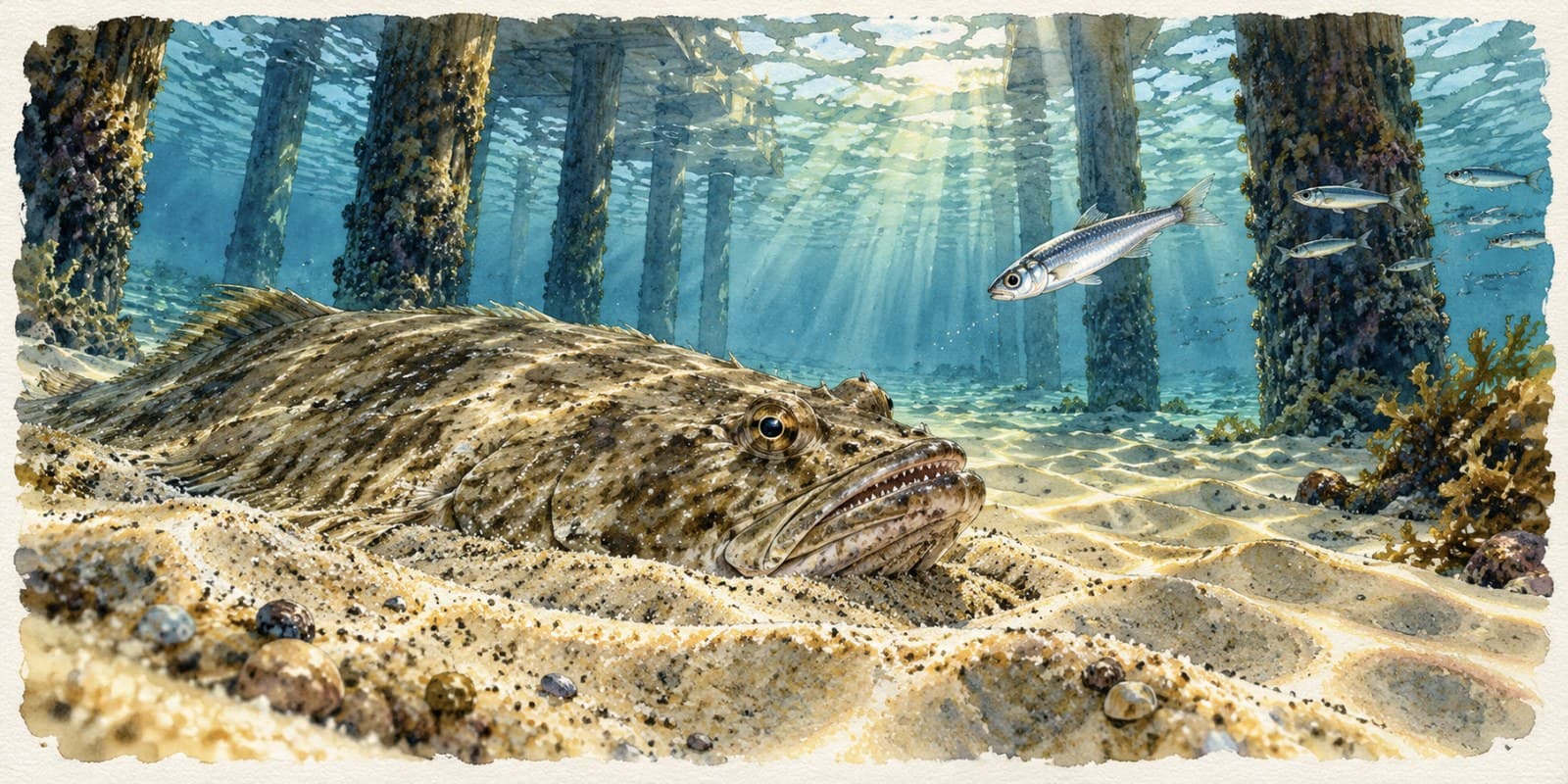
- Pier pilings and the sand around them. Bait schools hold around the pilings, and halibut lie on the sand nearby waiting for them. Fish the bottom near the end of the pier and along the sides, not just straight down.
- Surf troughs and holes. On a sandy beach, the deeper slots between the sandbar and the shore, and the rip channels cutting out through the bar, are where bait gets pushed and where halibut wait. Walk the beach at low tide to see them, then fish them as the tide comes in.
- Bay mouths and channels. Where a bay drains past a jetty or a channel edge, the tide carries bait to the fish. San Diego Bay, Mission Bay, Newport, Alamitos Bay and the Long Beach harbor all have this water.
- Jetty and breakwater ends. The sand where the rocks end is a classic ambush spot.
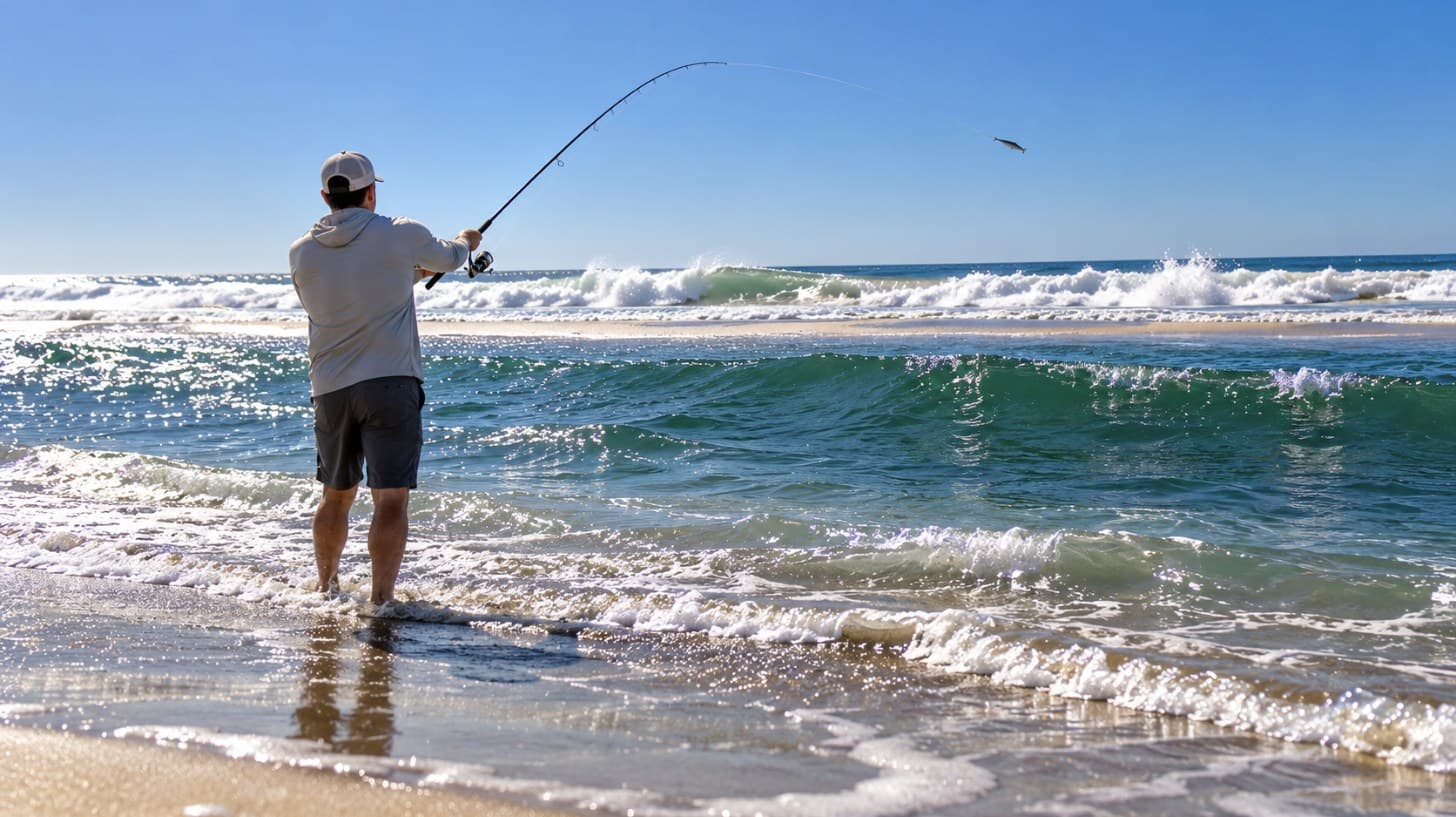
Avoid fishing right among the surfers and swimmers, and check that the stretch you choose is not inside a marine protected area. The CDFW MPA maps show the lines.
From the pier: live bait
The pier approach is simple. Catch your bait, then put it on the bottom.
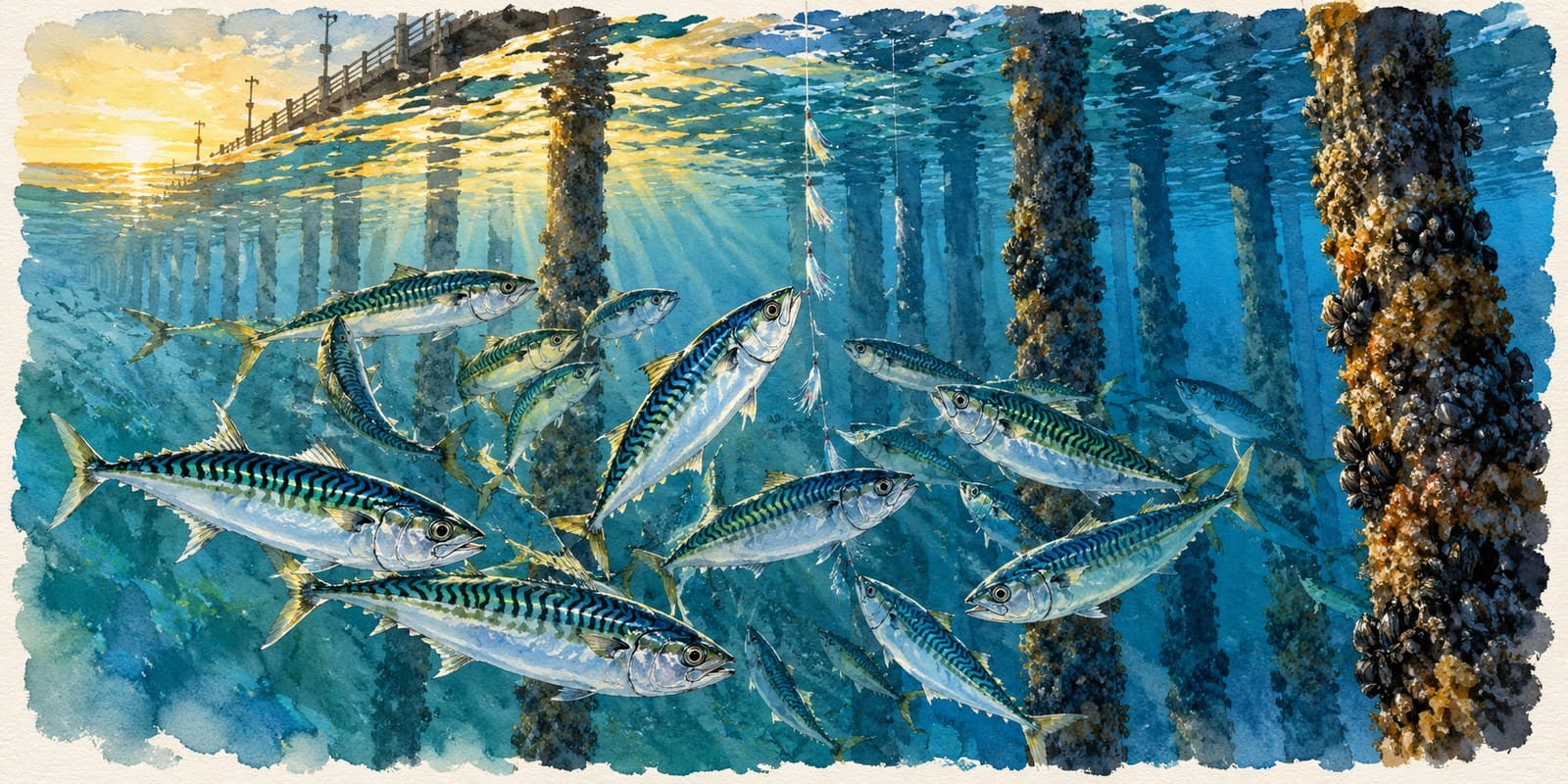
- Make bait. Small baitfish such as smelt, queenfish and small mackerel often school around the pilings. A sabiki rig catches them, and our guide to catching mackerel off the pier covers fishing one from the rail. The sabiki and mackerel post covers how to keep them alive in a bucket.
- The rig. A sliding sinker on the main line, a swivel, two to three feet of fluorocarbon leader and a hook through the bait's nose or lips. Use enough weight to hold the bottom in the current, and no more.
- Let it swim. Keep the line just tight enough to feel the bait working. When it suddenly goes frantic, a halibut is close.
- Wait on the bite. A halibut often grabs the bait crossways and needs a few seconds to turn it. Let it take line before you come tight.
Many anglers fish two rods, one live bait on the bottom and one lure cast and retrieved, to cover more water.
From the beach and jetty: lures
In the surf, a lure lets you cover the troughs and holes and keep moving until you find fish.
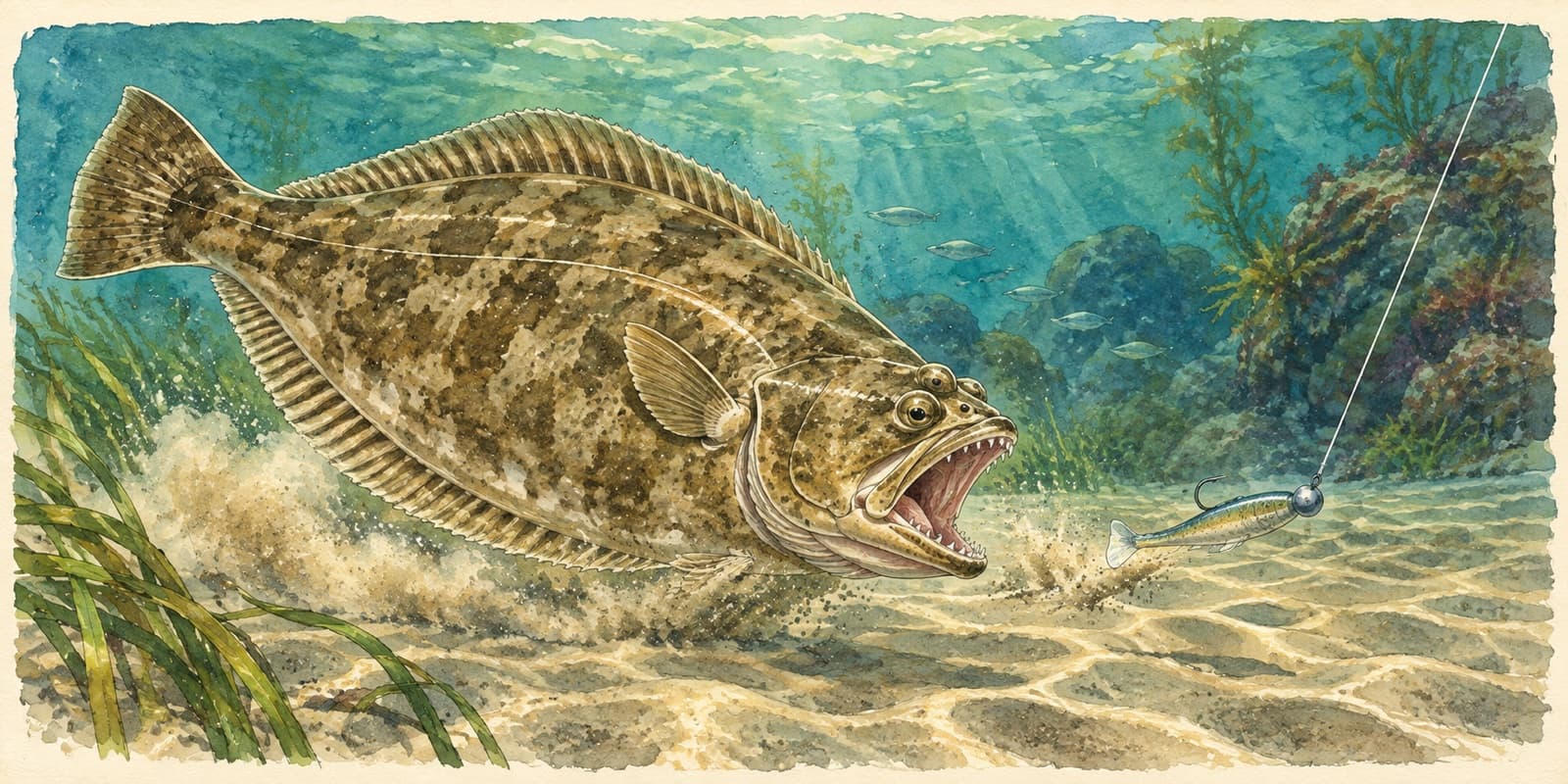
- Swimbaits and grubs. A three- to five-inch paddletail or curly-tail grub on a quarter- to half-ounce leadhead covers most surf conditions. Go heavier only if the surge keeps lifting it off the bottom.
- The retrieve. Cast across the trough, let it sink to the bottom, and bring it back slowly with small hops so it kicks up sand. Halibut often eat as it falls.
- Colors. Match what is in the water: smelt and sardine shades, white, and something darker on a dirty day.
- Spoons. A heavy casting spoon reaches past the first break and flutters on the drop, which is useful when the fish are holding outside.
If you already fish plastics for bass, the same outfit works. A 7- to 9-foot rod with 12- to 20-pound line is a good all-round surf and pier setup, with a fluorocarbon leader against the halibut's teeth.
Getting a big halibut up a pier
This is where most pier halibut are lost. Once a heavy fish leaves the water, its whole weight hangs on the leader and one hook, and a halibut shakes its head hard. Lifting it straight up on the line usually ends with a broken leader or a torn-out hook.
The answer is a pier net: a hoop or drop net on a long rope. Lead the fish over the net, then lift the net, not the line. Plenty of pier regulars carry one, and many will help a stranger with a good fish. If you plan to fish a pier for halibut, bring your own.
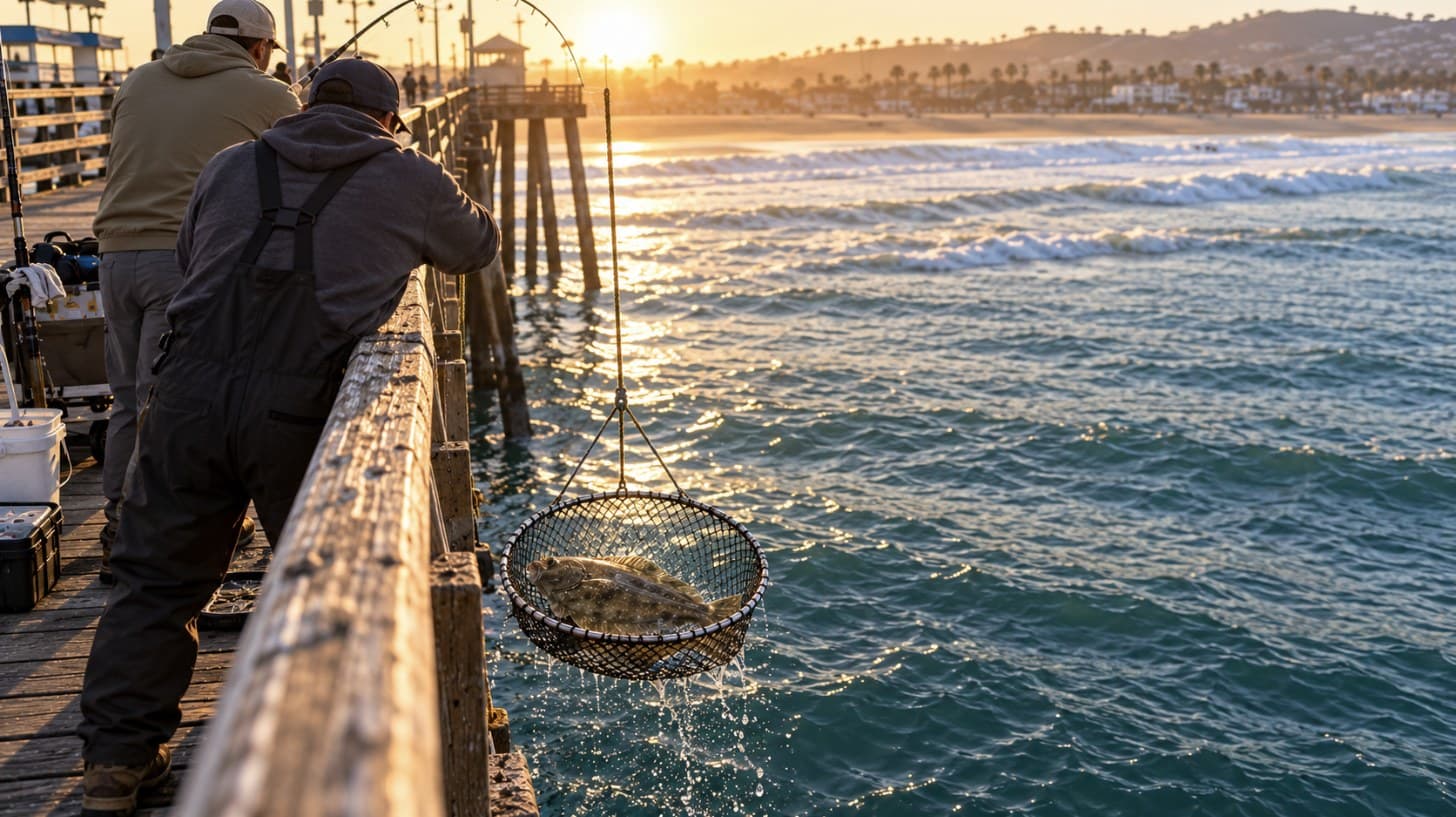
From the beach, walk the fish in on a wave and slide it up the sand. Do not try to lift it by the line.
Measure before you keep
The minimum size for California halibut is not small, and plenty of shore fish are short. Carry a measuring tape or board and measure every fish on a flat surface. Check the current size and bag limits in the CDFW Southern region regulations before you go.
A short halibut should go back quickly and wet. Unhook it with pliers, keep your fingers out of its mouth, and get it back in the water head first. If a fish swallowed the hook, cut the leader close rather than tearing it out.
One more thing to check: on a public pier in ocean waters, California does not require a fishing licence, but every size, bag and season rule still applies. Off the beach or a jetty you need a licence. The CDFW licensing page has the details.
Telling a halibut from a sanddab
Small flatfish come up from the sand all the time, and a young halibut can look like a sanddab or another flatfish. The easiest tell is the mouth. A halibut has a big mouth full of sharp teeth, with a jaw that reaches back past the eye. The sanddab post shows the difference.
Where Fish or Pass fits
The halibut guide is a profile, not a daily grade. The Bite Score grades conditions for six species, and on a spring morning on the beach the one to watch is calico bass, which lives on the same reef and kelp edges the halibut sand runs along. Neither can tell you which trough the fish are in this morning. Your feet and a few casts will.