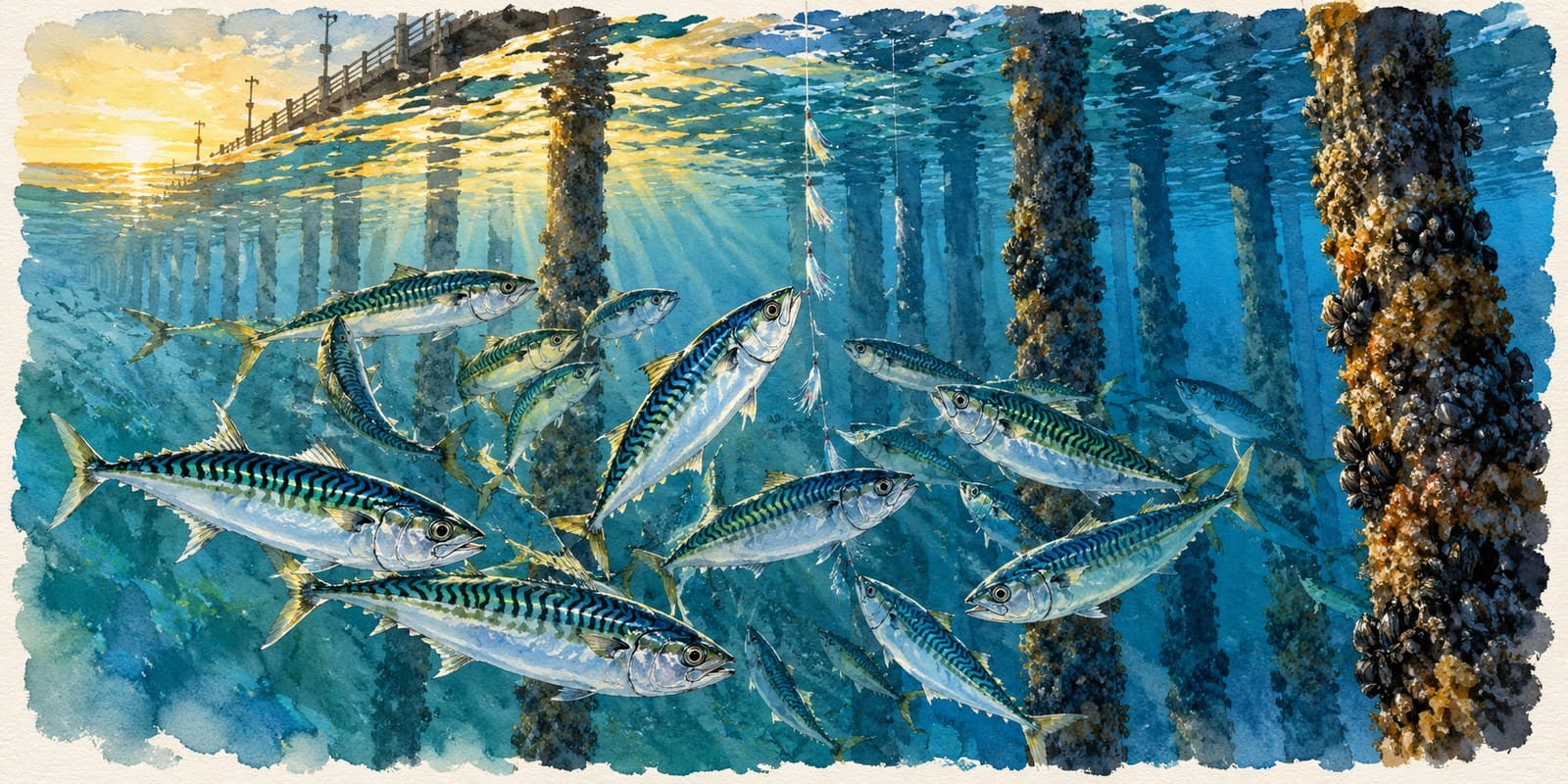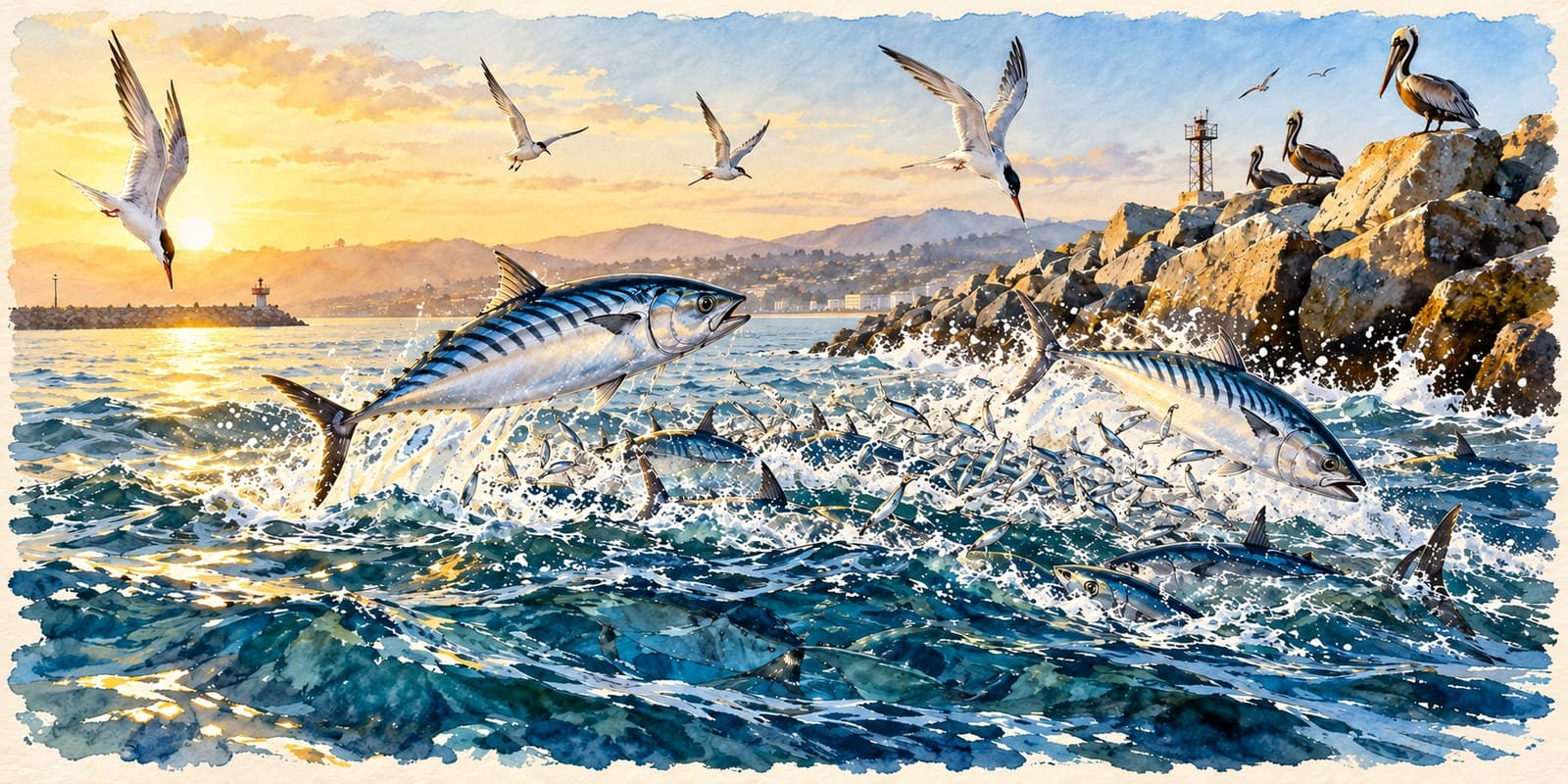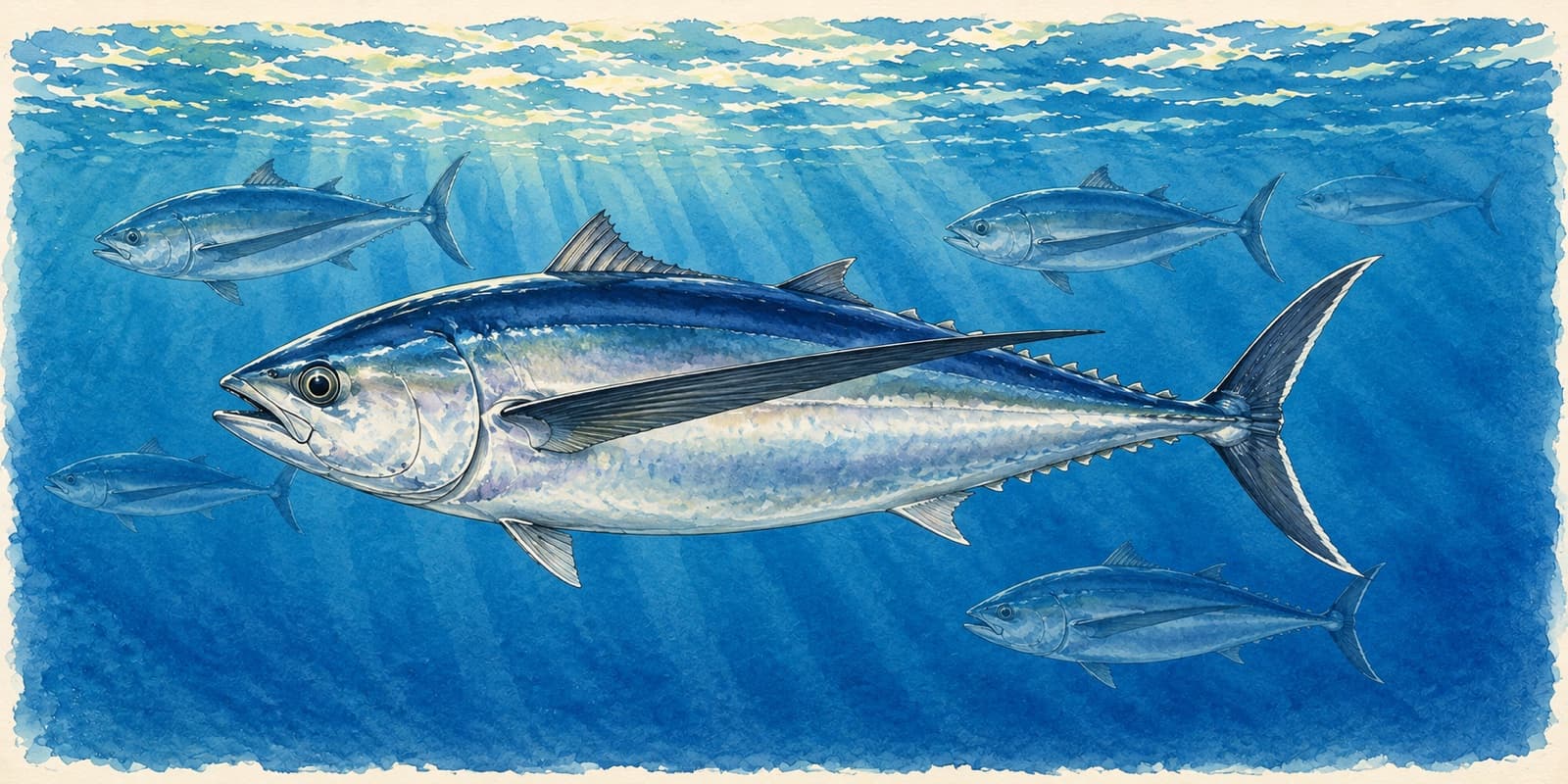
For most of the twentieth century, summer in Southern California meant albacore. The canneries on San Pedro Bay were built on them, the party boat fleet grew up chasing them, and a good July was measured in longfins on the deck. Today a San Diego sportboat that lands one makes the fishing report for it.
This is how that happened, told from the records: the first cans, the boom years, the years the fish went missing, and why the fleet now mostly fishes for other tuna. For the fish itself, see our albacore guide.
1903: white meat from San Pedro
The commercial albacore fishery grew out of a cannery. According to the CDFW status report on albacore, the first canning of the species happened in 1903 in San Pedro Bay, the harbor behind today's San Pedro landings, and the commercial fisheries "developed rapidly" after that. Albacore became canned white meat tuna, and the canneries needed a lot of it.
The fleet was small and close to home at first. From 1916 to 1925, about 300 boats fished albacore on one-day trips in coastal waters. They used the two methods that are still the backbone of albacore fishing: trolled jigs, and live bait thrown to a school once it was found.
1926: the first disappearance
The fish did not cooperate for long. The albacore catch in 1925 was more than 22 million pounds. In 1926 the fish shifted offshore and the coastal catch fell to under two and a half million. In 1928, less than 300,000 pounds came from coastal waters, the poorest year on record at the time. The albacore did not return to their old coastal haunts until 1935, after "a mysterious absence of almost a decade," according to the San Diego History Center.
That decade changed the fleet. San Diego boats that ran south looking for albacore found richer fishing for yellowfin and skipjack, and those fish became the backbone of the city's tuna industry. The lesson anglers here keep relearning started in 1926: albacore go where the water tells them, and nothing promises this coast a visit.
The party boat years
Recreational albacore fishing started in the early 1900s, when Southern California boat owners realized anglers would pay to charter. The first trips were few and worked the water around the Channel Islands. By the mid-1950s, more than 100 party boats were running albacore trips, and through the 1960s the boats got bigger, carried more anglers and ran farther in the years the fish stayed offshore.
The commercial fleet peaked over the same stretch. It reached about 3,000 boats in 1950, and California landings from the 1950s through the mid-1960s averaged roughly 30 million pounds a year.
The method on the sportboats was the one the commercial jig boats used. Troll feathers and cedar plugs until a fish hits, stop the boat, chum live bait, and fish the school that comes up under it.
Boom and bust, year by year
Albacore fishing off this coast was never steady. The fish cross the North Pacific every year, and where they make landfall depends on the ocean. CDFW notes that most albacore are caught in water from 59 to 67 degrees, along temperature fronts and the warm side of upwelling edges, in clear blue water. When that band of water sits off Southern California, so do the fish. When it does not, they go somewhere else.
- 1986. The summer was a failure. A CalCOFI fisheries review describes cold, turbid California Current water reaching south from Point Conception and acting "like a barrier," keeping the fish offshore. Sportboats suffered canceled charters for much of the season, and by then only one cannery on the coast was still processing albacore.
- 1994. Most of the stock went north to Oregon and Washington. Fewer than 200 albacore were landed on California party boats all year.
- 1999. The stock took a southern route and spent much of summer and fall off Southern California and northern Mexico. Party boat anglers landed 258,448 albacore, the highest total on record at the time.
Same fish, same fleet, five years apart. Nothing about the boats explains the gap between 1994 and 1999. The route does.
The 2000s fade
After 1999 the visits got rarer. A San Diego Reader fishing report puts it plainly: albacore were the mainstay of the San Diego fleets from the start, but around 2003 they "all but disappeared from the counts."
There were still good runs. On one day in July 2007, 15 San Diego dayboats landed 835 albacore 25 to 100 miles out, according to Sportfishing Report. In July 2010 the Endeavor came back to Seaforth Landing from a day and a half with 78 albacore for 19 anglers. Since then the fish have mostly passed by out of range. The same Reader report notes that San Diego commercial boats still catch them, often 500 to 700 miles west of Point Loma, far beyond any sportboat trip.
Nobody has a settled explanation. What the records do show is that this has happened before, from 1926 to 1935, and that the albacore came back then.
If they come back
You will know an albacore when one comes over the rail. The pectoral fin is enormous and reaches back past the second dorsal. Our guide to telling yellowfin from bluefin uses that same fin to separate the three. In the warm years, the small striped tuna that shows up on the old albacore grounds is far more likely to be a skipjack.
If albacore do show within range, the old program still works: troll to find them, stop on the strike, and keep the bait going. Boats out of Point Loma found them that way in 2007 and 2010.
Where Fish or Pass fits
Albacore are a profile species on Fish or Pass. The albacore guide describes the fish, but the site does not grade it. The Bite Score grades bluefin and yellowfin, the tuna that do come within range now, reading water temperature, breaks, bait and recent landing reports. It cannot tell you where the albacore migration will make landfall, and it cannot make a fish bite.