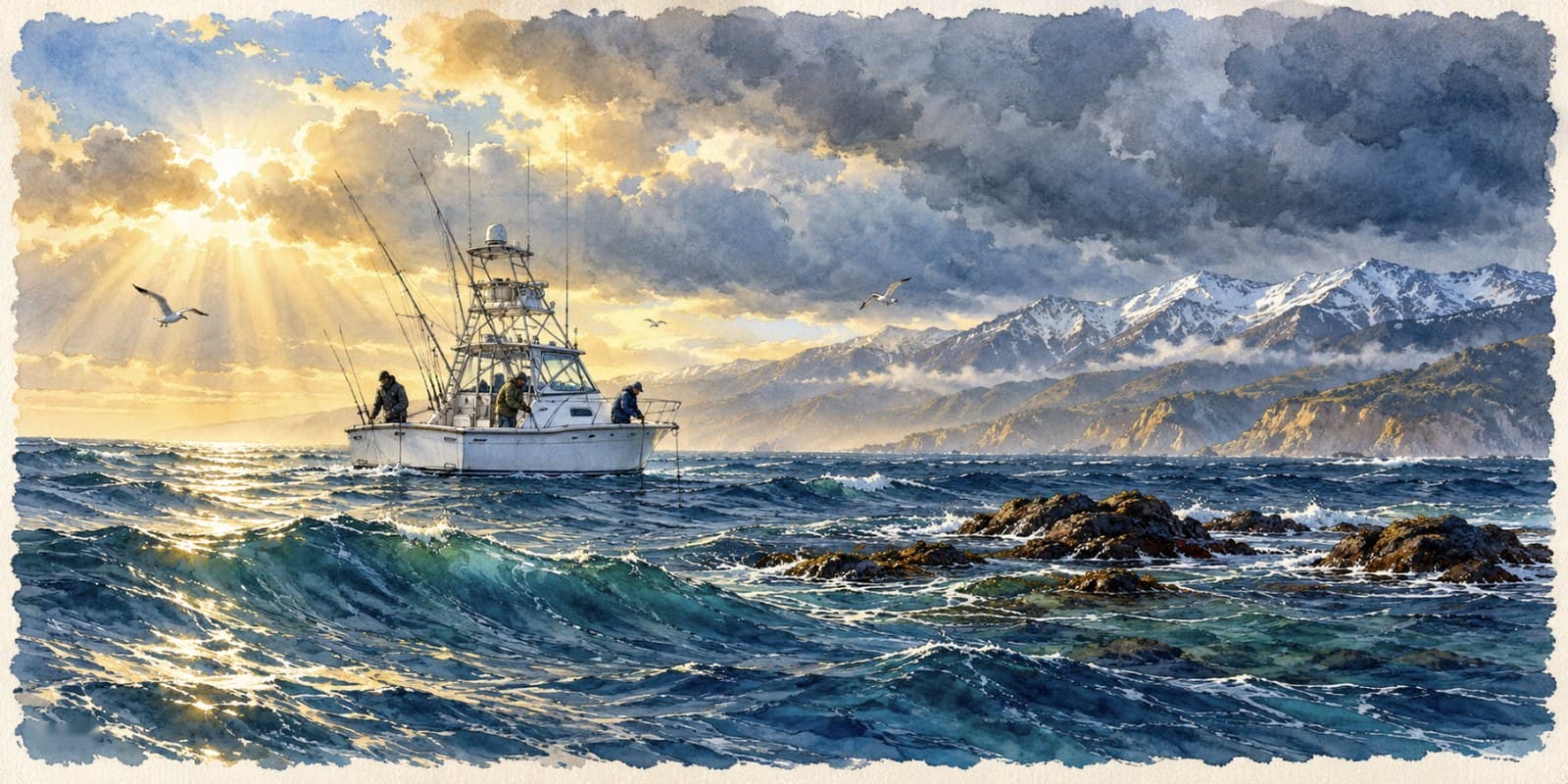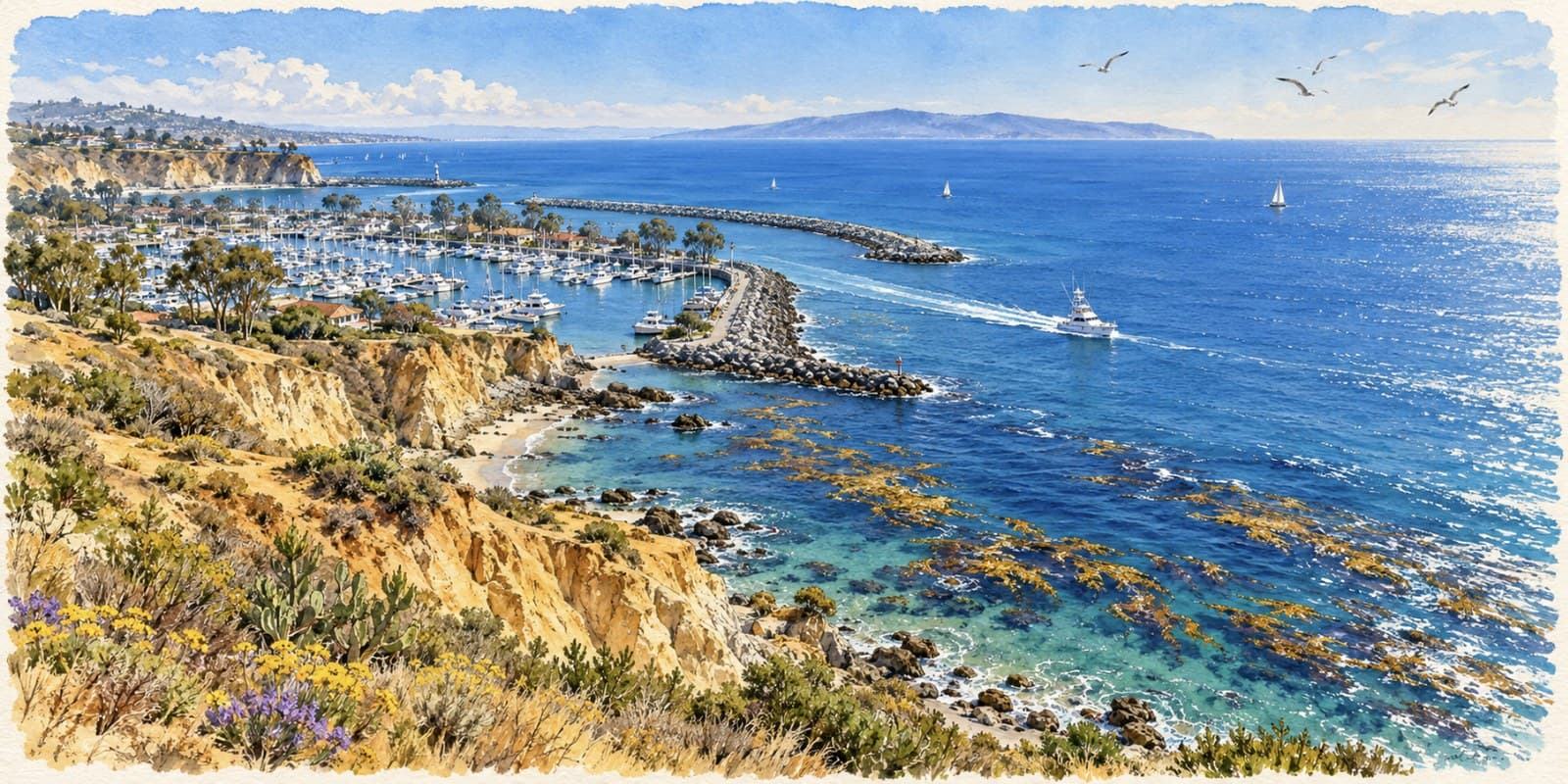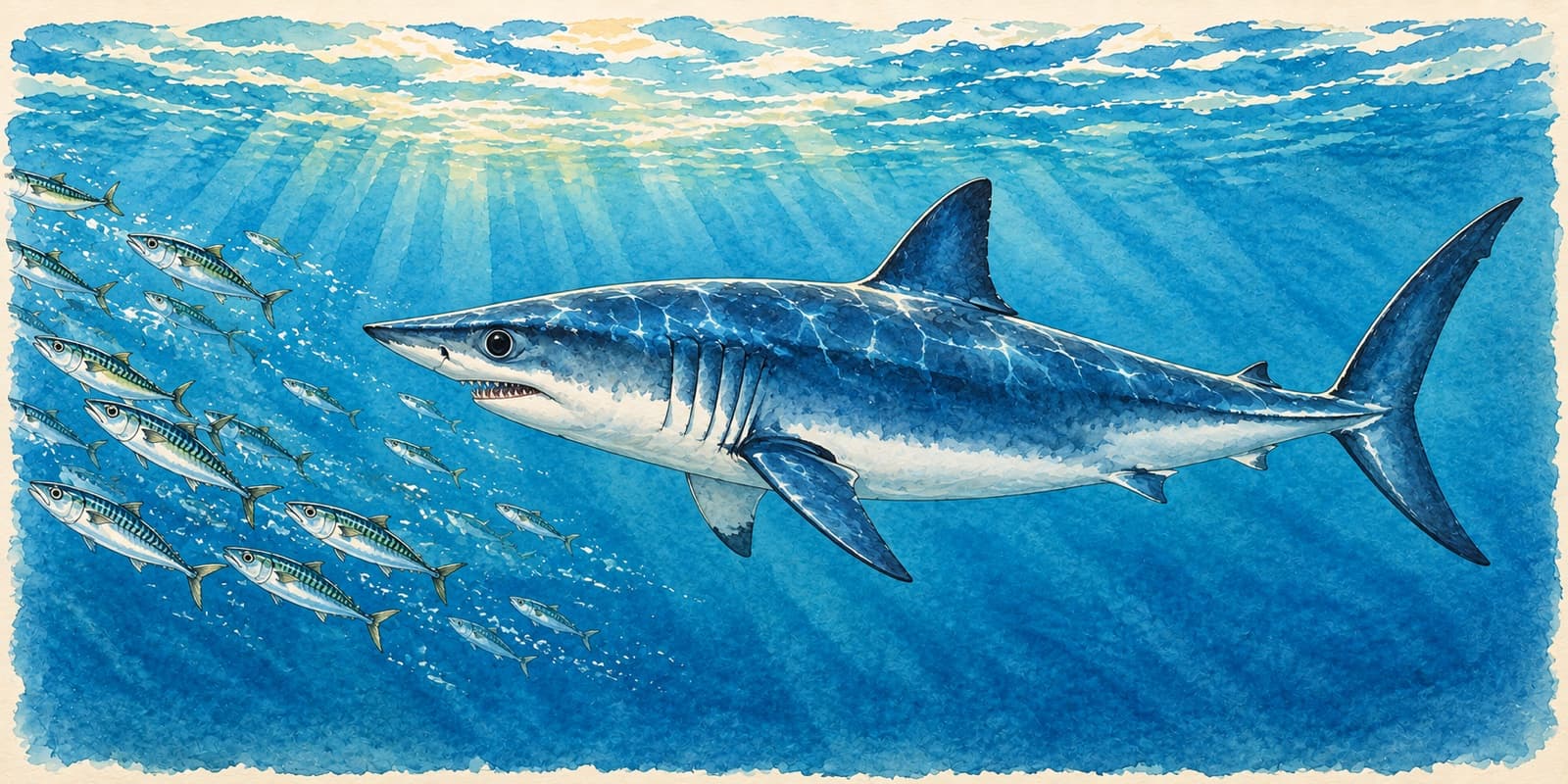
Ask around the docks about makos and you hear two kinds of story. The shark that appeared in the chum slick out of nowhere, and the shark that jumped. Both are true to the fish. The shortfin mako is a blue-water shark built like a tuna, and the water off Southern California is one of the places it grows up.
This post is about how makos use the Bight: when they arrive, where they hold, what they eat, and what that means if one turns up behind your boat. It is not a rules summary. Mako regulations are set at both the federal and state level and they change, so the links at the end are where the current rules live.
The Bight is a mako nursery
NOAA Fisheries describes the water from Santa Barbara to San Diego as long-recognized mako habitat and an important feeding area, and says the large numbers of juvenile makos caught here mark it as a nursery (NOAA Fisheries). Federal and state biologists took that seriously enough to run a dedicated juvenile shark survey in the Southern California Bight starting in 1994, tracking the abundance and size of young makos and blue sharks.
What that means on the water is simple. Many of the makos you meet here are young sharks, not the giants in the photographs. The mako species guide puts a typical local fish at 50 to 150 pounds. A young mako is still fast, still strong and still has a mouthful of teeth. It is also a fish that has not yet bred, which is worth thinking about before you decide what happens at the boat.
When they show up
Makos are summer visitors that come back on purpose. Between 2002 and 2014, NOAA researchers put satellite tags on 105 makos off the West Coast. The sharks ranged from Washington to Baja California and out toward Hawaii, and some covered nearly 12,000 miles in a year. But they kept returning to the same offshore areas, year after year, typically in summer when local water is richest in food. The researchers read that as memory: the sharks go back to where the eating was good.
In practice the local season runs from late spring into early fall. The fish come closer in through late spring and early summer, which is when most encounters happen. A cool spring or a warm one moves that window around, so treat the calendar as a guide and the water as the deciding vote.
Where they hold
The tagged makos mostly stayed in surface water of roughly 60 to 70°F. They spent about 90 percent of their time in the top 160 feet, with occasional dives as deep as 2,300 feet. That is a shark living in the same layer and the same temperature band as the summer tuna fleet, which is why makos so often turn up on tuna trips.
Inside that band, they go where the food is. Offshore banks, ridges and the edges of submarine canyons push cold water up and concentrate bait near the surface, and those are the places shark crews set up a drift. Look for the same signs you would look for on any offshore day: bait on the meter, birds working, a temperature break, life on the surface. Out of Point Loma, Dana Point and Newport, that kind of water is often within reach of a day trip, but it moves from week to week.
What they eat
A study of shark stomachs from the California Current, published in 2012, examined 330 makos. The 238 that held food contained 42 different kinds of prey, the most varied diet of the three sharks studied (mako, blue and thresher). Jumbo squid and Pacific saury ranked as the most important prey.
A shark that eats almost anything is a shark that comes to a smell. That is why the classic approach is a chum slick: a frozen block of ground oily fish such as mackerel or sardine, hung over the side in a mesh bag while the boat drifts, with baits set at different depths down the slick. Guides who fish them often note the difference between the two common sharks in a slick. Blue sharks tend to work their way up it slowly. Makos tend to appear suddenly, already moving fast.
Mako, blue or white: know before you touch
Three sharks share this water, and the difference matters to the law as well as to you.
- Shortfin mako. Deep metallic blue on the back with a sharp line to a bright white belly. A long, pointed, conical snout. Long, slender teeth that show even with the mouth closed. Short pectoral fins and a crescent tail with the two lobes almost the same size.
- Blue shark. Slimmer, a brighter cobalt blue down the sides, a long rounded snout and very long, wing-like pectoral fins. A regular in the same offshore slicks.
- White shark. Heavier through the body, grey rather than metallic blue on the back, with broad, triangular, serrated teeth.
White sharks are protected in California. They may not be taken (14 CCR 28.06). If a white shark comes up the slick, stop chumming and pull your baits. Shark rules change, so check the current CDFW ocean sport fishing regulations for what applies where you fish.
The part people underestimate
A hooked mako jumps, often more than once, and sometimes toward the boat or into it. That is the single most important thing to know before you set a bait for one.
- Decide the plan before the bite. Who drives, who handles the leader, who holds the knife, and whether the fish comes aboard at all. Most crews release makos in the water.
- Keep the deck clear. Nobody stands at the transom when the shark is near the boat, and loose gear goes below.
- Release in the water. A circle hook usually ends up in the corner of the jaw. Cutting the leader as close to the hook as you safely can sends the shark off with the least hardware.
- Do not lift it for a picture. A shark out of the water is a shark that can hurt someone and a shark that is being hurt.
On a small boat, all of this matters more. A mako that clears the gunwale does not care what size your boat is.
Rules and the bigger picture
Makos are managed as a highly migratory species under a federal fishery management plan, alongside state rules. The rules have tightened over the past decade as stock assessments have come in. Internationally, the shortfin mako is listed on CITES Appendix II, which governs trade, and in 2022 NOAA Fisheries decided that the species did not warrant listing under the Endangered Species Act.
None of that tells you what you may keep this season. For that, read the NOAA Fisheries West Coast highly migratory species page and the CDFW ocean sport fishing regulations before you go, and release anything you are not certain about.
Makos share the summer with a very different shark that lives much closer to the beach. Our post on thresher sharks in Southern California covers the shark that hunts with its tail.
Where Fish or Pass fits
The mako guide is a profile. Fish or Pass does not grade makos. The Bite Score grades offshore fish such as bluefin and yellowfin, reading water temperature, breaks, bait and recent reports, and a lot of mako water is that same warm blue water. The score cannot tell you a mako is in the slick, and it cannot make one eat.