Most marlin caught off Southern California are never hooked on a trolled lure. They are seen first. A crew runs the banks with binoculars, spots a fin, and puts a live bait in front of the fish. Veteran captain Chet Spreen has estimated that around four out of five of his fish come that way (Marlin Magazine).
This post walks through how that works: reading the fish on the surface, the bait and tackle, the trolling spread for when nothing is showing, and the release. For where and when to look, see our post on marlin season in Southern California, and for the fish itself, the marlin guide.
Read the fish before you cast
Southern California crews sort surface marlin into a few kinds, and each one tells you something different (Sport Fishing).
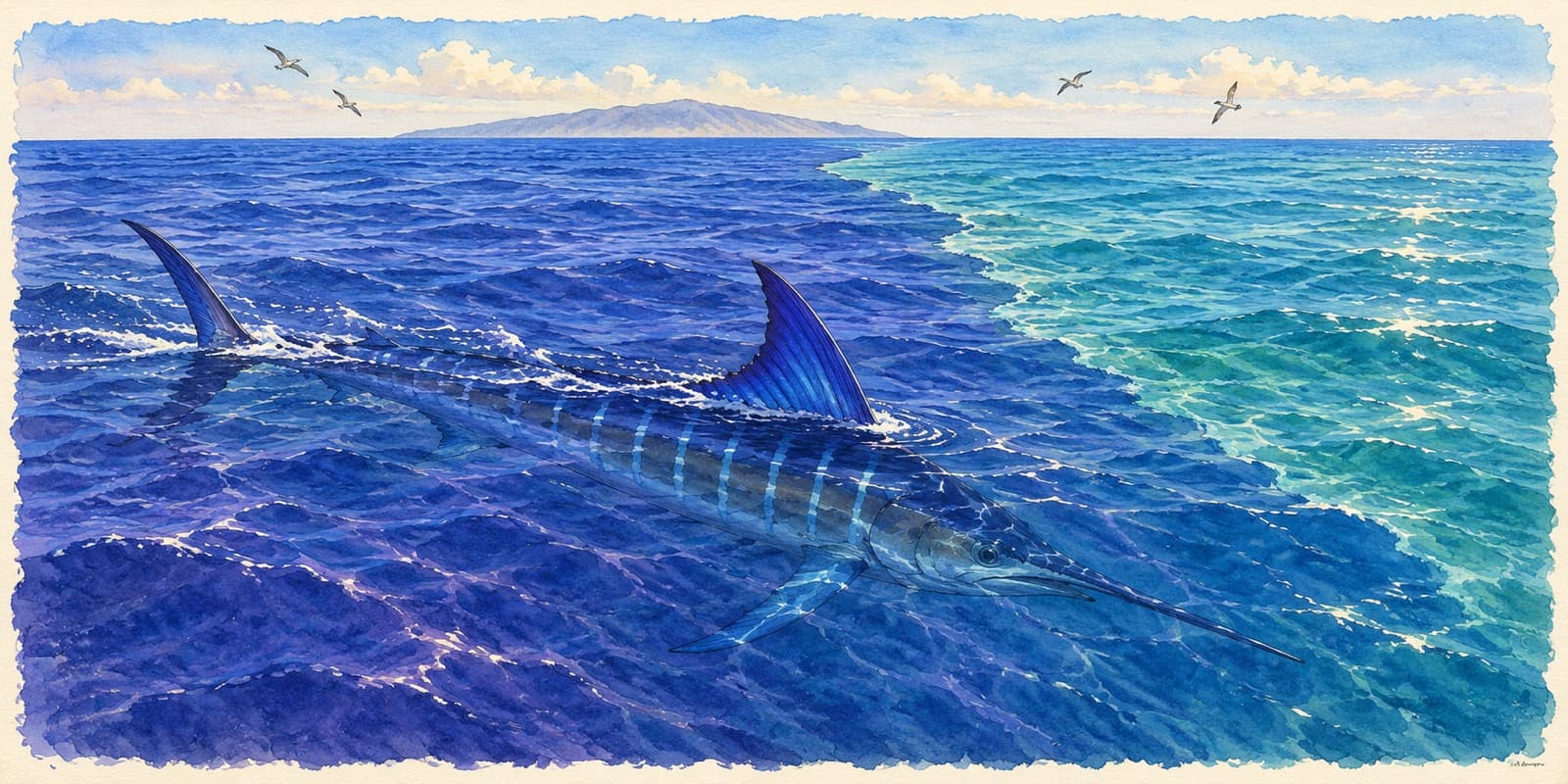
- Tailers are swimming fast down-swell and down-wind with the dorsal and tail tips out of the water. A NOAA tracking study measured this "tailing" or "breezing" at bursts of five to six knots (Holts and Bedford, 1990). They are traveling, so the bait has to land well ahead of them.
- Sleepers lie still just under the surface, sometimes for hours at night or early in the morning, according to the same study. Approach slowly and quietly.
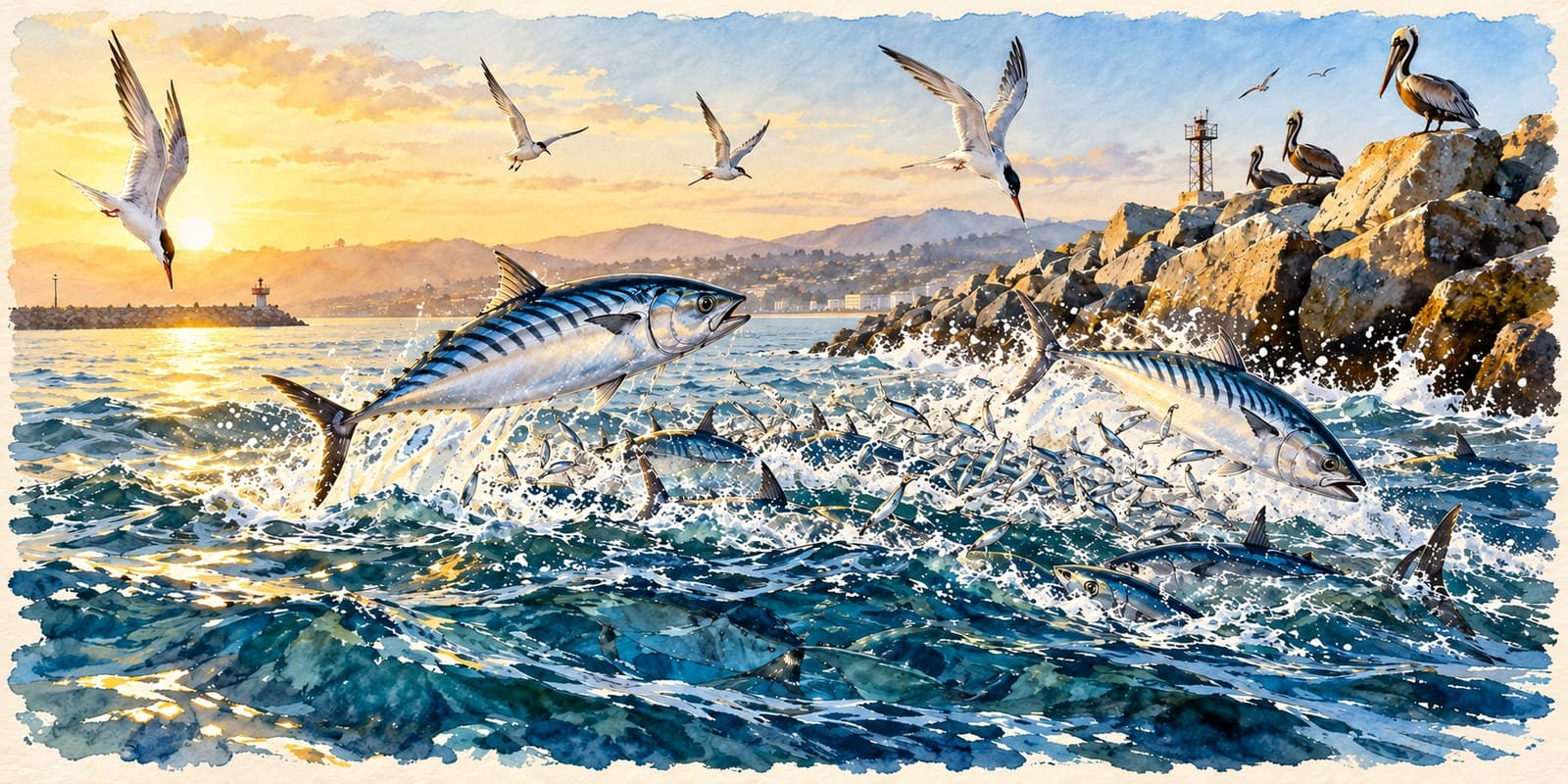
- Feeders are working bait. They are the most willing fish on the water.
- Jumpers give themselves away from a long distance and tell you fish are in the area, even if that one is gone.
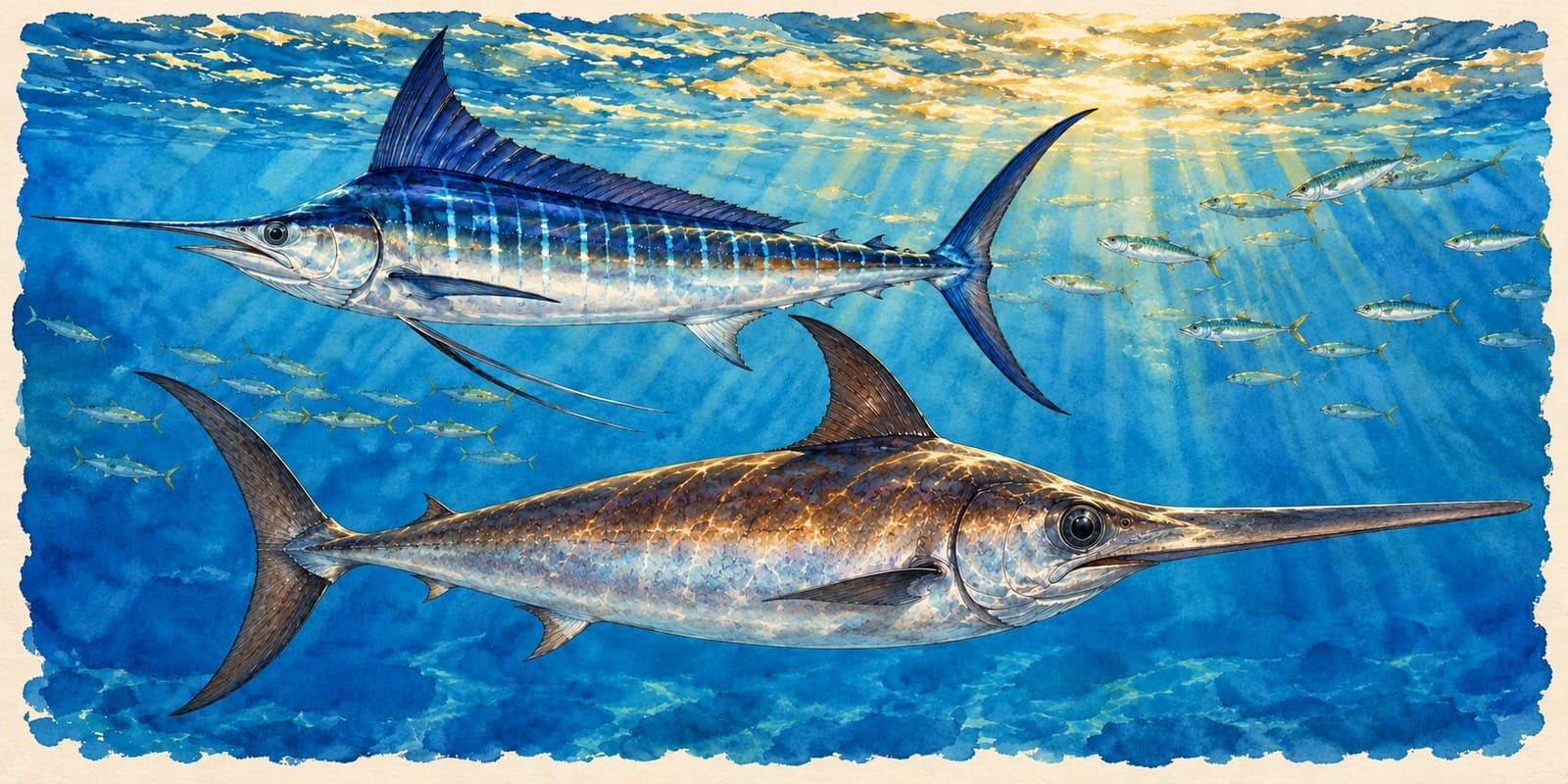
Spotting is the skill. Crews stand high, use stabilized binoculars, and search the edges where clean blue water meets greener water. Not every fin out there is a marlin: in the fall a swordfish on the surface can pass for one at a distance, and how to tell a swordfish from a striped marlin covers the dorsal fin and bill that give each one away.
The bait
The standard bait is a live Pacific mackerel, six to eight inches long, which locals call a greenback or a greenie. Jack mackerel, sometimes called Spanish mackerel on the docks, is the backup when greenbacks are scarce.
The bait is bridled through the nose so it swims naturally and stays lively after the cast. The cast itself is usually underhand and soft: the aim is to land the bait a few yards ahead of the fish without spooking it, not to throw a long way.
The tackle
Sport Fishing's sight-casting rundown describes a typical setup (Sport Fishing):
- Spinning or conventional gear with 12- to 20-pound monofilament.
- A 60- to 80-pound fluorocarbon leader to stand up to the bill.
- A non-offset J hook, 6/0 to 8/0.
Light line is part of the tradition here and part of the fun. It also means a long fight, which is why boat handling matters as much as the angler.
The bite and the hook set
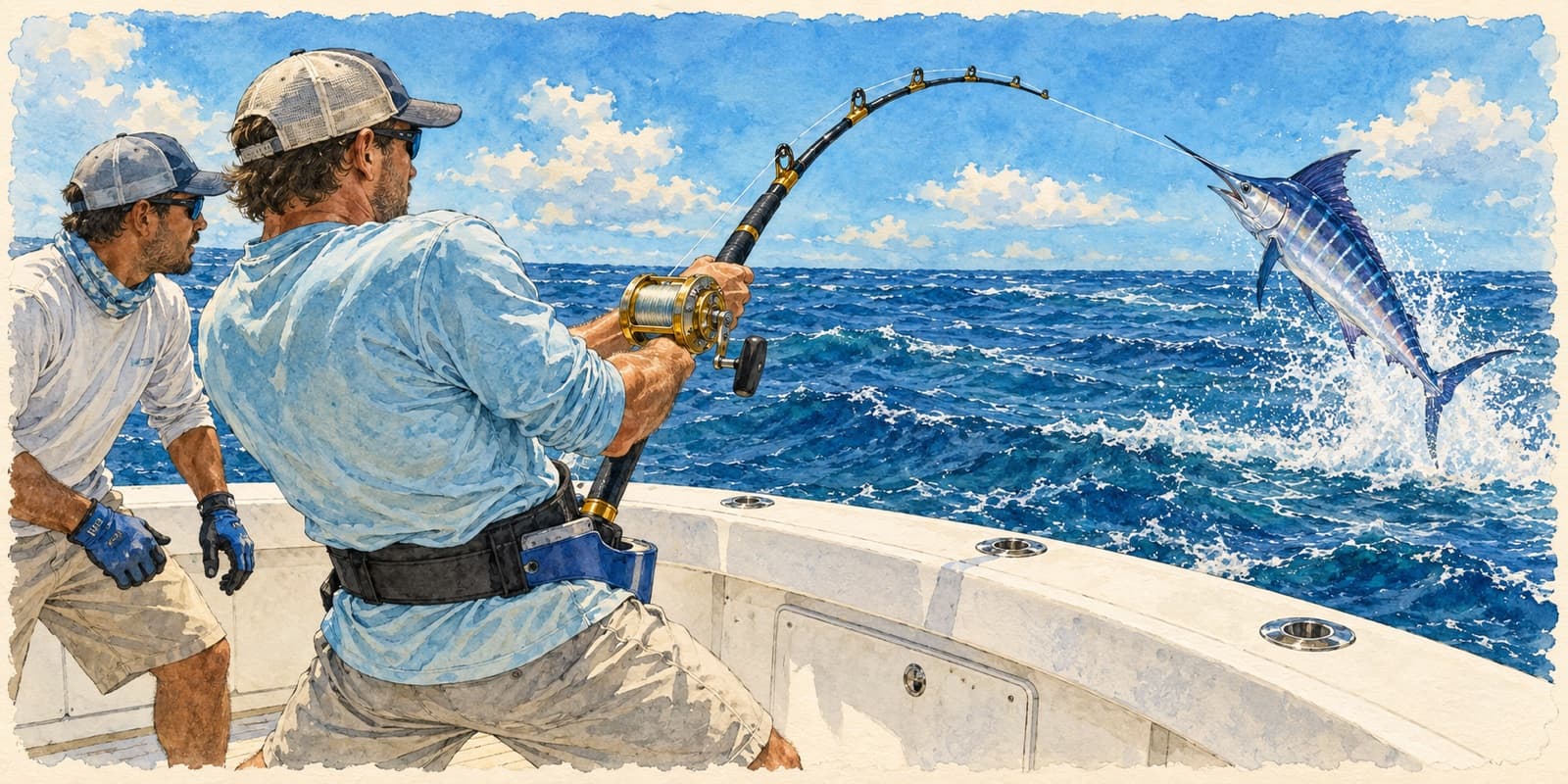
When a marlin takes a bait, it often grabs it crosswise and swims off before turning it. With a J hook, the classic local rule is to free-spool and count to about five before engaging the reel and coming tight, giving the fish time to swallow the head of the bait.
Research on how marlin feed helps explain why. Studies filming marlin hunting sardines found they slash through a bait school at high speed and use the bill to tap and stun isolated fish before eating them (Hansen et al., 2020). A marlin that has just hit your mackerel with its bill has not necessarily eaten it yet.
When nothing is showing: troll
On days with no fish on top, crews troll to cover water. A Southern California spread is commonly four lines with lures, which locals call jigs, often with squid-chain teasers or dredges to raise fish.
Many boats run a bait-and-switch. A teaser raises the marlin behind the boat, the teaser is pulled away, and a live or rigged bait is pitched to the excited fish. It combines trolling's reach with the hookup of a bait.
The release
Almost every marlin caught off Southern California today goes back, and California has reserved the species for sport fishing since 1937 (Bedford and Hagerman, 1983). The history of marlin fishing at Catalina covers how it got there. A good release is part of the technique:
- Keep the fish in the water.
- Control it by the leader and bill with gloves.
- Remove the hook if it comes out easily; if it does not, cut the leader close.
- Let the fish recover alongside the boat until it swims off under its own power.
Tagging is how anglers have helped science follow these fish. NOAA's cooperative billfish tagging program handed out more than 80,000 tags between 1963 and 2021, and satellite tags from the IGFA Great Marlin Race have followed fish tagged off the Channel Islands thousands of miles out past Baja toward Hawaii (Pelagic).
Before you go
Sight-casting is a game of reading water and fish, and that is the work the Bite Score is built to help with. We are adding marlin to it now. In the meantime, check the CDFW ocean sport fishing regulations for current limits, and check the NOAA marine forecast before a long run to the outer banks off Dana Point or Newport.